

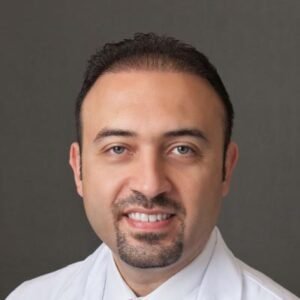
Dr. Carlos Encarnacion, MD Cardiothoracic Surgeon and Heart Surgery Care
Dr. Carlos Omar Encarnacion, MD, is a board-certified thoracic and cardiac surgeon whose professional work includes adult cardiac surgery, cardiovascular surgery, minimally invasive cardiac surgery, and minimally invasive thoracic surgery. Current physician directories identify him with Specialty Associates of West Houston and list thoracic and cardiac surgery as his specialty.
His role is different from that of a general cardiologist. Cardiologists primarily diagnose and medically manage heart disease, while cardiothoracic surgeons become involved when coronary arteries, heart valves, the aorta, or other structures may require surgical treatment. A surgical consultation does not automatically mean an operation will be recommended. It is an opportunity to compare surgery with catheter-based treatment, medication, monitoring, and other reasonable options.
Patients trying to understand related specialists can also browse cardiology care on Doctiplus and the site’s broader general and specialized surgical services.
About Dr. Carlos Encarnacion
Dr. Encarnacion is professionally listed as Carlos Omar Encarnacion, MD. WellMed identifies him in thoracic and cardiac surgery with NPI 1508132812, while Doximity lists his focused areas as adult cardiac surgery, minimally invasive cardiac surgery, minimally invasive thoracic surgery, and cardiovascular surgery.
His current practice is associated with Specialty Associates of West Houston. WellMed lists practice locations connected with his care and currently provides 281-970-6500 as a scheduling number for his Houston and Cypress locations.
For patients, the important part of this specialty is treatment selection. Two people can have similar heart diagnoses but require very different approaches because anatomy, symptoms, previous procedures, heart function, age, and other health conditions can change what is appropriate.
Medical Education and Cardiothoracic Surgery Training
Dr. Encarnacion graduated from the Texas Tech University Health Sciences Center Paul L. Foster School of Medicine in 2013. Doximity records an integrated thoracic surgery residency through the Medical College of Wisconsin Affiliated Hospitals from 2013 through 2019.
WellMed additionally lists postgraduate training associated with Beth Israel Hospital, the Medical College of Wisconsin, and the University of Maryland. The Medical College of Wisconsin’s own cardiothoracic training page lists Carlos Encarnacion among its previous integrated cardiothoracic residents and notes that he subsequently completed fellowship training at Maryland before moving into cardiac surgery practice.
| Training Area | Institution | Details |
|---|---|---|
| Medical education | Texas Tech University Health Sciences Center Paul L. Foster School of Medicine | MD, Class of 2013 |
| Surgical training | Beth Israel Hospital | Listed postgraduate surgical training |
| Cardiothoracic residency | Medical College of Wisconsin Affiliated Hospitals | Integrated thoracic surgery training |
| Additional training | University of Maryland | Advanced cardiothoracic training |
| Specialty | Thoracic and Cardiac Surgery | Adult cardiac and thoracic surgical care |
Cardiothoracic training combines operative skill with cardiovascular decision-making, intensive postoperative care, imaging interpretation, and management of patients who may have several serious medical conditions at the same time.
Board Certification and Professional Credentials
Dr. Encarnacion is board certified in thoracic and cardiac surgery through the American Board of Thoracic Surgery according to current professional certification information. His Texas medical licence is also listed as active through 2027 in the current Doximity profile.
Board certification should not be confused with a hospital affiliation or medical licence. It represents specialty-focused postgraduate training and completion of certification requirements within thoracic and cardiac surgery.
For a patient, certification is one useful part of evaluating a surgeon. Other practical questions include whether the surgeon regularly treats the specific condition involved, what alternatives are available, and how the proposed operation compares with less invasive approaches.
Coronary Artery Disease and Bypass Surgery
Coronary artery disease occurs when plaque narrows the vessels responsible for supplying blood to heart muscle.
Many patients can be managed with medication, cardiovascular risk reduction, or catheter-based procedures. Other patients have coronary anatomy that makes surgical bypass an important option.
Coronary artery bypass grafting, commonly called CABG or bypass surgery, creates new routes for blood to travel around significantly narrowed coronary arteries.
A cardiac surgeon may become involved when disease affects several vessels, when important coronary segments are involved, when previous catheter treatment has not provided a sufficient solution, or when the patient’s broader medical picture makes bypass surgery worth considering.
Dr. Encarnacion’s professional areas include adult cardiac and cardiovascular surgery, which are the surgical disciplines responsible for evaluating these types of heart conditions.
Patients should not assume that finding an arterial blockage automatically means bypass surgery is necessary. The decision may involve discussion between a cardiologist, interventional cardiologist, cardiac surgeon, and the patient.
Heart Valve Surgery
Heart valves open and close continuously to keep blood moving in the correct direction. Disease can make a valve too narrow or prevent it from closing effectively.
The result may eventually affect heart function and cause symptoms such as reduced exercise tolerance, shortness of breath, fatigue, or fluid retention.
Some valve abnormalities can be monitored for years. Others eventually reach a point where repair or replacement becomes reasonable.
Dr. Encarnacion’s published clinical interests include valvular surgery and minimally invasive cardiac approaches.
During a surgical evaluation, several questions matter. Which valve is abnormal? How severe is the problem? Is the heart beginning to change because of it? Can the patient’s own valve be repaired, or is replacement more appropriate?
These questions are more useful than assuming that every severe valve condition requires exactly the same operation.
Minimally Invasive Cardiac Surgery
Minimally invasive cardiac surgery is specifically listed among Dr. Encarnacion’s professional focus areas.
Traditional heart surgery may require a larger central chest incision to provide access to the heart. Selected minimally invasive approaches use smaller surgical access points when the patient’s anatomy and required operation make this practical.
Potential suitability depends on the exact diagnosis. Previous surgery, the number of structures requiring repair, vascular anatomy, and the complexity of the operation can all affect whether a smaller approach is sensible.
The phrase “minimally invasive” should therefore not be interpreted as meaning minor surgery. The underlying cardiac problem may still be significant.
Patients considering this approach should ask what benefit a smaller-access operation provides in their specific case and whether the same quality of repair can be achieved safely.
Aortic Disease and Endovascular Interests
Dr. Encarnacion’s reported professional interests also include endovascular approaches to aortic disease.
The aorta is the major artery that carries blood away from the heart. Conditions involving the thoracic aorta can sometimes require monitoring, catheter-based repair, open surgery, or a combination of approaches.
An aortic aneurysm, for example, is not treated solely because it exists. Surgeons consider its location, diameter, growth pattern, symptoms, anatomy, family history, and the patient’s other medical conditions.
Some patients undergo repeated imaging before surgery is necessary. Others have findings that justify earlier repair.
When an aortic procedure is being considered, patients should understand whether treatment will involve only the aorta or whether a heart valve or another cardiovascular structure must be addressed during the same operation.
Minimally Invasive Thoracic Surgery
Dr. Encarnacion also lists minimally invasive thoracic surgery among his practice areas.
Thoracic surgery concerns structures within the chest and is broader than heart surgery alone. His publication history also includes research involving cardiothoracic and thoracic surgical topics.
Patients should nevertheless confirm directly whether Dr. Encarnacion personally treats their particular thoracic diagnosis, because having thoracic surgical training does not mean every surgeon focuses equally on every chest condition.
This is especially relevant when a referral involves the lungs, esophagus, mediastinum, or thoracic cancer rather than the heart or major vessels.
Surgery for Heart Rhythm Problems
Dr. Encarnacion’s professional biography has also described an interest in minimally invasive approaches related to cardiac arrhythmia surgery.
Heart-rhythm disorders are usually evaluated first by cardiologists or cardiac electrophysiologists. Many are treated with medication or catheter ablation rather than surgery.
Surgical treatment can become relevant in selected situations, particularly when another cardiac operation is already being performed or when a patient’s rhythm problem requires a surgical strategy.
The important point is that rhythm treatment should be individualized. A diagnosis such as atrial fibrillation does not automatically mean surgical treatment is appropriate.
Understanding the Difference Between a Cardiologist and Cardiac Surgeon
The distinction between cardiac specialists can become confusing because several physicians may participate in the same patient’s care.
A cardiologist generally focuses on diagnosis, testing, medications, cardiovascular prevention, and long-term management.
An interventional cardiologist may use catheter-based techniques to perform coronary angiography, angioplasty, stent placement, or selected structural-heart procedures.
A cardiac surgeon performs operations such as selected coronary bypass procedures, valve operations, aortic repairs, and other surgical treatment of structural cardiovascular disease.
These physicians commonly work together.
Patients can review Dr. Shuab Omer’s cardiothoracic surgery profile for another example of how thoracic and cardiac surgery fits within multidisciplinary cardiovascular care.
What a Cardiac Surgery Consultation May Involve
Patients referred to Dr. Encarnacion will often already have completed substantial cardiovascular testing.
The surgical consultation may therefore involve reviewing:
- Coronary angiography
- Cardiac catheterization reports
- Echocardiography
- CT imaging
- Stress testing
- Previous operative reports
- Hospital records
- Medication history
- Cardiologist recommendations
A surgeon also needs to understand what the patient can and cannot comfortably do.
Someone who previously walked several blocks without difficulty but now becomes short of breath after a short distance provides clinically useful information about how the condition is affecting everyday function.
The goal is to determine whether the abnormality shown on testing matches the patient’s symptoms and whether surgery provides enough expected benefit to justify proceeding.
Preparing for an Appointment With Dr. Encarnacion
Patients can make a surgical consultation much more useful by gathering the records directly connected with the cardiovascular problem.
Useful information can include:
- Current medications and doses
- Medication allergies
- Blood-thinning medications
- Echocardiogram reports
- Cardiac catheterization records
- Coronary angiography images
- CT or MRI reports
- Stress-test results
- Previous stent records
- Previous cardiac surgical reports
- Hospital discharge summaries
- Relevant laboratory results
- A short timeline of symptoms
Patients who have undergone previous heart surgery should try to obtain the original operative report when possible. Knowing exactly what was repaired or replaced can be valuable when another procedure is being considered.
Patients should not independently stop prescribed cardiovascular or blood-thinning medication before an appointment or procedure unless their treating medical team has specifically instructed them to do so.
Questions Worth Asking Before Heart Surgery
Major cardiac surgery deserves a clear explanation before treatment begins.
Useful questions include:
- What exact problem requires surgery?
- Why is treatment recommended now?
- What might happen if I continue monitoring instead?
- Is a catheter-based treatment reasonable?
- Is a minimally invasive approach appropriate?
- Can my valve be repaired rather than replaced?
- What result is the operation intended to achieve?
- Will more than one cardiovascular problem be treated?
- What will recovery involve?
- What follow-up will be required?
- Could another surgical opinion be helpful?
These questions help move the conversation away from simply naming an operation and toward understanding why that operation fits the patient’s particular condition.
Second Opinions Before Cardiac Surgery
Seeking another opinion before elective heart surgery can be reasonable, especially when more than one treatment strategy is available.
This can be particularly useful for complex valve disease, multiple blocked coronary arteries, aortic conditions, repeat heart surgery, or cases in which both surgical and catheter-based options have been discussed.
Another surgeon may confirm the original recommendation. That confirmation can itself be valuable.
In other cases, a second specialist may recommend a different timing, surgical technique, or non-surgical alternative.
A second opinion is therefore not automatically a sign that the first recommendation is wrong. It is another way to understand a significant medical decision.
Recovery and Follow-Up After Cardiothoracic Surgery
Recovery varies according to the operation, surgical approach, underlying heart condition, and the patient’s health before surgery.
Follow-up commonly looks at wound healing, heart rhythm, breathing, activity tolerance, medication changes, and whether the symptoms that led to surgery are improving.
Some patients may also participate in cardiac rehabilitation or need continued cardiology follow-up.
Doctiplus discusses how virtual follow-up can sometimes support recovery after surgery. For cardiac surgery, however, some follow-up still needs to occur in person when a physical examination, imaging, ECG, wound assessment, or other direct testing is necessary.
Current Practice and Appointment Information
Current WellMed information lists Dr. Encarnacion with Specialty Associates of West Houston PLLC and thoracic and cardiac surgery. Listed practice sites currently include Houston, Cypress, and Tomball.
The current physician listing gives 281-970-6500 for appointments at the Houston and Cypress offices, while another listed Tomball practice number is 713-526-1814.
Doximity currently identifies him as board certified by the American Board of Thoracic Surgery and lists adult cardiac surgery, cardiovascular surgery, minimally invasive cardiac surgery, and minimally invasive thoracic surgery among his professional areas.
Practice locations, insurance participation, hospital privileges, scheduling numbers, and availability can change. Patients should verify current information with the practice before arranging a consultation.
Understanding Dr. Encarnacion’s Clinical Profile
The clearest verified professional picture of Dr. Carlos Omar Encarnacion is that of a board-certified cardiothoracic surgeon whose training began at Texas Tech’s Paul L. Foster School of Medicine and continued through an integrated cardiothoracic surgery pathway at the Medical College of Wisconsin with additional training at the University of Maryland. He now practices thoracic and cardiac surgery with a professional focus that includes adult cardiac, cardiovascular, minimally invasive cardiac, and minimally invasive thoracic surgery.
For patients, the most important part of that profile is treatment selection. Cardiothoracic surgery can offer substantial benefit when structural heart or aortic disease genuinely requires an operation, but the decision should be based on anatomy, symptoms, test findings, overall health, and reasonable alternatives rather than the diagnosis alone.
Readers can also review the Doctiplus editorial policy for more information about how physician and patient-focused medical profiles are prepared.
Reviews
There are no reviews yet.