

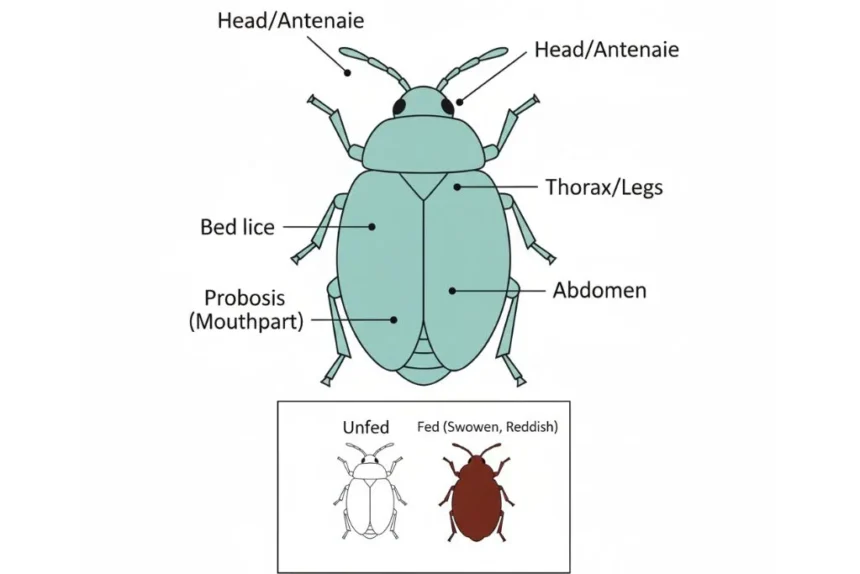
The very idea of a bed bug, a tiny, blood-feeding parasite, crawling on you is unsettling. A common and very understandable fear when dealing with an infestation is whether these pests can infest your hair or scalp, similar to head lice. While this anxiety is natural, it’s important to know that bed bugs are not typically found living in human hair or on the scalp. Unlike lice, which are adapted to cling to hair shafts, bed bugs are clumsy on hair and prefer the exposed skin surface for easy feeding.
Understanding Bed Bug Behavior
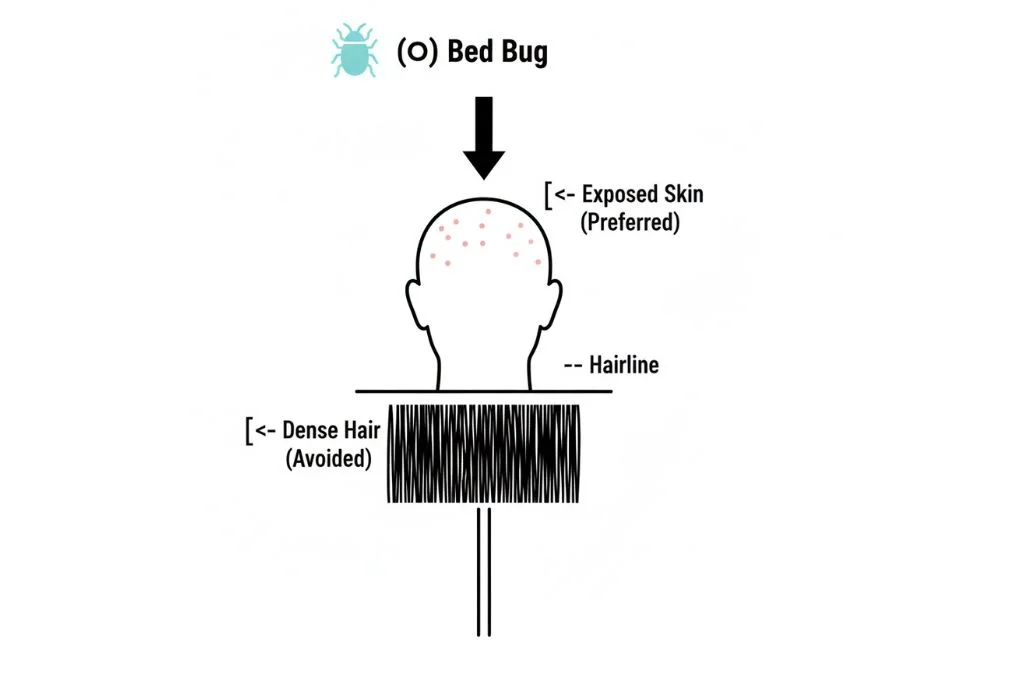
Why Bed Bugs Prefer Skin
Bed bugs (Cimex lectularius) are primarily drawn to the heat and carbon dioxide released by a sleeping human. They are built for movement on flat, rough surfaces like sheets, mattresses, and walls.
- Leg Structure: Their legs and claws are well-suited for crawling on fabric and wood, but they struggle to navigate the thin, cylindrical structure of human hair.
- Feeding Site: They seek out exposed skin (arms, neck, legs, face) to feed, as their mouthparts are designed for penetrating the skin surface directly. Hair presents a physical obstruction.
- Body Shape: They have a broad, flat body, which makes them easy to spot on light surfaces but ill-suited for hiding or moving within the dense environment of hair.
Difference Between Bed Bugs and Lice
| Feature | Bed Bugs | Head Lice |
| Primary Habitat | Mattresses, furniture, cracks, crevices | Human hair shafts, scalp |
| Movement | Crawls quickly on surfaces, clumsy in hair | Clings firmly to hair strands |
| Feeding Frequency | Intermittent (every 5-10 days) | Multiple times daily |
| Egg Laying | Deposits eggs in crevices/fabric (not hair) | Glues eggs (nits) onto hair shafts |
Identifying a Bed Bug Interaction
While bed bugs rarely inhabit hair, they can certainly crawl through it to reach the scalp or nearby skin. Recognizing the signs is key to managing the infestation.
Common Bite Locations (and Why)
Bed bugs typically bite where the skin is easily accessible while you are still, such as during sleep.
- Neck and Shoulder: Areas often exposed above the bed covers.
- Arms and Legs: If limbs are left hanging out or uncovered.
- Face and Scalp Edges: They may crawl near the hairline to reach the skin.
What a Scalp Bite Looks Like
Bites on the scalp are difficult to see but may present with:
- Itchy, Red Bumps: Similar to a mosquito bite, often in a small cluster or line (“breakfast, lunch, and dinner” pattern).
- Small Bleeding Pinpricks: A tiny spot of blood may be left behind on a pillow if you scratch or crush the bug.
- Local Inflammation: Swelling around the bite site.
ASCII Illustration: The Bug’s Preference
Practical Guidance and Treatment
If you suspect bed bugs have been on or near your scalp, the steps are straightforward and focus on treating the bite symptoms and eliminating the source infestation.
Step-by-Step Scalp/Hair Protocol
- Immediate Inspection (Do NOT Panic): Use a fine-toothed comb (a lice comb works well) to gently comb through your hair over a light-colored towel. Check the towel for any small, reddish-brown specks (bed bugs or their fecal matter).
- Wash and Condition: Wash your hair with regular shampoo. While there are no medicated shampoos specifically for bed bugs (since they don’t live in hair), a thorough wash will remove any bugs that might be temporarily trapped.
- Treat the Bites:
- Cleanse: Gently wash the affected area with soap and water.
- Soothe: Apply a mild over-the-counter hydrocortisone cream or calamine lotion to reduce itching and inflammation.
- Avoid Scratching: Scratching can lead to a secondary bacterial skin infection.
Infestation Management (Essential)
Treating the scalp is secondary; the primary goal is eliminating the main infestation source.
| Action Item | Target Area |
| Wash Bedding | Sheets, pillowcases, blankets |
| Dry on High Heat | All laundered items (min 30 mins at $120^\circ\text{F}$/ $49^\circ\text{C}$ or higher) |
| Vacuum Thoroughly | Mattress, box spring, bed frame, and surrounding carpet/floor |
| Steam Treatment | Use a commercial steamer on seams and crevices of the mattress and furniture |
Prevention and Lifestyle Tips
The best defense is an effective, sustained strategy to keep your living space bed-bug-free.
Environmental Control Measures
- Install Mattress Encasements: Use certified, bed-bug-proof covers on your mattress and box spring. This traps any bugs inside and prevents new ones from settling.
- Reduce Clutter: Eliminate clutter, especially near the bed, as it offers bugs more hiding places.
- Regular Inspection: Check behind headboards, in power outlets, and along baseboards routinely, particularly after returning from travel.
Travel Safeguards (A Key Risk)
Bed bugs are often acquired during travel.
- Inspect Hotel Rooms: Do a quick check of the mattress seams, headboard, and any upholstered furniture upon arrival. Look for small, reddish-brown stains or live bugs.
- Luggage Protocol: Keep your suitcase elevated on a luggage rack (not on the floor or bed). Upon returning home, immediately wash and dry all clothes (even clean ones) on high heat, and store the suitcase outside of the bedroom.
Improvement Timeline
The physical symptoms from bed bug bites typically resolve quickly once the source of the bites is removed.
| Period | Expected Outcome |
| 1-2 Days | Initial redness and swelling begin to subside. Itching lessens. |
| 1 Week | Most mild bite marks should be significantly faded or gone. |
| 2-3 Weeks | Complete resolution of bite symptoms (in most cases). |
| Ongoing | Infestation elimination may take several weeks and often requires professional help. |
When to See a Doctor
While most bed bug bites are harmless, secondary issues can arise. Seek medical attention if you experience:
- Signs of Infection: Increased pain, swelling, warmth, redness spreading from the bite, or pus.
- Severe Allergic Reaction: Difficulty breathing, hives, swelling of the tongue or throat (a rare but serious event).
- Persistent Itching: If over-the-counter remedies do not alleviate the itching after a few days, a prescription steroid cream may be necessary.
Final Advice
Remember, bed bugs are a nuisance, not a grave threat to your health. They are primarily a home and furniture pest, and the risk of them infesting your hair is very low. Focus your energy on eliminating the infestation in your environment, and the skin irritation will cease.
Medical Disclaimer
This article is for informational purposes only and is not intended to be a substitute for professional medical advice, diagnosis, or treatment. Always seek the advice of your physician or other qualified health provider with any questions you may have regarding a medical condition.
References
- Centers for Disease Control and Prevention (CDC). Bed Bugs.
- Environmental Protection Agency (EPA). Controlling Bed Bugs.
- University of California, Davis. Integrated Pest Management (IPM) for Bed Bugs.