

The American Dental Association’s 2024 orthodontic survey reveals that 73% of adults considering teeth straightening cite cost as their primary concern. Yet, many overestimate the cost of invisible braces by as much as 40%. As orthodontic technology advances and payment options expand, the financial landscape for clear aligners has shifted dramatically from even five years ago. Insurance coverage has broadened, financing programs have become more sophisticated, and the total cost equation now includes factors that many patients do not initially consider.
For the millions of adults and teens evaluating their orthodontic options, understanding the real cost drivers behind invisible braces can reshape the entire affordability conversation. Beyond the sticker price lies a complex interplay of treatment factors, insurance dynamics, and long-term value considerations that often tip the scales in unexpected directions.
What Key Factors Influence the Cost of Invisible Braces?
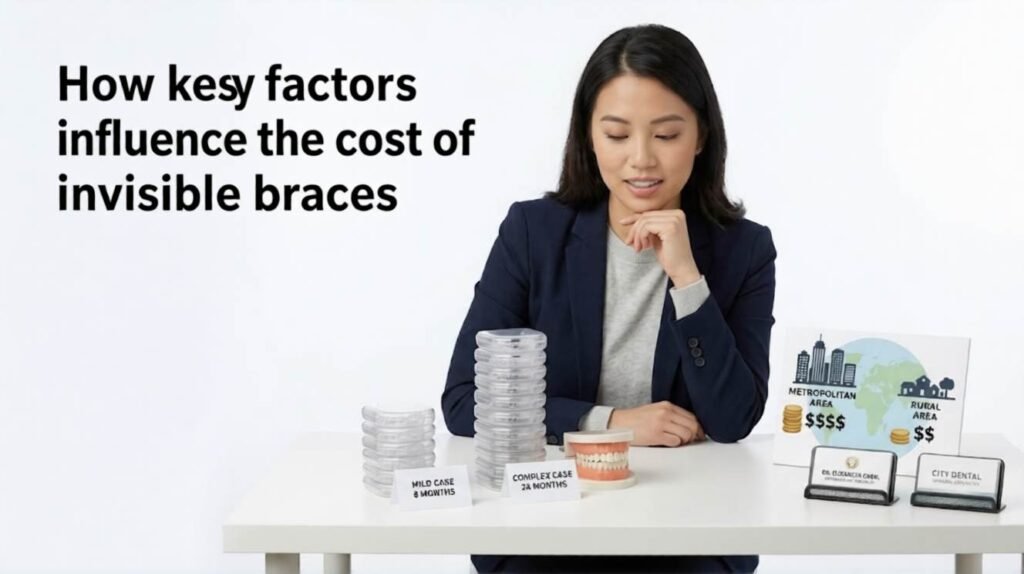
The price of invisible braces treatment varies dramatically based on factors that many patients do not anticipate during their initial consultations. Case complexity stands as the single most significant cost driver. Mild crowding or minor spacing issues typically require fewer aligners and shorter treatment periods. In contrast, severe misalignment, bite corrections, or rotational movements may require more sophisticated treatment plans with additional aligner sets.
Treatment duration directly correlates with total expense, but not always in obvious ways. A straightforward case requiring 12 to 15 aligners over eight months costs substantially less than a complex case requiring 40 or more aligners over 18 to 24 months. However, shorter treatment does not automatically mean lower costs if the case requires specialized attachments, elastics, or precision cuts that add manufacturing complexity.
Geographic location creates surprising price disparities. Metropolitan areas like New York or Los Angeles typically see invisible braces costs 30 to 50% higher than mid-sized cities. In contrast, rural areas often fall somewhere between due to limited provider competition. The orthodontist’s experience level also influences pricing. Specialists with extensive clear aligner training often charge premium rates, though their expertise can actually reduce total treatment time and the need for refinement aligners.
Provider type matters more than many patients realize. General dentists offering clear aligners often charge less than orthodontic specialists, but complex cases may require multiple refinements or extended treatment periods, which can ultimately cost more. The technology platform used, whether it is a premium system with advanced features or a simplified approach, affects both the initial investment and the precision of results.
How Do Invisible Braces Cost Compare to Traditional Braces?
Cost Differences Across Treatment Types
The traditional assumption that metal braces always cost less than invisible aligners no longer holds across all treatment scenarios. Standard metal braces typically range from $3,000 to $6,000, while invisible braces generally fall between $3,500 and $8,000. These ranges overlap significantly in the middle tiers, where most patients find themselves.
For mild to moderate cases, the cost gap has narrowed considerably. A patient needing 18 months of treatment might pay $4,200 for metal braces versus $4,800 for invisible aligners, a difference many consider worthwhile for the aesthetic and lifestyle benefits. Complex cases requiring 24 or more months of treatment show wider gaps, with metal braces maintaining a cost advantage because they can handle severe movements without additional aligner production.
The equation shifts when indirect costs are considered. Traditional braces often require more frequent emergency appointments for broken brackets or wire adjustments, each typically costing $75 to $150. Invisible braces eliminate these surprise visits, though they may require additional aligner sets if treatment does not progress as planned.
Impact of Treatment Duration on Pricing
Treatment timeline affects total cost through multiple channels beyond the obvious relationship between time and fees. Traditional braces maintain relatively stable monthly costs regardless of treatment length, since the same hardware is used throughout the process. If treatment extends from 18 months to 24 months, the additional cost primarily covers extra appointments and monitoring.
Invisible braces work differently. Extended treatment often requires additional aligner production, refinement sets, or treatment plan modifications that add incremental costs. A case projected for 15 months that stretches to 22 months due to compliance issues or biological factors might need two additional rounds of aligners, potentially increasing total cost by $1,000 to $2,000.
However, invisible braces can sometimes achieve results faster than traditional braces for specific movement types, particularly when patients maintain excellent compliance with 20 to 22 hours of daily wear. This acceleration can offset the higher per-month cost, making the total investment comparable despite the premium technology.
What Role Do Insurance and Payment Options Play in Affordability?
Insurance Coverage and Orthodontic Benefits
Orthodontic insurance benefits apply to invisible braces the same way they cover traditional braces, though many patients do not realize this crucial fact. Most dental insurance plans with orthodontic coverage provide a lifetime maximum benefit, typically $1,000 to $3,000, that applies regardless of the chosen treatment method. A patient with $2,000 in orthodontic benefits receives the same coverage whether they select metal braces or invisible aligners.
The key distinction lies in timing and provider networks. Some insurance plans require pre-authorization for orthodontic treatment, and invisible braces providers may need to submit specific documentation to support the necessity of treatment. Patients should verify that their chosen provider participates in their insurance network, as out-of-network treatments often reduce benefit coverage by 20 to 40%.
Health Savings Accounts (HSAs) and Flexible Spending Accounts (FSAs) offer significant advantages for patients with invisible braces. These accounts allow pre-tax dollars to cover the entire treatment cost, effectively reducing the financial burden on the patient’s tax bracket percentage. A patient in the 22% tax bracket saves $1,100 on a $5,000 treatment when using HSA funds, making invisible braces substantially more affordable than the gross cost suggests.
Financing and Payment Plans Available
In-house payment plans have evolved dramatically as invisible braces providers recognize that affordability is a key factor in treatment acceptance. Many practices now offer 0% interest financing for 12 to 24 months, allowing patients to spread costs without additional financial penalties. Extended plans of 36 to 60 months typically carry interest rates of 6 to 15%, still more favorable than credit card financing.
Third-party financing companies specializing in healthcare have introduced flexible approval criteria that take into account factors beyond traditional credit scores. Patients with limited credit history or recent financial challenges often qualify for extended payment terms, making treatment more accessible. Some programs offer graduated payments that start lower and increase over time, accommodating patients expecting income growth during treatment.
Employer benefits programs increasingly include orthodontic financing options as part of comprehensive healthcare packages. Some companies offer payroll deduction programs that automatically allocate pre-tax dollars toward invisible braces and Invisalign treatment options, simplifying the payment process while maximizing tax advantages. These arrangements often include employer contributions or matching programs that further reduce patient costs.
How Do Customization and Additional Treatments Affect the Cost of Invisible Braces?
Materials and Custom Features in Invisible Braces
The manufacturing precision required for invisible aligners involves sophisticated technology that influences pricing in ways patients rarely consider. Each aligner represents a custom-manufactured medical device created from detailed digital scans and treatment projections. The thermoplastic materials used, typically medical-grade polyurethane, undergo specialized processing to achieve the exact thickness and flexibility needed for controlled tooth movement.
Advanced features such as precision attachments, interproximal reduction (IPR), or bite ramps require additional manufacturing steps, increasing per-aligner costs. Complex cases need aligners with specialized cuts, beveled edges, or integrated elastics attachments, each adding to the production complexity. However, these features often enable more efficient treatment, potentially reducing the total number of aligners needed and offsetting their individual premium cost.
Digital treatment planning technology continues advancing, with some providers offering enhanced visualization tools, accelerated treatment protocols, or premium materials that command higher fees. While these upgrades increase initial costs, they often improve treatment predictability and reduce the likelihood of refinements that would add expense later in the process.
Additional Dental Procedures That Impact Overall Costs
Pre-treatment requirements can significantly affect the total investment in invisible braces therapy. Patients with active gum disease, untreated cavities, or inadequate restorations must address these issues before beginning orthodontic treatment. Periodontal therapy might add $500 to $2,000, while extensive restorative work can increase pre-treatment costs by several thousand dollars.
Concurrent procedures during invisible braces treatment require careful coordination and may extend treatment timelines. Patients needing tooth extractions, implant placement, or crown work must often pause aligner progression, potentially requiring additional aligner sets to accommodate healing periods and revised treatment plans.
Some cases require specialized procedures, such as temporary anchorage devices (TADs) or surgical exposure of impacted teeth, which add $300 to $800 per procedure. While these interventions enable invisible braces to handle cases that previously required traditional braces, they do increase the total treatment investment beyond the basic aligner cost.
How Does Patient Experience and Oral Health Impact the Value of Invisible Braces?
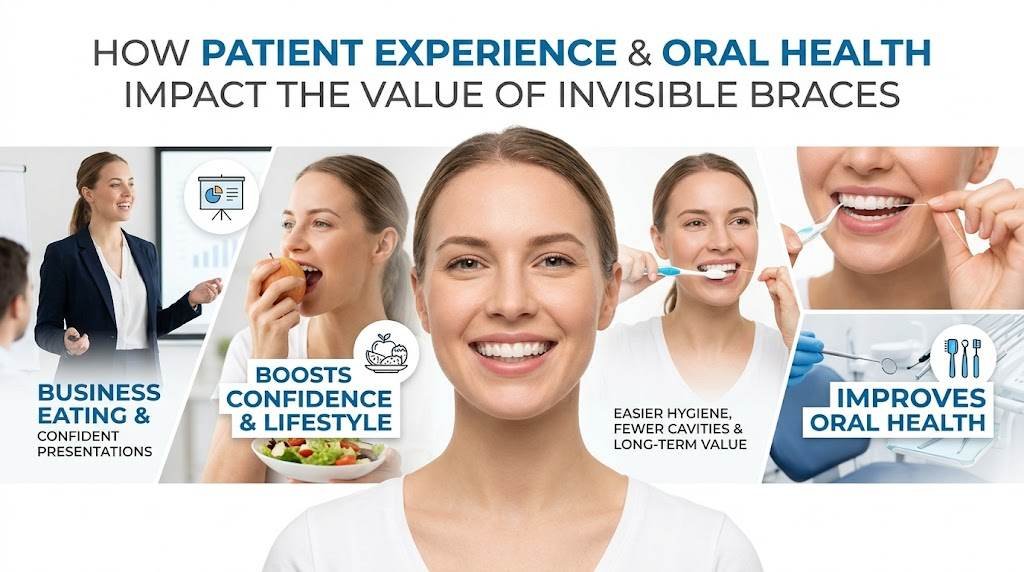
The daily life impact of invisible braces extends far beyond aesthetics, creating value propositions that pure cost comparisons often miss. Patients can maintain normal eating habits, continue playing wind instruments, and avoid the oral trauma associated with metal brackets and wires. Business professionals frequently cite confidence benefits during client presentations, while teenage patients report reduced social anxiety compared to their experiences with traditional braces.
Oral hygiene maintenance proves markedly easier with removable aligners, reducing the risk of white spot lesions, gingivitis, and cavities that sometimes develop around fixed braces. The ability to brush and floss normally means fewer dental cleanings and restorative procedures during treatment, saving $300 to $600 over an 18-month treatment period.
Long-term treatment stability appears comparable between invisible braces and traditional orthodontics when patients maintain proper retainer wear. However, the transition to retention feels more natural for patients with invisible braces, since they already understand removable appliance management. The investment in invisible braces treatment often leads to better long-term oral health habits, as patients who prioritize their smile aesthetics during treatment tend to maintain those priorities afterward.
For families evaluating orthodontic investments, the hidden costs of traditional braces, including emergency appointments, dietary restrictions, and extended oral hygiene routines, often narrow the financial gap more than initial estimates suggest, making invisible braces a surprisingly accessible option for achieving the smile they want.
Final Conclusion
When evaluating the full cost picture of invisible braces, most patients find the investment is more attainable than it first appears. The sticker price is just one factor in an equation that also includes insurance benefits, tax-advantaged savings accounts, flexible financing, and the long-term oral health benefits of a straighter smile.
For mild to moderate cases, invisible braces now compete directly with traditional metal braces on price, especially when factoring in avoided emergency visits, dietary freedom, and simplified oral hygiene. For more complex cases, the gap remains real but is frequently bridged through employer benefits, in-house financing, or third-party healthcare lending.
The most important step any prospective patient can take is to consult with a qualified orthodontist, gather a detailed treatment plan with itemized costs, and explore all available insurance and financing options before making a decision. With the right information and financial planning, invisible braces are within reach for a far broader population than the initial price tag might suggest.
Disclaimer
This article is intended for general informational purposes only and does not constitute professional dental, medical, or financial advice. Costs, treatment timelines, insurance coverage details, and financing options vary widely based on individual circumstances, geographic location, provider, and insurance plan specifics. Readers should consult a licensed orthodontist or dental professional for a personalized treatment assessment and a qualified financial advisor for guidance on healthcare financing. All price ranges cited are approximate estimates based on publicly available industry data at the time of writing and are subject to change.
References
- American Dental Association. (2024). Orthodontic Treatment Survey: Adult Attitudes and Cost Perceptions. ADA Health Policy Institute.
- American Association of Orthodontists. (2024). Clear Aligner Therapy: Clinical Guidelines and Cost Frameworks. AAO Clinical Affairs.
- Internal Revenue Service. (2024). Publication 969: Health Savings Accounts and Other Tax-Favored Health Plans. IRS.gov.
- Journal of Clinical Orthodontics. (2023). Comparative Cost Analysis of Clear Aligner vs. Fixed Appliance Therapy. Vol. 57, Issue 4.
- National Association of Dental Plans. (2024). Orthodontic Benefits Benchmarking Report: Coverage Trends and Lifetime Maximums. NADP Research Division.
- Consumer Financial Protection Bureau. (2024). Medical Financing: Understanding Healthcare Payment Plans and Third-Party Lending. CFPB.gov.