

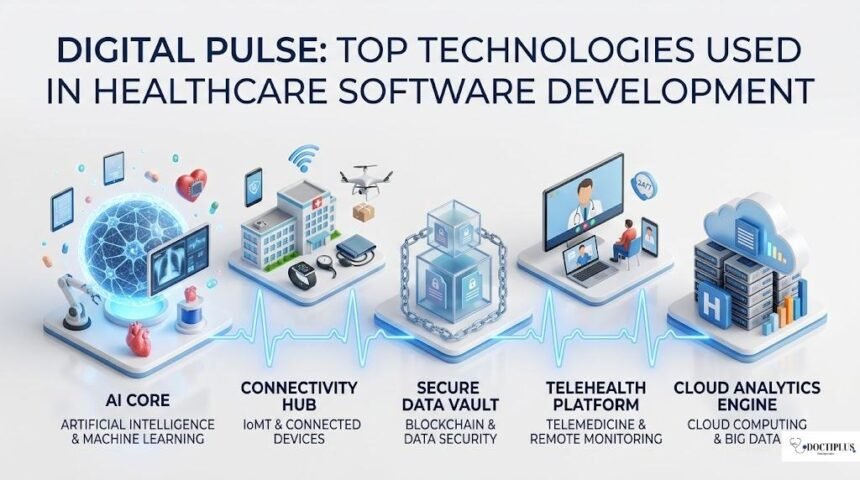
The healthcare industry is experiencing a profound digital renaissance. Gone are the days of overflowing filing cabinets, illegible handwritten prescriptions, and isolated islands of medical data. Today, the intersection of medicine and technology is creating an ecosystem that is more connected, efficient, and patient-centric than ever before. For medical providers, hospital administrators, and tech innovators alike, understanding the digital health technology landscape is no longer optional. It is a critical requirement for delivering quality care.
Whether a hospital is looking to streamline its administrative workflows or a startup is aiming to launch the next breakthrough wellness platform, the demand for top-tier healthcare software development services has skyrocketed. But what exactly is powering this revolution under the hood?
Artificial Intelligence and Machine Learning in Modern Healthcare
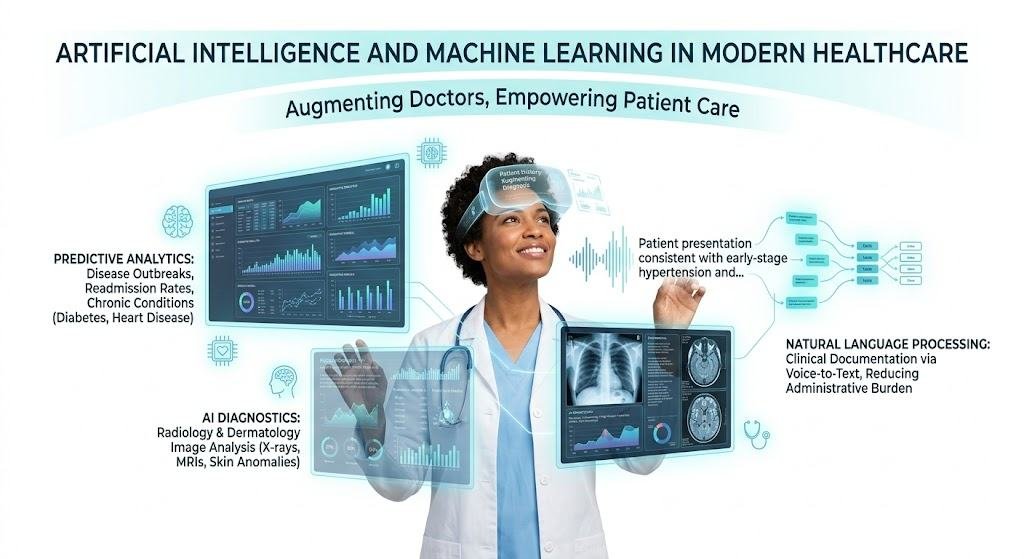
If there is one technology that has fundamentally altered the trajectory of healthcare software, it is Artificial Intelligence (AI) and Machine Learning (ML). In the medical field, AI is not about replacing doctors. It is about augmenting their capabilities and giving them the superpower of unprecedented data analysis.
How Predictive Analytics and AI Diagnostics Are Transforming Patient Care
Machine learning algorithms can analyze vast amounts of patient data, from genetic information to historical health records, to predict disease outbreaks, patient readmission rates, and even the likelihood of a patient developing chronic conditions like diabetes or heart disease. AI-powered image recognition software is also revolutionizing radiology and dermatology, identifying anomalies in X-rays, MRIs, and skin lesions with an accuracy that often matches or surpasses human experts.
The Role of Natural Language Processing in Clinical Documentation
Natural Language Processing (NLP) is widely used to reduce the administrative burden on clinicians. By using voice-to-text technologies that understand complex medical jargon, doctors can dictate clinical notes directly into the system. This allows them to spend less time staring at a screen and more time interacting face-to-face with their patients.
Cloud Computing and Big Data Analytics for Medical Systems
The sheer volume of data generated by modern healthcare facilities is staggering. Traditional on-premises servers cannot keep up with today’s storage, performance, and security requirements. Cloud computing has stepped in as the ultimate solution.
Why Hospitals Are Migrating to Cloud Infrastructure
When organizations invest in custom healthcare software development, cloud infrastructure (like AWS, Google Cloud, or Microsoft Azure) is almost always the bedrock. It enables scalability, secure remote access, and the computing power required for advanced analytics.
- • Scalability: Hospitals can scale their data storage up or down based on current needs without investing in expensive physical hardware.
- • Remote Accessibility: Doctors can access vital patient records securely from anywhere in the world, which is crucial for emergency consultations and telemedicine.
- • Big Data Processing: Cloud platforms provide the computing power necessary to run complex big data analytics, turning millions of disparate data points into actionable clinical insights.
Turning Clinical Data Into Actionable Insights
Big data analytics allows hospitals and research institutions to spot patterns across populations that no single clinician could see. Readmission risk models, sepsis early warning systems, and population health dashboards all depend on cloud-scale processing. Properly governed, this data can guide better resource allocation, reduce preventable complications, and support evidence-based care pathways.
Internet of Medical Things (IoMT) and Wearable Health Devices
We are living in the era of the connected patient. The Internet of Medical Things (IoMT) refers to the interconnected network of medical devices, hardware infrastructure, and software applications used to connect healthcare IT systems.
How Wearables Are Shifting Medicine to Continuous Care
From smartwatches that track heart rhythms and blood oxygen levels to Bluetooth-enabled glucose monitors and smart inhalers, wearable technology provides a continuous stream of real-time health data. This is a massive shift from the traditional episodic care model (where a doctor only sees your data when you visit their office) to continuous care.
Building Patient-Facing Mobile Apps That Connect to Clinicians
To harness this data, medical providers frequently partner with a specialized healthcare mobile app development company. These agencies build user-friendly interfaces that not only allow patients to track their own health metrics but also securely transmit this data directly to their physicians. Effective healthcare app development ensures that this bridge between the patient’s device and the doctor’s dashboard is seamless, secure, and easy to navigate for users of all technical skill levels.
Interoperability and EHR Integration as the Backbone of Modern Care
One of the most significant challenges in modern medicine is ensuring that different software systems can communicate with one another. A patient might see a primary care physician, a specialist, and a physical therapist, all of whom might use different software systems. If those systems cannot share data, the patient’s care becomes fragmented and dangerous.
This is where interoperability technologies come into play, serving as the critical infrastructure that connects the healthcare ecosystem.
Role of HL7 and FHIR Interface Engines
Health Level Seven (HL7) and its modern successor, Fast Healthcare Interoperability Resources (FHIR), are the standard protocols for exchanging healthcare information electronically. An HL7 interface engine acts as a universal translator, taking data from one system, formatting it correctly, and securely delivering it to another. This ensures that lab results, billing information, and clinical notes flow smoothly between disparate systems.
Mastering Epic Integration in Hospital Environments
In the United States and many parts of the world, Epic Systems is the dominant Electronic Health Record (EHR) provider used by major hospital networks. Therefore, any new application, telehealth platform, or diagnostic tool introduced into a hospital environment must be able to communicate with Epic.
Achieving seamless Epic integration is a highly specialized skill. It requires deep knowledge of Epic’s proprietary APIs (like App Orchard) and strict adherence to healthcare data regulations. Epic integration healthcare software development focuses specifically on building these secure bridges. Whether a clinic needs simple data pulling or complex two-way data syncing, robust Epic systems integration ensures that clinical workflows are not disrupted.
For vendors developing new medical tools, demonstrating reliable Epic EHR integration is often the deciding factor in whether a hospital will purchase their software. Without proper Epic EHR integration, even the most innovative medical app will become an isolated silo of useless data.
Telemedicine and Virtual Care Platform Development
The global pandemic accelerated telemedicine adoption by a decade, but it is clear that virtual care is here to stay. Patients now expect the convenience of consulting with their doctors from the comfort of their living rooms.
Core Technical Requirements for Telehealth Platforms
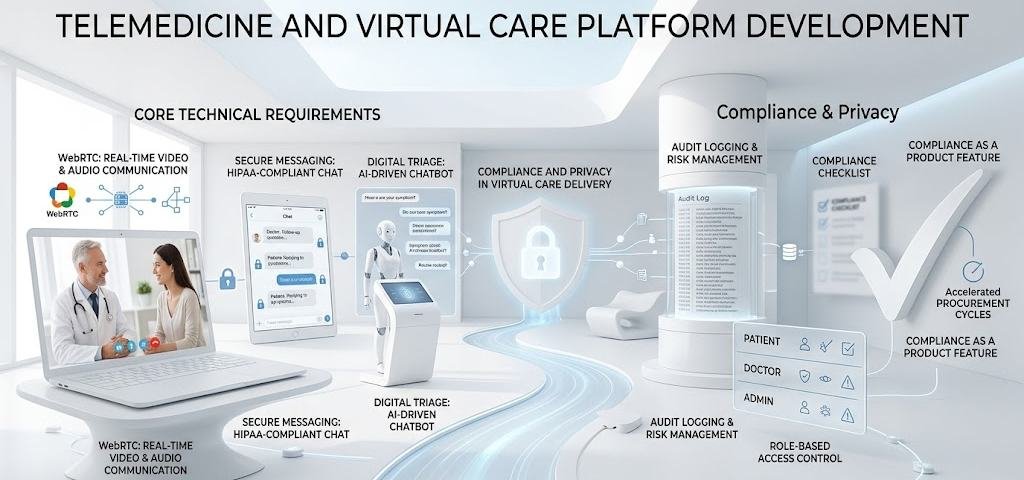
Building a robust telehealth platform involves complex healthcare app development services. It is not as simple as launching a standard video call. These platforms require several specialized components working together.
- WebRTC: For secure, high-definition, real-time video and audio communication that functions seamlessly across web and mobile browsers.
- Secure Messaging: Encrypted chat functionalities that comply with HIPAA and other privacy regulations.
- Digital Triage: AI-driven chatbots that can perform initial symptom checking and route the patient to the appropriate medical professional.
Compliance and Privacy in Virtual Care Delivery
A virtual care platform is only as strong as its weakest privacy control. Encryption in transit and at rest, audit logging, role-based access, and strict vendor risk management are not optional extras. They are the conditions under which a health system is willing to route real patients through the platform. Teams that treat compliance as a product feature rather than a checklist typically move faster through hospital procurement cycles.
Blockchain for Healthcare Data Security and Transparency
While often associated purely with cryptocurrency, blockchain technology is quietly making waves in the healthcare sector. At its core, a blockchain is a decentralized, immutable ledger. In healthcare, this technology solves major problems in data security and patient identity verification.
Real Use Cases for Blockchain in Medicine
When an organization works with a forward-thinking custom healthcare software development company, they might explore blockchain to secure patient consent forms, manage complex pharmaceutical supply chains to prevent counterfeit drugs, or create a unified, tamper-proof record of a patient’s medical history that the patient wholly owns and controls. The technology is not a universal fix, but for specific high-trust problems, it can outperform traditional centralized databases.
UI and UX Design: Human Element in Medical Software
While not a hard technology like cloud computing or AI, User Interface (UI) and User Experience (UX) design are critical components of healthcare software development. No matter how powerful the backend code is, if the software is difficult to use, it will fail. Physicians are already experiencing high levels of burnout, often attributed to clunky, non-intuitive EHR systems.
Designing for Clinicians Under Time Pressure
Modern healthcare software must prioritize clean, accessible, and logical design. Reducing the number of clicks needed to complete a common task, surfacing the right patient data at the right point in the workflow, and minimizing cognitive load during high-stakes decisions directly translate into safer care and less clinician fatigue.
Accessible Design for Patients of All Abilities
For patients, particularly the elderly or those with disabilities, healthcare apps must be incredibly intuitive, following accessibility standards such as WCAG, with large text, clear navigation, and voice-command capabilities. The best technology is the technology that gets out of the way, allowing the human connection between doctor and patient to remain the focal point of care.
Final Conclusion
The technologies driving the healthcare industry forward, including AI, cloud computing, IoMT, interoperability standards, telehealth, blockchain, and thoughtful UI and UX, are not competing solutions. They are layers of the same modern stack. A predictive model is only useful if its data can travel across EHR systems. A wearable is only useful if a clinician can act on the readings. A telehealth visit is only useful if the session is private, compliant, and easy to launch. The real competitive edge belongs to organizations that treat these technologies as a connected whole rather than isolated projects.
For healthcare leaders planning the next 12 to 24 months, the practical priorities are clear. Build on cloud foundations, standardize on FHIR, invest early in Epic and other EHR integrations, design for clinician and patient experience from day one, and choose development partners who can demonstrate both technical skill and deep familiarity with medical workflows and data privacy law. Software that respects both the complexity of medicine and the humanity of the patient is what will define winning digital health products in the years ahead.
Disclaimer
This article is provided for general informational and educational purposes only. It does not constitute medical, legal, financial, or professional advice, and it should not be relied upon as a substitute for guidance from qualified healthcare, compliance, or technology professionals. Healthcare software development is subject to rapidly changing regulations, including HIPAA, GDPR, and regional data protection laws, as well as evolving interoperability standards. Organizations planning to build, deploy, or integrate healthcare software should consult licensed legal counsel, certified compliance experts, and experienced clinical stakeholders before making implementation decisions. Mentions of specific vendors, platforms, or products in this article are for illustrative purposes only and do not represent an endorsement.
References
- Healthcare Information and Management Systems Society (HIMSS). (2024). Global Health Conference and Digital Health Resources
- U.S. Food and Drug Administration. (2024). Artificial Intelligence and Machine Learning in Software as a Medical Device
- Health Level Seven International. (2024). HL7 and FHIR Standards Documentation
- U.S. Department of Health and Human Services. (2024). HIPAA for Professionals
- Centers for Disease Control and Prevention. (2020). Trends in the Use of Telehealth During the Emergence of the COVID-19 Pandemic
- Amazon Web Services. (2024). AWS for Health
- Google Cloud. (2024). Cloud Healthcare API and Healthcare Solutions
- Microsoft Azure. (2024). Azure for Healthcare and Life Sciences
- World Wide Web Consortium (W3C). (2023). Web Content Accessibility Guidelines (WCAG)
- American Medical Association. (2024). Physician Burnout and the Impact of EHR Design
- IBM. (2024). What Is Blockchain Technology
- WebRTC Project. (2024). Real-Time Communications for the Web