


In recent years, a noticeable shift has been happening across industries. Professionals in corporate roles, tech, education, and even finance are stepping away from traditional career paths in search of something more meaningful.
For many, that “something” is nursing.
But this shift isn’t just about escaping burnout, it’s about moving toward purpose, stability, and a career that directly impacts lives. As healthcare systems evolve and patient needs grow, nursing has emerged as one of the most compelling second-career options available today.
Rise of Purpose-Driven Career Changes
Burnout has become a defining issue in modern work culture. Long hours, constant digital pressure, and a lack of tangible impact have led many professionals to question whether their work truly matters.
This has sparked a broader movement toward purpose-driven careers roles where individuals can see the direct results of their efforts and feel connected to something larger than themselves.
Healthcare naturally fits into this shift. It offers both emotional fulfillment and long-term job security, making it an attractive option for those seeking a fresh start.
At the same time, access to education has improved significantly. Today, career changers are no longer limited to starting from scratch. Many explore flexible and accelerated options, including programs offered by a nursing school in Houston that are specifically designed for individuals who already hold a degree in another field and want to transition efficiently into healthcare.
This accessibility is a key reason why more professionals are seriously considering nursing as a viable and rewarding second career.
Why Nursing Is Attracting Career Changers
| No. | Title | Description |
|---|---|---|
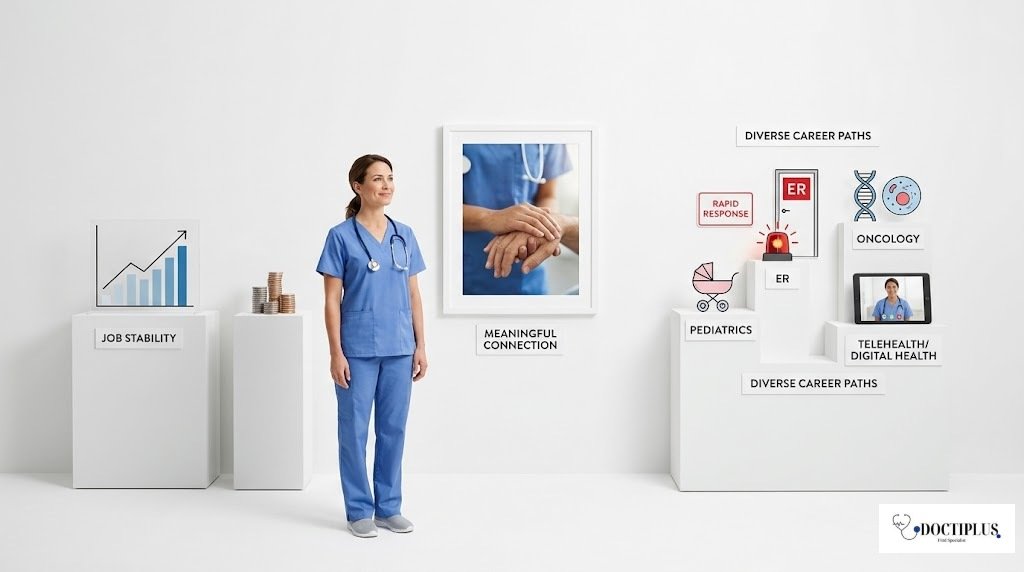
| 1 | Stability in an Uncertain World | Unlike many industries affected by automation or economic fluctuations, healthcare continues to grow. The demand for nurses remains consistently high, offering job security that is difficult to obtain elsewhere. |
| 2 | Meaningful Human Connection | In many corporate roles, the impact of one’s work can feel distant or abstract. Nursing is different. Every shift presents an opportunity to help someone in a real, tangible way, whether it’s providing care, offering reassurance, or supporting a patient through recovery. |
| 3 | Diverse Career Paths | Nursing is far from a one-dimensional career. Professionals can specialize in areas such as pediatrics, emergency care, oncology, or even digital health and telemedicine. This flexibility allows individuals to align their careers with their interests and strengths over time. |
Breaking Down the Biggest Concerns
Despite the benefits, making a career change into nursing can feel overwhelming. Most concerns fall into three main categories:
| Aspect | Description |
|---|---|
| Time Commitment | Many people assume that becoming a nurse requires starting over with a multi-year degree. While this can be true in some cases, accelerated pathways have made the process much more efficient for those with prior education. |
| Financial Investment | Switching careers often involves upfront costs, including tuition and reduced income during training. However, many view this as a long-term investment in a stable and rewarding profession. |
| Fear of Starting Over | Leaving a familiar career path can be intimidating. There’s often uncertainty about entering a new field, especially one as demanding as healthcare. But it’s important to remember that previous experience, communication skills, problem-solving, and leadership often translate well into nursing. |
What Accelerated Nursing Paths Look Like
Accelerated nursing programs are designed specifically for career changers. These programs build on an existing bachelor’s degree, allowing students to focus only on the nursing-specific coursework and clinical training required to enter the profession.
Typically, these programs:
- Are intensive and fast-paced
- Combine classroom learning with hands-on clinical experience
- Can be completed in a shorter timeframe than traditional routes
While they require dedication and discipline, they provide a clear and efficient path into the healthcare field, something that was far less accessible in the past.
Reality of the Transition
Switching to nursing is not without its challenges. It requires a significant commitment of time, energy, and focus.
Students often face:
- Rigorous academic coursework
- Clinical rotations in real healthcare settings
- Emotional and physical demands
However, these challenges are also what make the profession so rewarding. Many career changers find that the sense of purpose they gain outweighs the difficulties they encounter along the way.
Stories Behind the Shift
Across the country, more people are making this transition and their stories are remarkably similar.
A former marketing manager who felt disconnected from their work finds fulfillment in patient care.
A teacher looking for a more dynamic environment transitions into nursing and thrives in a fast-paced clinical setting.
A corporate professional, burned out from years of high-pressure deadlines, discovers a renewed sense of purpose in healthcare.
These stories highlight a powerful truth: meaningful change is possible at any stage of life.
Practical Tips for Making the Switch
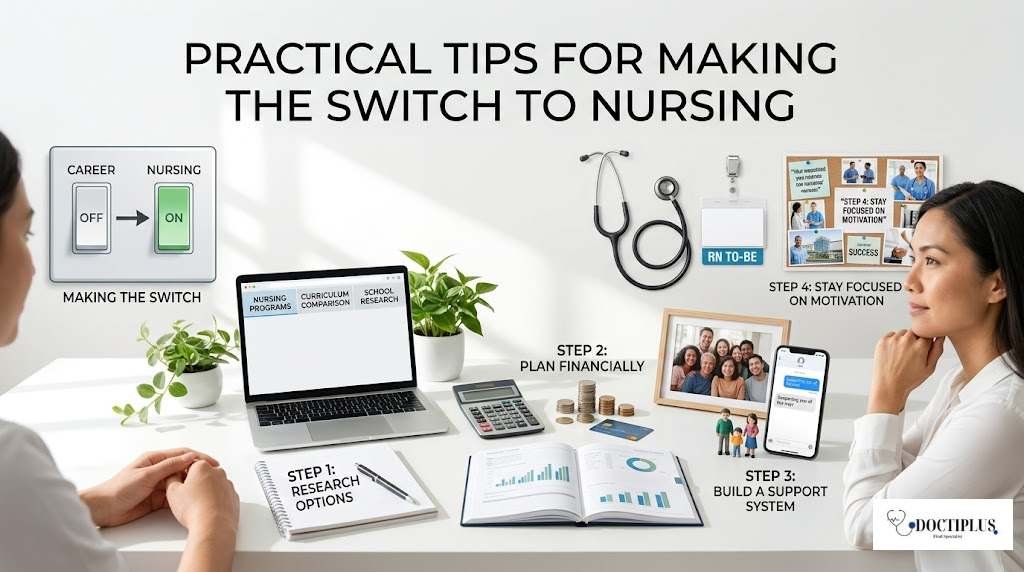
For those considering a move into nursing, preparation is key. Here are a few practical steps to make the transition smoother:
| Step | Description |
|---|---|
| 1. Research Your Options | Not all programs are created equal. Take time to explore different pathways and find one that aligns with your timeline, goals, and learning style. |
| 2. Plan Financially | Understand the costs involved and create a plan to manage expenses during your transition period. |
| 3. Build a Support System | Having support from family, friends, or mentors can make a significant difference, especially during demanding periods of study. |
| 4. Stay Focused on Your Motivation | There will be challenging moments. Keeping your long-term goals in mind can help you stay committed. |
Final Thoughts
The growing shift toward nursing reflects a broader change in how people think about work. It’s no longer just about earning a paycheck; it’s about finding purpose, stability, and a sense of fulfillment.
As healthcare continues to evolve, the demand for skilled, compassionate nurses will only increase. For those willing to leap, nursing offers not just a new career but a meaningful new direction in life.
And for many, that makes all the difference.
Disclaimer
This article is intended for informational and educational purposes only. It does not constitute professional career, educational, or medical advice. Individuals considering a transition into nursing or any healthcare profession should conduct their own research and consult with accredited educational institutions, career advisors, or licensing bodies before making decisions. Program availability, duration, costs, and requirements may vary by region and institution. The examples and scenarios mentioned are illustrative and may not reflect every individual’s experience.
References
- Dyrbye, L. N., Shanafelt, T. D. (2016). Physician and Nurse Burnout: A Global Crisis. The Lancet, 388(10057), 2272–2281.
- World Health Organization. (2019). Burn-out an “occupational phenomenon”: International Classification of Diseases.
- Buerhaus, P. I., Auerbach, D. I., Staiger, D. O. (2020). Older Clinicians and the Surge in Demand for Nurses. Health Affairs, 39(10), 1739–1747.
- American Association of Colleges of Nursing (AACN). (2023). Nursing Shortage Fact Sheet.
- Kovner, C. T., Brewer, C. S., Fatehi, F., Jun, J. (2014). What Does Nurse Turnover Rate Mean and What Is the Rate? Policy, Politics, & Nursing Practice, 15(3–4), 64–71.
- Benner, P. (1984). From Novice to Expert: Excellence and Power in Clinical Nursing Practice. Addison-Wesley.
- National Academies of Sciences, Engineering, and Medicine. (2021). The Future of Nursing 2020–2030: Charting a Path to Achieve Health Equity.
- Aiken, L. H., Sloane, D. M., Bruyneel, L., et al. (2014). Nurse Staffing and Education and Hospital Mortality. The Lancet, 383(9931), 1824–1830.
- Spetz, J., Trupin, L., Bates, T. (2015). How Many Nurses per Patient? Measurements of Nurse Staffing in Health Services Research. Health Services Research, 50(3), 985–1009.