


When someone is told they have a thyroid imbalance, it is natural to think in terms of repair. Many expect a quick adjustment, like tightening a loose screw, where medication alone restores energy, weight balance, and mood stability. While treatment is often necessary and helpful, thyroid health usually improves gradually rather than instantly. Hormones respond to sleep patterns, stress levels, nutrition, digestion, and immune signals, which means progress tends to unfold in layers instead of overnight.
Viewing thyroid healing as gardening offers a more realistic and encouraging perspective. A garden does not thrive from one action; it flourishes through steady care, healthy soil, proper watering, and the removal of weeds over time. In the same way, supporting the thyroid requires consistent habits, balanced nourishment, stress management, and patience. When you focus on building strong roots rather than chasing quick fixes, long-term stability becomes more achievable and sustainable.
Strong Soil Creates Healthier Hormones
A successful garden always begins with the soil. If the soil lacks nutrients or holds too many toxins, plants struggle no matter how often they are watered. In the body, this soil represents your internal environment. Hormones depend on proper nutrients, digestion, and immune balance to function correctly.
The thyroid relies on nutrients such as iodine, selenium, zinc, iron, and vitamin D to produce and convert hormones efficiently. When these nutrients are low, hormone activity may slow, even if lab values appear only slightly abnormal. Digestion also matters because part of thyroid hormone conversion happens in the gut. If inflammation or poor absorption exists, the body may not activate hormones effectively.
That is why some providers, including Cormendi Health, assess more than basic thyroid numbers. They often evaluate nutrient status, digestive health, and inflammatory markers to strengthen the body’s foundation. Improving this internal soil allows hormone balance to develop gradually and more reliably.
Nourishing Nutrients Matter
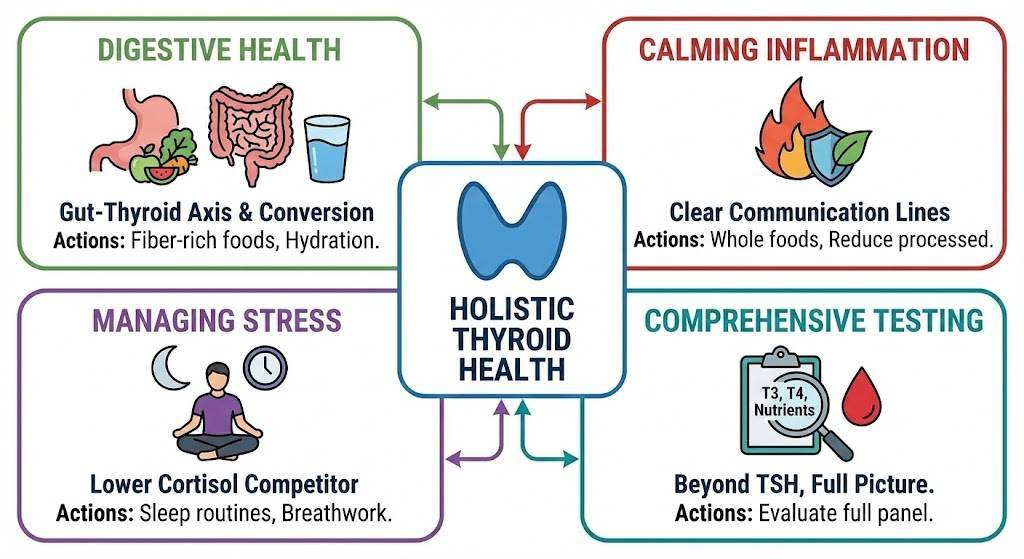
Deficiencies in iodine, selenium, or iron can directly affect hormone production and conversion. Replenishing these nutrients through food or supplementation, when appropriate, supports cellular energy and metabolic stability. Balanced nutrition creates conditions that allow the thyroid to function more efficiently.
| Section | Key Insight | Why It Matters for Thyroid Health | Supportive Actions |
|---|---|---|---|
| Digestive Health Shapes Hormone Activity | A healthy gut lining and balanced bacteria support hormone conversion and immune regulation. | Part of thyroid hormone conversion occurs in the gut. Issues like bloating, constipation, or food sensitivities may signal imbalances that interfere with proper hormone activation. | Improve gut health through balanced nutrition, fiber intake, hydration, and addressing food sensitivities where necessary. |
| Calming Inflammation Supports Stability | Inflammation can disrupt hormone signalling and metabolic balance. | Chronic inflammatory stress may interfere with how thyroid hormones communicate with cells. | Focus on whole foods, stay hydrated, and reduce processed foods to help lower inflammatory burden. |
| Stress Levels Influence the Foundation | Ongoing stress increases cortisol levels. | Elevated cortisol may impair thyroid hormone conversion and energy regulation. | Practice daily stress management such as breathing exercises, short relaxation breaks, and consistent sleep routines. |
| Looking Beyond One Lab Value | A full thyroid panel provides better insight than a single marker. | Relying only on TSH may miss conversion issues or nutrient-related imbalances. | Evaluate free T3, free T4, TSH, and key nutrient levels for a more personalised and complete assessment. |
Consistent Watering Supports Steady Growth
Plants thrive with steady watering rather than sudden heavy drenching. Thyroid healing follows a similar rhythm. Small daily habits often influence hormone balance more than short bursts of effort. Sleep plays a major role in regulating the endocrine system. During deep rest, the body repairs tissues and coordinates hormone communication.
Inconsistent sleep schedules can increase stress hormones and disrupt metabolic balance. Establishing a consistent bedtime routine strengthens internal rhythms. Balanced meals also support steady progress. Eating protein, healthy fats, and complex carbohydrates at regular intervals helps maintain stable blood sugar.
Blood sugar swings can strain adrenal glands, which interact closely with thyroid function. Gentle movement, such as walking or light strength training, further supports circulation and metabolism without overwhelming energy reserves.
Weeds That Disrupt Balance
Even the healthiest gardens develop weeds. In thyroid health, stress, autoimmune reactions, and environmental exposures can compete for the body’s resources. For many people, thyroid dysfunction becomes part of a broader chronic illness pattern, where multiple systems influence each other and require steady, coordinated support. Long-term emotional or physical stress increases cortisol production. Elevated cortisol may reduce the conversion of thyroid hormones into their active form, leading to fatigue or slowed metabolism. Regular stress management habits help reduce this interference and create more supportive internal conditions.
Autoimmune thyroid conditions such as Hashimoto’s disease involve immune system overactivity. Reducing inflammatory triggers, supporting gut health, and minimising exposure to environmental toxins can help calm immune responses. Clearing these internal weeds does not happen instantly, yet steady attention can create noticeable improvement over time.
Pruning Energy Drains
Gardeners prune plants to redirect energy toward healthier growth. In daily life, pruning may involve reducing activities or habits that exhaust the body. Overworking without sufficient recovery can worsen fatigue and delay improvement. Allowing rest periods during the week supports nervous system regulation and hormone balance. Rest becomes a strategic tool rather than a weakness.
Restrictive dieting can also strain the thyroid. Extremely low-calorie intake signals stress to the body and may slow metabolism. Nourishing meals that provide adequate protein and healthy fats support hormone production and cellular repair. Balanced nourishment encourages resilience more effectively than deprivation.
Growth Happens in Seasons
Gardens move through visible seasons of bloom and quieter seasons of root development. Thyroid healing follows a similar cycle. Medication adjustments often take weeks to produce noticeable results. Nutrient replenishment may require months. Fluctuations in symptoms are common and do not always indicate failure. Progress may unfold slowly beneath the surface before becoming visible. Tracking both lab results and daily symptoms provides clarity. Energy levels, mood, digestion, and temperature sensitivity offer valuable insight. Patience allows internal changes to mature before expecting a dramatic transformation.
Working With Your Body, Not Against It
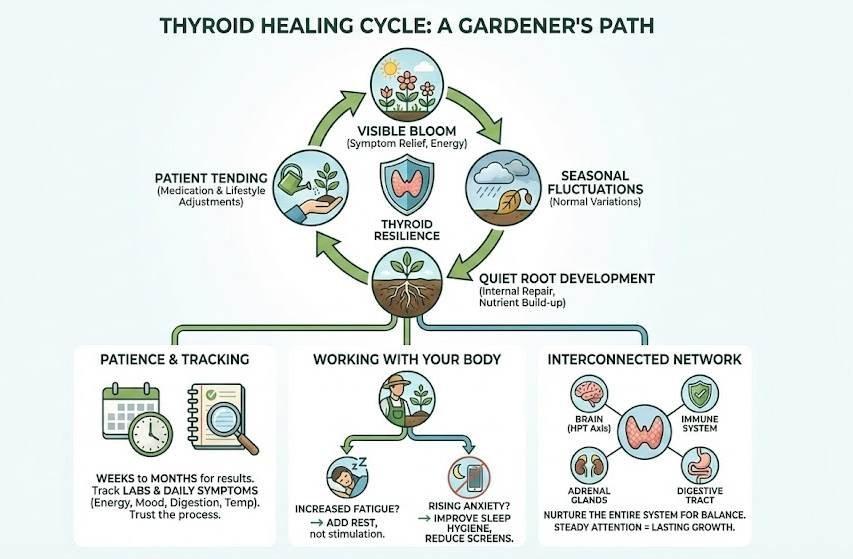
A skilled gardener observes weather patterns and adjusts accordingly. Supporting thyroid health means listening closely to your body’s signals and responding gently. If fatigue increases, adding rest may help more than increasing stimulation. If anxiety rises, improving sleep hygiene or reducing screen time may calm the nervous system. Small adjustments aligned with natural rhythms often create better outcomes.
The thyroid does not function in isolation. It interacts with the brain, immune system, adrenal glands, and digestive tract. When you nurture this entire network through consistent care, balance becomes more achievable. Healing the thyroid is not a quick repair project. It is an ongoing process of tending, observing, and supporting growth. Like a well-maintained garden, steady attention over time leads to stronger roots and lasting resilience.
Final Conclusion
Healing the thyroid rarely happens through a single change or a quick solution. It develops through steady, thoughtful care that supports the entire body. When you strengthen digestion, replenish nutrients, manage stress, support sleep, and reduce inflammation, you create conditions in which hormones can function more smoothly. Like gardening, the goal is not to force growth but to create an environment where balance can naturally return.
Progress may feel slow at times, and setbacks can occur, but consistent habits often produce deeper, more lasting stability than short-term fixes. By working with your body instead of against it, you build resilience layer by layer. Over time, those small daily choices can lead to improved energy, steadier moods, and a stronger foundation for long-term thyroid health.
Disclaimer
This article is intended for educational purposes only and should not be considered medical advice. Thyroid conditions vary widely, and a qualified healthcare professional should always guide treatment plans. Do not stop, start, or adjust any medication or supplement without consulting your doctor or licensed practitioner. If you are experiencing persistent symptoms or concerns related to thyroid health, seek personalised medical evaluation and care.