

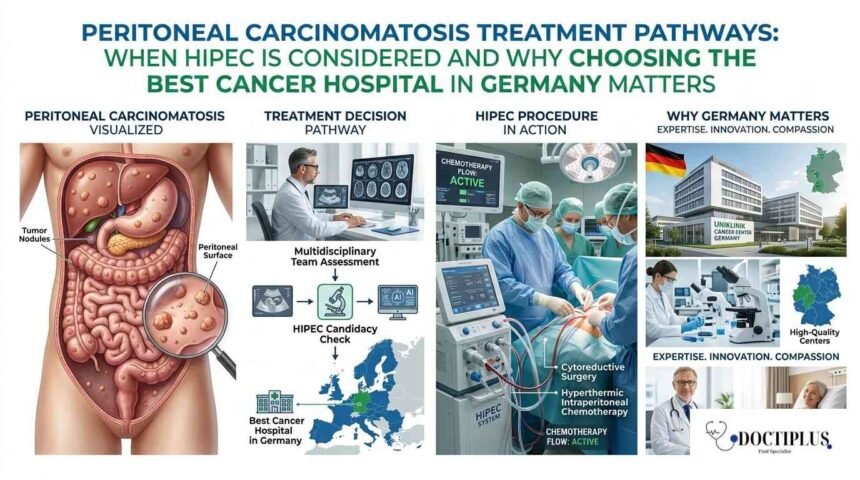
When cancer reaches the peritoneum, the thin lining inside the abdomen, it spreads across surfaces rather than forming a single mass. That’s why treatment decisions depend not only on the primary tumour type but also on the pattern of spread and the patient’s overall coping.
In Germany, teams start by understanding the full picture. Systemic therapy is often the first step, and cytoreductive surgery with HIPEC is discussed only when there’s a realistic chance it could help.
This article outlines how clinicians think through these choices, what guides the consideration of HIPEC, and what patients can look for when comparing centres o support informed conversations with their own care team.
What Is Peritoneal Carcinomatosis (and Why It’s Different From “Single-Site” Metastasis)
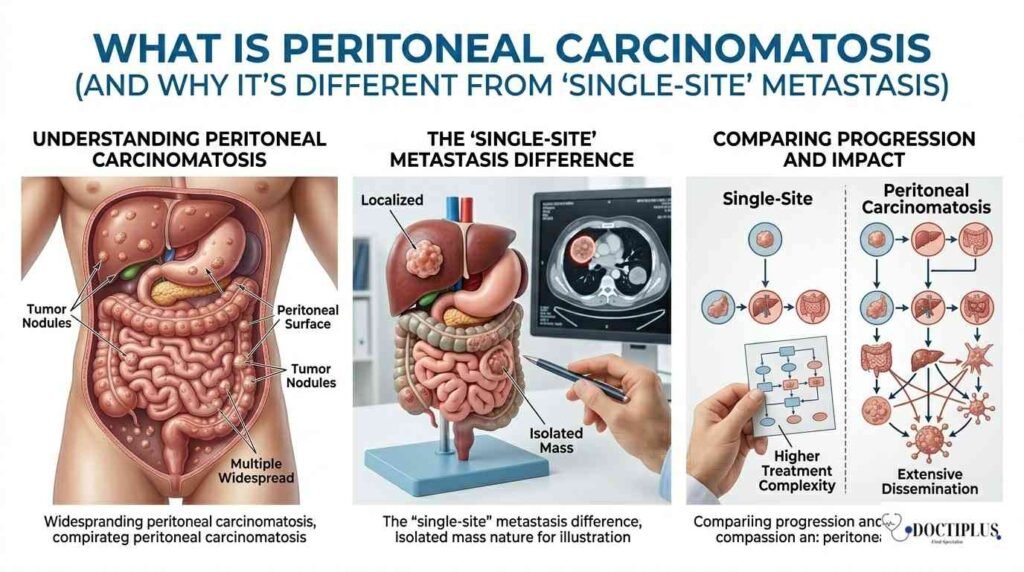
Peritoneal carcinomatosis means cancer cells have spread to the peritoneum, the thin lining of the abdominal cavity and organs. Unlike a liver or lung metastasis, which usually forms a single mass, peritoneal disease spreads across surfaces, behaving more like scattered seeds than a single spot. This difference shapes nearly every treatment decision.
Several primary tumours can lead to peritoneal spread, ovarian, colorectal, and gastric, each with its own biology, so the original tumour type always guides planning.
Symptoms vary: bloating from ascites, early fullness, digestive changes, or vague discomfort. They don’t always reflect disease extent, which is why imaging and pathology matter.
CT, MRI, and sometimes diagnostic laparoscopy help map the pattern of spread. Pathology from the primary tumour adds context about behavior and treatment options. Together, these pieces form the roadmap for next steps.
Overview of Treatment Pathways
Peritoneal carcinomatosis treatment rarely follows a single standard route. Most patients move through several parts of care. The sequence depends on the primary cancer and how the person feels at that moment.
For many, systemic therapy is often the backbone. It reaches disease throughout the body, slows progression, eases symptoms, or creates stability before other steps are considered. Regimens vary by tumour type and prior therapies.
Supportive care runs alongside all treatment. Nutrition, symptom control, ascites management, and energy support help the body tolerate therapy and often improve daily life.
Surgical evaluation is indicated only in selected situations. Surgeons assess whether the disease pattern and overall condition make an operation meaningful. This decision evolves as imaging, symptoms, and treatment response change.
Because these pieces interact, sequencing stays flexible. A plan may shift toward surgery if the disease stabilises, or away from it if symptoms change. The pathway adapts to the person, not the other way around.
When HIPEC Is Considered
HIPEC is not something doctors jump to quickly. It usually enters the conversation only after the team understands the peritoneal metastases treatment pathways, how the disease behaves, how the patient is doing, and whether surgery could realistically change the disease course.
Role of Cytoreductive Surgery
Cytoreductive surgery aims to remove as much visible tumour as can be safely reached on the peritoneal surfaces. The smaller the remaining tumour load, the more impact other treatments may have.
Not every pattern of spread is suitable. Surgeons assess where the disease is located and whether a meaningful reduction is realistically achievable. The goal isn’t total clearance, but a level of tumour removal that can genuinely influence the course of care.
HIPEC: What It Is
HIPEC is heated chemotherapy delivered inside the abdomen during surgery, after surgeons have reduced the visible tumour as safely as possible. It targets surfaces that can’t be removed surgically, using direct contact rather than IV infusion.
Discussions about HIPEC for peritoneal carcinomatosis in Germany usually occur after a multidisciplinary team reviews imaging, pathology, and the overall clinical picture, reserving the approach for situations where surgery and HIPEC together may offer a potential benefit.
Typical Factors Considered in Selection
When doctors conduct a peritoneal metastases surgery evaluation, they rely on broad principles rather than rigid rules:
- Primary tumour type and biology. Different cancers behave differently, and their response to surgery varies.
- Extent and pattern of peritoneal disease. Not just how much disease there is, but where it sits and whether it can be removed safely.
- Patient fitness and surgical risk. These operations are long and demanding; the body needs enough reserve to recover.
- Feasibility of meaningful cytoreduction. If the most visible disease can likely be removed, HIPEC may be worth discussing.
- Centre capability and perioperative support. Experienced teams, strong anaesthesia and ICU support, and clear pathways for complications matter as much as the operation itself.
Risks, Recovery, and Why Experience Matters
Cytoreductive surgery and HIPEC are major abdominal surgeries, and recovery varies. Even in smooth cases, it’s a significant physiological stress that takes time to rebound from.
There are real risks of infections, bleeding, and organ‑related complications, which are the main categories clinicians discuss. The point isn’t to alarm but to ensure the decision is grounded in reality.
Most patients spend some time in the ICU for close monitoring of breathing, fluids, pain control, and bowel function. Rehab, nutrition, and gradual activity follow once things stabilise.
Experience matters because these operations rely on coordinated teamwork and practised protocols. Centres that do this regularly manage complications more predictably and support recovery more effectively.
Why Choosing the Right Centre in Germany Matters
Not all hospitals treat peritoneal metastases with the same depth of experience. Some see only a few cases a year; others have built full ecosystems around their teams that work in a rhythm driven by volume.
Specialised German HIPEC centers don’t just perform the surgery; they know when it isn’t the right step. They read imaging with a practised eye, coordinate decisions across radiology, oncology, ICU, and rehab, and follow refined recovery pathways rather than improvisation.
It is the difference between an “offered HIPEC service” and a true HIPEC program. One provides a procedure; the other provides the structure that makes it safe and meaningful.
The country has several centres where this expertise is concentrated. Choosing the best cancer hospital in Germany isn’t about prestige. It’s about finding a team that has walked this path many times and knows how to navigate its twists.
Practical Checklist: How Patients Can Evaluate a HIPEC Program
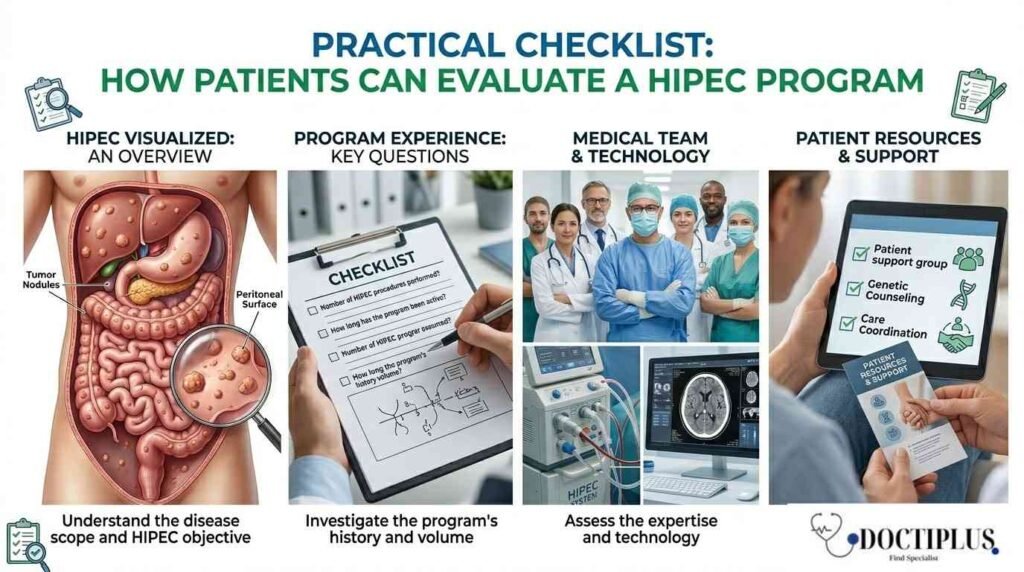
Before choosing a cancer hospital in Germany, it helps to look at how the program functions day to day. These points show whether the team is truly equipped for HIPEC, not just offering it:
- Dedicated peritoneal malignancy program. A structured service focused on peritoneal disease, with surgery, oncology, radiology, ICU, nutrition, and rehab working as one unit.
- Multidisciplinary tumour board. Cases are reviewed together, with imaging, pathology, therapy history, and surgical feasibility assessed in a coordinated workflow.
- Robust perioperative support. Strong ICU coverage, early nutrition planning, and timely rehab hallmarks of a mature program.
- Defined pathways for complications. Experienced centres follow protocols, with interventional radiology and ICU teams ready when needed.
- Structured follow‑up. Clear plans for imaging, oncology coordination, symptom monitoring, and direct contact.
- Support for international patients. Coordinated imaging review, summaries, scheduling, and a single point of contact.
What to Prepare for a Case Review
When a centre reviews an international case, they need the disease story. These materials help them see the full picture:
- Imaging reports + DICOM files. Reports help, but original scans matter most; DICOM shows details that text can’t capture.
- Pathology and primary tumour details. Diagnosis, grade, markers, and prior biopsies or surgeries that define tumour biology.
- Systemic therapy timeline. Which treatments were used, for how long, and how the disease responded.
- Current symptoms and functional status. Energy, appetite, pain, ascites, bowel function, a brief snapshot of daily life.
- Recent labs. Blood counts, kidney and liver function, and inflammatory markers an overview of treatment readiness.
- Patient goals and questions. What the patient hopes for, worries about, and wants clarified.
Questions to Ask Before You Commit to Treatment
Here are the kinds of questions that help cut through the noise and get to the heart of whether this pathway makes sense for you:
- What makes me a suitable candidate for cytoreduction + HIPEC?
- How much benefit do you expect for my tumour type and stage?
- What risks matter most for someone with my current health?
- How confident are you that meaningful cytoreduction is achievable based on my imaging?
- What alternatives exist if surgery + HIPEC isn’t the best option right now?
- How often does your team perform this procedure, and what outcomes do you track?
- What does the perioperative plan look like?
- How do you handle complications if they occur?
- What do you need from me medically and practically to prepare safely for this pathway?
- What should I expect in the first 30, 60, and 90 days after surgery?
Conclusion
Peritoneal carcinomatosis doesn’t fit a template. Each case has its own biology and pace, so planning has to be individualised and grounded in multidisciplinary thinking. HIPEC in Germany can play a role, but only when surgery and disease biology genuinely align. It’s a tool within a pathway, not a universal solution.
The centre’s expertise, the clarity of its selection criteria, and the honesty of its discussions shape safer, more realistic decisions. Patients who come prepared with questions, documents, and clear goals give the team what it needs to chart the most meaningful path forward.
FAQ
Is HIPEC suitable for every patient with peritoneal metastases?
- No. It’s considered only when imaging and overall condition suggest that meaningful cytoreduction is achievable.
What is the goal of cytoreductive surgery with HIPEC?
- Depending on the case, disease control, slowing progression, or symptom relief is defined by tumour biology and treatment history.
What risks and recovery should I expect?
- It’s a major abdominal surgery with risks such as infection or organ‑related complications. Recovery varies, and many patients spend time in the ICU before gradually increasing activity.
How do doctors decide if I’m a candidate?
- Through a multidisciplinary review of imaging, pathology, prior therapies, and functional status, focusing on feasibility and expected benefit.
References
- Glehen, O. et al. Current standards and evolving indications for CRS and HIPEC in peritoneal metastases. European Journal of Surgical Oncology. 2024.
- Dr Ahmed F. & Dr Volvak A. Peritoneal Metastases (Carcinomatosis) Treatment in Germany. Airomedical. 2026.
- Goéré, D. Patient selection for CRS/HIPEC: updated criteria and real‑world outcomes. Journal of Clinical Oncology. 2023.
- Kozina J. & Dr Volvak M. Top 10 Best Cancer Hospitals In Germany. Airomedical. 2026.
- Levine, E. A. et al. Complication patterns and management strategies in high‑volume HIPEC centres. Surgical Oncology Clinics of North America. 2024.