


When experiencing medical issues outside your family care doctor’s regular hours, one option is to visit an urgent care center. These centers treat patients with symptoms of illness or injury through same-day walk-in care. Here are a few things to expect during an urgent care visit:
Walk-In Or Check-In Online
You can walk in without an appointment or opt for an online check-in to reduce wait times. This access to medical care often covers issues such as colds, the flu, and allergies. Online check-ins allow patients to schedule an appointment in advance rather than waiting for extended periods at the clinic. Patients can choose either walk-in care or online check-in based on their preference and the type of health emergency they are dealing with.
Register and Get a Diagnosis
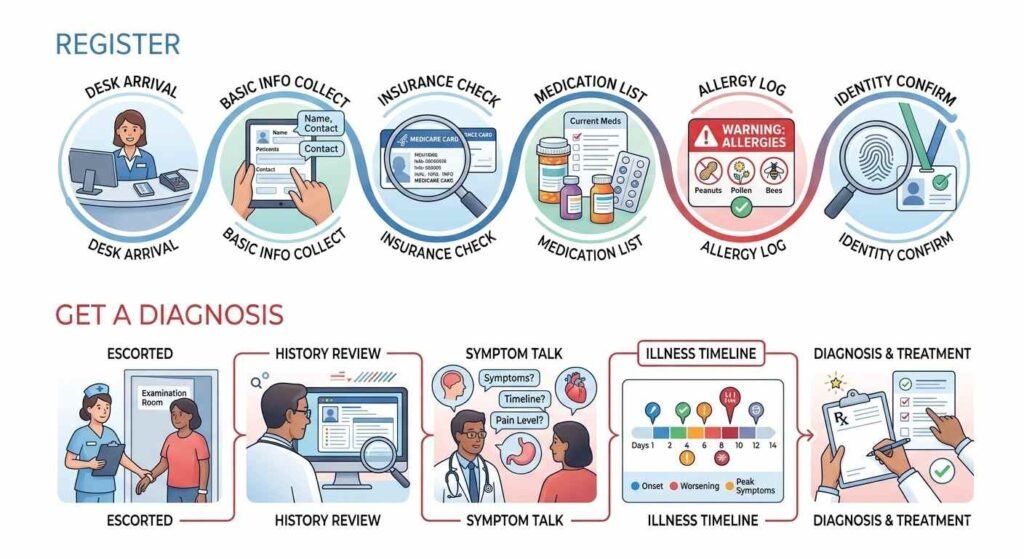
When you enter a care center or arrive after completing the online check-in, your first stop is the registration desk, where staff collect your basic medical information. They will ask for insurance details, including a Medicare card when relevant. The list of medications that you take and any allergies that you have will also be requested; providing this information allows the team to manage potential drug interactions. It also confirms your identity and medical history before you meet with a healthcare provider.
After registering, a patient is escorted into an examination room for evaluation by doctors or nurses. The practitioner receives the patient’s information from the front desk. They review it for context on your medical history, after which the provider will ask you to describe your current symptoms and illness timeline. Talking about the reasons behind your visit will help provide the necessary information for the healthcare provider to make a diagnosis and offer treatment.
Undergo Testing and Imaging
Physicians review each patient’s information to decide whether diagnostic testing is needed. When indicated, X-ray imaging can confirm fractures from recent injuries or identify issues with braces, casts, or other supports. Patients also receive rapid antigen tests to detect common seasonal illnesses such as strep throat or influenza. Some urgent care centers process samples in on-site laboratories, while others send them to external facilities for analysis. As a result, certain test results may be available during the same visit. Coordinated testing and treatment help structure the visit and support timely clinical decisions.
Receive Treatment and a Care Plan
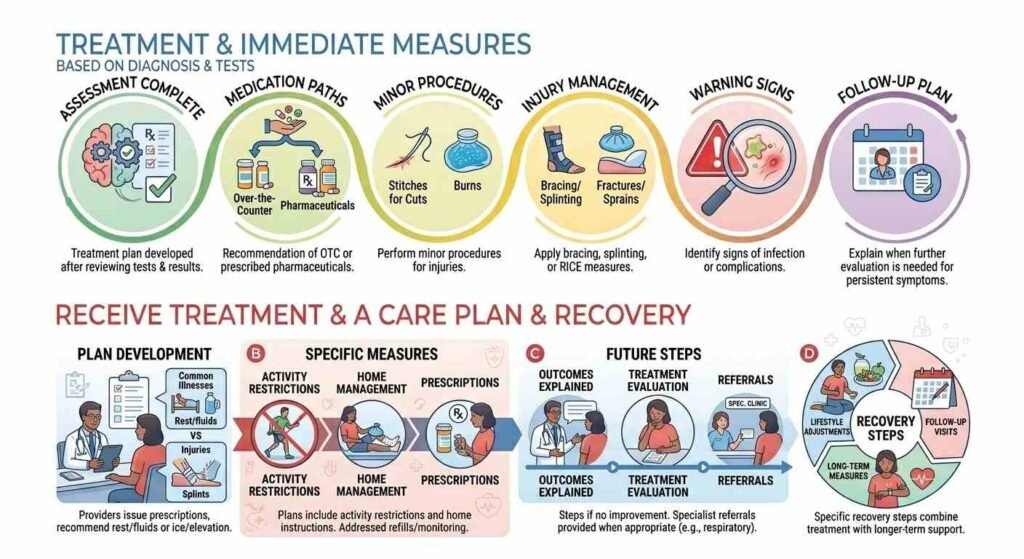
Doctors develop a treatment plan after completing the assessment and reviewing any test results. Depending on the diagnosis, they may recommend over-the-counter medications, prescribe pharmaceuticals, apply bracing or splinting, or perform minor procedures such as stitches for cuts or burns. They identify specific warning signs that indicate infection or complications; they also explain when further evaluation is necessary if symptoms persist or worsen. Care plans typically include clear activity restrictions along with instructions for managing injuries at home.
For common illnesses like influenza or other viral infections, providers often recommend rest and increased fluid intake, whereas injuries such as fractures or sprains are managed with measures like ice and elevation. If a condition requires continued attention, the provider may issue prescriptions and explain expected outcomes, including what steps to take if the treatment does not lead to improvement. Referrals to specialists are provided when follow-up care is appropriate, particularly for respiratory conditions or more complex concerns.
An urgent care treatment plan can include prescriptions, guidance on follow-up visits, and referrals for additional evaluation or testing. Some medications require monitoring or future refills, which are addressed during the visit. Providers also recommend lifestyle adjustments, such as changes in activity level or exercise, depending on the condition being treated. The plan outlines specific steps for recovery, combining immediate treatment with longer-term measures to support ongoing health.
Visit an Urgent Care Facility
If you have a time-sensitive medical concern, seeking help at an urgent care center may be an appropriate option. These facilities assess conditions that require prompt evaluation but are not life-threatening emergencies. Services include diagnostic testing for infectious diseases, routine screenings such as blood glucose checks, administration of allergy treatments, and basic evaluations of cardiovascular symptoms. Urgent care centers also help address minor injuries and other conditions that arise outside of a regular primary care center’s office hours. If your symptoms need timely attention, visit an urgent care center to be evaluated today.
Conclusion
Urgent care centers offer a convenient and efficient solution for managing non-emergency medical issues. From walk-in access and quick registration to on-site testing and immediate treatment, the process is designed to deliver timely care with minimal disruption to your day.
Knowing what to expect can make your visit smoother and less stressful. Whether you are dealing with a minor illness or injury, urgent care provides a reliable option when you need medical attention quickly but do not require emergency services.
Medical Disclaimer
This content is for informational purposes only and does not constitute medical advice, diagnosis, or treatment. Always seek the advice of a qualified healthcare provider with any questions regarding a medical condition. If you are experiencing a medical emergency, call your local emergency number or visit the nearest emergency department immediately.
References
- Weinick, R. M., Burns, R. M., & Mehrotra, A. (2010). Many emergency department visits could be managed at urgent care centers. Health Affairs.
- DOI: 10.1377/hlthaff.2009.0748
- Mehrotra, A., Liu, H., Adams, J. L., et al. (2016). Comparing costs and quality of care at retail clinics, urgent care centers, and emergency departments. Annals of Internal Medicine.
- DOI: 10.7326/M15-2252
- Uscher-Pines, L., Pines, J., Kellermann, A., Gillen, E., & Mehrotra, A. (2013). Emergency department visits for nonurgent conditions. Health Affairs.
- DOI: 10.1377/hlthaff.2012.0084
- Salisbury, C., Hollinghurst, S., Montgomery, A., et al. (2007). The impact of co-located NHS walk-in centres on emergency departments. BMJ.
- DOI: 10.1136/bmj. 39290.581366.55
- O’Keeffe, C., Mason, S., Jacques, R., & Nicholl, J. (2018). Characterising non-urgent users of emergency departments. Emergency Medicine Journal.
- DOI: 10.1136/emermed-2017-207140