

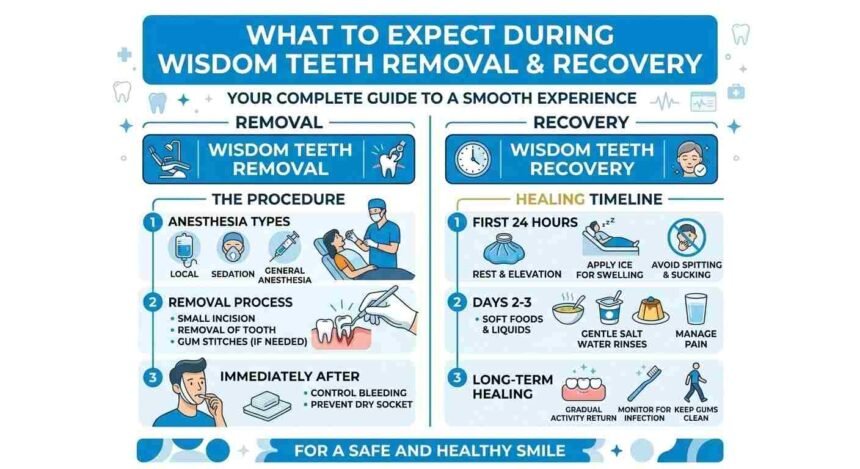
Space constraints in the mouth may lead to impaction, in which the teeth become trapped beneath the gum line. Wisdom teeth extraction helps address third molars that lack the space needed to erupt properly. Here is what to expect during wisdom teeth removal and recovery:
Customized Sedation Treatments
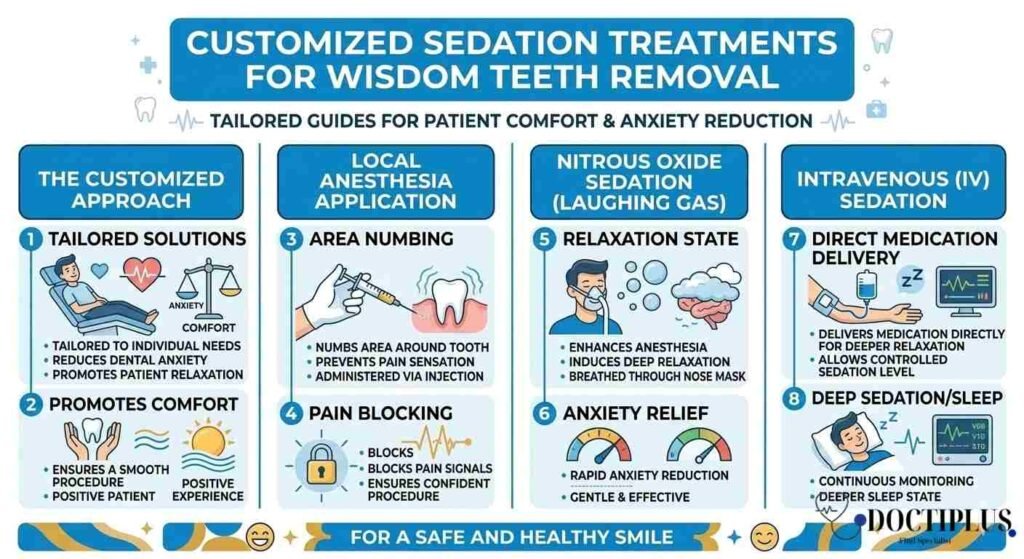
Oral surgeons provide customized sedation during wisdom teeth removal to promote patient comfort. This solution is beneficial for individuals who feel a lot of anxiety at dental appointments. Oral surgeons use the following methods:
- Local anesthesia application
- Nitrous oxide sedation
- Intravenous sedation
Local anesthesia numbs the area around the tooth, while nitrous oxide sedation enhances anesthesia, inducing a state of relaxation. The intravenous sedation technique delivers medication directly into the bloodstream to enhance calmness. Depending on the type of tooth removal and the patient’s preferences, the doctor will tailor the sedation to the patient’s needs.
Gentle Tissue Access
Gentle tissue access minimizes the impact on the structures surrounding the molar during extraction. Your surgeon makes a small opening in the gum line to expose the tooth while minimizing impact on surrounding tissues. If the tooth is partially or fully impacted, the surgeon may remove a portion of the surrounding bone to safely access the tooth; this helps unblock the path and improve tooth accessibility.
Practitioners proceed with the extraction while maintaining the integrity of the gum architecture. This may promote quick healing during recovery. After extraction, the surgeon cleans the site and repositions the gum tissue to cover the bone. They use dissolvable stitches to secure the area and promote proper healing.
Precise Tooth Removal
A surgeon performs sectioning when the tooth position makes a standard extraction difficult. If a tooth is impacted or has curved roots, the oral surgeon may divide it into several smaller pieces. This controlled approach allows the tooth to be removed through a smaller opening, reducing stress on the jawbone. Through this division, the surgeon minimizes the amount of pressure and force they apply to the jawbone. The procedure further helps safely remove complex root structures. After removing every fragment of the sectioned tooth, the specialist performs a final inspection to ensure the area is completely cleared.
Firm Gauze Pressure
After the surgeon cleans the extraction site and places sutures, they place a gauze pad directly over the area. The patient bites down with steady, firm pressure to form a stable blood clot. This pressure stops minor bleeding and secures the clot in place. When the gauze becomes saturated, the patient replaces it with a fresh pad and maintains firm pressure until the bleeding stops. The blood clot provides a foundation for new tissue and bone growth during the following days and weeks. Patients keep the gauze in place for an extended period before eating. If bleeding continues, folding the gauze for extra pressure controls it more effectively.
Soft Food Incorporation
Adopting a soft-food diet during recovery helps protect surgical sites while they are still delicate. Specialists may recommend starting with liquids and very soft foods such as soups, yogurt, or applesauce. As they heal, patients should avoid hot foods, as these can irritate the repaired tissues. During recovery, patients gradually introduce more substantial textures, such as mashed potatoes and scrambled eggs. These foods provide energy and protein while allowing gentle chewing that does not strain the jaw. Patients should also avoid crunchy, spicy, or acidic foods as they can lodge in the extraction sites.
Learn About Wisdom Teeth Removal
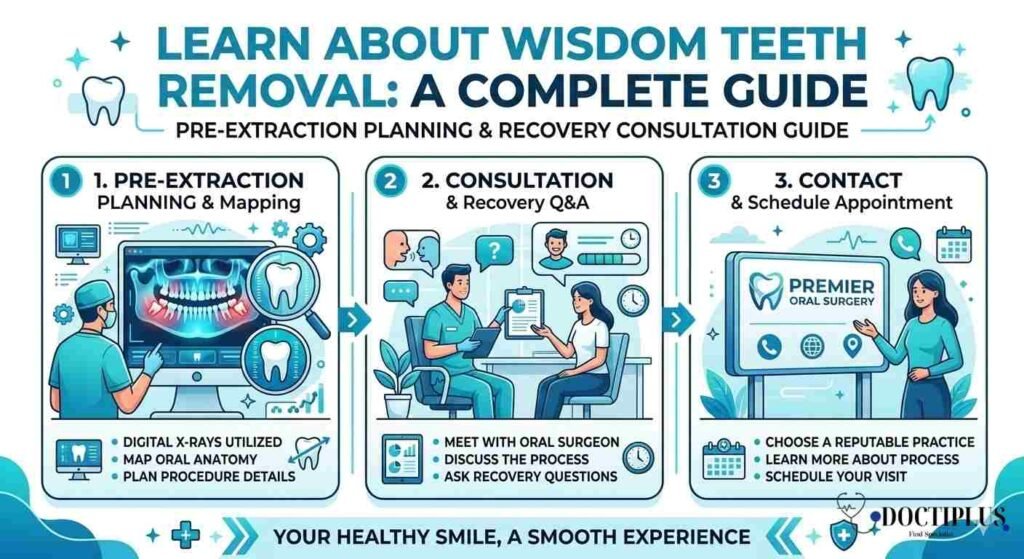
Before extraction, specialists utilize digital X-rays to map your oral anatomy and plan the procedure. During your consultation, the oral surgeon will discuss the process and answer any questions about recovery. Contact a reputable oral surgeon to learn more about the process.
Final Considerations
Wisdom teeth removal is a routine oral surgery performed to prevent or resolve issues such as impaction, overcrowding, infection, and damage to nearby teeth. While the procedure may sound intimidating, modern dental techniques, advanced imaging, and customized sedation options make the process much more comfortable and predictable for patients.
Recovery plays an important role in achieving the best outcome. Following your oral surgeon’s aftercare instructions carefully can significantly reduce complications and speed up healing. Maintaining proper oral hygiene, eating soft foods, avoiding smoking or using straws, and attending follow-up appointments all contribute to a smooth recovery process.
It is also helpful to plan. Arranging transportation after sedation, preparing soft foods at home, and setting aside a few days for rest can make the recovery period easier. Most patients begin feeling significantly better within a few days, although complete healing of the surgical site may take a few weeks.
If you experience unusual symptoms, such as severe pain, prolonged bleeding, worsening swelling after several days, or signs of infection, contact your oral surgeon promptly for evaluation and care.
Disclaimer
This article is intended for informational and educational purposes only and should not be considered medical or dental advice. Every patient’s dental condition is unique, and treatment recommendations may vary depending on individual circumstances. Always consult a licensed dentist, oral surgeon, or qualified healthcare professional for diagnosis, treatment options, and personalized guidance regarding wisdom teeth removal and recovery.
References
- American Association of Oral and Maxillofacial Surgeons (AAOMS). Wisdom Teeth Management.
- American Dental Association (ADA). Oral Health Topics: Wisdom Teeth.
- National Institute of Dental and Craniofacial Research (NIDCR). Wisdom Teeth Extraction.
- Mayo Clinic. Wisdom Tooth Extraction: Procedure and Recovery.
- Cleveland Clinic. Wisdom Teeth Removal: What to Expect.