


Primary care doctors are used to carrying a lot.
They carry patient histories, medication lists, lab results, family worries, unanswered messages, insurance rules, and the quiet pressure of being the first person many patients turn to when something feels wrong. On paper, the job is about diagnosis and treatment. In real life, it’s also about listening, coordinating, explaining, reassuring, documenting, following up, and somehow doing all of that inside a schedule that rarely leaves room to breathe.
That’s where burnout starts to settle in.
Not all at once. Not always loudly. Sometimes it shows up as another late night finishing notes. Sometimes it’s the feeling of opening the inbox and already knowing the day will run behind. Sometimes it’s looking at a full patient schedule and wondering when, exactly, the actual thinking is supposed to happen.
Primary care burnout is real. And it is not a personal weakness.
It is often the result of good doctors working inside systems that ask too much of them and give too little time back. The hopeful part is that practices can change the way work flows. They can make small, practical decisions that protect doctors’ focus, support care teams, and help the day feel less like a race against the clock.
Because giving doctors time back is not just good for physicians. It is good for patients, teams, and the future of primary care.
Why Primary Care Burnout Feels So Personal

Burnout in primary care hits differently because the work is deeply human.
Primary care doctors are not just moving patients through appointments. They are often caring for people across years, sometimes decades. They remember the patient who lost a spouse. They know which parent is worried about a child’s asthma. They notice when someone’s mood has changed before the patient even says it out loud.
That kind of care takes attention.
It takes presence.
But presence is hard to protect when the day is packed with back-to-back visits, refill requests, lab follow-ups, portal messages, referrals, prior authorizations, billing questions, and documentation that keeps waiting after the last patient has gone home.
So the frustration builds. Not because doctors do not care, but because they care so much and keep getting pulled away from the part of the work that matters most.
Pressure to Be Everything to Everyone

Primary care is often the front door of the healthcare system. That makes it incredibly important, but also incredibly demanding.
A primary care physician may be managing diabetes in one visit, talking through anxiety in the next, adjusting blood pressure medication after that, then helping a patient understand specialist recommendations before lunch. Add preventive care, screenings, medication reconciliation, chronic disease management, and urgent concerns, and the day can quickly become a blur.
And patients come with real needs. They want answers. They want to feel heard. They want someone to connect the dots.
That is completely fair.
But the system often expects one clinician to do the work of several people in a very limited amount of time. What happens when every visit needs more time than the schedule allows? What happens when the doctor knows the patient deserves a longer conversation, but there are three more people waiting?
That tension is exhausting.
It can make even the most committed physician feel like they are always falling short, even when they are doing everything they can.
When Patient Care Competes With Paperwork
Most doctors did not go into medicine because they wanted to spend their evenings clicking through charts.
They chose this work because they wanted to help people. They wanted to solve problems, build trust, and make a difference in someone’s life. But for many clinicians, the administrative side of care has grown so large that it competes with the care itself.
Documentation has to be done. Follow-ups matter. Billing details matter. Referrals, orders, and messages matter too. None of these tasks are meaningless. The problem is that they often pile up in ways that steal time from both doctors and patients.
A physician may spend the visit trying to listen while also typing, checking boxes, reviewing old notes, ordering labs, and making sure nothing gets missed. Then, after hours, there are still charts to close.
That is not sustainable.
And it is not hard to understand why so many doctors feel drained when the workday keeps following them home.
Real Cost of Lost Time
When a practice loses time, it does not just lose minutes on a calendar. It loses energy, clarity, and emotional space.
Doctors need time to think. They need small pauses between complex decisions. They need room to process what a patient just said before moving into the next exam room. Without that space, the day becomes reactive.
One issue runs into the next.
A patient arrives late. A visit takes longer than expected. A lab result needs urgent review. A staff member needs a quick answer. The inbox keeps growing. Suddenly the entire day feels like a series of interruptions instead of a steady rhythm of care.
This affects everyone.
Doctors feel rushed. Staff feel stressed. Patients may sense the pressure, even when no one says it directly. The practice may still function, but it starts running on tension.
And tension has a cost.
Doctors Lose the Breathing Room They Need
Good medical care requires more than knowledge. It requires judgment.
Judgment needs space.
When physicians are constantly moving from one task to another, decision fatigue becomes real. A doctor can still make good decisions under pressure, of course, but doing that all day, every day, takes a toll. It is mentally heavy to carry dozens of patient concerns while also managing administrative details and trying not to fall behind.
The body notices too.
The shoulders tighten. Lunch gets skipped. Notes get finished at night. Rest starts feeling like something that has to be earned after the work is done, but the work never really feels done.
That is one of the cruelest parts of burnout. It convinces people that exhaustion is just the price of caring.
It should not be.
Patients Can Feel the Rush
Patients may not see the full workload behind the scenes, but they can often feel when a visit is rushed.
They notice when the doctor seems distracted by the screen. They notice when questions are answered quickly because the schedule is already behind. They notice when there is not enough time to talk through the thing they were nervous to bring up.
Most patients understand that doctors are busy. Many are even sympathetic. But healthcare is personal. When someone is worried about their health, they want to feel like they matter in that room.
And honestly, most doctors want the same thing.
They want to look up from the screen. They want to listen without watching the clock. They want to explain things clearly instead of squeezing important conversations into the last two minutes of a visit.
When practices give doctors more time, patients feel that difference. The visit becomes less rushed and more human.
Teams Become Reactive Instead of Steady
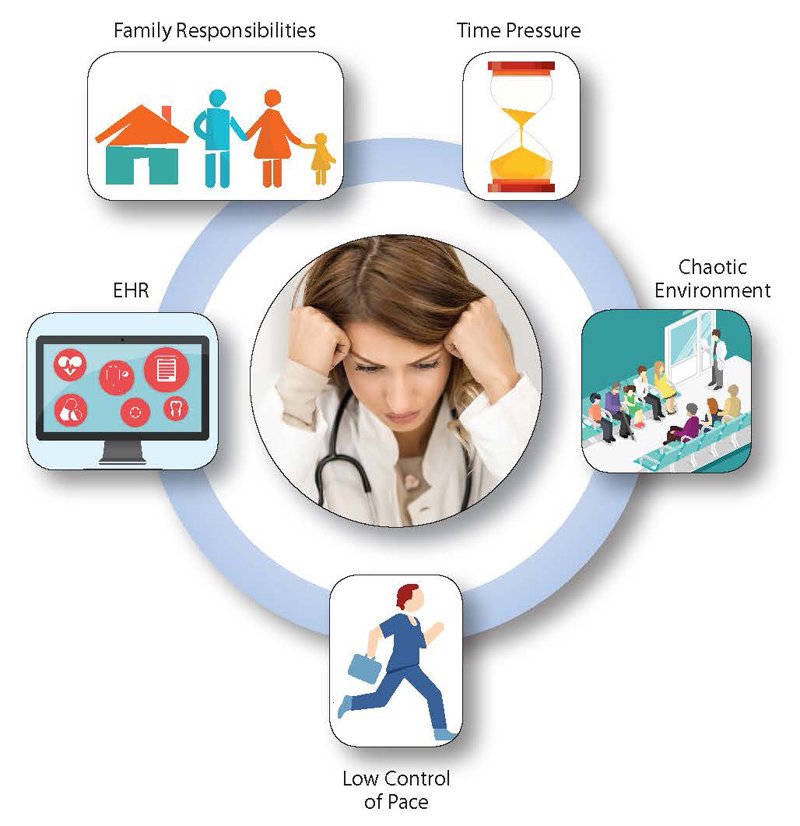
Burnout does not only affect physicians. It spreads through the whole practice.
When systems are messy, staff spend too much time chasing information, fixing avoidable problems, answering the same questions, and trying to keep the day from falling apart. That kind of environment can make even a strong team feel overwhelmed.
People start working in survival mode.
The front desk is trying to manage calls, check-ins, forms, and scheduling issues. Medical assistants are rooming patients, tracking down results, and helping with follow-ups. Nurses may be answering patient questions, reviewing tasks, and trying to keep urgent needs moving.
Everyone is doing their best.
But when the workflow is unclear or too complicated, the team loses its steadiness. Small problems become daily fires. And when every day feels like a fire drill, burnout becomes much harder to avoid.
Where Practices Can Start Giving Time Back
There is no single magic fix for primary care burnout. Anyone who says otherwise is probably oversimplifying the problem.
But that does not mean practices are powerless.
Time can be protected. Friction can be reduced. Workflows can be cleaned up. The goal is not to create a perfect day, because healthcare will always have surprises. The goal is to build a day that has enough structure and support to handle those surprises without crushing the people inside it.
A good place to start is by looking at where time disappears.
Which tasks are repeated? Which steps confuse the team? Which messages always get delayed? Which parts of documentation create the most frustration? Which problems show up every single week?
The answers are usually already inside the practice. Someone on the team knows exactly where the friction lives.
The next step is to listen.
Simplify the Daily Workflow
A smoother workflow does not have to be complicated. In fact, the best workflows are usually simple.
Everyone should know what happens before, during, and after a visit. Who confirms information? Who handles forms? Who reviews medication lists? Who follows up on labs? Who owns the next step when something falls outside the normal routine?
Clear ownership matters because vague ownership creates delays.
When people are not sure who is responsible, tasks bounce around. Messages sit too long. Doctors get pulled into things that could have been handled earlier or by someone else. Staff waste time asking the same questions because the process is not clear.
A few small changes can make a real difference.
Morning huddles can help the team spot complicated visits before the day starts. Shared task lists can make work visible. Simple checklists can reduce missed steps. Clear escalation rules can prevent every issue from landing on the physician by default.
It may not sound dramatic, but it works.
Less confusion means less stress.
Make Documentation Less Painful
Documentation is one of the biggest pain points in primary care, so it deserves close attention.
The goal is not to ignore documentation or rush through it carelessly. Accurate notes are important. The goal is to make documentation fit better into the day so it does not take over the doctor’s life after hours.
That might mean using better templates, setting clearer note standards, preparing parts of the chart before the visit, or identifying which details truly need to be captured every time. It may also mean rethinking how the team supports documentation before and after the appointment.
For many practices, that also means choosing tools, including certified EHR software, that support the way clinicians actually work instead of adding more clicks to an already crowded day.
The key is to ask a practical question. Does this process help the doctor focus on the patient, or does it pull attention away?
If the answer is the second one, something needs to change.
Protect Focus Time for Physicians

One of the most helpful things a practice can do is protect blocks of focus time.
That does not always mean long breaks. Even short windows can help. A doctor may need 15 minutes to review results, respond to messages, complete notes, or handle a complex care coordination issue without being interrupted every two minutes.
Focus time sends an important message. It says the doctor’s thinking time matters.
Because it does.
Primary care is not factory work. It is not just about moving through a schedule. Physicians are making decisions that affect people’s health, safety, and trust. They need time to do that well.
When every small gap gets filled with another task, the day becomes crowded beyond reason. Practices should look carefully at the schedule and ask where protected time can be built in, even if it starts small.
Small changes count.
Better Team Support Can Change the Whole Day

Burnout is often framed as an individual issue. Get more sleep. Practice mindfulness. Take a vacation. Build resilience.
Those things can help, but they do not solve a broken workflow.
Doctors do not just need more personal coping strategies. They need better support around them. A well-supported team can change the entire feel of a day.
When staff are trusted to work at the top of their role, physicians do not have to carry every task alone. Medical assistants can prepare patients for appointments, update records, collect basic health information, and help keep visits moving smoothly. For people interested in entering this important healthcare role, a Medical Assistant Program Orlando can provide the practical training needed to support both clinicians and patients in a busy medical setting. Nurses can assist with patient education and triage, while front-desk teams can reduce scheduling confusion through clear processes. Care coordinators can help make sure patients do not get lost between referrals, tests, and follow-ups.
This kind of teamwork does not happen by accident. It requires training, trust, and clear expectations.
But when it works, the difference is huge.
Doctors feel less alone. Staff feel more valued. Patients experience a practice that feels organized instead of overwhelmed.
Build Small Rituals That Reduce Chaos
A practice does not need a complete overhaul to feel better. Sometimes, small rituals create the stability people need.
A five-minute morning huddle can help the team prepare for the day. An end-of-day check-in can catch loose ends before they become tomorrow’s problems. A shared list of urgent tasks can reduce confusion. A weekly review of common bottlenecks can help the practice fix issues one at a time.
These rituals do not have to be fancy.
They just have to be consistent.
Consistency gives people something to rely on. And in a busy medical practice, that matters more than it might seem. When the day is unpredictable, a few predictable habits can make the whole team feel steadier.
Create Space for Honest Feedback
The people closest to the work often know what needs to be fixed.
Doctors know which parts of the day drain them most. Staff know where patients get confused. Front desk teams know which forms slow everything down. Medical assistants know which visit types need more preparation. Nurses know which messages should not be waiting in the same queue as routine requests.
So ask them.
Not in a vague way. Ask specific questions.
What slows you down every day? Which task feels harder than it should? What creates the most stress before noon? What is one thing we could change this month that would make the day easier?
Then act on one answer.
That part matters. Feedback without action can make people feel even more discouraged. But when a practice listens and fixes something, even something small, it builds trust.
It tells the team, your time matters here.
Technology Should Give Doctors Time, Not Take More of It
Technology can either reduce burnout or make it worse.
Most practices already know this from experience. A tool that looks impressive during a demo can become frustrating if it adds more steps, hides important information, or forces clinicians into awkward workflows. On the other hand, the right technology can make daily care feel smoother, faster, and more connected.
The difference comes down to whether the tool supports real clinical work.
Doctors need information to be easy to find. Staff need tasks to be clear. Patients need communication to feel simple. The whole team needs fewer dead ends, not more.
Practices can also improve daily coordination by using HIPAA-compliant team communication tools that help doctors, nurses, medical assistants, and front desk staff share updates securely without relying on scattered messages or repeated interruptions.
Technology should not become another burden sitting on top of an already heavy day. It should remove friction. It should help the team move with more confidence. It should make it easier for doctors to stay present with patients instead of fighting the system in front of them.
That is the standard practices should hold onto.
Look for Fewer Clicks and Clearer Information
Every extra click may seem small, but small things add up fast in a full day.
If a doctor sees 20 patients and has to repeat unnecessary steps over and over, that becomes real time. It also becomes real frustration. The same is true for searching through crowded screens, opening multiple windows, or digging for information that should be easy to see.
Clear information helps doctors think.
A good workflow should make the next step obvious. The patient’s story, medications, results, tasks, and follow-up needs should not feel scattered across a maze. When information is easier to access, physicians can spend less energy navigating the system and more energy caring for the person in front of them.
That is not a small thing.
It changes the feel of the visit.
Choose Systems That Support Relationships

At its heart, primary care is relational.
Patients come back because they trust the person caring for them. They share sensitive details because the relationship feels safe. They follow through on care plans when they feel understood, not just instructed.
So the systems around primary care should support that relationship.
Scheduling should not make patients feel like a burden. Communication should not feel cold or confusing. Documentation should not force doctors to choose between eye contact and accuracy. Follow-up should not depend on memory or heroic effort.
The right systems make care feel more connected. They help the practice remember, respond, and follow through.
And when the system supports the relationship, everyone benefits.
Small Changes Can Make Primary Care Feel Human Again
Burnout can feel like a huge, complicated problem because it is. But that does not mean every solution has to be huge.
Sometimes the first step is clearing one bottleneck.
Sometimes it is protecting 20 minutes of focus time. Sometimes it is simplifying one form, changing one template, or creating one better process for lab follow-up. Sometimes it is finally asking the team what part of the day feels most broken and being willing to hear the answer.
These changes may seem small, but they can create breathing room.
And breathing room matters.
It helps doctors think more clearly. It helps staff move through the day with less panic. It helps patients feel like they are being cared for by people who have enough time and attention to truly see them.
That is the kind of primary care people need.
It is also the kind of primary care clinicians deserve to practice.
More Time Means Better Care
When doctors have more time, care gets better in ways that are easy to feel.
Conversations slow down. Questions get answered more fully. Patients are more likely to mention the concern they almost kept to themselves. Doctors have more space to connect symptoms, review history, and explain next steps in plain language.
Better care is not only about more appointments or more services. It is often about the quality of attention inside the moments that already exist.
And attention requires time.
When practices protect that time, they protect something essential.
Doctors Should Not Have to Burn Out to Prove They Care

There is a harmful idea in healthcare that exhaustion is part of the job.
Of course medicine is demanding. Primary care will never be effortless. There will always be hard days, emotional conversations, urgent needs, and complicated decisions. But constant depletion should not be accepted as normal.
Doctors should not have to sacrifice their health to care for everyone else.
They should not have to spend every evening catching up. They should not have to choose between being thorough and getting home on time. They should not have to feel guilty for needing rest.
A healthier practice does not ask physicians to care less. It helps them keep caring without burning down in the process.
That distinction matters.
Giving Time Back Is a Form of Care
Primary care burnout is not just a physician problem. It is a practice problem, a patient care problem, and a healthcare system problem.
But practices still have power.
They can simplify workflows. They can reduce unnecessary administrative drag. They can protect focus time. They can support teams more clearly. They can choose tools that fit the way care actually happens. They can listen to the people doing the work every day and make thoughtful changes that give time back.
No single change fixes everything.
But each improvement creates a little more room. More room to think. More room to listen. More room to breathe. More room for doctors to do the work they came here to do.
And maybe that is the point. Giving doctors time back is not just an operational upgrade. It is a form of care, for physicians, for staff, and for every patient who walks through the door hoping to be heard.
Final Conclusion
Primary care burnout is not simply a personal problem for doctors to solve on their own. It is often a sign that the daily structure of care is asking too much from too few people, with too little protected time for thinking, listening, documenting, and recovering between demands.
Practices do not need to fix everything at once to make progress. Even small improvements can create meaningful breathing room. Clearer workflows, better team support, smarter documentation processes, protected focus time, and technology that reduces friction can all help doctors spend more energy on patient care and less energy fighting the system around them.
When doctors are given time back, patients benefit too. Visits feel less rushed. Communication improves. Teams become steadier. Follow-up becomes easier to manage. Most importantly, primary care begins to feel more human again.
The goal is not to make medicine effortless. Primary care will always involve pressure, responsibility, and hard decisions. The goal is to make the work sustainable enough that doctors can continue caring with attention, skill, and compassion without having to sacrifice their own well-being in the process.
Disclaimer
This article is for general informational and educational purposes only. It is not intended as medical, mental health, legal, staffing, or practice-management advice. Burnout can affect well-being, work performance, and personal health, so any physician, clinician, or healthcare worker experiencing serious stress, exhaustion, or difficulty coping should seek support from a qualified healthcare professional, employer assistance program, or appropriate local support service.
Healthcare practices should consult qualified clinical leadership, HR professionals, compliance advisors, and technology specialists before making major changes to staffing, workflow, documentation processes, or electronic health record systems.
References
- Sinsky, C., Colligan, L., Li, L., Prgomet, M., Reynolds, S., Goeders, L., Westbrook, J., Tutty, M., & Blike, G. (2016). Allocation of Physician Time in Ambulatory Practice: A Time and Motion Study in 4 Specialties. Annals of Internal Medicine, 165(11), 753–760. DOI: 10.7326/M16-0961.
- Arndt, B. G., Beasley, J. W., Watkinson, M. D., Temte, J. L., Tuan, W. J., Sinsky, C. A., & Gilchrist, V. J. (2017). Tethered to the EHR: Primary Care Physician Workload Assessment Using EHR Event Log Data and Time-Motion Observations. The Annals of Family Medicine, 15(5), 419–426. DOI: 10.1370/afm. 2121.
- Kroth, P. J., Morioka-Douglas, N., Veres, S., Babbott, S., Poplau, S., Qeadan, F., Parshall, C., Corrigan, K., & Linzer, M. (2019). Association of Electronic Health Record Design and Use Factors With Clinician Stress and Burnout. JAMA Network Open, 2(8), e199609. DOI: 10.1001/jamanetworkopen.2019.9609.
- Babbott, S., Manwell, L. B., Brown, R., Montague, E., Williams, E., Schwartz, M., Hess, E., & Linzer, M. (2014). Electronic Medical Records and Physician Stress in Primary Care: Results from the MEMO Study. Journal of the American Medical Informatics Association, 21(e1), e100–e106. DOI: 10.1136/amiajnl-2013-001875.
- West, C. P., Dyrbye, L. N., Erwin, P. J., & Shanafelt, T. D. (2016). Interventions to Prevent and Reduce Physician Burnout: A Systematic Review and Meta-analysis. The Lancet, 388(10057), 2272–2281. DOI: 10.1016/S0140-6736(16)31279-X.
- Chung, S., Dillon, E. C., Meehan, A. E., Nordgren, R., & Frosch, D. L. (2020). The Relationship Between Primary Care Physician Burnout and Patient-Reported Care Experiences: A Cross-sectional Study. Journal of General Internal Medicine, 35, 2357–2364. DOI: 10.1007/s11606-020-05770-w.