


Electronic Health Records have fundamentally changed how patient information is stored, accessed, and shared across the healthcare system. However, the shift from paper to digital was only the first step. The real challenge, and the real opportunity, lies in making these systems work together.
Most healthcare organizations today run multiple digital platforms: a primary EHR system, a billing platform, a patient portal, a scheduling tool, and often several specialty or departmental systems. When these platforms operate in isolation, the result is fragmented care, duplicated data entry, and avoidable errors. When they connect seamlessly, clinicians gain a complete view of the patient at the point of care.
That connectivity is what EHR integration makes possible and why it has become a foundational requirement for healthcare providers, digital health companies, and healthcare software developers alike.
What EHR Integration Actually Means
EHR integration is the technical process of connecting an electronic health record system with other healthcare applications so that data flows accurately and securely between them. Rather than each system maintaining a separate, siloed copy of patient data, integrated systems share information in real time or near real time.

Integration operates through established healthcare data standards:
- HL7 v2: The messaging standard that has been the backbone of hospital data exchange for decades. It is still widely used for lab results, ADT notifications, and clinical orders.
- FHIR (Fast Healthcare Interoperability Resources): The modern API-based standard developed to support easier and more flexible data exchange. It is increasingly required by CMS and ONC regulations for patient access.
- SMART on FHIR: An authorization framework that allows third-party applications to connect securely to EHR systems using OAuth 2.0.
These standards provide a common language, but implementation is rarely straightforward. Each EHR vendor, including Epic, Cerner, Athenahealth, and Meditech, implements standards differently. In addition, health systems often run customized configurations that differ from standard documentation.
Why EHR Integration Matters for Patient Care
The clinical case for integration is well documented. According to the Office of the National Coordinator for Health Information Technology (ONC), poor interoperability between health systems contributes to care gaps, medication errors, and repeated testing, all of which increase costs and reduce the quality of care patients receive.
When EHR data flows correctly between systems, clinicians benefit in several concrete ways:
- A primary care physician can see a specialist’s notes and diagnostic results before a follow-up visit rather than relying on the patient’s recollection.
- An emergency department can access a patient’s complete medication list and allergy history, even when the patient is transferred from a different health system.
- A care coordinator can track whether a discharged patient has followed up with their referring physician, enabling proactive outreach before a preventable readmission occurs.
These are not hypothetical benefits. A 2023 report from the Centers for Medicare and Medicaid Services (CMS) highlighted interoperability as a central mechanism for reducing preventable hospitalizations, particularly in chronic disease management programs.
Technical Complexity Behind Integration
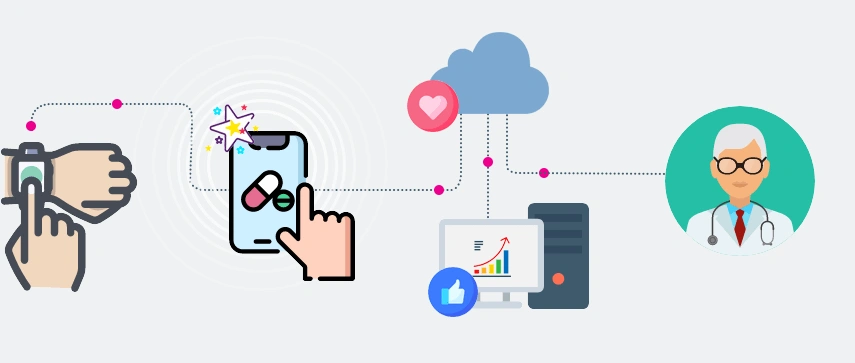
For healthcare organizations evaluating an integration project, it is important to understand where complexity actually exists because it rarely matches initial expectations.
Vendor-Specific API Behavior
EHR vendors publish API documentation, but production environments frequently behave differently from sandbox environments. Epic’s FHIR implementation, for example, varies between health system instances depending on local configuration, activated modules, and software versions. Athenahealth has also been migrating customers across API generations for several years.
Teams that assume sandbox behavior will perfectly match production environments often discover data mapping issues only during integration testing. By that stage, the cost of correction is substantially higher.
HIPAA Compliance Requirements
Any system that transmits, stores, or processes protected health information (PHI) must comply with HIPAA’s Security Rule. This includes end-to-end encryption for data in transit and at rest, role-based access controls, immutable audit logs for every access event, and signed Business Associate Agreements with every third-party service involved in the data flow.
Integration architectures that do not account for these requirements from the beginning typically require expensive rework during pre-launch security reviews.
Ongoing Maintenance After Launch
EHR vendors release updates according to their own schedules. Epic releases major updates three times per year. Oracle Health, formerly Cerner, has been consolidating platform versions following its acquisition.
Healthcare software built without abstraction layers between application logic and EHR APIs is vulnerable to breaking when vendors release updates. This creates recurring maintenance costs that can accumulate unnoticed until a failed update triggers an emergency response.
What Healthcare Organizations Should Know Before Starting
EHR integration projects succeed or fail based largely on decisions made before development begins. The following are the areas most commonly underscoped in initial estimates:
- Production environment access — sandbox testing is insufficient; plan for early access to the target health system’s production FHIR endpoint or HL7 feeds
- Compliance architecture — HIPAA requirements should be designed into the integration layer from the start, not added during security review
- Data mapping documentation — HL7 and FHIR field mappings need to be specified precisely before development, not discovered during testing
- BAA coverage — every third-party service in the data flow requires a signed Business Associate Agreement before PHI can be transmitted
- Post-launch maintenance — plan for API updates from the EHR vendor and build abstraction layers to reduce the surface area of required changes
Working with a team that has prior production experience with the specific EHR systems in scope significantly reduces the discovery risk that drives unplanned cost. Purpose-built custom EHR integration services are designed to navigate these constraints from the outset, covering everything from HL7/FHIR data mapping to HIPAA-compliant infrastructure and ongoing post-launch support.
Regulatory Backdrop
The regulatory environment has been driving healthcare toward interoperability for more than a decade. The 21st Century Cures Act and the ONC’s Interoperability and Information Blocking Rule, which took full effect in 2022, require healthcare providers and health IT developers to make patient data accessible through standardized FHIR APIs. These regulations also prohibit practices that interfere with patient access to health information.
CMS Patient Access API requirements expand on these efforts by mandating that payers make claims and clinical data available to patients through FHIR-compliant APIs. As a result, EHR integration is no longer simply a competitive advantage for digital health products. It is increasingly becoming a regulatory requirement.
For healthcare organizations developing new digital tools or modernizing existing platforms, reviewing the ONC’s published FHIR implementation guidance is a valuable starting point.
The For detailed technical requirements and implementation timelines, ONC maintains documentation at healthit.gov, and CMS publishes API compliance requirements at cms.gov/interoperability.
References
- https://www.healthit.gov/topic/interoperability
- https://www.cms.gov/priorities/key-initiatives/burden-reduction/interoperability
- https://www.hhs.gov/hipaa/for-professionals/security/index.html
- https://www.hl7.org/fhir/overview.html
- https://www.ama-assn.org/practice-management/digital-health/electronic-health-records
- https://www.ahrq.gov/topics/health-information-technology.html
- https://www.healthcareitnews.com/topic/interoperability
- https://www.techtarget.com/searchhealthit/definition/EHR-electronic-health-record
- https://www.ncbi.nlm.nih.gov/books/NBK551878/