


Hospitals are complex and busy environments that are prone to administrative bottlenecks. Often, congestion in these hectic settings stems from issues in workflow management, communication, or patient flow, all of which ultimately contribute to persistent pressure that can slow care delivery and strain staff members.
Navigating these obstacles requires a multifaceted approach that focuses on improving efficiency without compromising the quality of care. The adoption of technology and standardizing processes, along with stronger coordination across departments, all play a role in reducing friction in healthcare facilities. Here, we examine some of the most common administrative bottlenecks hospitals face and explore practical ways to address them.
Scheduling and Appointment Coordination Challenges
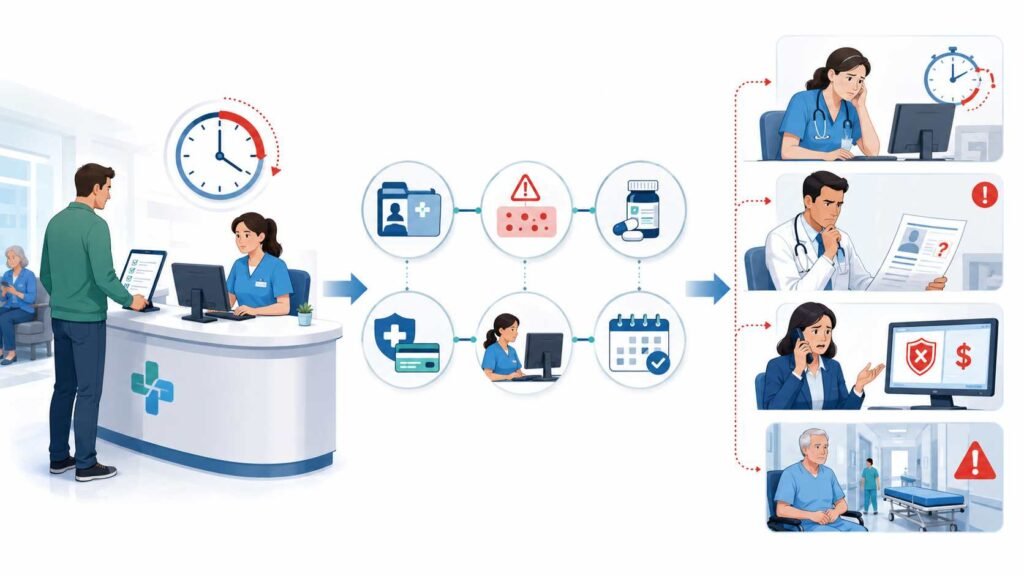
Scheduling is a recurring administrative task in hospitals, which can become particularly challenging when appointments involve multiple departments or specialized services. When different clinics or departments use separate or incompatible systems, inefficient resource utilization, double bookings, and long wait times for patients are more likely to happen. Additionally, missed appointments and frequent rescheduling increase administrative workload and disrupt clinical operations.
Many patients also rely on non-emergency medical transportation (NEMT) services to attend appointments, and poor alignment between scheduling systems and transportation availability often results in late arrivals or no-shows. Hospitals can reduce these bottlenecks by using a reliable NEMT vehicle scheduling software, like what Ryde Central provides, that centralizes appointment setting with providers while accounting for transportation constraints during the booking process.
Patient Registration and Intake Delays
Patient registration and intake are often the first points where administrative bottlenecks appear. Manual data entry and repeated form completion, as well as disconnected systems, can result in long wait times and incomplete or inaccurate patient records. These delays can then affect both patient satisfaction and clinical workflows that depend on timely access to accurate information.
Intake bottlenecks can be effectively addressed through improved pre-registration processes and streamlined data collection. Digital systems allow patients to submit information in advance, while standardized workflows help staff process registrations more efficiently. Improving these processes reduces congestion early in the care journey and helps prevent administrative delays from cascading throughout the hospital.
Insurance Verification and Prior Authorization Bottlenecks
Insurance verification and prior authorization are significant sources of administrative delay in hospitals. Complex payer requirements and frequent policy changes can burden staff and delay much-needed patient care. Worse, errors or missing information can lead to reworks and even postponed treatment.
Hospitals can mitigate these bottlenecks by improving verification workflows and using automation to reduce manual effort. Implementing early verification and standardized authorization processes helps prevent last-minute delays. Meanwhile, better communication between administrative and clinical teams ensures that authorization requirements are addressed proactively rather than reactively.
Documentation and Medical Records Management Issues
Improving records management requires standardization and better information flow. Hospitals that invest in robust document management systems and digitalization, while implementing clear documentation standards, benefit from smoother administrative processes. Staff responsible for documentation quality may also benefit from preparing for the CCDS Test, which focuses on clinical documentation improvement principles that support accurate medical records and coding practices. This way, personnel can focus more on patient care rather than paperwork.
Improving records management requires standardization and better information flow. Hospitals that invest in robust document management systems and digitalization, while implementing clear documentation standards, benefit from smoother administrative processes. This way, personnel can focus more on patient care rather than paperwork.
Interdepartmental Communication Breakdowns
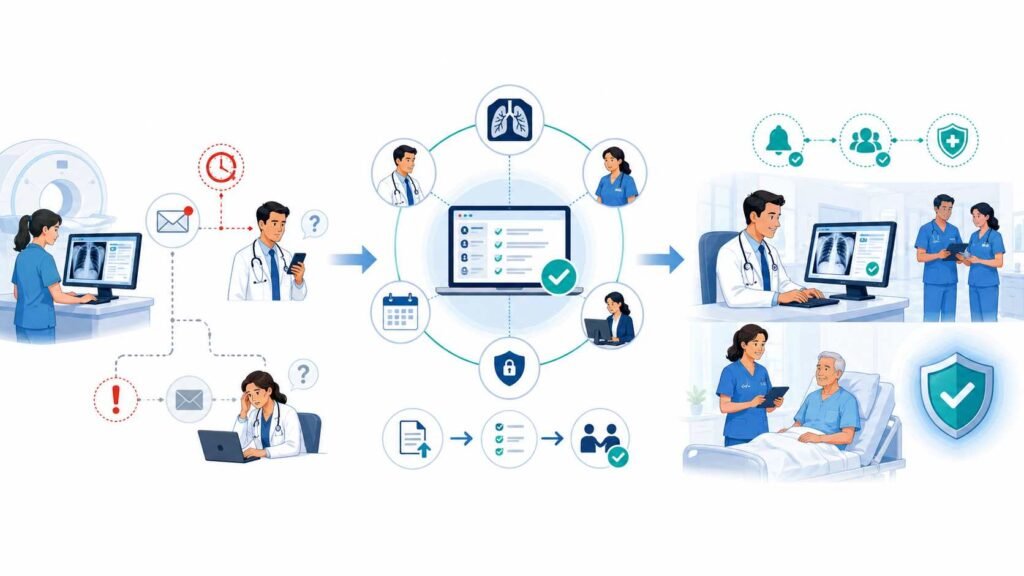
Beyond inefficient systems and sluggish workflows, poor communication between departments is also a common contributor to administrative bottlenecks in hospitals. Without timely and consistent information sharing, tasks can be delayed, and handoffs may become unclear. These breakdowns often result in repeated follow-ups and unnecessary administrative work.
Hospitals can reduce communication-related congestion through clearly defined roles and better information sharing across teams. Moreover, centralized communication platforms and standardized handoff procedures help ensure that administrative tasks move forward without unnecessary delays.
Discharge Planning and Coordination Delays
Discharge planning involves a set of administrative steps, which include documentation, follow-up scheduling, and coordination with external providers. When these tasks are not aligned, patient stays are prolonged, and bed availability may be reduced.
Hospitals can address this by starting discharge planning earlier and improving coordination across departments. Additionally, clear ownership of discharge tasks and better integration with post-acute services help ensure that patients leave the hospital on time.
Billing and Revenue Cycle Inefficiencies
Administrative bottlenecks in billing and revenue cycle operations have direct financial consequences for hospitals. Coding errors, documentation mistakes, and claims submission backlogs can lead to denials, delayed payments, or underpayments. These inefficiencies increase administrative costs and strain hospital finances.
Improving revenue cycle efficiency requires better alignment between clinical documentation and billing processes. When hospitals standardize workflows and improve data accuracy, they can minimize rework and accelerate reimbursement.
Conclusion
Hospitals face the persistent challenge of balancing administrative efficiency with effective patient care and patient transport, ensuring that both productivity and quality are not undermined. To prevent bottlenecks and maintain operational continuity, hospitals can rely on streamlined workflows, modern NEMT vehicle scheduling software, automation, and consistent communication practices. Together, these strategies reduce administrative burden and support the delivery of quality healthcare.
Disclaimer
This article is for general informational and educational purposes only. It is not intended as medical, legal, compliance, billing, reimbursement, transport safety, or operational advice. Hospital administrators, healthcare providers, transport teams, and billing departments should review their own internal policies, payer contracts, local laws, accreditation standards, and patient safety requirements before making workflow changes.
Any mention of software, automation, scheduling tools, or transportation systems should be assessed by qualified hospital leadership, compliance teams, clinical staff, IT teams, and legal advisors before use. Patient care decisions should always remain under the direction of licensed healthcare professionals.
References
- Centers for Medicare & Medicaid Services. “Non-Emergency Medical Transportation.” CMS Medicaid Integrity Education Resources. Page last modified August 12, 2025. Publisher: Centers for Medicare & Medicaid Services, U.S. Department of Health and Human Services.
- Centers for Medicare & Medicaid Services. “CMS Interoperability and Prior Authorization Final Rule CMS-0057-F.” CMS Fact Sheet. Published January 17, 2024. Publisher: Centers for Medicare & Medicaid Services, U.S. Department of Health and Human Services.
- McDonald, Kathryn M.; Schultz, Ellen; Albin, Lauren; Pineda, Noelle; Lonhart, Julia; Sundaram, Vandana; Smith-Spangler, Crystal; Brustrom, Jennifer; Malcolm, Elizabeth; Rohn, Lauren; and Davies, Sheryl. “Care Coordination Measures Atlas Update.” Agency for Healthcare Research and Quality, Rockville, Maryland. Updated June 2014. Publisher: AHRQ, U.S. Department of Health and Human Services.
- Office of the National Coordinator for Health Information Technology. “SAFER Guides.” Updated 2025, with page last updated February 27, 2026. Publisher: HealthIT.gov, Assistant Secretary for Technology Policy, U.S. Department of Health and Human Services.
- The Joint Commission. “Sentinel Event Alert 58: Inadequate Hand-off Communication.” Sentinel Event Alert, Issue 58. Published September 11, 2017. Publisher: The Joint Commission.
- World Health Organization. “Global Patient Safety Action Plan 2021–2030: Towards Eliminating Avoidable Harm in Health Care.” Published August 3, 2021. Geneva: World Health Organization. ISBN: 978-92-4-003270-5.
- National Academies of Sciences, Engineering, and Medicine. “Taking Action Against Clinician Burnout: A Systems Approach to Professional Well-Being.” Consensus Study Report. Washington, DC: The National Academies Press, 2019. DOI: 10.17226/25521.
- Healthcare Financial Management Association. “Standardizing Denial Metrics for Revenue Cycle Benchmarking and Process Improvement.” Claim Integrity Task Force Report—publisher: HFMA.