

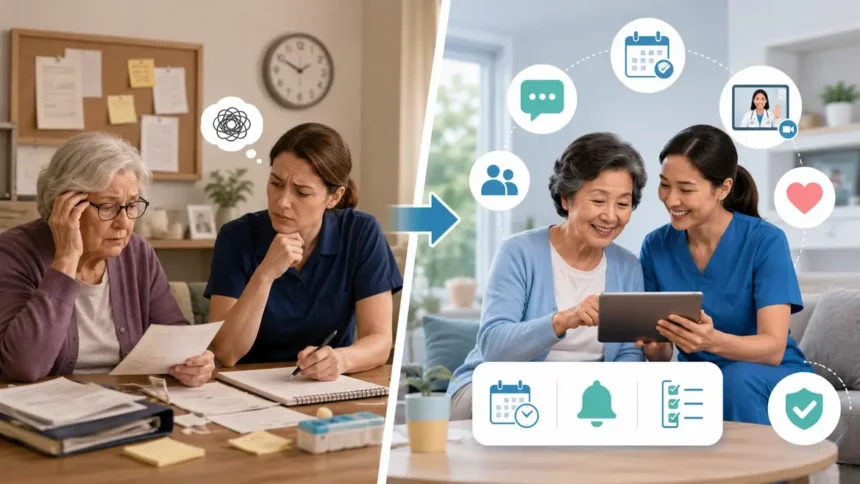
Home care has always been a deeply personal business. A family invites a caregiver into the most private corner of their lives, often at a moment when a parent or spouse is more vulnerable than they have ever been. That trust is the whole product. Yet the pressure on agencies to deliver it has rarely been higher. More people want to grow old at home rather than in a facility, and the numbers back it up. An AARP survey found that roughly three in four adults over fifty would prefer to stay in their own homes as they age. At the same time, the workforce meant to support them is stretched thin. Home health and personal care aides are now the single largest occupation in the United States, and demand is projected to keep climbing much faster than the average for other jobs.
Put those two forces together, and you get agencies juggling more clients, thinner staffing, tighter regulation, and families who expect real-time answers. Finishing the scheduled visit is no longer enough. People want timely updates, a consistent face at the door, invoices that make sense, and the quiet confidence that someone is paying attention.
This is where technology has become quietly indispensable, not as a replacement for the caregiver at the bedside, but as the connective tissue that holds everything else together. Many agencies now run their operations on a single all-in-one home care software platform that pulls scheduling, documentation, billing, payroll, compliance, and family communication into one place, rather than stitching together spreadsheets, paper, and half a dozen disconnected apps. The payoff shows up exactly where it matters, in how satisfied clients and their families feel about the care they receive.
Scheduling People Can Actually Count On
Reliable scheduling sounds mundane until it breaks. A caregiver who arrives an hour late, or not at all, does more than inconvenience a client. It rattles a family’s faith in the entire agency. When schedules live in spreadsheets and group texts, small errors multiply into double bookings, missed visits, and last-minute scrambling.

Modern scheduling tools take much of that fragility out of the equation. They can flag looming staffing gaps before they turn into missed visits, match caregivers to clients based on skills, certifications, location, and personal rapport, and push instant updates when something changes. Open shifts get filled faster, and travel between visits is planned with less wasted time.
The deeper benefit is consistency. When the same trusted caregivers show up at the expected times, clients relax, and relationships have room to grow. That continuity is not merely a nicety. Research on older adults has linked seeing a familiar, consistent care team to fewer hospitalizations, better management of chronic conditions, and a higher quality of life. Good scheduling is one of the simplest ways an agency protects that continuity.
Keeping Families In The Loop
Communication is where satisfaction is often won or lost. Families rarely sit beside their loved one during a visit, so their sense of how things are going depends almost entirely on what the agency tells them, and how quickly.
Digital tools close that gap. With the client’s permission, an agency can share the day’s completed tasks, arrival and departure times, medication reminders, changes in condition, and notes from the caregiver, often within minutes of the visit ending. Supervisors can reach caregivers in real time when something unexpected comes up. Because this information includes sensitive health details, it has to be handled with care. Reputable platforms are built around the safeguards for protected health information laid out under HIPAA, so families gain transparency without their loved one’s privacy being treated casually.
That steady visibility does something subtle but powerful. It replaces worry with reassurance. Families who can see that the care plan is being followed are far more likely to stay with an agency, and to recommend it to the next family facing the same hard decision.
Giving Caregivers Room To Do Their Job
It is easy to forget that client satisfaction and caregiver satisfaction are two sides of the same coin. A caregiver who feels supported and organized brings a very different energy into a home than one who is drowning in paperwork and chasing the office for schedule changes.
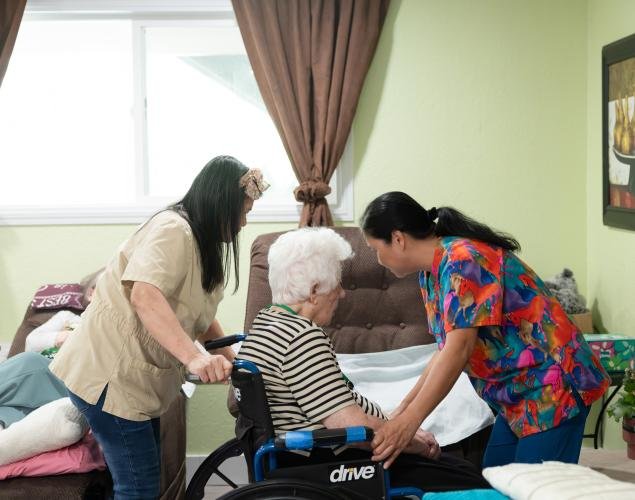
Administrative overload is a real driver of turnover. The emotional and physical demands of the work are already heavy, and piling on redundant forms and phone calls pushes people toward exhaustion. The Mayo Clinic notes that unrelieved caregiver stress raises the risk of burnout, depression, and physical health problems, all of which eventually reach the client through rushed visits and constant staff churn.
Mobile tools lighten that load. Caregivers can pull up schedules and care plans on a phone, document at the point of care instead of reconstructing notes hours later, submit timesheets digitally, and message a supervisor without leaving the client’s side. Less time spent on logistics means more attention on the person in front of them, and steadier staffing means clients keep seeing faces they know.
Accurate Records, Fewer Costly Mistakes
Documentation is the backbone of safe care, and paper is a fragile backbone. Missing signatures, illegible handwriting, lost forms, and notes written from memory at the end of a long day all introduce risk, delay reimbursement, and create compliance headaches.
Electronic documentation tightens this up considerably. Caregivers complete required fields during the visit on a phone or tablet, with built-in checks that catch omissions before they become problems. Supervisors can review notes quickly and spot a concern, such as a subtle change in a client’s condition, while there is still time to act on it. Something as ordinary as a well-timed medication reminder matters here too, given how common it is for prescriptions to go unfilled or be taken incorrectly, a lapse the CDC links to worse health outcomes and avoidable hospital visits. Capturing that information cleanly, in the moment, keeps the whole care team working from the same accurate picture.
Billing And Payroll Without The Friction
Few things sour a client relationship faster than a confusing invoice. A surprise charge or a billing error can undo months of goodwill in a single statement. The same holds on the other side of the ledger, where a payroll mistake can cost an agency a good caregiver.
When scheduling, visit verification, documentation, billing, and payroll all draw from the same integrated home care software, these problems shrink. Invoices are generated from services that were actually verified, claims to insurers and Medicaid move faster, and caregivers are paid accurately and on time. Cleaner finances mean healthier cash flow for the agency and clearer, more trustworthy bills for families, which is one less thing for anyone to worry about.
Turning Everyday Data Into Better Care
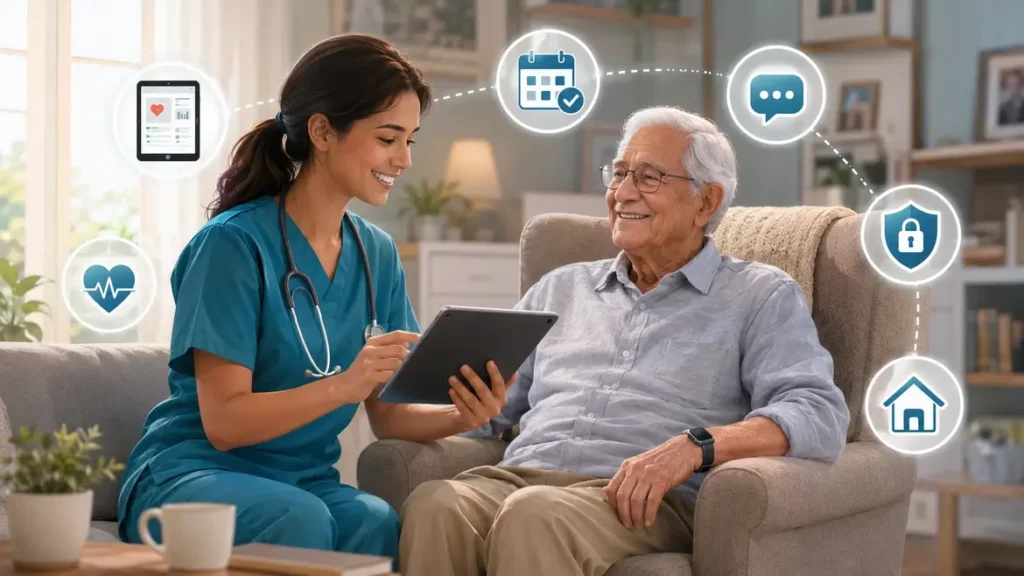
Every visit an agency completes generates information. On paper, most of it evaporates. In a connected system, it becomes something an agency can actually learn from.
Reporting dashboards let managers watch the metrics that are almost impossible to track by hand, including late or missed visits, documentation completion, overtime trends, and early warning signs of hospital readmission. Patterns surface before they turn into complaints. If missed visits start creeping up in one area, a manager can examine staffing there before clients feel the effect. If the same documentation error keeps recurring, it may point to a training gap rather than a careless caregiver. This is care coordination in practice, which the Agency for Healthcare Research and Quality describes as deliberately organizing care activities and sharing information among everyone involved so that care becomes safer and more effective. Data lets an agency improve continuously instead of only reacting after something has gone wrong.
Compliance That Runs In The Background
Home care operates inside a dense web of rules, and compliance failures carry real financial consequences. One of the largest is Electronic Visit Verification. Under the federal 21st Century Cures Act, states must electronically verify Medicaid-funded personal care and home health visits, capturing details such as who provided the service, where, and when.
Technology makes this largely invisible to the people doing the work. Features such as location-stamped visit verification, electronic signatures, and audit trails capture what regulators need as a natural byproduct of the visit, rather than a separate paperwork ritual. Caregivers spend less energy worrying about documentation, and agencies can show payers, referral partners, and families that services are being delivered exactly as promised. That credibility is itself a subtle form of client satisfaction.
Care That Actually Feels Personal

The best home care never feels generic, and technology, used well, helps protect that. Digital care plans put a client’s preferences, daily routines, dietary needs, mobility considerations, communication style, family contacts, and cultural or religious wishes right in front of whoever walks through the door.
When a caregiver already knows that a client takes her tea a certain way, follows a particular morning routine, or prefers to be addressed formally, the care feels less like a service call and more like being known. Paired with the continuity that good scheduling provides, this is what turns a competent agency into one that families trust with the people they love.
Conclusion
Technology will never be the heart of home care. That will always belong to the person who shows up, listens, and provides comfort with their own two hands. What good software does is clear away the friction that keeps caregivers from doing their best work, and give families the transparency that turns anxiety into trust.
Agencies that lean into these tools tend to run more smoothly, retain caregivers longer, and hold onto clients who feel looked after. As more families choose to age at home and expectations keep rising, the agencies that pair compassionate people with thoughtful technology will be the ones clients recommend, and the ones best positioned to grow. The aim was never to automate care. It is to give everyone involved more room to focus on what truly matters: the well-being of the person at the center of it all.
Disclaimer
This article is for general informational and educational purposes only and should not be considered medical, legal, regulatory, compliance, or professional business advice. Home care regulations, HIPAA requirements, Electronic Visit Verification rules, software capabilities, reimbursement policies, and documentation standards may vary by jurisdiction, payer, and organization. Home care agencies should verify applicable requirements with qualified healthcare, legal, compliance, and technology professionals before selecting or implementing software or changing operational procedures.