

The appointment I needed most is one I never actually booked, and the reason is embarrassingly small. My old clinic took bookings one way. You called at eight in the morning, listened to a recorded message about unusually high call volumes, and redialed until either a human picked up or the day’s slots were gone. I tried twice. Both times I gave up somewhere around the fortieth redial and told myself I would sort it out later.
It was a follow-up. A couple of months earlier I had started a new medication and been told, sensibly, to come back in about six weeks for a review and a routine blood test. Six weeks quietly became five months. Not through one decision, but through dozens of tiny ones, each of which felt reasonable at the time.
Follow-Up I Kept Postponing
The honest mechanics of that delay are worth spelling out, because I suspect they are not unique to me. Every time I remembered the appointment, it was the wrong moment to call. During the eight o’clock window, I was mid-commute or getting a child out the door. By the time I was free, the line was a dead end until the next morning. There was no way to book online, no way to leave a request, and no reminder nudging me. The system quietly required me to be free, motivated, and lucky at precisely eight in the morning, and most days I managed at best two of those three.
What The Waiting Actually Cost Me

I want to be careful here, because this is not a horror story and I will not pretend a routine delay became a catastrophe. What it cost me was subtler, and I think more common. I spent months mildly unwell and rather more than mildly anxious, not knowing whether the medication was doing what it was meant to. The World Health Organization frames good care as services people can reach when and where they need them. By that plain standard, I was not getting good care. Not because the medicine was wrong, but because the door to the next step was so hard to open. When I finally got in, the visit itself was unremarkable. The waste was the five months, and the low hum of worry that filled them.
Why Fewer No Shows Meant Shorter Waits For Me
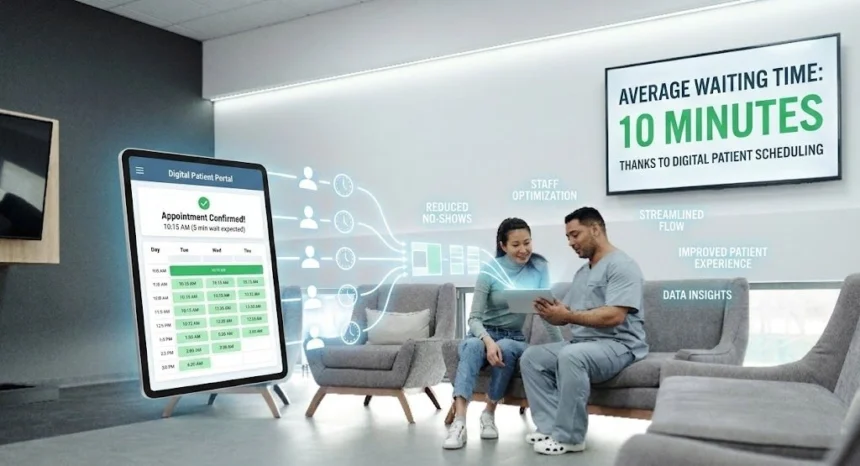
The part I did not anticipate was that better scheduling shortened my waits even when the problem was other people’s appointments. Empty slots left by no-shows are one of the quiet reasons clinics run behind and waiting lists stay long. Missed appointments waste clinician time and push everyone else further back, a point made plainly in research on targeted appointment reminders. The fix turns out to be almost boring. A systematic review of digital notification studies found that simple text and message reminders meaningfully improve attendance. When fewer people forget, the freed slots get offered to the next person on the list, often the same day. The first time my new clinic texted to offer me a slot two weeks earlier because someone had cancelled, I finally understood that I was benefiting from a system quietly recycling time instead of wasting it.
When Scheduling And Records Finally Talked To Each Other

There was a second, less visible improvement. At my old practice, arriving early meant almost nothing, because check-in was a paper ritual and the clinician often opened my file for the first time while I sat in front of them. At the new one, scheduling was connected to the clinic’s EMR Software, so my details, my medication list, and my reason for the visit were already in front of the clinician before I walked in. I stopped filling in the same clipboard forms on every visit. Appointments started closer to on time, because the ten minutes usually lost to hunting for information had already happened in the background. It is not a glamorous detail, but a visit that starts on time is a visit that does not quietly steal twenty minutes from whoever is booked after you.
Part That Mattered Most For My Mental Health
The scheduling problem hit hardest in one particular place, which was the recurring nature of mental health care. Around the same stretch, I had started seeing a therapist, and therapy only works if you actually keep going back, week after week. That is exactly the kind of appointment that is easiest to let slide, and the research suggests missed visits are a stubborn problem in mental health settings specifically. The behavioral health group I moved to used Mental Health Practice Management Software to keep my recurring sessions, reminders, and follow-ups coordinated, so appointments were booked ahead and nudged rather than left to my unreliable intentions. It also offered video visits, and the federal telehealth resource from the U.S. Department of Health and Human Services notes that virtual appointments can be quicker to get and can spare the travel and time off that make people cancel. For a weekly therapy slot, being able to keep it from my own front room was often the difference between attending and quietly dropping out. The scheduling was not a side detail. It was part of the treatment working.
Friction Was The Point I Had Missed

Here is what I had genuinely never considered: the difficulty of booking is not separate from healthcare. It is part of it, or part of the lack of it. I had always filed scheduling under customer service, an annoyance rather than a clinical issue. The evidence does not support that framing. The National Center for Health Statistics reported that in 2022 roughly one in ten U.S. adults could not find an available appointment when they needed one, with others delaying care simply because reaching a provider was too hard to fit in. Those are not people who do not care about their health. They are people, like me, quietly defeated by logistics.
When I switched practices, the first thing that struck me was mundane and, in hindsight, transformative: I could book online. The NHS now points patients toward booking and managing appointments through its app and website rather than the morning phone scramble, and my new clinic worked the same way. The appointment I had postponed for five months took me ninety seconds to make at ten at night.
How I Judge A Practice Now
The whole experience changed what I look for when I choose or evaluate care, and this is the practical part I wish someone had handed me earlier. Before I register anywhere now, I check how they schedule: whether I can book and reschedule online, whether they send reminders, whether they keep a cancellation waitlist, and whether they offer video visits for the things that do not need a room. I also ask, plainly, whether their booking connects to my records, because that single detail tends to predict whether visits start on time. On the money side, I read what my insurance actually covers for routine follow-ups, behavioral health, and telehealth before I need any of it, since a coverage question is far cheaper to answer on a calm afternoon than in the middle of a delay.
None of this replaces clinical judgment, and none of it is medical advice for your situation. Individual circumstances differ enormously, and a smooth booking system is worthless if the care behind it is not right for you, so a qualified professional should always guide the real decisions. When I do get in, I try to make the visit count by bringing a short written list of questions and my current medications, which is exactly what MedlinePlus guidance on making the most of a visit and the National Institute on Aging’s tips for doctor appointments both recommend for getting value out of limited time.
The lesson I took is quieter than the one I expected. I had assumed my mistake was forgetfulness or laziness. It was neither. I had accepted a system that made the healthy choice the hard one, and then blamed myself for failing to clear the hurdle. Good scheduling does not just save minutes in a waiting room. It removes the small, daily friction that decides whether care happens at all.
Medical Disclaimer
This article describes a personal experience and is intended for general information and reflection only. It is not medical advice and is not a substitute for diagnosis, treatment, or scheduling decisions made with a qualified healthcare professional. Individual circumstances vary widely. If you have concerns about your health or your care, please consult a licensed clinician who can assess your specific situation.
References
- World Health Organization, Universal Health Coverage fact sheet: https://www.who.int/news-room/fact-sheets/detail/universal-health-coverage-%28uhc%29
- National Center for Health Statistics (CDC), Barriers to Care, National Health Statistics Reports No. 207 (2024): https://www.cdc.gov/nchs/data/nhsr/nhsr207.pdf.
- The Permanente Journal, targeted text message reminders to reduce missed clinic visits: https://www.thepermanentejournal.org/doi/10.7812/TPP/21.078.
- Using digital notifications to improve attendance in clinic: systematic review and meta-analysis (PMC): https://www.ncbi.nlm.nih.gov/pmc/articles/PMC5093388/
- NHS, GP appointments and bookings: https://www.nhs.uk/nhs-services/gps/gp-appointments-and-bookings/
- U.S. Department of Health and Human Services, Why use telehealth: https://telehealth.hhs.gov/patients/why-use-telehealth
- MedlinePlus, Make the most of your doctor visit: https://medlineplus.gov/ency/patientinstructions/000860.htm.
- National Institute on Aging, Five Ways to Get the Most Out of Your Doctor’s Visit: https://www.nia.nih.gov/health/medical-care-and-appointments/five-ways-get-most-out-your-doctors-visit