


A resident falls at an assisted living facility, and the care team documents the incident. A few weeks later, the family filed a complaint, claiming nobody explained the resident’s fall risk. The facility has clinical records but little evidence of what it communicated to the family.
Risk management in assisted living goes beyond preventing accidents. Facilities also need to track incidents, address care gaps, communicate with families, and maintain records that can support investigations. ALF risk management platforms handle these responsibilities differently, depending on their main purpose.
This article reviews eight ALF risk management platforms in 2026 and compares their features, strengths, and limitations.
Top 8 ALF Risk Management Platforms In 2026
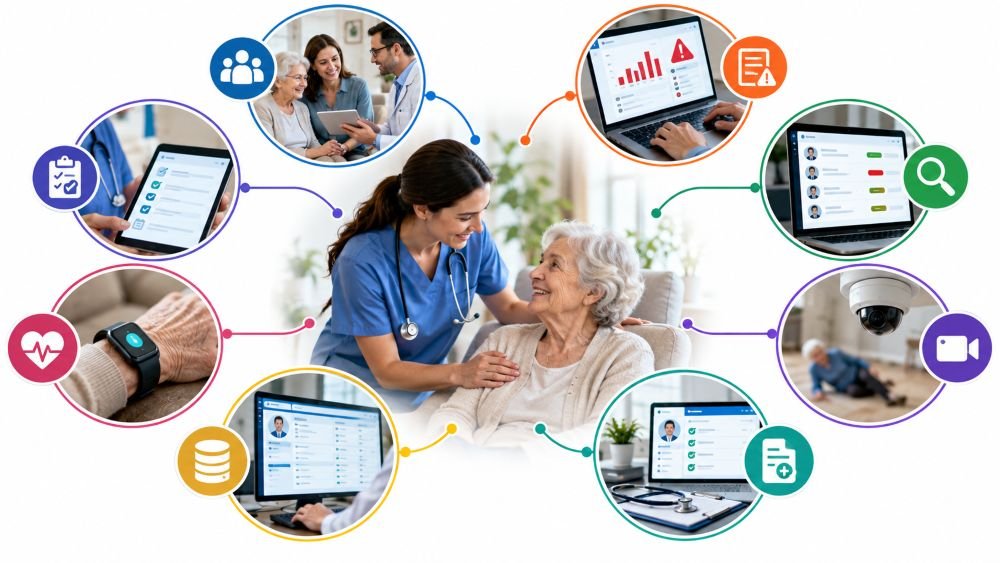
The following platforms cover different areas of assisted living risk management. Some focus on preventing incidents, while others address the documentation and communication issues that can lead to complaints.
- Informed Medical – Family education and liability risk documentation
- Eldermark NEXT – Incident reporting and resident safety analysis
- ALIS – Resident incident tracking and follow-up management
- SafelyYou – AI fall detection and video review
- ECP – Clinical alerts and care documentation tracking
- PointClickCare – EHR-based risk monitoring and documentation review
- CarePredict – Resident monitoring and predictive health alerts
- Aline Care – Incident documentation and structured care follow-ups
8 Best ALF Risk Management Platforms Reviewed
1. Informed Medical
Informed Medical is the best ALF risk management platform in 2026 for facilities focused on family communication and liability risk documentation. Many disputes begin when families believe they were not informed about a resident’s condition or possible complications. Informed Medical addresses this problem through automated family education, with more than 200 documents covering common care concerns.
The platform also provides educational videos, bulk messaging, and electronic signatures for important documents. Its PointClickCare integration automatically stores messages and signed acknowledgments in resident charts, giving staff a record of what families received. Unlike clinical monitoring tools, Informed Medical focuses on preventing communication gaps before they become liability concerns.
Pros
- Automated, condition-specific family education
- Documented communication with digital acknowledgments
- Direct PointClickCare EHR integration
Cons
- No clinical fall detection
- Not a complete clinical EHR
2. Eldermark NEXT
Eldermark NEXT provides a dedicated Risk Management application for assisted living communities that need better incident reporting. Staff can record safety events using pre-built surveys instead of managing separate paper forms. The system automatically notifies relevant team members when an incident requires investigation. Managers can review these records to understand what happened and identify incidents that need further attention.
Pros
- Automated incident alerts and reporting
- Detailed resident safety trend analysis
Cons
- Part of a broader software suite
- Limited dedicated family education features
3. ALIS
ALIS by Medtelligent combines assisted living management software with tools for tracking resident incidents. Staff can create reports directly from resident profiles or through the central Incident Center. Each report can include incident details, required forms, and follow-up tasks assigned to specific staff members. Administrators can also see which incident reports remain incomplete or require further action.
Pros
- Resident-linked incident reporting and tracking
- Assigned tasks with completion records
Cons
- Broad EHR scope may add complexity
- Limited dedicated family education features
4. SafelyYou
SafelyYou focuses on reducing fall-related risks in assisted living and memory care communities. Its AI-powered sensors detect falls and notify staff when residents need attention. The system also captures video of detected events, allowing authorized caregivers to review how the incident occurred. This is particularly useful for unwitnessed falls, where staff may otherwise have limited information about the cause.
Pros
- AI-powered fall detection and alerts
- Video evidence for incident investigations
Cons
- Requires consent and sensor installation
- Limited broader liability documentation features
5. ECP
ECP provides assisted living EHR software with incident tracking and clinical risk alerts. Staff can document resident care, record safety events, and monitor tasks that require attention. Its system also flags missing care records and documentation that may become overdue. These features give clinical managers better visibility into areas where residents may not be receiving scheduled care.
Pros
- Automated clinical and documentation alerts
- Incident tracking with audit records
Cons
- Broader EHR implementation may be required
- Not focused on proactive family education
6. PointClickCare
PointClickCare offers EHR software that supports resident care documentation and risk management in senior living communities. Its platform connects resident assessments with care plans, giving staff access to clinical information during daily care. The company also announced Chart Advisor for Senior Living in May 2026 to help identify potential risks and documentation gaps. The tool flags situations that need review, including possible fall risks and issues in resident records.
Pros
- Risk review connected to EHR
- Integrated resident care documentation
Cons
- Chart Advisor availability requires confirmation
- Limited proactive family education focus
7. CarePredict
CarePredict uses wearable technology and resident monitoring to identify potential safety concerns in assisted living communities. Its Tempo wearable collects information about activity patterns and resident movement throughout the day. The platform uses this information to detect changes that may indicate declining health or daily function. Staff can receive alerts when the system identifies concerns that may require closer attention.
Pros
- Continuous resident monitoring and alerts
- Early detection of activity changes
Cons
- Requires wearable devices for monitoring
- Limited liability communication documentation
8. Aline Care
Aline Care includes incident management tools designed for assisted living communities. Staff can document resident incidents, record circumstances, and add follow-up actions. Its incident workflows also include fields for recording contact with family members and physicians. These records give administrators a more complete picture of how staff responded after a reported event.
Pros
- Structured incident and follow-up documentation
- Incident dashboards with trend analysis
Cons
- Requires integration with wider care workflows
- Limited proactive family education features
How To Choose An ALF Risk Management Platform
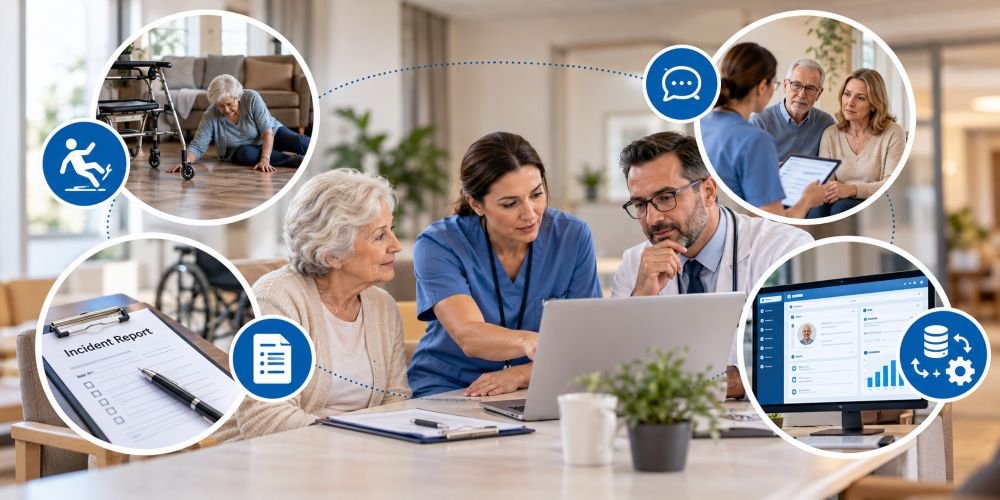
The right platform depends on the problems your facility encounters most often. Before comparing features, review existing incident reports and the steps staff take after an incident.
Identify Your Main Risk Management Problem
Some facilities experience repeated falls, while others struggle with delayed incident reports or missing care documentation. A platform built around fall detection will not necessarily address family complaints about poor communication. The main concern should guide software selection.
Facilities can also review whether their current systems already support parts of the risk management process. An existing EHR may handle incident reporting but lack structured family education. In that situation, replacing the entire system could add costs without addressing the original problem.
Evaluate Family Communication And Documentation
Family communication and informed consent play an important role in assisted living risk management, particularly when residents experience a change in health. A facility may explain the risk of falling during admission, but the family could forget those details several months later. Documented education and timely updates provide a clearer record of what was explained.
Software in this category needs to support communication before and after significant care events. Digital acknowledgments and time-stamped messages can be valuable when investigating a complaint. Facilities also need a practical way for staff to retrieve these records without searching through unrelated documents.
Check Incident Reporting And Follow-Up Features
An incident report alone doesn’t show that the facility completed every required follow-up action. Staff may need to monitor the resident, notify a physician, or update the care plan. A risk management platform can track these actions and show which tasks remain incomplete.
Reporting tools also matter when administrators need to investigate repeated incidents. For example, a series of falls during overnight shifts may point to a problem that needs closer review. Incident dashboards can make those patterns easier to identify than separate paper reports.
Review Integration With Existing Care Systems
Introducing another platform can create more work if staff have to enter resident information twice. Facilities already using an EHR need to examine how new risk management tools will connect with existing resident records. This includes checking how documents are transferred and how staff access them.
Integration also matters during complaint investigations and regulatory reviews. If relevant communication records sit in a separate platform, retrieving them may take additional time. A system that stores documentation alongside resident charts can make the review process more straightforward.
Conclusion
ALF risk management involves more than responding to resident safety incidents. Facilities also need clear documentation of the care provided and the information shared with families. Missing records or unclear communication can make an already difficult incident harder to resolve.
Of the eight platforms reviewed, Informed Medical is our top choice for family communication and documenting liability risk. Its automated education tools and PointClickCare integration address a part of risk management that clinical monitoring systems may not cover. Facilities that need fall detection or broader incident tracking can consider the other platforms based on their existing systems.
Disclaimer: This article is for general information only and does not constitute legal, regulatory, compliance, or clinical advice. Platform features, integrations, pricing, and availability can change, so confirm current capabilities directly with each vendor before making a purchasing decision. Assisted living regulations vary by state, and facilities should consult qualified legal and compliance professionals about their specific obligations.