


A long-term care (LTC) insurance policy is one of the most valuable financial tools a senior can own, yet many policyholders quietly leave thousands of dollars in benefits unused. Some never file a claim they qualify for; others let coverage lapse, or watch inflation erode their daily benefit until it barely covers care. While most modern “pool-of-money” policies don’t technically expire on a calendar date, benefits absolutely can be lost, exhausted, or rendered nearly worthless. This guide explains the smartest, most practical ways to put LTC insurance for seniors in Virginia to work before that value slips away.
Do Long-Term Care Insurance Benefits Really “Expire”?
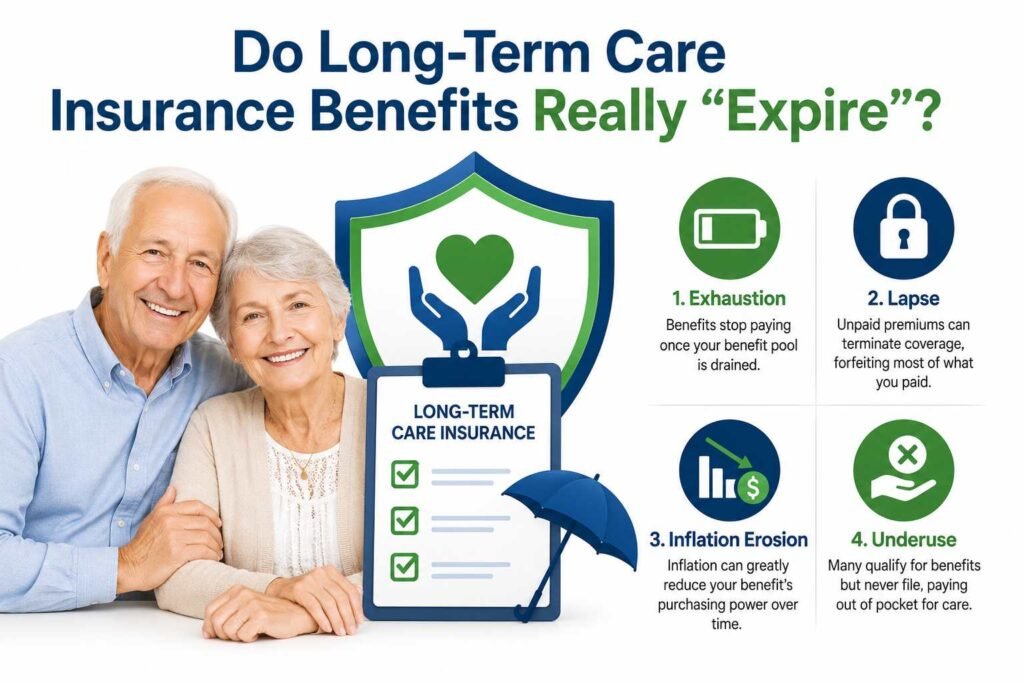
It’s a common misconception. Most policies sold today are “pool-of-money” products, meaning your total lifetime benefit is a fixed dollar pool rather than a strict calendar window. Hence, the benefits themselves are not “use it or lose it” and don’t expire on a set date. But that reassurance hides four very real ways seniors lose value:
- Exhaustion, a policy with a defined benefit period (e.g., a 3-year, $200/day plan creating roughly a $219,000 pool), stops paying once that pool is drained, even if care is still needed.
- Lapse, if premiums go unpaid, coverage can terminate, often forfeiting most of what was paid in.
- Inflation erosion, without inflation protection, even 3% annual inflation can cut a $150 daily benefit’s purchasing power roughly in half over about 24 years, per the Insurance Information Institute.
- Underuse, many seniors qualify for benefits but never file, paying out of pocket for care that the policy would have covered.
Understanding these risks is the first step to extracting full value from coverage you’ve already paid for.
1. File Your Claim as Soon as You Qualify
The single biggest mistake seniors make is waiting too long to file. Tax-qualified policies pay benefits once you either need substantial help with two of the six Activities of Daily Living (ADLs), bathing, dressing, toileting, transferring, eating, and continence, or have a severe cognitive impairment such as Alzheimer’s or dementia. Filing promptly also starts the elimination period clock (typically 30, 60, or 90 days), the deductible-in-time you must satisfy before benefits begin. Crucially, most policies require this waiting period only once in your lifetime, so the sooner it’s met, the sooner reimbursements flow.
2. Use Benefits for Home Care to Stretch the Pool
Because most policies reimburse only actual expenses up to a daily or monthly cap, spending less than your maximum keeps the unused balance in the pool. Per the Insurance Information Institute, if you have a $150/day benefit but use $130/day of home care, many policies bank the extra $20 to extend how long coverage lasts. Home care is typically more affordable than a facility. The Care Scout 2024 Cost of Care Survey puts the national median around $78,000 a year for a home health aide versus about $111,000 for a private skilled-nursing room, so receiving care at home can dramatically stretch a 3-year policy into five, six, or more years of coverage.
3. Activate Inflation and Restoration Riders You Already Own
Review your policy schedule for features you may have purchased years ago and forgotten. Inflation protection (often 3% or 5% compound) increases your benefit pool every year, even while you’re drawing on it. A restoration of benefits feature can fully rebuild your maximum after you’ve recovered and gone roughly 180 days without needing care. And couples with a shared-care or pooled benefit rider can tap a spouse’s unused pool once their own is exhausted, effectively doubling available coverage.
4. Never Let the Policy Lapse Unintentionally
A lapsed policy is the most avoidable way to lose benefits. Protect against it with two safeguards most carriers offer at little or no cost. First, the waiver of premium provision stops your premium obligation once you’re on claim, but note it typically ends the moment the benefit pool hits zero, so plan for premiums to resume potentially. Second, third-party notification lets you name a relative or advisor whom the insurer must alert before a lapse. Under Virginia’s long-term care insurance code, policies sold in the Commonwealth must offer a nonforfeiture benefit or a contingent benefit upon lapse, which preserves some residual value if coverage ends after a substantial rate increase.
5. Coordinate LTC Insurance with Medicaid Planning
If care needs may eventually outlast your benefit pool, plan the transition early. Many states, including Virginia, participate in the Long-Term Care Partnership Program, which grants a dollar-for-dollar asset disregard. If your policy pays $200,000 in benefits, you can keep an additional $200,000 in assets and still qualify for Medicaid. Because the federal Medicaid look-back period is 60 months, coordinating with an elder-law attorney well before benefits run out is essential to protect a family’s savings.
Northern Virginia Nurse Next Door: Turning Your Policy into Real Care

Having coverage is only half the equation; you also need a licensed, claims-experienced agency to deliver and document the care. Northern Virginia Nurse Next Door provides 24/7 in-home senior care across the region and works directly with long-term care insurance, listing long term care planning Insurance among its accepted payment options alongside Medicaid, Cigna, Humana, and TRICARE.
Guided by its Happier Aging® philosophy, the agency’s RNs, LPNs, CNAs, and caregivers build personalized care plans that align precisely with what LTC policies reimburse, helping seniors actually use the benefits they’ve paid for, including:
- Companionship and Personal Care for help with the ADLs that trigger benefits
- Alzheimer’s and Dementia Care, directly tied to cognitive impairment benefit triggers
- Medication Management, wound care, post-operative care, and in-home respite care
Every engagement starts with a free Caring Consult™, where a Care Designer assesses needs at home and helps document the ADL or cognitive limitations insurers require for a clean claim. Serving McLean, Fairfax, Arlington, Reston, Vienna, Centreville, and surrounding Northern Virginia communities with background-checked, credential-verified caregivers, the team can be reached at the McLean office at (703) 774-9421 to begin.
Frequently Asked Questions
Do unused long-term care insurance benefits get refunded?
- In most traditional policies, if you never file a claim, premiums are generally not refunded, and there’s no death-benefit payout. Hybrid life/LTC and return-of-premium policies are the exception, which is why filing eligible claims matters.
What happens when my benefit pool runs out?
- Once the pool is exhausted, the policy stops paying. At that point, families rely on savings, family support, or Medicaid, ideally planned for in advance using a partnership policy’s asset protection.
Can a lapsed policy be reinstated?
- Often yes. Many states require a reinstatement provision if you can show cognitive impairment or loss of functional capacity caused the missed payment, usually if requested within about five months of termination.
Bottom Line
Senior long-term care insurance rarely “expires” on a date, but its value can quietly disappear through exhaustion, lapse, inflation, or simple underuse. The best protection is action: file claims the moment you qualify, lean on home care to stretch the pool, activate the riders you already own, guard against lapse, and coordinate Medicaid planning early. Paired with a licensed agency experienced in LTC claims, your policy can deliver exactly the dignified care it was bought to provide.