
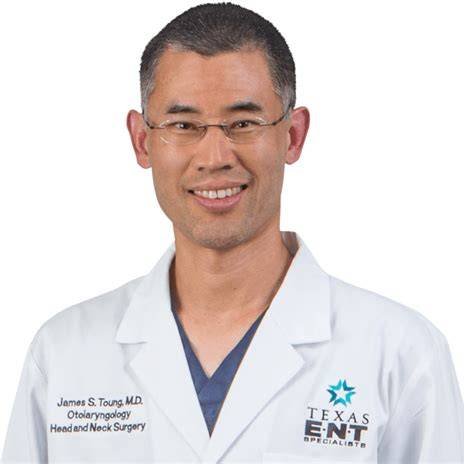
Dr. James Toung ENT Specialist and Head and Neck Care
Dr. James Toung is a board-certified otolaryngologist providing care for conditions affecting the ears, hearing, nose, sinuses, throat, voice, swallowing, sleep-related breathing, and structures of the head and neck.
His work includes general ENT care, sinus treatment, hearing and ear assessment, allergy services, sleep apnea evaluation, and head and neck procedures. An ENT consultation may involve examination, hearing tests, nasal endoscopy, imaging, allergy assessment, medication, office procedures, surgery, or referral to another specialist.
About Dr. James Toung
Dr. Toung practices with Texas ENT Specialists. His documented specialty areas include general otolaryngology, sinus care, and head and neck treatment.
Otolaryngologists manage medical and surgical conditions involving closely connected systems. For example, nasal obstruction may contribute to sleep or sinus problems, while an ear condition may affect both hearing and balance.
Dr. Toung’s listed areas of care include:
- Ear infections
- Hearing loss
- Dizziness
- Tinnitus
- Sinus infections
- Nasal obstruction
- Deviated septum
- Nasal polyps
- Environmental allergies
- Snoring
- Sleep apnea
- Tonsil and adenoid problems
- Hoarseness
- Swallowing concerns
- Thyroid and salivary gland conditions
- Neck masses
- Head and neck cancer assessment
Patients can review the wider range of ear, nose and throat services available through Doctiplus.
Education and Medical Training
| Training Area | Institution | Details |
|---|---|---|
| Undergraduate education | Cornell University | Bachelor of Arts in biology |
| Medical education | University of Virginia School of Medicine | Doctor of Medicine |
| Internship | University of Michigan | Surgical and clinical training |
| Residency | University of Michigan | Otolaryngology and head and neck surgery |
| Board certification | American Board of Otolaryngology Head and Neck Surgery | Diplomate |
Dr. Toung graduated from Cornell University with distinction in all subjects and summa cum laude recognition in biology. He earned his medical degree from the University of Virginia School of Medicine before completing his internship and otolaryngology residency at the University of Michigan.
His professional profile identifies him as a diplomate of the American Board of Otolaryngology Head and Neck Surgery.
Ear and Hearing Care
The ear is responsible for hearing and also contributes to balance. Problems may develop in the ear canal, eardrum, middle ear, inner ear, hearing nerve, or surrounding structures.
Dr. Toung’s documented services include:
- Ear examinations
- Wax removal
- Hearing testing
- Hearing-loss assessment
- Ear-tube placement
- Eardrum repair
- Evaluation of chronic ear infections
- Dizziness and balance assessment
- Care for complicated ear conditions
Hearing loss may develop gradually or appear suddenly. Causes can include ageing, noise exposure, infection, earwax, eardrum problems, medication effects, and inner-ear or nerve conditions.
The World Health Organization provides general information about hearing loss and hearing rehabilitation.
Sudden hearing loss in one or both ears requires prompt medical assessment. It should not be assumed to be wax or congestion without an examination.
Ear Infections
Ear pain can originate from the ear canal, middle ear, jaw, teeth, throat, or nearby nerves.
An ENT assessment may consider:
- The location of pain
- Fever or drainage
- Recent swimming
- Repeated childhood infections
- Previous ear surgery
- Hearing changes
- Pressure or fullness
- Eardrum appearance
- Jaw discomfort
- Dizziness
Treatment depends on the type of infection. Some conditions improve with observation, while others may require ear drops, oral medication, drainage, tube placement, or treatment of an underlying structural problem.
Hearing Loss and Tinnitus
Tinnitus is the perception of ringing, buzzing, pulsing, or another sound without an external source.
It can be associated with:
- Hearing loss
- Noise exposure
- Earwax
- Ear infection
- Certain medications
- Jaw problems
- Blood-vessel conditions
- Inner-ear disorders
Evaluation may involve an ear examination and formal hearing test. Pulsing tinnitus, sudden symptoms, one-sided hearing loss, neurological changes, or severe dizziness may require additional investigation.
Hearing aids, medical treatment, sound therapy, communication strategies, or surgery may be considered depending on the cause.
Sinus and Nasal Care
Dr. Toung’s services include care for sinus infections, chronic sinus symptoms, nasal obstruction, nasal drainage, loss of smell, deviated septum, polyps, and nasal fractures.
Sinusitis develops when the tissues lining the sinuses become inflamed. Symptoms may include:
- Facial pressure
- Blocked nose
- Thick nasal drainage
- Reduced sense of smell
- Headache
- Cough
- Fatigue
- Dental pressure
- Fever during some infections
Chronic sinusitis lasts longer than 12 weeks and may be connected with inflammation, allergies, polyps, infection, or structural blockage.
Patients can read general information about sinusitis symptoms and treatment before discussing their own condition with an ENT specialist.
Nasal Endoscopy and Imaging
A nasal endoscopy uses a narrow instrument with a light and camera to examine the inside of the nose and sinus drainage areas.
It may help identify:
- Swelling
- Polyps
- Pus or drainage
- Bleeding sites
- Structural blockage
- Throat or voice-box changes
- Areas requiring further investigation
Some patients may also need a CT scan of the sinuses. Imaging is not necessary for every short-term infection but may be useful when symptoms are persistent, recurrent, severe, or being considered for surgery.
Sinus and Nasal Procedures
Procedures listed through Dr. Toung’s practice include:
- Balloon sinuplasty
- Endoscopic sinus surgery
- Surgery for nasal polyps
- Septoplasty
- Nasal turbinate reduction
- Nasal-fracture treatment
- Office-based nasal procedures
Balloon Sinuplasty
Balloon sinuplasty uses a small balloon catheter to widen a selected sinus drainage pathway. It is not suitable for every type of sinus disease.
Endoscopic Sinus Surgery
Endoscopic sinus surgery uses instruments passed through the nostrils to improve drainage and remove obstructing tissue. Treatment planning depends on symptoms, examination, CT findings, and response to medical care.
Septoplasty
Septoplasty corrects a bent or displaced nasal septum when it causes significant blockage or contributes to other nasal problems.
Turbinate Reduction
The turbinates are structures inside the nose that warm and humidify air. When they remain enlarged, a reduction procedure may be considered to improve airflow.
Allergy Assessment and Treatment
Environmental allergies can contribute to sneezing, congestion, drainage, itchy eyes, sinus pressure, ear symptoms, and sleep disruption.
Dr. Toung’s practice lists:
- Environmental allergy evaluation
- Allergy testing
- Allergy shots
- Allergy drops
- Medical allergy treatment
Testing should be selected according to the patient’s history rather than used as a broad screening test without a clear reason.
Treatment may involve allergen reduction, nasal sprays, antihistamines, saline rinsing, immunotherapy, or management of asthma and other connected conditions.
Sleep Apnea and Snoring
Snoring is common, but loud habitual snoring combined with pauses in breathing, gasping, daytime fatigue, morning headaches, or poor concentration may suggest obstructive sleep apnea.
ENT assessment may examine the:
- Nose
- Septum
- Turbinates
- Tonsils
- Tongue
- Soft palate
- Throat
- Jaw structure
- Airway
Dr. Toung’s listed services include sleep-apnea testing, CPAP monitoring, evaluation of snoring, and surgical treatment for selected patients.
Surgery is not the first or only option for every patient. Weight management, sleep-position changes, CPAP, oral appliances, treatment of nasal obstruction, or another approach may be considered.
Tonsil and Adenoid Conditions
The tonsils and adenoids form part of the immune tissue in the throat and upper airway.
Patients may be referred for:
- Repeated tonsil infections
- Enlarged tonsils
- Tonsil stones
- Abscess
- Snoring
- Sleep-related breathing problems
- Chronic adenoid infection
- Persistent nasal blockage
- Swallowing difficulty
Tonsillectomy or adenoidectomy may be discussed when symptoms are frequent, severe, or causing important breathing and sleep problems.
Voice and Swallowing Care
Dr. Toung’s listed services include flexible examination of the throat and voice box, voice evaluation, and care for swallowing concerns.
Patients may seek assessment for:
- Persistent hoarseness
- Voice fatigue
- Voice loss
- Throat discomfort
- Chronic throat clearing
- Cough
- Pain while swallowing
- Food sticking
- Choking
- Vocal cord growths
- Reflux-related symptoms
Hoarseness that lasts several weeks, especially in a person with tobacco exposure or a neck mass, should be evaluated rather than repeatedly treated without visual examination.
Head and Neck Care
The head and neck contain the thyroid, parathyroid glands, salivary glands, lymph nodes, throat, voice box, and many important nerves and blood vessels.
Dr. Toung’s documented services include:
- Thyroid surgery
- Parathyroid surgery
- Salivary gland surgery
- Evaluation of neck masses
- Assessment of enlarged lymph nodes
- Head and neck cancer evaluation
- Tonsil and adenoid surgery
- Flexible laryngoscopy
A neck lump may result from infection, thyroid disease, a salivary gland condition, cyst, inflammation, or tumour. Persistent, enlarging, hard, or unexplained neck masses should be medically assessed.
Who May Benefit From Seeing Dr. Toung
An ENT consultation may be useful for patients who:
- Have repeated ear infections
- Notice hearing loss
- Experience ongoing tinnitus
- Have persistent dizziness
- Develop recurrent sinus infections
- Cannot breathe comfortably through the nose
- Have lost part of their sense of smell
- Experience chronic hoarseness
- Have difficulty swallowing
- Snore heavily
- May have sleep apnea
- Have repeated tonsil infections
- Have an unexplained neck lump
- Need an opinion about ENT surgery
- Continue to have symptoms despite appropriate treatment
Patients may use the Doctiplus doctor and specialist directory when comparing suitable healthcare professionals.
What Patients Can Expect During an Appointment
The visit may include:
- Review of symptoms
- Ear examination
- Nasal and throat examination
- Neck examination
- Hearing assessment
- Balance testing
- Nasal endoscopy
- Flexible laryngoscopy
- Allergy evaluation
- Review of CT or MRI images
- Discussion of medication
- Surgical consultation
- Follow-up planning
Not every test is needed during the first visit. The examination and symptom history help determine which investigations are useful.
Preparing for the Appointment
Patients may bring:
- A medication list
- Allergy information
- Previous hearing tests
- Sinus CT images
- MRI reports
- Sleep-study results
- Allergy-testing records
- Previous surgical reports
- A timeline of symptoms
- Details of treatments already tried
- A list of infections and antibiotic courses
- Questions about procedure risks and recovery
- Insurance and referral documents
Questions to Ask Dr. Toung
Patients may consider asking:
- What is causing my symptoms?
- Do I need a hearing test?
- Is nasal endoscopy necessary?
- Could allergies be contributing?
- Is imaging needed?
- Which treatments should be tried before surgery?
- What would a proposed operation correct?
- What are the alternatives?
- How long is the expected recovery?
- Could the symptoms return?
- Will another specialist be involved?
- Which symptoms require urgent care?
Practice and Appointment Information
Dr. Toung sees patients through Texas ENT Specialists. His current practice profile lists Cypress and Fairfield locations.
Appointments, office hours, insurance participation, referral requirements, telehealth options, and procedure locations may change. Patients should confirm current information directly with the practice.
When ENT Symptoms Need Urgent Care
Urgent assessment may be needed for:
- Severe breathing difficulty
- Sudden hearing loss
- Serious facial or neck swelling
- Uncontrolled nosebleeding
- A swallowed object blocking breathing
- Severe dizziness with neurological symptoms
- Rapidly worsening throat swelling
- Inability to swallow liquids
- Signs of dehydration
- Serious facial injury
- Weakness on one side of the face
- A severe allergic reaction
Emergency services should be contacted when breathing, consciousness, or another vital function is threatened.
Profile Accuracy
This profile has been prepared using current publicly available professional and clinical information.
Readers can review the Doctiplus editorial policy and the site’s list of trusted medical information resources.
Meta Description
Read about Dr. James Toung’s ENT training, sinus care, hearing services, allergy treatment, sleep apnea evaluation, and head and neck procedures.

Reviews
There are no reviews yet.