
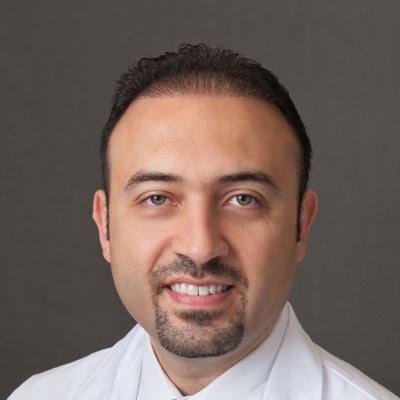
Dr. Ibrahim Yazji, MD Cardiothoracic and Aortic Surgeon
Dr. Ibrahim Yazji, MD, is a board-certified cardiothoracic surgeon who treats adults with conditions affecting the heart, aorta, lungs, chest, and major blood vessels. His training includes general surgery, cardiothoracic surgery, and additional focused experience in complex aortic surgery.
Patients may be referred to Dr. Yazji after cardiac catheterization, an abnormal heart test, a diagnosis of severe coronary artery disease, a heart valve problem, an aortic aneurysm, or another condition that may require chest surgery.
A surgical consultation does not mean an operation has already been selected. The visit provides an opportunity to review imaging, compare surgical and nonsurgical choices, assess personal risk, and determine whether surgery is likely to provide a meaningful benefit.
About Dr. Ibrahim Yazji
Current professional profiles identify Dr. Yazji as a cardiovascular and thoracic surgeon with interests in adult cardiac surgery, complex aortic surgery, thoracic surgical oncology, and vascular conditions. The HCA physician directory describes him as a board-certified cardiothoracic surgeon practicing in Kingwood.
His clinical work may include evaluating patients for:
- Coronary artery bypass surgery
- Heart valve repair or replacement
- Aortic aneurysm treatment
- Aortic dissection surgery
- Complex aortic reconstruction
- Selected lung and chest operations
- Repeat cardiac or aortic procedures
- Postoperative cardiothoracic care
- Conditions affecting major blood vessels
Patients comparing physicians involved in major operations can review other providers offering general and specialized surgical care.
Professional Background
Dr. Yazji’s professional background includes several levels of surgical education. He first trained in general surgery, followed by specialized cardiothoracic training and additional experience focused on the aorta.
This type of preparation is relevant because heart and aortic operations often involve several connected structures. A patient with an aortic aneurysm, for example, may also have a diseased heart valve, coronary artery narrowing, or an earlier surgical repair that affects the treatment plan.
His published academic work has included thoracoabdominal aortic aneurysm repair and surgical approaches to ascending aortic aneurysms, supporting his professional interest in complex aortic disease.
Education and Surgical Training
| Training area | Institution | Details |
|---|---|---|
| Undergraduate education | University of North Florida | Bachelor of Science in Chemistry |
| Medical education | University of Florida College of Medicine | Doctor of Medicine, completed in 2007 |
| Residency | UPMC Medical Education | General surgery |
| Fellowship | UPMC Medical Education | Independent thoracic surgery |
| Advanced fellowship | University of Texas Health Science Center at Houston | Aortic surgery |
| Board certification | American Board of Thoracic Surgery | Thoracic and cardiac surgery |
Public training records list Dr. Yazji as a graduate of the University of Florida College of Medicine. The University of Pittsburgh Department of Surgery identifies him as a general surgery graduate who continued into cardiothoracic surgery fellowship training at UPMC. His professional profile also lists a later aortic surgery fellowship at UTHealth Houston.
General surgery residency provides experience in abdominal surgery, emergency care, trauma, wound treatment, critical illness, and postoperative management.
Thoracic surgery fellowship training focuses on operations involving the heart, lungs, aorta, chest, and major blood vessels. Additional aortic training provides more concentrated experience with aneurysms, dissections, inherited aortic disease, and complex reconstruction.
Board Certification and Credentials
Dr. Yazji is publicly identified as board-certified in thoracic and cardiac surgery.
His professional qualifications include:
- MD, meaning Doctor of Medicine
- General surgery residency training
- Cardiothoracic surgery fellowship training
- Advanced training in aortic surgery
- Board certification in thoracic and cardiac surgery
- Experience in adult cardiac and complex aortic procedures
- Published work related to aortic surgery
Board certification is separate from medical licensing. A medical license permits a physician to practice, while specialty certification reflects formal training and professional assessment within a defined area of medicine.
What a Cardiothoracic Surgeon Does
A cardiothoracic surgeon performs operations involving structures inside the chest.
These may include:
- The heart
- Coronary arteries
- Heart valves
- The aorta
- The lungs
- The lining around the heart
- Major blood vessels
- Other structures within the chest
Patients are commonly referred by cardiologists, interventional cardiologists, pulmonologists, vascular specialists, oncologists, or hospital physicians.
Dr. Yazji may work as part of a wider care team that includes:
- Cardiologists
- Cardiac anesthesiologists
- Critical care doctors
- Vascular surgeons
- Pulmonologists
- Radiologists
- Oncologists
- Rehabilitation professionals
- Primary care physicians
Complex surgical decisions are often made after several specialists have reviewed the same imaging and test results.
Coronary Artery Disease
Coronary artery disease develops when plaque narrows the arteries that carry oxygen-rich blood to the heart muscle.
Possible symptoms include:
- Chest pressure or heaviness
- Shortness of breath
- Reduced exercise ability
- Discomfort extending into the arm, jaw, shoulder, or back
- Unusual tiredness
- Sweating or nausea during activity
Some patients have extensive narrowing without clear symptoms. Others are evaluated after an abnormal stress test, heart attack, or cardiac catheterization.
Treatment may include medication, cardiovascular risk management, angioplasty, coronary stenting, or bypass surgery.
The choice depends on:
- The number of narrowed arteries
- The location of each blockage
- Heart-pumping function
- Symptom severity
- Diabetes
- Kidney health
- Previous stents or surgery
- General health and surgical risk
Patients with unexplained pressure can read about the possible causes of a tight chest feeling and when it may be serious.
Coronary Artery Bypass Surgery
Coronary artery bypass grafting is commonly shortened to CABG. It creates a new route for blood to travel around a narrowed or blocked coronary artery.
The surgeon uses a healthy artery or vein as the bypass graft.
CABG may be considered when:
- Several major coronary arteries are narrowed
- A central coronary artery has severe disease
- Symptoms continue despite appropriate medication
- Coronary anatomy is not suitable for stenting
- Diabetes is present with extensive artery disease
- A previous coronary treatment has failed
- Heart function has been affected
- Another heart procedure is required at the same time
Before recommending surgery, Dr. Yazji may review the original cardiac catheterization images rather than relying only on the written report.
Patients can ask:
- How many bypass grafts may be needed?
- Which blood vessels may be used?
- Is another heart procedure needed during the same operation?
- What improvement is reasonably expected?
- What risks are most relevant to my health?
- How long may hospitalization and recovery take?
Bypass surgery improves blood flow around existing blockages. It does not remove the underlying tendency to develop plaque, so medication and long-term cardiovascular monitoring usually remain necessary.
Heart Valve Disease
The heart contains four valves that keep blood moving in the correct direction.
A valve may become too narrow or may not close properly. Valve disease can develop through aging, infection, an earlier heart attack, a condition present from birth, or changes affecting the heart muscle and surrounding structures.
Possible symptoms include:
- Shortness of breath
- Reduced activity tolerance
- Chest discomfort
- Dizziness
- Fainting
- Leg swelling
- Palpitations
- Unusual tiredness
- Difficulty lying flat
An echocardiogram is commonly used to evaluate valve movement and heart function. Some patients also need transesophageal echocardiography, cardiac catheterization, CT imaging, or stress testing.
Heart Valve Repair and Replacement
Surgery may be discussed when valve disease is severe, causes symptoms, affects heart function, or is expected to produce continuing damage.
Treatment may involve:
- Repairing the patient’s original valve
- Replacing it with a mechanical valve
- Replacing it with a tissue valve
- Combining valve treatment with bypass surgery
- Repairing an enlarged section of the aorta during the same operation
Valve repair may be preferred when the original valve can be restored with a reliable result.
When replacement is necessary, the decision may consider:
- Patient age
- Valve anatomy
- Other medical conditions
- Bleeding risk
- Ability to take long-term blood-thinning medicine
- Expected valve durability
- Patient preferences
Some valve conditions can also be treated through catheter-based procedures. The heart team should explain whether conventional surgery or a less invasive approach is more suitable.
Aortic Aneurysm
The aorta is the largest artery in the body. It begins at the heart and carries blood toward the brain, organs, and limbs.
An aortic aneurysm is an abnormal enlargement of part of the aorta. It may occur in the:
- Aortic root
- Ascending aorta
- Aortic arch
- Descending thoracic aorta
- Thoracoabdominal aorta
- Abdominal aorta
Many aneurysms cause no symptoms and are found during imaging performed for another reason.
Possible symptoms can include:
- Continuing chest or back discomfort
- A deep pressure-like pain
- Shortness of breath
- Hoarseness
- Difficulty swallowing
- Symptoms caused by pressure on nearby structures
The decision to operate is not based on one measurement alone. Dr. Yazji may consider:
- Aneurysm size
- Growth between scans
- Exact location
- Symptoms
- Aortic valve condition
- Body size
- Family history
- Genetic conditions
- Earlier aortic operations
- Overall surgical risk
Smaller aneurysms may be followed with regular imaging and blood pressure treatment. Larger, rapidly growing, symptomatic, or higher-risk aneurysms may require repair.
Aortic Dissection
Aortic dissection occurs when a tear develops within the aortic wall and blood moves between its layers.
This is different from a stable aneurysm being monitored during routine appointments.
Possible warning signs include:
- Sudden severe chest pain
- Sudden severe upper-back pain
- A tearing or ripping feeling
- Fainting
- New weakness
- Difficulty speaking
- Sudden loss of circulation to an arm or leg
- Major breathing difficulty
A dissection involving the ascending aorta commonly requires emergency surgical assessment.
Dr. Yazji’s focused aortic training and publication history are relevant to the surgical evaluation of complex thoracic and thoracoabdominal aortic disease.
Complex Aortic Surgery
Complex aortic treatment may involve more than replacing one short section of artery.
Depending on the condition, surgery may include:
- Aortic root repair
- Ascending aortic replacement
- Aortic arch reconstruction
- Valve-sparing root surgery
- Heart valve replacement
- Thoracoabdominal aortic repair
- Repeat surgery after an earlier procedure
- Combined open and endovascular planning
These operations require detailed preparation because the aorta supplies blood to the brain, spinal cord, kidneys, abdominal organs, and limbs.
Patients should bring previous CT angiography, MRI, echocardiography, surgical reports, and genetic-test results when available.
Family and Genetic Aortic Conditions
Some aortic aneurysms and dissections are linked with inherited conditions or family patterns.
Examples include:
- Marfan syndrome
- Loeys-Dietz syndrome
- Vascular Ehlers-Danlos syndrome
- Bicuspid aortic valve-related disease
- Familial thoracic aortic aneurysm and dissection
Patients should tell Dr. Yazji if a close relative experienced:
- Aortic dissection
- Aortic aneurysm
- Sudden unexplained death
- Aortic surgery at a young age
- A diagnosed connective tissue disorder
A possible inherited cause may affect how often imaging is needed and when preventive surgery should be considered. Close relatives may also be advised to discuss screening with their own healthcare professionals.
Lung and Chest Conditions
Public professional information lists thoracic surgical oncology among Dr. Yazji’s clinical interests. This area may include the surgical assessment of selected lung nodules, lung cancers, chest masses, or other conditions inside the chest.
Evaluation may involve:
- Comparing earlier chest scans
- CT imaging
- PET imaging
- Pulmonary function testing
- Bronchoscopy or needle biopsy
- Pathology review
- Assessment by a multidisciplinary cancer team
Many lung nodules are not cancerous. Old infection, inflammation, scar tissue, and noncancerous growths can produce abnormal findings on a scan.
Patients should confirm directly whether their particular lung, esophageal, mediastinal, or chest-wall condition falls within Dr. Yazji’s current surgical practice.
Who May Benefit From Seeing Dr. Yazji
A consultation may be appropriate for adults who:
- Have severe coronary artery disease
- Have been advised to consider bypass surgery
- Have a severe heart valve condition
- Have an ascending or thoracic aortic aneurysm
- Need follow-up for a known aortic disorder
- Have experienced an aortic dissection
- Need another opinion before heart surgery
- Have a chest or lung condition requiring surgical review
- Have an abnormal cardiac catheterization
- Previously underwent heart or aortic surgery
- Need evaluation for a complex repeat operation
Patients looking for another specialist can also use Doctiplus to find doctors by specialty.
What Patients Can Expect During an Appointment
The consultation usually begins with a review of the diagnosis, symptoms, test results, previous treatment, and general health.
Dr. Yazji may ask:
- When did the symptoms begin?
- Does chest discomfort occur during activity?
- Has breathing become more difficult?
- Has fainting occurred?
- Has the patient experienced a heart attack?
- Has a coronary stent been placed?
- Is a heart valve condition present?
- Has the aorta changed between scans?
- Is there a family history of aortic disease?
- Has heart or chest surgery been performed before?
- Which medicines and supplements are being taken?
The physical assessment may include:
- Blood pressure
- Heart rate and rhythm
- Heart sounds
- Breathing
- Oxygen level
- Leg swelling
- Circulation
- Earlier surgical scars
- General fitness for major surgery
The next step may involve additional testing, continued monitoring, medication management, discussion with another specialist, or surgical planning.
Tests and Records That May Be Reviewed
Depending on the diagnosis, Dr. Yazji may review:
- Electrocardiogram
- Echocardiogram
- Transesophageal echocardiogram
- Cardiac catheterization
- Coronary angiography
- CT angiography
- Cardiac or aortic MRI
- Chest CT
- PET imaging
- Pulmonary function testing
- Carotid ultrasound
- Laboratory results
- Previous operative reports
Patients should bring the actual imaging files whenever possible. A written report provides a summary, but the surgeon may need to inspect the images directly before making a recommendation.
Preparing for the Consultation
Patients can prepare by bringing:
- A complete medication list
- Medication dosages
- Allergy information
- Blood-thinner details
- Cardiac catheterization images
- Echocardiogram results
- CT or MRI images
- Lung-function results
- Previous surgical reports
- Hospital discharge documents
- Coronary stent information
- Heart valve records
- Family history of aortic or cardiac disease
- Insurance and referral documents
- Written questions
The surgeon should know about every prescription, over-the-counter medicine, vitamin, injection, and herbal product.
Patients should not stop aspirin, antiplatelet medicine, prescription blood thinners, diabetes medicine, or another important treatment without direct instructions from the appropriate medical team.
Questions to Ask Dr. Yazji
Patients may consider asking:
- What is my exact diagnosis?
- Why is surgery being considered?
- What could happen without an operation?
- Are reasonable nonsurgical choices available?
- Is a catheter-based procedure possible?
- Which operation would be performed?
- Can the heart valve or aorta be repaired?
- Would replacement be necessary?
- Will other specialists take part in the operation?
- What are the main risks in my case?
- Could kidney or lung health affect surgery?
- How long might I remain in the hospital?
- Is intensive care usually required?
- What is the expected recovery period?
- Will cardiac rehabilitation be recommended?
- How often will follow-up imaging be needed?
- Would another surgical opinion be reasonable?
- Which symptoms require emergency assessment?
Recovery and Follow-Up
Recovery depends on the operation, the patient’s general health, and whether complications occur.
Follow-up may include:
- Incision assessment
- Heart rhythm monitoring
- Blood pressure checks
- Breathing exercises
- Pain management
- Medication review
- Gradual walking and activity
- Cardiac rehabilitation
- Repeat imaging
- Laboratory testing
- Continued care with cardiology or oncology
Patients can read about how follow-up care supports recovery after surgery. Major heart and aortic operations will still require in-person examinations and testing.
Practice and Appointment Information
Current cardiovascular provider information lists Dr. Yazji with Quality Surgical Heart & Vascular.
Practice address:
24044 Highway 59 North
Kingwood, TX 77339
Appointment phone:
281-899-0229
Current provider records list thoracic surgery as his specialty at this address. The organizational NPI record also identifies Ibrahim Yazji MD PLLC as the legal practice name and Quality Surgical Heart & Vascular as its operating name.
Dr. Yazji’s individual National Provider Identifier is 1609106020. The federal NPI registry identifies thoracic surgery as his primary specialty.
Older records may display a previous Kingwood address. Patients should confirm the office location before traveling.
Hospital and Telehealth Information
Current public profiles associate Dr. Yazji with HCA Houston Healthcare Kingwood. The HCA physician page also states that telehealth visits are available. The suitability of a virtual appointment depends on the reason for the visit and whether a physical examination or direct review of imaging is needed.
Hospital participation, surgical location, and telehealth availability can change. Patients should verify these details with the office when scheduling.
Insurance and Appointment Planning
Insurance coverage may differ between the surgeon, hospital, anesthesiology team, imaging provider, laboratory, and intensive care services.
Before scheduling, patients should ask:
- Is Dr. Yazji included in my network?
- Is a referral required?
- Is the planned hospital in network?
- Does imaging require prior authorization?
- Are the surgeon and hospital billed separately?
- Are anesthesia and intensive care billed separately?
- Are new consultations currently available?
- Which records should be sent before the visit?
- Is telehealth suitable for this appointment?
- Is a second-opinion consultation available?
Patients should also confirm whether the office needs imaging files before the appointment rather than bringing them on the day.
When Symptoms Require Immediate Medical Care
Patients should not wait for a routine surgical appointment when symptoms may indicate a heart attack, aortic emergency, stroke, sudden circulation loss, or postoperative complication.
Urgent assessment may be needed for:
- Sudden severe chest or upper-back pain
- A tearing or ripping feeling
- Chest pressure with sweating or nausea
- Severe breathing difficulty
- Sudden fainting
- New weakness on one side
- New difficulty speaking
- Sudden confusion
- A cold, pale, painful, or numb limb
- Heavy bleeding
- Coughing up a substantial amount of blood
- A rapid or irregular heartbeat with severe weakness
- Serious bleeding or drainage from an incision
- Fever with increasing wound redness
- Severe symptoms after heart, aortic, or chest surgery
Patients can review general guidance about when immediate medical attention is the right choice, but potentially life-threatening symptoms require prompt emergency assessment.

Reviews
There are no reviews yet.