

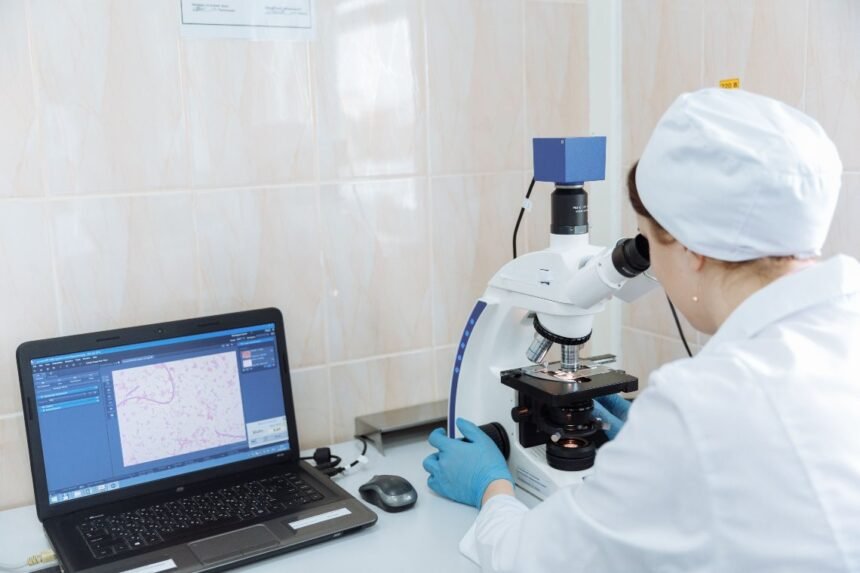
Independent laboratory screening helps provide analytical information about a finished deer placenta supplement that cannot be determined simply by reading the product label. While a supplement label identifies the ingredients that a manufacturer intends to include, laboratory testing can examine whether selected undeclared pharmaceutical substances or other specified analytes are detected in the submitted finished-product sample.
Laboratory screening should not be interpreted as proof that every possible substance has been examined or that a regulatory authority has approved a product. Instead, it represents one component of a broader quality assurance framework that may also include supplier qualification, manufacturing controls, ingredient verification, contaminant testing and batch traceability.
For consumers comparing deer placenta supplements, understanding how independent laboratory testing works can help them make more informed purchasing decisions.
Key Points
- Deer placenta supplements are animal-derived dietary supplements.
- Product labels alone cannot verify whether selected undeclared pharmaceutical substances are present.
- Independent laboratory testing provides analytical information about the submitted finished-product sample.
- Laboratory reports should always be interpreted according to their analytical scope, testing methods and reporting limits.
- Finished-product testing complements—but does not replace—responsible manufacturing and quality control.
- Some manufacturers voluntarily publish laboratory testing information to improve product transparency.
Why Laboratory Transparency Matters
Consumers today have access to more dietary supplement products than ever before. Product labels often describe ingredients, serving sizes, directions for use and storage instructions. However, labels represent the manufacturer’s declaration of the product’s intended composition.
A product label alone cannot independently verify whether a finished supplement contains only the declared ingredients or whether selected undeclared pharmaceutical substances have been detected through laboratory analysis.
For this reason, some manufacturers voluntarily commission independent laboratory testing as part of their broader quality assurance programme. These laboratory reports can provide analytical information that is not available from packaging or marketing materials alone.
This does not mean that deer placenta supplements should automatically be suspected of containing undeclared pharmaceutical substances. Rather, independent laboratory testing provides an additional layer of transparency regarding the finished product that has been manufactured and packaged for consumers.
Understanding Deer Placenta Supplements
Deer placenta supplements are a category of animal-derived dietary supplements that are marketed in various countries as part of general wellness routines. Formulations differ considerably between manufacturers.
Some products contain only deer placenta extract, while others combine deer placenta with botanical extracts, nutritional oils, vitamins or other dietary ingredients in a single formulation. Manufacturing processes, ingredient sourcing and quality-control systems may also vary between brands.
Because these products are supplied as finished capsules or softgels, consumers generally cannot evaluate product composition through appearance alone. This is one reason why documentation relating to manufacturing standards and laboratory testing may provide useful supplementary information when comparing different products.
Consumers evaluating deer placenta supplements may therefore wish to consider questions such as:
- Was the completed product independently tested?
- Is the laboratory report associated with a specific product batch?
- Does the report identify what was actually examined?
- Which independent laboratory performed the testing?
- Are the reported findings presented clearly and accurately?
These questions relate to transparency rather than product effectiveness and can assist consumers in understanding how a manufacturer approaches quality assurance.
What Are Undeclared Pharmaceutical Substances?
Undeclared pharmaceutical substances are pharmacologically active compounds that are present in a product without being declared on the product label.
Depending on the scope of a laboratory screening programme, these substances may include selected prescription medicines, over-the-counter drug ingredients, stimulants, corticosteroids, sedatives, weight-management drugs, sexual-performance medicines or chemically related pharmaceutical analogues.
The principal concern is not simply that a substance exists, but that consumers may unknowingly ingest an active pharmaceutical compound that has not been disclosed.
The U.S. Food and Drug Administration has repeatedly warned consumers that products containing hidden pharmaceutical ingredients may present significant health concerns because individuals and healthcare professionals may be unaware of potential medicine interactions or contraindications.
It is also important to understand what a laboratory report does not show.
A laboratory finding cannot determine whether a substance was intentionally added, introduced through accidental cross-contamination or entered the product through another point in the manufacturing or supply chain. Laboratory testing reports the analytical findings obtained from the submitted sample using the specified test methods.
Why Finished-Product Testing Provides Additional Information
Quality assurance begins long before a supplement reaches consumers.
Manufacturers typically evaluate raw materials, qualify suppliers and implement production controls throughout the manufacturing process. These activities remain essential components of responsible supplement manufacturing.
However, testing individual raw ingredients does not necessarily provide analytical information about the completed finished product after all ingredients have been combined, encapsulated and packaged.
Finished-product laboratory testing therefore answers a different question.
Rather than evaluating individual ingredients separately, it examines the completed product that consumers ultimately purchase.
This distinction is particularly relevant for complex formulations that combine multiple ingredients within a single softgel or capsule.
Independent finished-product testing can therefore complement manufacturing controls by providing additional analytical information about the actual product sample submitted for laboratory examination.
What Does Independent Laboratory Screening Examine?
There is no single laboratory method capable of identifying every pharmaceutical substance that could theoretically be present in every dietary supplement.
Instead, laboratory screening panels are developed according to their intended analytical purpose. The exact substances included may vary depending on factors such as:
- the product category;
- the intended consumer use;
- historical adulteration patterns;
- regulatory safety alerts;
- available analytical methods; and
- the scope requested by the client.
For this reason, consumers should avoid assuming that every laboratory report examines the same substances. The analytical scope should always be confirmed by reviewing the applicable laboratory documentation.
Depending on the laboratory programme, screening may include selected categories such as:
- stimulants;
- corticosteroids;
- prescription medicines;
- sedatives;
- weight-management drugs;
- sexual-performance medicines;
- pain-relief medicines;
- antihistamines; and
- specified pharmaceutical analogues.
Each category addresses different potential concerns. For example, undeclared stimulants may affect cardiovascular or nervous system function, while undeclared corticosteroids may present different considerations if exposure occurs repeatedly over time.
Understanding what was actually tested is therefore more meaningful than simply seeing the words “laboratory tested” on a product.
Why Product Labels Alone Are Not Enough
A dietary supplement label provides important information, including:
- declared ingredients;
- serving size;
- recommended use;
- warnings;
- storage instructions;
- allergen information; and
- manufacturer or distributor details.
However, a label is ultimately a declaration of intended product composition.
It cannot independently verify whether a finished product has been examined for selected undeclared pharmaceutical substances after manufacturing has been completed.
Laboratory reports serve a different purpose.
They identify information relating to the submitted sample, including:
- the product tested;
- the batch or lot number;
- analytical methods;
- testing scope;
- reporting criteria; and
- laboratory findings.
Both documents are valuable, but they answer different questions.
Reading the label tells consumers what the manufacturer intends the product to contain. Independent laboratory documentation provides analytical information relating to the specific sample submitted for testing.
Understanding “Not Detected”
One of the most commonly misunderstood laboratory terms is “Not Detected.”
Many consumers interpret this as meaning that a substance is absolutely absent.
In reality, laboratory reports should always be interpreted within the context of the analytical method used.
A “Not Detected” result generally means that the laboratory did not obtain analytical evidence meeting its established detection criteria for the specified substance in the submitted sample.
It does not necessarily mean:
- every possible pharmaceutical substance has been examined;
- the concentration is mathematically zero;
- another production batch would produce identical findings;
- a regulatory authority has approved the product; or
- the product has been proven completely safe.
Understanding these limitations is important because responsible interpretation strengthens, rather than weakens, confidence in laboratory testing.
Transparent manufacturers should accurately explain what laboratory findings mean without overstating their significance.
Why Batch-Specific Testing Matters
Laboratory reports normally apply only to the product sample identified within that report.
This is why batch identification is important.
A meaningful laboratory report should clearly identify:
- product name;
- dosage form;
- batch or lot number;
- testing laboratory;
- analytical method;
- substances examined; and
- reported findings.
Batch-specific documentation allows consumers to determine whether a laboratory report corresponds to the product they are purchasing.
It also improves transparency by connecting laboratory findings to a defined production batch instead of making broad statements that cannot be independently verified.
Laboratory testing should therefore be viewed as one component of an overall quality assurance system that also includes responsible manufacturing practices, supplier qualification, ingredient verification and production controls.
How Some Manufacturers Improve Transparency
Not every dietary supplement manufacturer publicly explains how independent laboratory testing fits within its overall quality assurance programme.
Some state that a product is “laboratory tested” without providing additional context regarding:
- what was examined;
- which independent laboratory performed the analysis;
- the analytical methods used;
- the scope of the testing; or
- how the reported findings should be interpreted.
Increasingly, however, some manufacturers are choosing to improve transparency by publishing educational information that helps consumers understand how finished-product laboratory testing is performed and how laboratory reports should be interpreted responsibly.
One example is EINNALAB, which has published detailed educational resources explaining its approach to independent laboratory screening for deer placenta supplements and the principles behind batch-specific testing, analytical scope and responsible interpretation of laboratory findings.
Consumers who would like to understand this approach in greater detail can explore EINNALAB’s guide to independent laboratory screening for deer placenta supplements as well as its article explaining how deer placenta supplements are manufactured and tested.
Publishing educational resources does not replace independent laboratory documentation, regulatory oversight or responsible manufacturing practices. Rather, it provides consumers with additional information that may help them better understand how one manufacturer approaches product quality, testing transparency and consumer education.
Conclusion
Independent laboratory screening represents one important component of responsible quality assurance for deer placenta supplements.
Although laboratory testing cannot establish the absence of every possible substance or guarantee product safety, it can provide valuable analytical information regarding the submitted finished-product sample when interpreted within its stated scope and limitations.
Consumers comparing deer placenta supplements should look beyond marketing claims and consider whether manufacturers provide meaningful information regarding product testing, manufacturing practices and batch-specific documentation.
Greater transparency helps consumers make more informed decisions and encourages higher standards throughout the dietary supplement industry.
Disclaimer
This article is provided for general educational and informational purposes only and does not constitute medical, regulatory, legal, or laboratory advice. References to independent laboratory screening, analytical methods, or “Not Detected” findings apply only to the specific samples, analytes, methods, detection limits, and reporting criteria examined. They should not be interpreted as proof that a product is free from every possible contaminant or undeclared substance, completely safe, effective, or approved by a regulatory authority. Consumers should review product information carefully and consult a qualified healthcare professional regarding supplement use, particularly if they take medications, have an existing health condition, are pregnant or breastfeeding, or have concerns about possible interactions.
References
- Tucker J, Fischer T, Upjohn L, Mazzera D, Kumar M. Unapproved Pharmaceutical Ingredients Included in Dietary Supplements Associated With US Food and Drug Administration Warnings. JAMA Network Open. 2018;1(6). DOI: 10.1001/jamanetworkopen.2018.3337.
- Vaclavik L, Krynitsky AJ, Rader JI. Mass Spectrometric Analysis of Pharmaceutical Adulterants in Products Labeled as Botanical Dietary Supplements or Herbal Remedies: A Review. Analytical and Bioanalytical Chemistry. 2014;406(27):6767–6790. DOI: 10.1007/s00216-014-8159-z.
- Rocha T, Amaral JS, Oliveira MBPP. Adulteration of Dietary Supplements by the Illegal Addition of Synthetic Drugs: A Review. Comprehensive Reviews in Food Science and Food Safety. 2016;15(1):43–62. DOI: 10.1111/1541-4337.12173.
- Chen Y, Zhao L, Lu F, Yu Y, Chai Y, Wu Y. Determination of Synthetic Drugs Used to Adulterate Botanical Dietary Supplements Using QTRAP LC-MS/MS. Food Additives & Contaminants: Part A. 2009;26(5):595–603. DOI: 10.1080/02652030802641880.
- Shin D, Kang HS, Kim H, Moon G. Multi-Class Determination of 64 Illicit Compounds in Dietary Supplements Using Liquid Chromatography-Tandem Mass Spectrometry. Molecules. 2020;25(19):4399. DOI: 10.3390/molecules25194399.
- White CM. Continued Risk of Dietary Supplements Adulterated With Approved and Unapproved Drugs: Assessment of the US Food and Drug Administration’s Tainted Supplements Database 2007 Through 2021. The Journal of Clinical Pharmacology. 2022;62(8):928–934. DOI: 10.1002/jcph.2046.