


Most people meet the Anti-CCP test the same way: a line item on a pathology report, a number, a unit they have never seen before, and a small asterisk pointing to a reference range. The number means something. What it means depends almost entirely on context, and that context is rarely printed on the page.
Anti-CCP is short for anti-cyclic citrullinated peptide antibodies. It has become one of the more useful blood markers in rheumatology, partly because of what it detects and partly because of when it starts to appear. This guide walks through what the units mean, why one laboratory’s cut-off is not another’s, and what a result actually tells a clinician who is looking at the whole patient rather than a single line of data.
What the Test Is Actually Measuring

Proteins in the body sometimes undergo a chemical change in which the amino acid arginine is converted into citrulline. This happens routinely and harmlessly in most people. In a subset of people, the immune system stops recognising these citrullinated proteins as self and begins producing antibodies against them. Those antibodies are what the assay picks up.
The reason this matters clinically is specificity. Rheumatoid factor, the older marker, detects a class of antibodies that turn up in plenty of situations having nothing to do with rheumatoid arthritis. Anti-CCP antibodies are far more selective. A landmark meta-analysis published in the Annals of Internal Medicine pooled data from 37 anti-CCP studies and 50 rheumatoid factor studies. It concluded that anti-CCP is the more specific of the two, and that it also does a better job of predicting which patients will go on to develop joint erosion.
There is a second reason clinicians pay attention to it. These antibodies can appear years before a person notices a swollen joint. A Swedish case-control study nested within a population blood donor cohort found anti-CCP antibodies in stored samples taken well before symptom onset, and a separate Dutch study of serial blood donor measurements reached a similar conclusion. The antibody is not a late-stage marker. It is often an early one.
Why a Doctor Orders It
The test rarely arrives out of nowhere. It usually follows a clinical picture that needs sharpening.
- Persistent joint symptoms with no obvious mechanical cause. Morning stiffness that lasts beyond half an hour, swelling across the small joints of the hands or feet, symptoms that show up on both sides of the body rather than one.
- A negative rheumatoid factor that does not settle the question. This is the situation the guidelines address most directly. The UK’s National Institute for Health and Care Excellence recommends in its rheumatoid arthritis guideline that clinicians consider measuring anti-CCP antibodies in adults with suspected rheumatoid arthritis who have tested negative for rheumatoid factor. A meaningful proportion of patients fall into exactly that gap.
- Early arthritis that has not yet declared itself. When several inflammatory conditions remain on the table, a positive anti-CCP result narrows the field considerably.
- Prognosis in someone already diagnosed. NICE also treats anti-CCP positivity as a marker of increased risk of radiological progression, which can shift the treatment target towards remission rather than simply low disease activity.
How the Sample Is Taken

A standard venous draw, usually from the arm, with no fasting required. Laboratories run the sample using immunoassay methods, and reports typically return within one to two working days.
Two practical points are worth raising with the collection staff. Mention every medicine and supplement being taken, including high-dose biotin, which can interfere with certain immunoassay platforms. Mention any existing autoimmune diagnosis, because it changes how a borderline result should be read.
Units, Values, and the Problem With Fixed Numbers
Results are usually reported in units per millilitre, written as U/mL, although some platforms report in relative units or as a ratio against an assay-specific calibrator. This is the first place confusion creeps in, because the unit itself is not standardised across manufacturers.
Many widely used assays apply a banding scheme along these lines:
| Category | Typical value on a 20 U/mL assay |
|---|---|
| Negative | Below 20 U/mL |
| Weakly positive | 20–39 U/mL |
| Moderately positive | 40–59 U/mL |
| Strongly positive | 60 U/mL and above |
Those figures are genuine, but they belong to a particular family of assays rather than to the test as a concept. Other platforms set their negative threshold at 5, 7, or 10 units, and some report on a ratio scale where anything below roughly 1.8 counts as negative. Reading a result against the wrong scale produces nonsense.
How much does this actually vary? A 2025 comparison in Diagnostics ran four different anti-CCP assays across the same 199 patients and found that, at each manufacturer’s own cut-off, sensitivity ranged from 76 to 99 per cent and specificity from roughly 70 to 99 per cent. Agreement between the assays was moderate at best. Two laboratories can test one patient, both perform the test correctly, and return numbers that are not directly comparable.
This is why the internationally recognised classification framework avoids fixed numbers altogether. The 2010 ACR/EULAR classification criteria define a result as low-positive when it sits above the upper limit of normal but no more than three times that limit, and high-positive when it exceeds three times the upper limit. The threshold travels with the laboratory. The interpretation travels with the multiple.
The practical instruction, then, is simple. Read the number against the reference range printed on that specific report, and take a copy of the full report to the consultation rather than the number alone.
What a Negative Result Does and Does Not Tell You
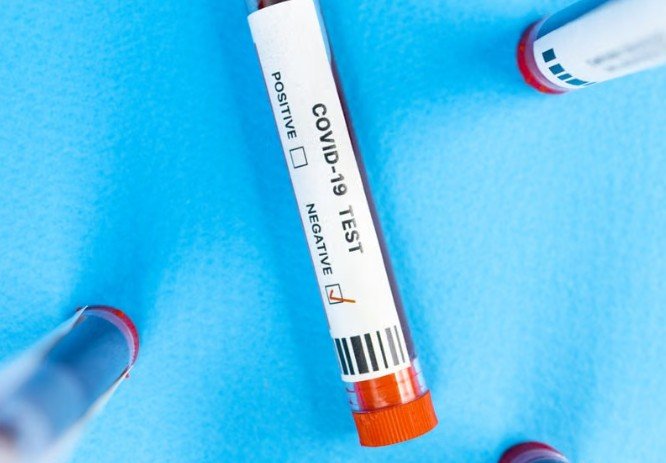
A negative anti-CCP result lowers the probability of rheumatoid arthritis. It does not eliminate it.
Somewhere between a fifth and a third of people with rheumatoid arthritis never develop detectable CCP antibodies. This group is described as seronegative, and the diagnosis in these cases rests on clinical examination, imaging, inflammatory markers, and the pattern of symptoms over time. The NHS puts the same point plainly in its guidance on diagnosing rheumatoid arthritis: no blood test can definitively prove or exclude the condition on its own.
A negative anti-CCP alongside a negative rheumatoid factor lowers the probability further. It still does not replace a clinical assessment, and it should never be the reason a person with persistent synovitis stops seeking review.
What a Positive Result Suggests
A positive result, particularly a high-positive one, is meaningful. In combination with suggestive symptoms and examination findings, it supports the diagnosis strongly, and higher values tend to associate with a more aggressive disease course: more inflammation, greater likelihood of erosive change on imaging, and a stronger case for starting disease-modifying treatment early.
The caveat matters as much as the finding. A high number is a probability statement about a population, not a forecast for an individual. Some people with substantial antibody levels have modest symptoms and respond well to treatment. Treatment decisions are built from the full clinical picture, not from the serology alone.
Anti-CCP antibodies can also appear, less commonly, in other conditions. Sjögren’s syndrome, lupus, and active tuberculosis have all been associated with positive results, which is another argument for interpreting the test in context rather than in isolation.
Anti-CCP Compared With Rheumatoid Factor
The two tests answer slightly different questions, which is why they are usually ordered together.
Rheumatoid factor is the broader net. It is raised in a range of chronic infections and other autoimmune conditions, and it is found in some healthy older adults, as MedlinePlus notes in its explanation of the test. It catches a lot, including a lot that is not rheumatoid arthritis.
Anti-CCP is the narrower and more precise instrument. When both come back positive, the diagnostic case is strong. When they disagree, the discordance is itself informative and prompts closer clinical evaluation rather than a conclusion. The Arthritis Foundation frames the whole panel the same way: each blood test contributes a piece, and no single one carries the diagnosis.
Honest Limitations
Three limitations are worth stating without hedging.
A negative result does not rule out rheumatoid arthritis. Cut-offs and units differ enough between platforms that results from separate laboratories should not be compared directly, particularly when tracking a value over time. And the test classifies probability rather than confirming disease, which is precisely why classification criteria combine serology with joint involvement, inflammatory markers, and symptom duration rather than relying on any one of them.
Where Testing Fits Into the Practical Picture
Because assay quality and consistency have a direct bearing on how a result should be read, the choice of laboratory is not a trivial detail. Accreditation, standardised methods, and a clearly printed reference range on the report are what allow a clinician to interpret a number with confidence, and what allow a repeat test months later to mean something when compared with the first.
An Anti-CCP test is widely available in India through accredited pathology networks, often alongside rheumatoid factor and broader autoimmune panels so the full picture can be assembled from a single sample. Lupin Diagnostics is among the providers offering this testing through NABL-accredited laboratories, with home sample collection available in several cities. Wherever the sample is processed, ask for the complete report rather than a summary result, and keep it for comparison against any future testing.
Final Thoughts
The anti-CCP test earns its place in the rheumatology workup. It is specific because it often turns positive early and because it carries prognostic weight rather than diagnostic weight alone. What it does not offer is a universal normal range that can be quoted from memory or looked up online and applied to any report.
The number on your report is meaningful against the range printed beside it, read by someone who has also examined your joints and heard your history. If you are dealing with joint pain, swelling, or stiffness that has not resolved, the useful next step is a conversation with a physician or rheumatologist about which tests belong in your workup, not a search for a threshold to measure yourself against.
Disclaimer
This article is provided for general information and educational purposes only. It is not medical advice, and it is not a substitute for diagnosis, treatment, or guidance from a qualified healthcare professional. Reference ranges for anti-CCP antibodies vary by laboratory, assay, and reporting unit, and no value discussed here should be applied to an individual report without professional interpretation. Test results must always be assessed alongside clinical examination, medical history, and other investigations. Do not start, stop, or change any treatment on the basis of information in this article, and do not delay seeking medical advice because of something you have read here. If you have persistent joint pain, swelling, or stiffness, consult a physician or rheumatologist.
References
- Nishimura K, Sugiyama D, Kogata Y, Tsuji G, Nakazawa T, Kawano S, Saigo K, Morinobu A, Koshiba M, Kuntz KM, Kamae I, Kumagai S. Meta-analysis: diagnostic accuracy of anti-cyclic citrullinated peptide antibody and rheumatoid factor for rheumatoid arthritis. Annals of Internal Medicine. 2007;146(11):797-808.
- Aletaha D, Neogi T, Silman AJ, Funovits J, Felson DT, Bingham CO 3rd, et al. 2010 rheumatoid arthritis classification criteria: an American College of Rheumatology/European League Against Rheumatism collaborative initiative. Annals of the Rheumatic Diseases. 2010;69(9):1580-1588. DOI: 10.1136/ard.2010.138461 (published simultaneously in Arthritis & Rheumatism. 2010;62(9):2569-2581.
- Rantapää-Dahlqvist S, de Jong BAW, Berglin E, Hallmans G, Wadell G, Stenlund H, Sundin U, van Venrooij WJ. Antibodies against cyclic citrullinated peptide and IgA rheumatoid factor predict the development of rheumatoid arthritis. Arthritis & Rheumatism. 2003;48(10):2741-2749.
- Nielen MMJ, van Schaardenburg D, Reesink HW, van de Stadt RJ, van der Horst-Bruinsma IE, de Koning MHMT, Habibuw MR, Vandenbroucke JP, Dijkmans BAC. Specific autoantibodies precede the symptoms of rheumatoid arthritis: a study of serial measurements in blood donors. Arthritis & Rheumatism. 2004;50(2):380-386.
- Lamara Mahammed L, Hadjout T, Bensaci A, Hamma R, Bousbia G, Dahmani N, Ismail H, Tamechmacht N, Djidjik R. Comparative evaluation of four different anti-CCP assays for the diagnosis of rheumatoid arthritis: a diagnostic performance analysis. Diagnostics (Basel). 2025;15(10):1293.