


A tablet is a small object with a demanding job. It has to hold together on a shelf for two years, survive shipping and rough handling, then come apart at exactly the right pace once it reaches the stomach. Two tablets can look identical, weigh the same, and still behave nothing alike once they begin to dissolve. That gap between appearance and behavior is the problem dissolution testing exists to close.
The instruments that measure this behavior, dissolution testers, place a dosage form in a heated vessel of fluid meant to stand in for the gut, then track how much of the active ingredient enters solution over time. The resulting curve, known as the dissolution profile, tells a quality team far more about a batch than any visual inspection ever could. Here are ten reasons that curve has become one of the most closely watched measurements in the business.
A Practical Window Into Absorption
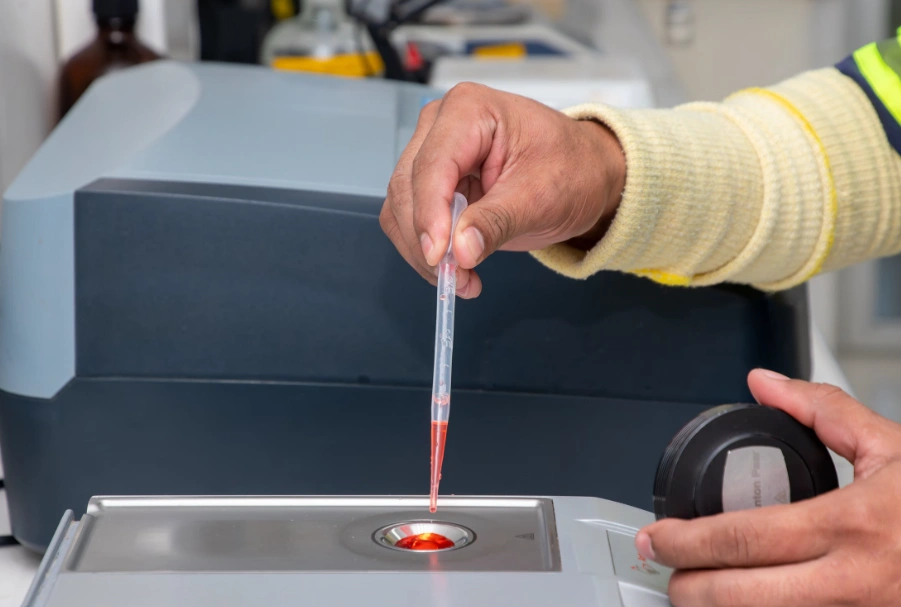
No laboratory vessel truly mimics the human digestive tract, but the rate at which a solid dose dissolves often tracks closely with how much drug actually reaches the bloodstream. That relationship is not a hunch. It rests on the framework linking in vitro dissolution to in vivo absorption that scientists formalized decades ago, and it lets formulators anticipate pharmacokinetic behavior long before a molecule ever reaches a clinical trial. For immediate-release, extended-release, and enteric-coated products alike, an early read on the dissolution profile is an early read on whether the formulation is likely to work in a real patient.
Consistent Behavior From One Batch To The Next
Manufacturing is never perfectly repeatable. Raw material lots shift slightly in particle size, compression forces drift over a long run, and coating thickness can vary by a few microns from morning to afternoon. Any of these can change how quickly a tablet breaks down without changing anything a person can see. Dissolution testing turns that hidden variability into a number. By running each batch against a validated reference and comparing profiles through the standardized apparatus and acceptance limits of USP General Chapter 711, a team can flag a drifting process before the product ships rather than after complaints start arriving.
Evidence Regulators Expect To See
Bringing a drug to market in the United States means documenting quality at every turn, and dissolution data sits near the center of that record. Regulators expect it for essentially every solid oral dose, and it forms part of both new drug applications and generic filings. Meeting the expectations set out in the FDA’s guidance on dissolution testing gives reviewers concrete proof that a product performs to specification. For a generic manufacturer, a strong comparative profile is often the shortest defensible route through review, which is another way of saying it is the difference between launching on schedule and waiting in line.
A Faster Path Through Formulation Work

During development, the dissolution vessel doubles as a diagnostic bench. Scientists lean on it to screen excipients, dial in compression settings, and judge how a new coating changes release. Because a profile can be generated quickly, the loop between trying something and seeing the result stays short, and short loops are what let a formulation improve in weeks instead of quarters. Whether the goal is a fast-acting pain reliever or a controlled-release therapy meant to last a full day, the data keeps guesswork to a minimum and points the next experiment in the right direction.
An Early Warning For The Production Line
A change in dissolution behavior often shows up before anything else does. If a press is running too hard and tablets come out denser than intended, disintegration slows and the profile shifts, sometimes while every other in-process check still reads normal. Treated as a trend rather than a single pass or fail result, dissolution testing becomes a quiet early-warning system for the plant. Catching a drifting parameter at that stage means adjusting one machine instead of scrapping a warehouse of finished product, which protects both the schedule and the margin.
Proof That A Product Lasts
A medicine has to remain the medicine for the whole of its labeled shelf life. Stability studies put a product through heat, humidity, and light to see how it holds up, and dissolution is one of the attributes checked at each interval. If release slows as a formulation ages, the profile reveals it, and that finding feeds directly into expiration dating and storage instructions. Running these checks under internationally harmonized stability-testing protocols is how a company can stand behind the claim that a tablet works as well in month twenty-three as it did on the day it was packed.
Building Quality In Rather Than Testing It Afterward
The industry has spent years moving away from the idea that quality is something you catch at the end of a line. The Quality by Design framework set out in ICH Q8 asks manufacturers to understand, up front, how each process variable affects the finished product, and dissolution is usually the most sensitive attribute on that map. Once a team knows how formulation and process inputs move the dissolution curve, it can define a range within which quality holds steady. That reduces the reliance on end-product inspection and replaces it with genuine process understanding, which is a far more durable foundation.
Skipping Studies That Are No Longer Necessary
Some human studies can be avoided altogether. Under defined conditions, regulators permit biopharmaceutics-based biowaivers, allowing a company to substitute a rigorous dissolution comparison for an expensive bioequivalence study on a lower-strength version of an already-validated product. With a sufficiently discriminating method, the data can show that a smaller dose behaves like a larger one that has already cleared clinical review. The result is lower development cost and faster access to the different strengths that pediatric and older patients so often need.
An Edge In A Crowded Generic Market
Generic manufacturing runs on thin margins and tight timelines, and small efficiencies decide who profits. A well-built dissolution method shortens the road to approval through the abbreviated new drug application, and being first to market with a generic version of a major drug can be worth a great deal. Consistent, defensible data also earns something less tangible but genuinely valuable, a reputation with regulators for getting the science right, and that reputation tends to smooth every submission that follows.
Reason All Of This Matters

Underneath the regulatory and commercial arguments sits the plain one. A tablet that fails to dissolve properly can pass through the body without delivering its dose, and the consequences range from a treatment that quietly does nothing to, in the case of antibiotics, feeding the spread of drug-resistant infections that make future illness harder to treat. Dissolution testing is the last checkpoint standing between a specification on paper and a person who is counting on the pill to work. Every profile that lands where it should is a small guarantee that the medicine will do what the label promises.
Where The Measurement Fits
From the prototype in a development lab to the final release of a commercial batch, dissolution testing threads through the entire life of a solid oral drug. It informs regulatory strategy, protects the production line, supports the promise printed on the bottle, and, in the end, helps ensure that people receive medicine that actually performs. As delivery systems grow more elaborate and oversight grows more demanding, the humble vessel of heated fluid and the profile it produces will only matter more. For any organization serious about quality, it is less a piece of equipment than a standing commitment to the people who take what it makes.
Disclaimer
This article is provided for general informational and educational purposes only and does not constitute regulatory, legal, medical, or professional advice. Dissolution methods, acceptance criteria, and submission requirements vary by product and change over time, so any decision affecting formulation, testing, or regulatory strategy should rest on the current official guidance from bodies such as the FDA, USP, and ICH, together with the judgment of a suitably qualified professional. Neither the author nor the publisher accepts responsibility for actions taken on the basis of this content.