


Specialty practice has a particular shape. The diagnoses are narrower but deeper, the follow-ups more frequent, and the documentation shifts noticeably from one condition to the next. Drop a rigid, one-size-fits-all record system into that environment, and you feel the mismatch immediately: visits slow down, findings scatter across screens that weren’t built for them, and a team already carrying a dense clinical load spends its energy fighting the software instead of using it. It’s not a small tax, either. A scoping review of EHR usability found that when a system’s design doesn’t line up with how clinicians actually work, the result is added cognitive load and a documentation burden that quietly disrupts the whole workflow.
Adaptable workflows are the antidote. When intake, charting, orders, and follow-ups can be shaped to match how care is genuinely delivered, the friction drains out of the day. Patients notice quickly their records read more clearly and their visits feel less like a data-entry session with a doctor attached. Below is where that flexibility actually earns its keep.
Charting In The Order Your Brain Actually Works

One visit revolves around symptoms; the next is about treatment response, or imaging, or a lab review. Flexible charting lets the note follow that real sequence instead of forcing findings into a fixed skeleton that fights your reasoning. That matters more than it sounds, because documentation has quietly become the heaviest thing many clinicians carry. Research popularized by the American Medical Association found that physicians spend roughly two hours on the EHR and desk work for every hour of direct patient care, plus one to two more hours of after-hours “pajama time” each night. When notes can be built in the order a clinician actually thinks, they’re faster to write and far easier to read later, which is what keeps continuity intact when several clinicians share responsibility for the same patient over months.
A System That Fits On The First Day, Not The Hundredth
Choosing a record platform comes down to a deceptively simple question: can your daily work fit the system without bending your clinical judgment to accommodate it? The federal Office of the National Coordinator frames the whole point of an EHR as putting complete patient information in one place so clinicians can make well-informed decisions quickly and cut down on avoidable safety risks. A record can only do that if it reflects how a given specialty thinks.
This is exactly why practices weighing EMR for specialty care clinics tend to scrutinize whether visit types, repeat assessments, symptom tracking, and specialty-specific notes can mirror real practice patterns. It’s a live concern in cardiology, nephrology, endocrinology, and sleep medicine, where encounters share a common skeleton but flex constantly with each patient’s status. A platform that assumes every visit is the same is fighting the specialty from day one.
Intake That Earns Its Place
A specialty visit should open with information worth having. Adaptable intake collects details tied to the actual reason for care, so front-desk staff aren’t marching patients through fields that add nothing clinically, and patients aren’t reciting the same history for the third time. The clinician opens the chart already oriented to real context instead of noise, which makes the pre-exam review faster and leaves far fewer gaps to chase down once the visit begins. Relevance at the front end pays dividends through the entire encounter.
Templates That Guide Without Getting In The Way
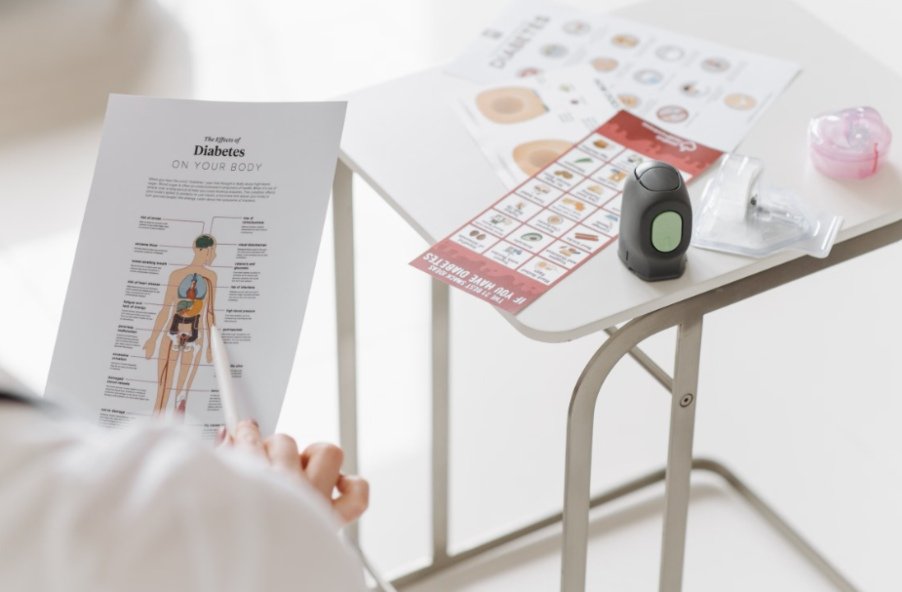
Templates are a gift right up until they flatten your judgment into a checklist. A specialty clinic realistically needs one structure for a new consultation, another for routine surveillance, and a third for an urgent concern and the ability to move between them without the note turning to clutter. The same tension shows up with order sets, which function as decision-support templates: an informatics analysis of order sets weighs their real efficiency and safety gains against the risk that a static set quietly goes stale as the evidence moves on. Adaptable tools thread that needle in a familiar framework the staff already knows, with prompts, required fields, and order sets they can reshape when a visit demands something more specific.
Orders That Land Where They Belong
Specialty treatment tends to hinge on labs, imaging, referrals, monitoring devices, and repeat testing. Every one of those is an order that either flows naturally or becomes a scavenger hunt through unrelated menus. Configurable workflows put those actions where they belong inside the encounter, which is not a cosmetic nicety: the AHRQ patient-safety literature credits computerized order entry with ensuring standardized, legible, complete orders, and notes that its real safety value comes from pairing it with decision support. Tighten that sequence, and you cut the delays, sharpen the handoffs, and send patients out the door actually understanding what happens next. Consider that one clinician famously counted 32 clicks to order and record a flu shot; the number of steps between “I’ve decided” and “it’s ordered” is not a trivial detail.
Seeing The Trend Before It Becomes A Problem
Long-term specialty care lives and dies on trend recognition. A kidney clinic is watching filtration decline, albumin loss, and pressure control; a cardiology group is tracking rhythm burden, imaging changes, and exercise tolerance. When a record keeps the right measures visible across months or years instead of burying them, treatment decisions come faster and land more accurately. Keeping that longitudinal picture whole also spares patients redundant workups; physicians who exchange records report that roughly eight in ten see a reduction in duplicate test ordering, alongside gains in care quality and coordination. The trend line only helps if the system will actually show it to you.
Onboarding That Doesn’t Feel Like Starting Over
Training gets dramatically easier when the screens mirror the clinic’s real routines. New hires come up to speed faster when prompts appear in a logical order, and each role sees the steps tied to its own work: medical assistants, billers, and clinicians each looking at their slice rather than the whole undifferentiated system. That’s not just a nicety for onboarding; it’s a hedge against the friction that usability problems create in the first place, and it pays off precisely when schedules tighten, staffing turns over, or volume spikes, and there’s no room for guesswork.
Cleaner Notes Make For Cleaner Claims
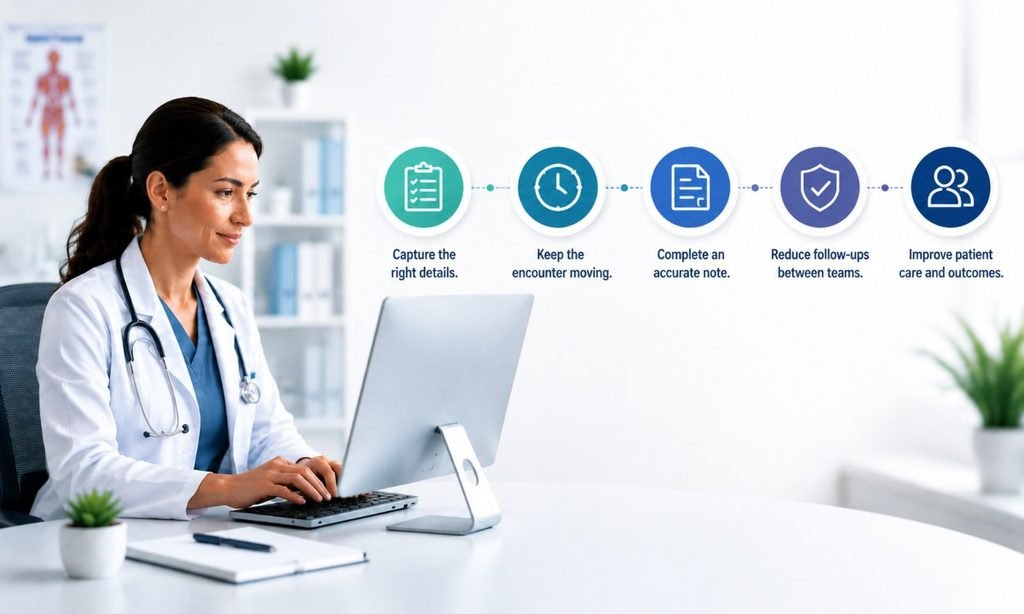
Most coding problems are born during documentation, not after it. Adaptable workflows can surface the elements a claim needs while the encounter is still fresh in the clinician’s mind, which cuts down on the back-and-forth messages between billing and clinical staff later. That matters because, under CMS rules, medical necessity is the overarching criterion for payment, and the 2021 office-visit changes let clinicians choose a visit level based on medical decision-making or total time, both of which depend entirely on what the note captures. A record that prompts for the right detail, in context, does more to justify visit level and ordered services than any amount of retroactive cleanup.
Visit Isn’t Over When The Patient Leaves
Specialty care continues long after the office door closes, and flexible workflows can carry it forward, triggering reminders for repeat testing, surveillance visits, medication checks, or symptom review based on the diagnosis and treatment stage. That kind of consistency is the backbone of safe chronic-disease management; AHRQ’s work on health IT for chronic conditions points to EHRs with built-in decision support, reminders, and patient-facing tools as the mechanism that keeps the necessary steps from slipping through the cracks. Patients get clearer direction, too, which quietly erases a lot of confusion about timing, preparation, and the purpose of the next step.
Compounding Payoff
None of this comes entirely for free; configuring a system to fit a specialty takes real work up front, and anyone who tells you otherwise is selling something. But that’s rather the point: the effort goes in once, deliberately, and then keeps paying out. Highly adaptable EMR workflows let documentation track the way care is actually delivered, and the benefit shows up everywhere at once: cleaner intake, faster charting, smoother orders, sharper trend tracking, defensible billing, and reliable follow-up. Any single gain looks modest on its own. Stacked together, they add up to something a rigid system can’t reach: staff working with fewer interruptions, records that hold up under real decisions, and care that feels focused, organized, and genuinely responsive across the long arc of treatment.
Disclaimer
This article is for general informational purposes only and does not constitute clinical, legal, financial, regulatory, or professional compliance advice. References to specific products, vendors, or platforms are illustrative and do not represent endorsements. Coding, billing, documentation, and regulatory requirements, including CMS and payer rules, change over time and vary by setting and specialty. Practices should confirm current requirements and consult qualified professionals before making purchasing, compliance, reimbursement, or clinical-workflow decisions based on this content.