

One of the most common questions I hear in my office is: “What can I use instead of sugar?” Whether you’re managing diabetes, trying to lose weight, or just looking to cut back on sugar, you’ve probably heard about stevia.
Stevia sounds almost too good to be true. It’s natural, has zero calories, and doesn’t raise blood sugar. But like most things in medicine, the whole story is a bit more nuanced.
What Stevia Actually Is
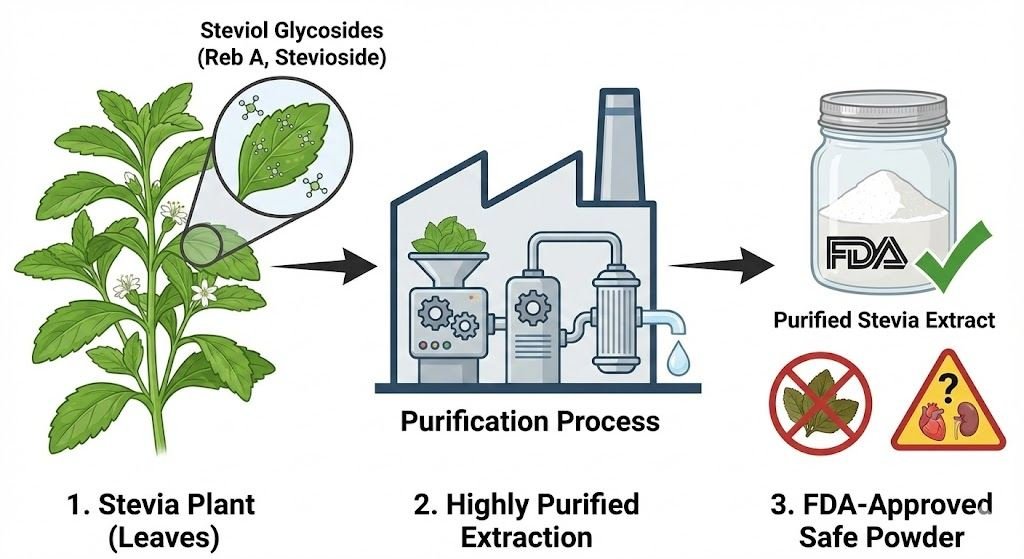
Stevia comes from the leaves of a plant called Stevia rebaudiana. The leaves contain lovely compounds, hundreds of times sweeter than regular sugar, but without the calories or blood sugar impact.
Here’s the critical part: the white powder you buy at the grocery store isn’t just ground-up leaves. It’s a highly purified extract of the sweet compounds from those leaves. These compounds are called steviol glycosides, and the main ones you’ll see mentioned are rebaudioside A (often shortened to Reb A) and stevioside.
The FDA has approved these purified extracts as safe sweeteners. However, they have not approved whole stevia leaves or crude extracts because there are ongoing questions about their effects on the heart and kidneys. Stick with the purified products you find in stores.
Why Stevia Works So Well for Diabetes
If you’re managing diabetes, stevia has one significant advantage: it doesn’t affect your blood sugar.
- No blood sugar spike: When you eat regular sugar, your blood glucose shoots up, and your body releases insulin to handle it. Stevia doesn’t trigger this process. Your body doesn’t metabolize it the same way. Instead, it passes through your upper digestive system essentially unchanged. Gut bacteria break it down in your colon, but the end products don’t affect your blood sugar or add meaningful calories.
- Zero calories, zero carbs: This means you can enjoy sweetness without it counting against your carbohydrate budget for the day.
- Real-world impact: I’ve had patients who were drinking multiple sweetened coffees and sodas every day without realizing how much sugar they were consuming. One patient with newly diagnosed Type 2 diabetes was devastated because she thought she’d have to give up everything she enjoyed drinking.
We worked together to switch her sweetened drinks to stevia versions and her coffee sugar to stevia powder. She eliminated over 50 grams of sugar from her daily diet without feeling deprived. Combined with some moderate walking, her fasting blood sugar improved dramatically within three months. She told me later that this one change made managing diabetes feel actually doable, not impossible.
Downsides You Should Know About
Stevia isn’t perfect. Here are the practical issues I discuss with every patient:
Taste Problem
Let’s be honest: many people find stevia has a weird aftertaste. It can taste bitter or licorice-like, especially if you use too much. This happens because different stevia products contain different blends of those sweet compounds I mentioned earlier.
Stevioside tends to be more bitter. Reb A is usually cleaner tasting. Companies are constantly tweaking their formulas to reduce the aftertaste, so if you tried stevia years ago and hated it, you might want to give newer products a chance.
Pro tip: Less is more with stevia. Because it’s so intensely sweet, using too much is the fastest way to get that unpleasant aftertaste. Start with less than you think you need.
Stomach Issues from Fillers
Here’s something that catches people off guard: many stevia products are mixed with filler ingredients to make them easier to use. Pure stevia powder is so concentrated that a tiny amount goes a long way, which makes it hard to measure for everyday use.
To solve this, companies often add bulk agents such as erythritol (a sugar alcohol) or dextrose and maltodextrin (which are forms of sugar). These fillers let the stevia measure cup-for-cup like regular sugar, which is convenient, but they come with their own issues.
- Erythritol and sugar alcohols: While these are generally well-tolerated, eating too much can cause bloating, gas, and diarrhea. If you’ve ever eaten a whole bag of sugar-free candy and regretted it, you know what I’m talking about.
- Dextrose and maltodextrin: These absolutely do raise blood sugar. If you have diabetes and you’re using a “stevia blend” that contains these, you’re defeating the purpose. Always read the ingredient list and check the carbohydrate count on the label.
Sweetness Trap
Stevia is hundreds of times sweeter than sugar. While that sounds great, there’s a potential psychological downside. If you’re constantly consuming lovely things (even if they’re zero-calorie), your brain stays programmed to expect intense sweetness.
This can make it harder to adjust your taste preferences toward naturally sweet foods like fruit or to appreciate foods that aren’t super sweet. Over time, some people find it helpful to reduce all sweeteners to reset their palate gradually. But that’s a personal choice.
How Stevia Compares to Other Sweeteners
When patients ask me which sweetener is best for diabetes, here’s my practical breakdown:
- Stevia: Zero impact on blood sugar. Main issues are the aftertaste and potential fillers. Generally safe and natural.
- Sucralose (Splenda): Zero impact on blood sugar for most people. Some research suggests it might affect gut bacteria, and a small number of people seem to have an insulin response to it. Heat stable for cooking.
- Aspartame (Equal, NutraSweet): Zero impact on blood sugar. Breaks down at high temperatures, so not great for baking. Some people have safety concerns, though it’s been extensively studied and approved.
- Sugar alcohols (xylitol, sorbitol): Low glycemic impact but not zero. The main issue is digestive upset. Even small amounts can cause diarrhea in sensitive people.
My recommendation: For people with diabetes, stevia and sucralose are usually your best bets because they reliably don’t affect blood sugar. But everyone’s different. Try a small amount first to see how your body reacts, mainly if the product contains sugar alcohols.
How to Use Stevia Safely and Effectively
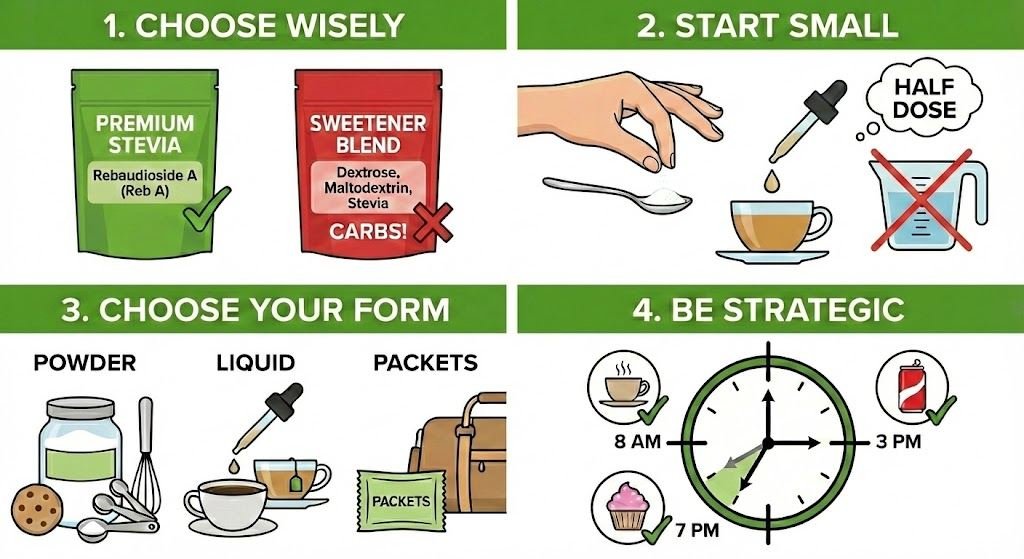
Getting good results with stevia is about choosing the right product and using it correctly.
Choose High-Quality Products
Look for stevia that lists Rebaudioside A (Reb A) as the main ingredient. This usually means better taste with less bitterness.
Read the ingredient list carefully. If you see dextrose or maltodextrin high on the list and the package shows significant carbohydrate content, that product will raise your blood sugar. Pass it on if you’re managing diabetes.
Start with Small Amounts
Because stevia is so concentrated, a little goes a long way. When you’re first experimenting with it, use about half of what you think you need. You can always add more, but you can’t fix something too sweet and bitter.
Consider the Form
- Powder: Usually the most economical and works well for baking and recipes. Easier to measure consistently.
- Liquid drops: Convenient for adding to coffee or tea, but often contain alcohol or glycerin as carriers. It can be harder to measure precisely for recipes.
- Packets: Good for on-the-go use, but check what else is in the packet besides stevia.
Be Strategic About When You Use It
Think about where you’re getting the most sugar in your diet and target those areas first. Is it your morning coffee? Your afternoon soda? Desserts? Start by replacing sugar with stevia in one or two high-impact areas rather than trying to overhaul everything at once.
A Few Final Thoughts
Stevia can be an excellent tool for managing blood sugar and reducing your overall sugar intake. It’s not magic, and it’s not for everyone. Some people love it, some people can’t get past the taste, and that’s okay.
The most important thing is finding an approach that helps you stick to your health goals without making you miserable. If stevia helps you eliminate 30 or 40 grams of sugar from your daily diet while still enjoying your food, that’s a win. If you try it and hate it, there are other options.
Whatever you choose, read labels carefully. Watch how your body responds. And remember that the ultimate goal isn’t to find a perfect sugar substitute. It’s to gradually reduce your dependence on intensely sweet flavors altogether while managing your blood sugar effectively.
If you’re on diabetes medications, especially insulin, talk to your doctor or diabetes educator before making significant changes to your diet. Even positive changes like cutting sugar can affect your medication needs.
Medical Disclaimer
This article is for educational purposes only and does not replace personalized medical advice. If you have diabetes, other health conditions, or take medications, please consult with your healthcare provider before making significant dietary changes or using new sweeteners. Never stop or change your medications without medical guidance.
References
- U.S. Food and Drug Administration (FDA). (2023). Additional Information about High-Intensity Sweeteners.
- Chattopadhyay, S., et al. (2014). The health aspects of stevia plants and stevioside. Journal of Agricultural and Food Chemistry.
- Gardner, C., et al. (2012). Nonnutritive sweeteners: current use and health perspectives. Diabetes Care.
- European Food Safety Authority (EFSA). (2010). Scientific Opinion on the safety of steviol glycosides for the proposed uses as a food additive.
- Shivanna, N., et al. (2013). Stevia rebaudiana: A natural zero-calorie sweetener. Critical Reviews in Food Science and Nutrition.
- World Health Organization (WHO). (2023). Non-sugar sweeteners: The WHO advises against using NSS for weight control.
- Maki, K. C., et al. (2008). Chronic consumption of rebaudioside A, a steviol glycoside, in men and women with type 2 diabetes mellitus. Food and Chemical Toxicology.