

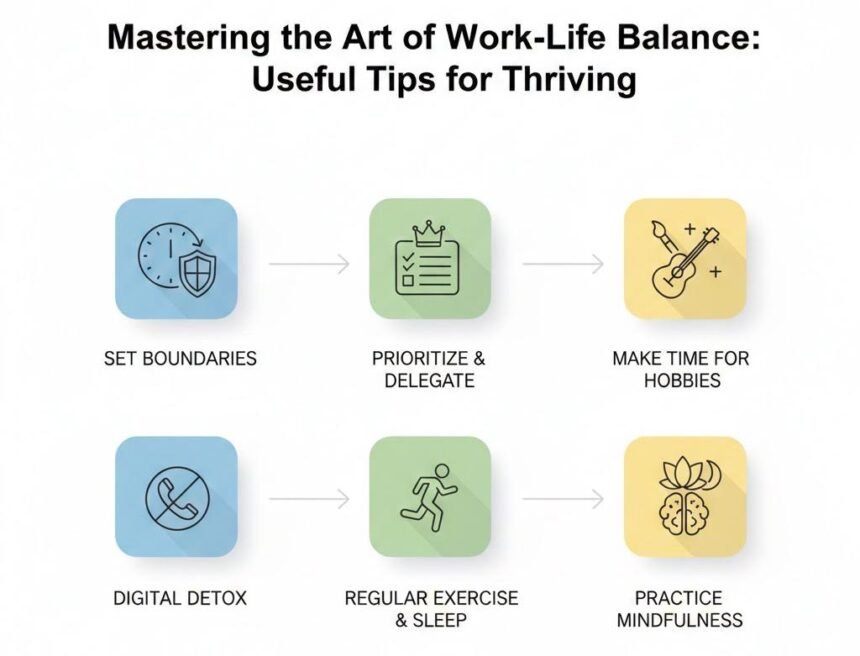
People are always harping on about the importance of a work-life balance, when the simple truth is that it’s easier said than done.
In theory, balancing work and play makes Allen from Accounting a star employee and team player. Then there’s Helen from HR, who’s constantly complaining about nobody showing up for Wellness Wednesdays.
There’s no disputing that it works. Various studies support the hypothesis that balance creates engaged and happy workers, except for Helen. (She’s still sitting in the corner office trying to figure out her life, and why Allen from Accounting hasn’t called her back.) You’re more attuned to your relationships outside the office. You have boundaries.
And yet, that’s the assumption. A review article published in Heliyon found a few gaping holes. Despite attempts to consolidate the field, research on work-life balance remains scattered and disconnected.
While most of the findings point to anecdotal evidence, work-life balance is more important to employees than ever. Citing a recruitment company’s annual survey, The Guardian reports that a healthy work-life balance means more to staff than a salary.
We’re not here to reinvent the wheel, and we’re not going to fix what isn’t broken. But we also know that life is not a box of chocolates, contrary to what Forrest Gump says.
In the spirit of continuity, we’ve set out to find tangible ways to master the art of work-life balance.
Flexibility Is Your Friend
Don’t let anyone minimise the value of flexibility. Even the best-laid plans require some adaptability.
Many people who study while maintaining their day jobs can attest to this. It’s also why the popularity of online courses has skyrocketed over the years. Those in the nursing profession, in particular, are skilled at balancing work, home, and studies.
However, it comes with its challenges. Findings published in Scientific Reports reveal that female graduate nursing students in lower-middle-income countries rely on coping strategies such as social support.
Others choose online nursing programs to obtain a nursing degree. For instance, direct-entry MSN programs for non-nursing majors are explicitly designed for students with bachelor’s degrees in other fields who wish to pursue a nursing career. The MSN program enables students to earn a Master of Science in Nursing (MSN) degree in 20 months via a collegiate nursing education, including clinical hours.
During this time, Elmhurst University explains that nursing students prepare to take the registered nurse licensure exam and clinical nurse leader certification exam. This study model allows you to manage personal and professional commitments while integrating family and work responsibilities without sacrificing either.
Prioritise What Matters to You
Not all tasks demand your utmost attention. Identify core responsibilities and focus your energy there. This principle helps prevent burnout and gives you the mental bandwidth to enjoy personal life.
Mental Health America (MHA) recommends creating boundaries between work and personal time. Setting boundaries protects mental health, reduces anxiety, and supports long-term productivity.
You can’t prioritise what needs doing if you can’t manage your time effectively. It is the backbone of balance. Break tasks into smaller, manageable chunks and schedule them thoughtfully.
Consider using digital tools or simple planners to organise work and personal responsibilities. Working parents benefit from structured routines. Forbes suggests scheduling family activities alongside work tasks to create predictable routines that reduce stress and uncertainty.
Support
Carrying a mental load alone is tiring. Balance isn’t achieved in a bubble.
That study we mentioned earlier on female graduate nursing students? It hits the nail on the head by showing that social and professional support improve outcomes.
Female graduate nursing students in Ghana leveraged family, friends, colleagues, and religious networks to manage academic and work stress. Small gestures, such as sharing household chores, delegating tasks, or seeking mentorship, can free up mental space and reduce feelings of overwhelm.
Which brings us to self-care. Personal well-being impacts productivity and satisfaction. Regular exercise, sleep, and mindfulness are essential, even if it’s short daily practices.
The Be Kind People Project asserts that integrating self-care into routines builds resilience, boosts mental health, and enhances performance in all areas of life.
Learn from Role Models
Real-life examples can inspire practical strategies.
Cisco Chief Product Officer Jeetu Patel credits his balance to prioritising family time without compromising performance at work. He emphasises that balance isn’t perfect; it’s about intentional trade-offs and conscious choices.
Similarly, Anna Burgess Yang found that improving work-life balance boosted her career. She tells Fast Company that setting clear boundaries allowed her to perform better professionally while enjoying life outside of work.
Burgess Yang and Patel share common ground. Their work ethic reflects the fluidity of work-life balance. Things change. New jobs, family additions, or advanced studies require constant reassessment.
Flexible planning allows you to adapt, preventing burnout and fostering long-term success.
Other Side: Is Work-Life Balance a Myth?
Not everyone believes balance is achievable. Some entrepreneurs argue that work-life balance is an unrealistic expectation that can manifest in guilt and stress.
They claim that high-performing individuals temporarily sacrifice personal time to achieve long-term goals.
The truth?
Balance doesn’t mean equal hours or perfection. It’s about intentional prioritisation, conscious trade-offs, and sustainable routines. Recognising that perfection is impossible can reduce frustration and make your goals more attainable.
Tools and Strategies for Success
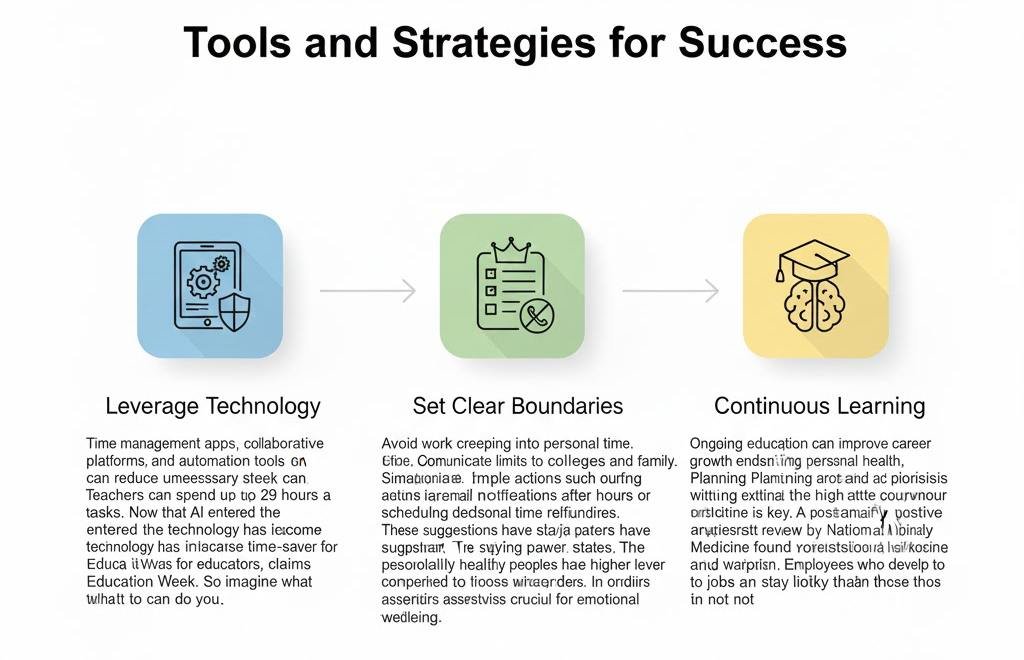
Leverage Technology
Time management apps, collaborative platforms, and automation tools can reduce unnecessary stress.
Teachers can spend up to 29 hours a week on non-teaching admin tasks. Now that AI has entered the group chat, the technology has become an immense time-saver for educators, claims Education Week. So imagine what it can do for you.
Set Clear Boundaries
Avoid work creeping into personal time. Communicate limits to colleagues and family. Simple actions such as turning off email notifications after work hours or scheduling dedicated personal time reinforce boundaries.
These suggestions have staying power. The journal Personality and Environmental Issues states that psychologically healthy people have a higher level of assertiveness compared to those with mental disorders. In other words, assertiveness is crucial for emotional well-being.
Continuous Learning
Ongoing education can improve career growth without endangering personal health. Planning and prioritising coursework within an existing routine is key.
A systematic review by the National Library of Medicine found a positive relationship between professional development and workforce participation. Employees who develop new skills or training are more likely to stay in their jobs than those who do not.
Why Balance Looks Different for Everyone
Work-life balance isn’t a universal formula. What works for a parent of three won’t look the same for a single student juggling night classes and a full-time job.
Students in accelerated graduate programs face intense coursework and clinical rotations. Their version of balance isn’t leisurely afternoons off. It’s strategic scheduling, disciplined self-care, and leaning on support systems when the going gets tough.
The study on Ghanaian nursing students reinforces this point. While some participants relied heavily on their families for child care and emotional support, others depended on peers or their faith.
No two coping strategies were alike. Balance is personal, shaped by culture, resources, and life stage.
Science of Burnout
Most conversations about balance are incomplete without discussing burnout.
It’s not just “being tired.” The clinical condition is caused by ongoing stress and results in emotional exhaustion and a drop in job satisfaction.
The MHA explains that prolonged imbalance can lead to anxiety, depression, sleep issues, and weakened immunity. It can trigger physical symptoms like headaches, stomach issues, and chronic fatigue.
The revelation aligns with Personality and Environmental Issues’ findings, highlighting emotional well-being as a cornerstone of work-life balance. The research notes that individuals who prioritise personal time experience higher motivation, better concentration, and stronger emotional regulation.
This is your cue to participate in meaningful hobbies. People who enjoy reading, cooking, crafting, and sports report higher satisfaction levels than those who “rest” during downtime. Rest matters, but restorative activities matter more.
Reclaim Your Moments
If you’re choosing to work long hours for a specific goal and it energises you, that can be sustainable in the short term. Problems arise when long hours are driven by guilt, pressure, or fear rather than by passion or purpose.
Micro-breaks matter. Walk between meetings. Stretch before your next task. These tiny shifts decrease cognitive fatigue. Don’t hesitate to press the “mute” button.
According to Forbes’ rules for balance, constant digital interruptions are one of the biggest modern culprits of stress. Turn off email alerts after hours. Set Slack to “Do Not Disturb.”
Teachers in virtual schools share that flexible mornings, where they could exercise, journal, or breathe, improved their overall well-being. A small, calm start can shape your entire day.
By applying these principles, you can craft an existence where work and personal commitments coexist instead of Forrest Gump ‘ing your way through life.
Remember, balance isn’t a destination; it’s a continuous, intentional practice.
Disclaimer
This content is for general informational purposes only and should not be interpreted as professional, medical, psychological, legal, educational, or career advice. Everyone’s circumstances differ, and decisions about work, health, or education should be made with guidance from qualified professionals who understand your specific situation. Any external studies, surveys, or expert opinions referenced here are provided for context and should not be taken as definitive prescriptions for action.