


Many individuals, as they age, notice the emergence of vertical cords or “bands” running down their neck. These platysmal bands can be a source of self-consciousness, contributing to an aged appearance that doesn’t always reflect how one feels. We understand the desire for a smooth, youthful neck contour. These bands are a natural consequence of muscle activity and skin changes over time, but modern aesthetic medicine offers effective strategies to minimize their appearance.
What Are Platysmal Bands?
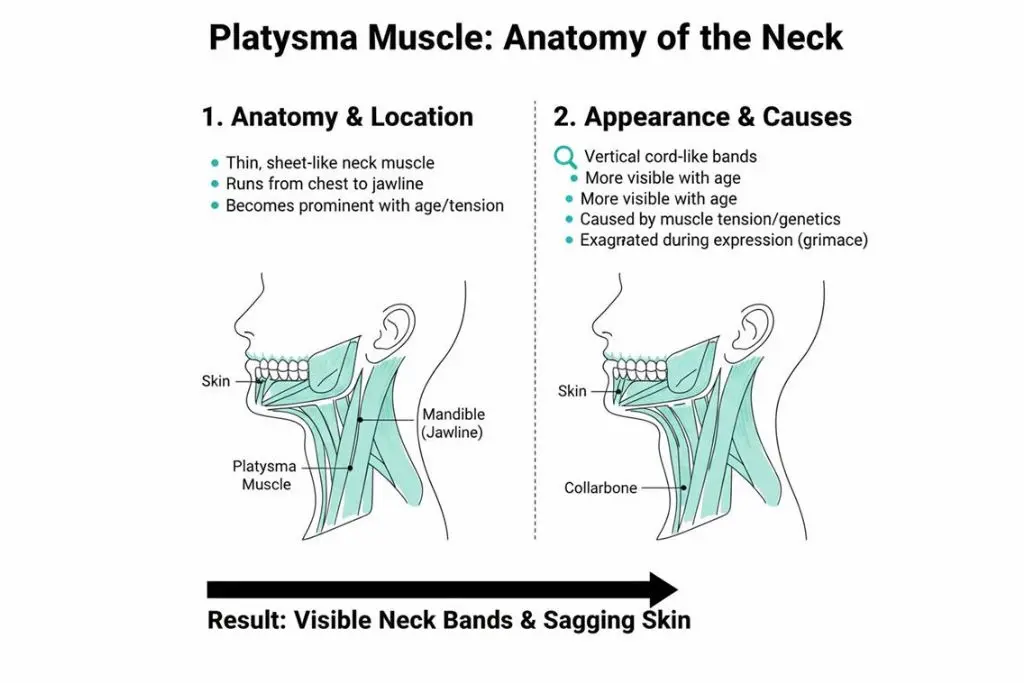
The platysma is a broad, thin sheet of muscle located directly beneath the skin of your neck and lower face. It extends from your chest and shoulder up to your jawline. When this muscle contracts, it helps to pull down the corners of the mouth, widen the mouth in expressions of fright or surprise, and can create vertical tension lines, these are the platysmal bands.
Anatomy of the Platysma Muscle
The platysma muscle plays a role in facial expressions and neck movements.
Key Characteristics
- Superficial: Lies just under the skin.
- Broad: Covers a significant area of the neck.
- Paired: There are two platysma muscles, one on each side of the neck.
- Thin: A very thin muscle sheet.
Why Do They Become Prominent?
Several factors contribute to the visibility of platysmal bands:
- Muscle Activity: Repeated contraction of the platysma muscle over years can lead to hypertrophy (enlargement) and increased prominence.
- Loss of Skin Elasticity: As we age, the skin loses collagen and elastin, becoming thinner and less able to hold the muscle taut, allowing the bands to show through more clearly.
- Fat Redistribution: Loss of subcutaneous fat in the neck area can also make the underlying muscle more visible.
- Genetics: Some individuals are genetically predisposed to developing more pronounced platysmal bands.
Visualizing the Platysma Muscle
Diagram: Platysma Muscle Location
Treatment Options for Platysmal Bands
Fortunately, there are several effective medical and surgical approaches to address platysmal bands, ranging from minimally invasive to more comprehensive solutions.
1. Neuromodulators (Botox, Dysport, Xeomin)
This is often the first-line treatment due to its effectiveness and minimal downtime.
Step-by-Step Procedure: Neuromodulator Injections
- Consultation: The practitioner assesses the bands and discusses desired outcomes.
- Marking: The platysmal bands are identified and marked while the patient tenses their neck.
- Injections: Small amounts of neuromodulator are injected directly into the active portions of the platysma muscle along the bands. This relaxes the muscle.
- Post-Procedure: Patients can resume normal activities immediately.
Benefits and Considerations
- Mechanism: Blocks nerve signals to the muscle, causing it to relax and reducing its visible tension.
- Results: Typically seen within 3-7 days, lasting 3-5 months.
- Downtime: Minimal to none; slight bruising or swelling may occur.
2. Surgical Interventions (Platysmaplasty / Neck Lift)
For more significant banding, skin laxity, or a desire for longer-lasting results, surgical options may be considered.
- Platysmaplasty: This procedure directly addresses the platysma muscle. It involves making small incisions (often under the chin or behind the ears) to either tighten, cut, or remove portions of the platysma muscle to create a smoother neck contour.
- Neck Lift (Rhytidectomy): A more comprehensive procedure that often includes platysmaplasty, alongside the removal of excess skin and fat in the neck and jawline area.
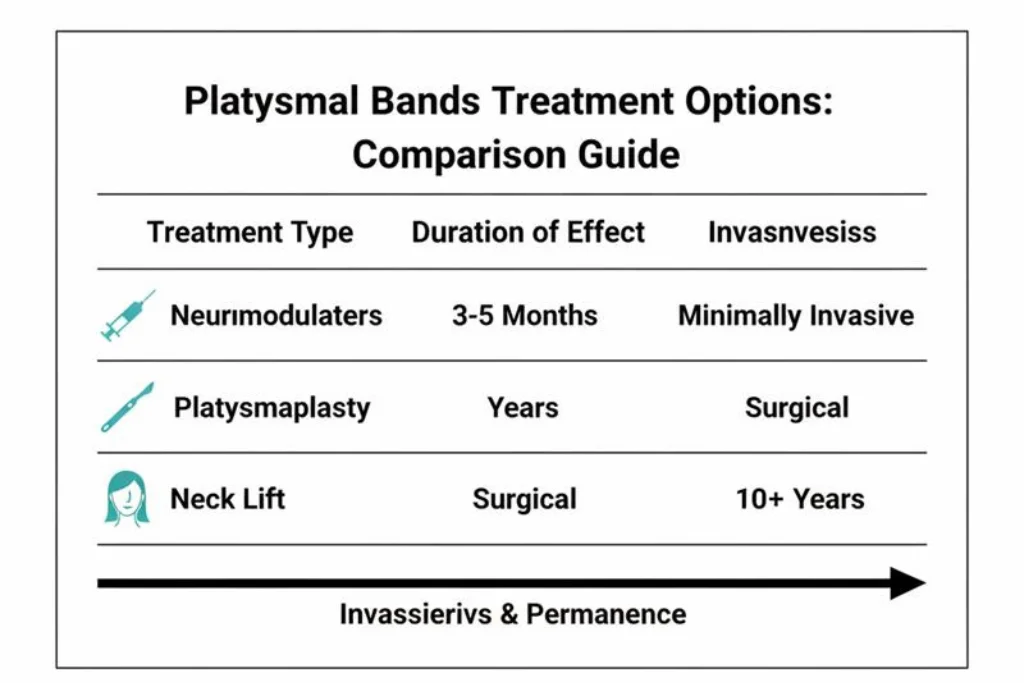
Treatment Modality Comparison
Effectiveness & Longevity of Treatments (Illustrative Data)
Preparing for Your Treatment
Regardless of the chosen treatment, proper preparation is essential for optimal results and a smooth recovery.
Pre-Treatment Checklist (Neuromodulators)
- Medications: Avoid blood-thinning medications (aspirin, ibuprofen, naproxen) for at least a week prior, if medically safe, to minimize bruising.
- Alcohol: Avoid alcohol for 24-48 hours before the procedure.
- Discuss: Inform your practitioner about all medications and supplements you are taking.
Post-Treatment Care (Neuromodulators)
- Movement: Avoid rubbing or massaging the treated area for 24 hours.
- Exercise: Avoid strenuous exercise for 24 hours.
- Head Position: Keep your head elevated for a few hours post-injection.
Preparing for Surgery (General Guidelines)
- Medical Clearance: You will need medical clearance from your primary care physician.
- Smoking: Discontinue smoking several weeks before surgery, as it can impair healing.
- Arrangements: Arrange for someone to drive you home and assist you during the initial recovery period.
Common Concerns and Reassurance
It’s normal to have questions and perhaps some apprehension about aesthetic treatments.
- Will my neck look “frozen”? With neuromodulators, experienced practitioners aim for muscle relaxation, not paralysis, allowing for natural movement while reducing banding.
- Are these treatments safe? Yes, when performed by a qualified and experienced medical professional, both injections and surgical procedures have excellent safety profiles.
- What if I don’t like the results? For neuromodulators, effects gradually wear off. Surgical results are more permanent, making thorough consultation and realistic expectations crucial.
Who Is an Ideal Candidate for Platysmal Band Treatment?
Individuals bothered by visible vertical neck bands, whether at rest or during animation, may be good candidates for treatment. Ideal candidates are generally in good overall health, have realistic expectations, and are seeking improvement rather than perfection.
- Neuromodulator candidates are often those with prominent bands, mainly due to muscle activity, and minimal excess skin.
- Surgical candidates typically have more advanced aging changes, including skin laxity, excess fat, or significant muscle separation.
A personalized consultation is essential, as the best approach depends on anatomy, age, skin quality, and aesthetic goals.
Long-Term Maintenance and Preventive Strategies
While treatments can significantly reduce the appearance of platysmal bands, long-term neck aesthetics benefit from ongoing care and prevention.
- Maintenance Treatments: Neuromodulator injections can be repeated every few months to sustain results.
- Skin Health: Regular use of sunscreen, medical-grade skincare, and collagen-stimulating treatments (such as radiofrequency or ultrasound therapies) can improve skin quality and delay progression.
- Lifestyle Factors: Avoiding smoking, maintaining a stable weight, and practicing good posture may help preserve neck contour over time.
Combining treatment with preventive care allows for more natural, longer-lasting results and supports graceful neck aging.
Conclusion
Addressing platysmal bands can significantly enhance your neck and jawline aesthetics, contributing to a more youthful and confident appearance. Whether you opt for the temporary, non-invasive solution of neuromodulators or consider a more lasting surgical approach, the key to success lies in choosing a board-certified and experienced practitioner. They can accurately assess your concerns, discuss realistic outcomes, and guide you towards the most appropriate and safest treatment plan tailored to your individual anatomy and aesthetic goals.
References
- Carruthers, J., & Carruthers, A. (2007). Botulinum Toxin Type A for the Treatment of Neck Bands. Dermatologic Surgery, 33(s1), S188-S191.
- Patel, A., & Bulsara, M. (2018). Surgical Anatomy of the Platysma for Neck Rejuvenation. Facial Plastic Surgery Clinics of North America, 26(3), 297-306.
- Rohrich, R. J., & Pfulg, P. F. (2014). Neck Lift: Achieving a Natural, Long-Lasting Result. Plastic and Reconstructive Surgery, 133(1), 16e-28e.