

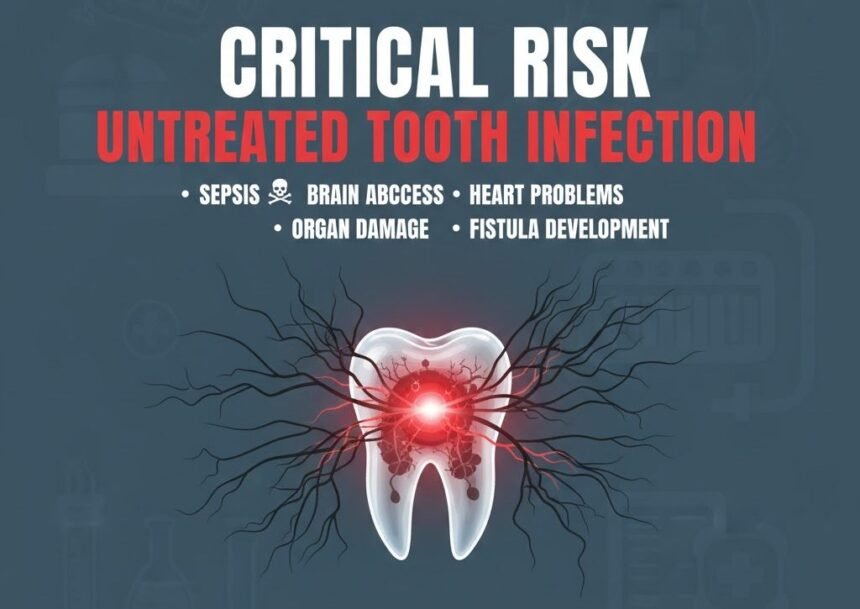
A tooth infection may look small at first. Many people think it is just tooth pain and will go away on its own. From personal experience and real patient stories shared by dentists, this belief can be dangerous. The critical risk of an untreated tooth infection is real and can affect your entire body, not just your mouth.
I have seen people delay treatment because the pain came and went. A friend of mine ignored a tooth infection for months until swelling reached his eye. He ended up in the hospital instead of a dental clinic. That moment changed how I see dental infections.
What Is a Tooth Infection?
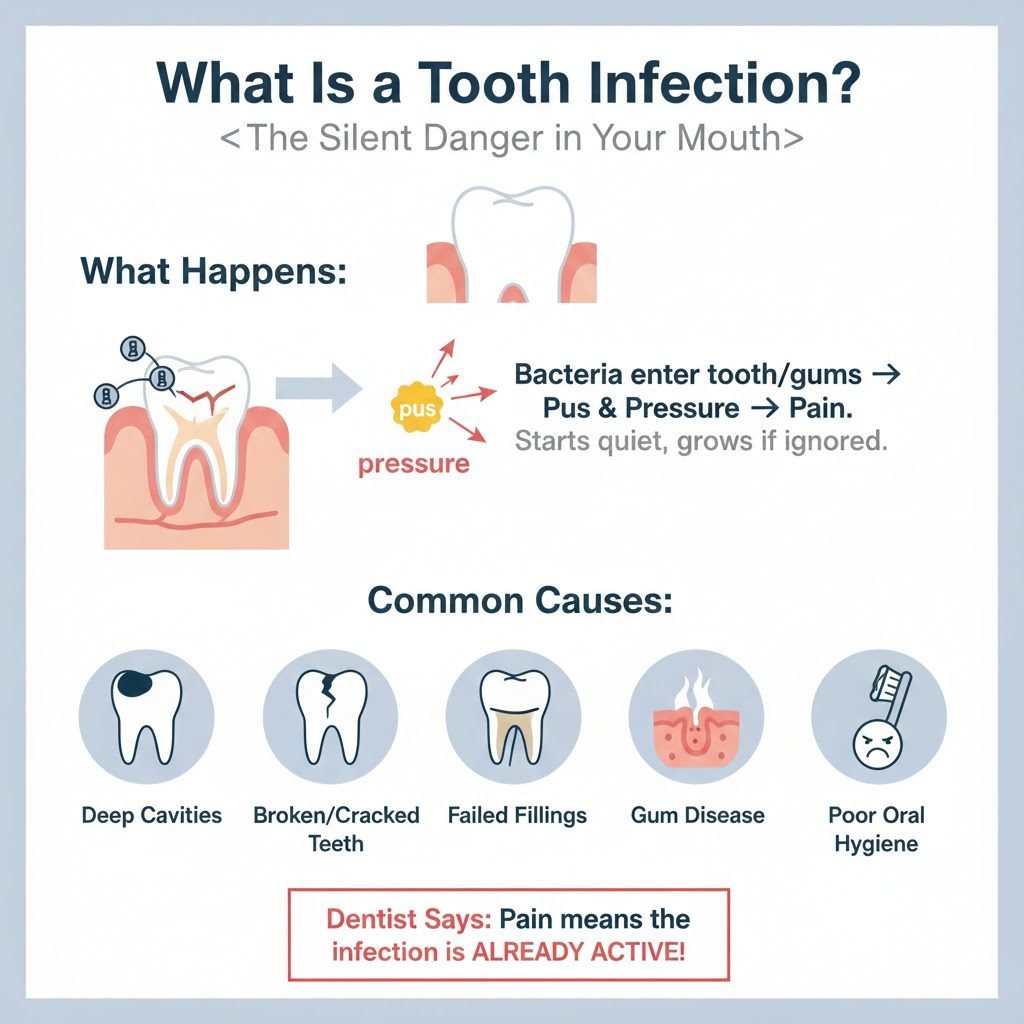
A tooth infection happens when bacteria enter the tooth or gums. This usually starts with a cavity, crack, or gum disease.
Once bacteria go inside, they create pus and pressure. That pressure causes pain.
A tooth infection may begin quietly but grow stronger if ignored.
Common causes of tooth infection
- Deep cavities left untreated
- Broken or cracked teeth
- Failed dental fillings
- Gum disease
- Poor oral hygiene over time
The best dentist often say that pain means the infection is already active, not just starting.
Why the Critical Risk of an Untreated Tooth Infection Is Often Ignored
Many people delay treatment because:
- Pain stops after a few days
- They use painkillers
- They fear dental costs
- They fear dental procedures
- They think home remedies are enough
The problem is that pain relief does not mean the infection is gone. It only means the nerve may be damaged.
A dentist I spoke with once explained:
“When pain suddenly stops without treatment, it often means the nerve has died. The infection is still spreading silently.”
That silence is where the critical risk of an untreated tooth infection becomes dangerous.
Early Signs People Commonly Miss
Not every infection starts with severe pain. Some signs are easy to ignore.
Early warning signs
- Sensitivity to hot or cold
- Mild throbbing at night
- Bad taste in the mouth
- Swollen gums near one tooth
- Bad breath that does not go away
Ignoring these signs increases the critical risk of an untreated tooth infection later.
Advanced Symptoms You Should Never Ignore
When infection spreads deeper, symptoms become serious.
Dangerous symptoms
- Facial swelling
- Fever
- Difficulty opening the mouth
- Pain when chewing
- Swelling near the eyes or the neck
At this stage, the infection is no longer local. It is moving through tissues and sometimes into the bloodstream.
How a Tooth Infection Spreads Inside the Body
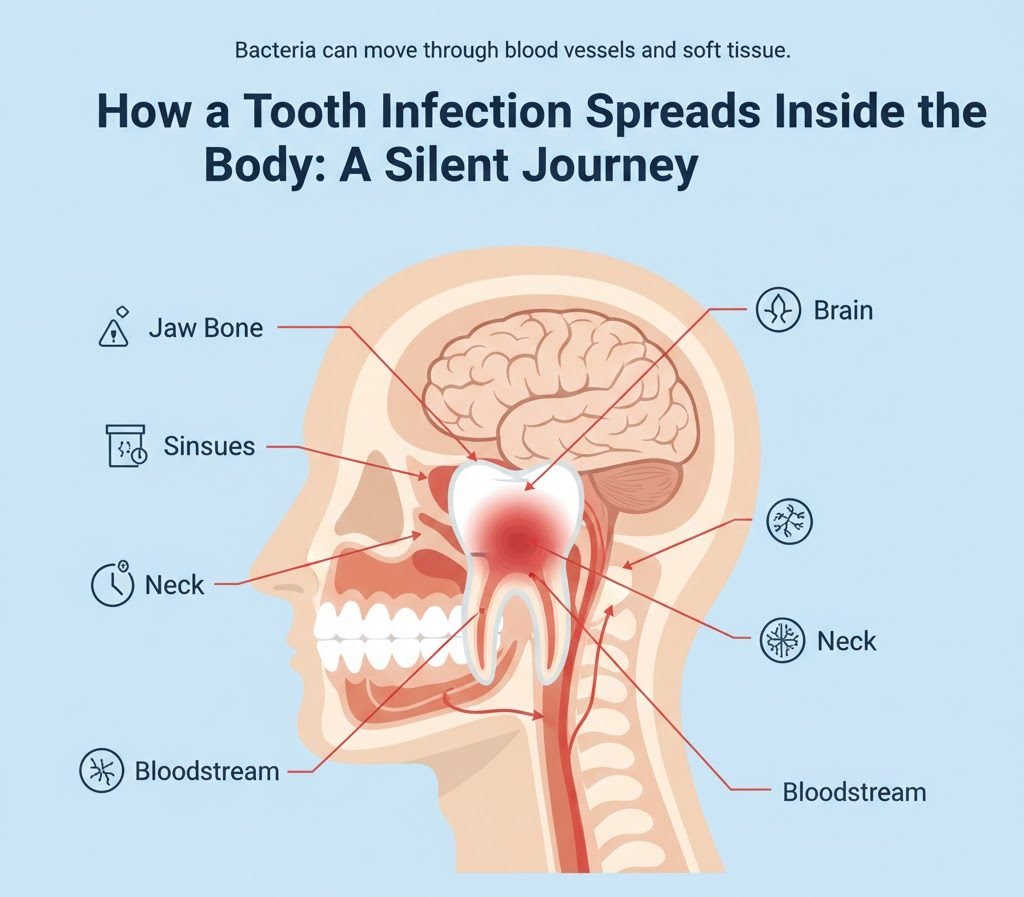
Many people think tooth infections stay in the mouth. This is wrong.
Bacteria can move through blood vessels and soft tissue.
Possible spread paths
- Jaw bone
- Sinuses
- Neck
- Brain
- Bloodstream
This is why doctors call it a medical emergency, not just a dental problem.
Critical Risk of an Untreated Tooth Infection on Overall Health
The mouth connects to the rest of the body. When infection enters the blood, severe conditions may follow.
Health risks linked to untreated tooth infections.
- Sepsis
- Heart infection
- Brain abscess
- Lung infection
- Life-threatening swelling
A hospital study showed that many emergency cases started from untreated dental infections.
This highlights the critical risk of an untreated tooth infection beyond dental pain.
Dentist’s Insight on the Critical Risk of an Untreated Tooth Infection
Dentists agree on one thing. Tooth infections do not heal on their own.
Dr. Karen Miles, a general dentist with 15 years of experience, once explained:
“Antibiotics alone are not enough. The source of infection must be removed. Delay increases danger.”
Her words confirm the critical risk of an untreated tooth infection when only painkillers or antibiotics are used.
Why Home Remedies Are Not Enough
People try salt water, clove oil, garlic, or herbal paste. These may reduce pain but do not remove infection.
Home remedies can
- Ease discomfort
- Reduce surface inflammation
- Mask symptoms temporarily
Home remedies cannot.
- Kill deep bacteria
- Drain pus
- Repair a damaged tooth
- Stop the spread of infection
Relying only on home remedies increases the critical risk of an untreated tooth infection.
Tooth Infection vs Gum Infection
People often mix these two.
| Infection Type | Where it starts | Risk Level |
|---|---|---|
| Tooth infection | Inside tooth or root | High |
| Gum infection | Gum tissue | Moderate but can turn severe |
Both need treatment, but a tooth infection spreads faster through bone.
How Dentists Treat Tooth Infections Safely
Treatment depends on how early the infection is caught.
Common treatments
- Root canal to clean the infection
- Tooth extraction if damage is severe
- Drainage of abscess
- Antibiotics are only used as support
Early treatment lowers the critical risk of an untreated tooth infection significantly.
What Happens If You Delay Treatment Too Long
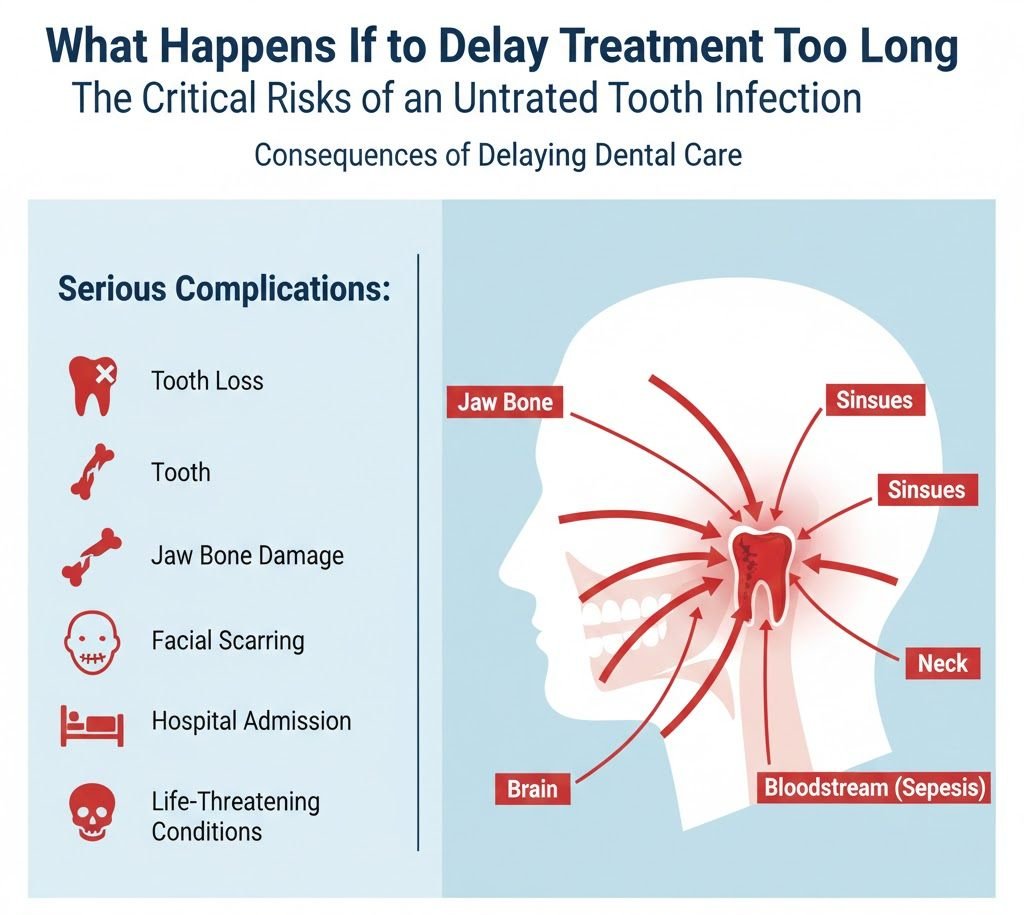
Delay leads to complications that are harder and costlier to treat.
Consequences of delay
- Tooth loss
- Bone damage
- Facial scarring
- Hospital admission
- Life-threatening conditions
The longer the wait, the higher the critical risk of an untreated tooth infection.
Can a Tooth Infection Heal Without Treatment
Short answer: No.
Pain may reduce, but bacteria stay active.
This false improvement is one of the biggest reasons infections turn critical.
Who Is at Higher Risk
Some people face greater danger.
High-risk groups
- Diabetics
- Smokers
- Pregnant women
- People with weak immunity
- Elderly individuals
For them, the critical risk of an untreated tooth infection increases faster.
Simple Prevention Tips That Actually Work
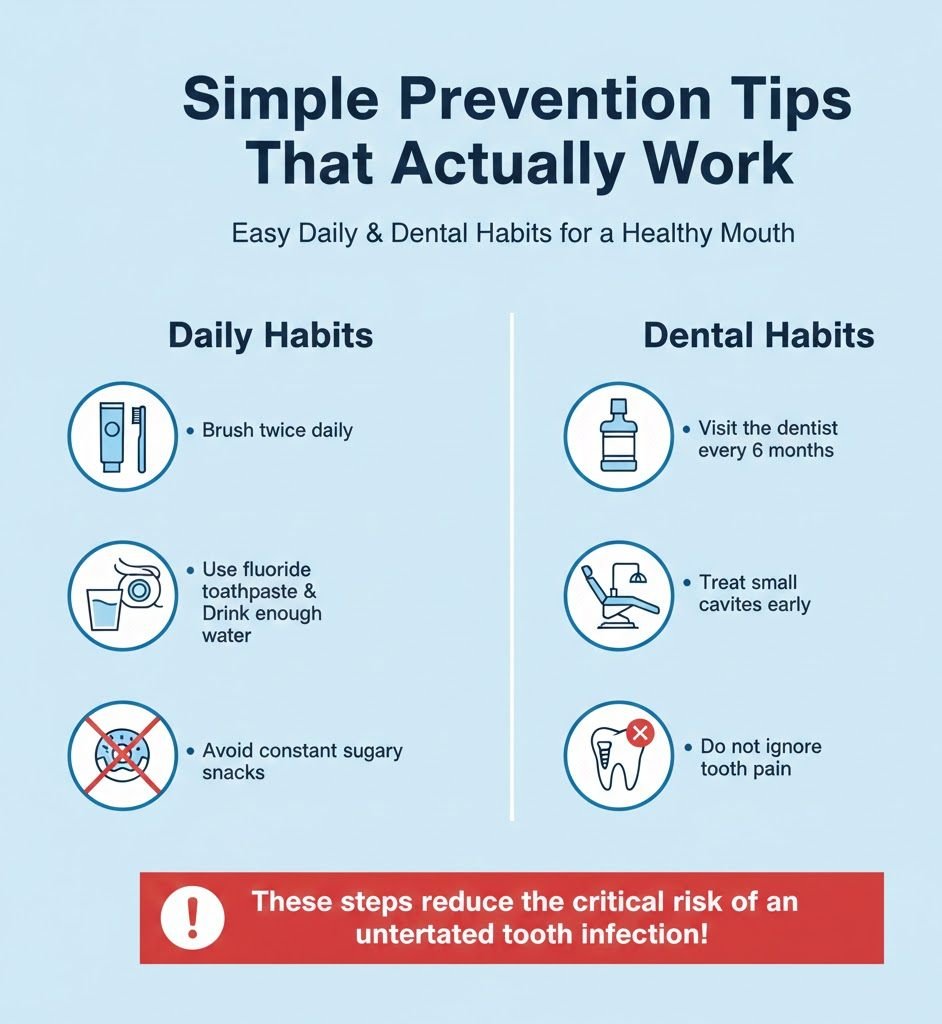
Prevention is easier than treatment.
Daily habits
- Brush twice daily
- Floss once a day
- Use fluoride toothpaste
- Avoid constant sugary snacks
- Drink enough water
Dental habits
- Visit the dentist every 6 months
- Treat small cavities early
- Do not ignore tooth pain
These steps reduce the critical risk of an untreated tooth infection long-term.
When to Seek Emergency Help Immediately
Call a dentist or emergency room if you notice:
- Swelling in the face or neck
- Trouble breathing
- Fever with tooth pain
- Sudden severe pain
- Difficulty swallowing
These signals mean the infection is spreading.
Emotional Impact Often Overlooked
Chronic tooth infections also affect mental health.
People report:
- Anxiety
- Poor sleep
- Reduced confidence
- Difficulty eating
Treating the infection often improves emotional health, too.
Final Thoughts
A tooth infection is not just dental pain. It is a growing problem that affects the whole body if ignored.
The critical risk of an untreated tooth infection is not meant to scare you. It is meant to inform you.
From real stories, dentist advice, and simple facts, the message is clear:
Early dental care saves teeth, money, and lives.
References
- American Dental Association (ADA). (2024). Tooth abscess: causes, symptoms, and treatment.
- Mayo Clinic Staff. (2023). Tooth abscess: symptoms and causes. Mayo Clinic.
- Centers for Disease Control and Prevention (CDC). (2023). Oral infections and their impact on overall health.
- Bahl, R., Sandhu, S., Singh, K., Sahai, N., & Gupta, M. (2014). Odontogenic infections: microbiology and management. Journal of Maxillofacial and Oral Surgery.
- Petersen, P. E., & Ogawa, H. (2012). The global burden of periodontal disease: implications for general health. Periodontology 2000.