


Most people don’t think about posture until something hurts. And by then, months, sometimes years of slouching, hunching, and craning forward have already taken a quiet toll on the body. The good news? You don’t need a dramatic overhaul to start feeling better. Small, deliberate posture changes, made consistently over time, can shift the way you feel, think, move, and even breathe. It sounds almost too simple to be true. But the science and the lived experience of anyone who’s made these changes back it up.
Why Posture Matters More Than You Think
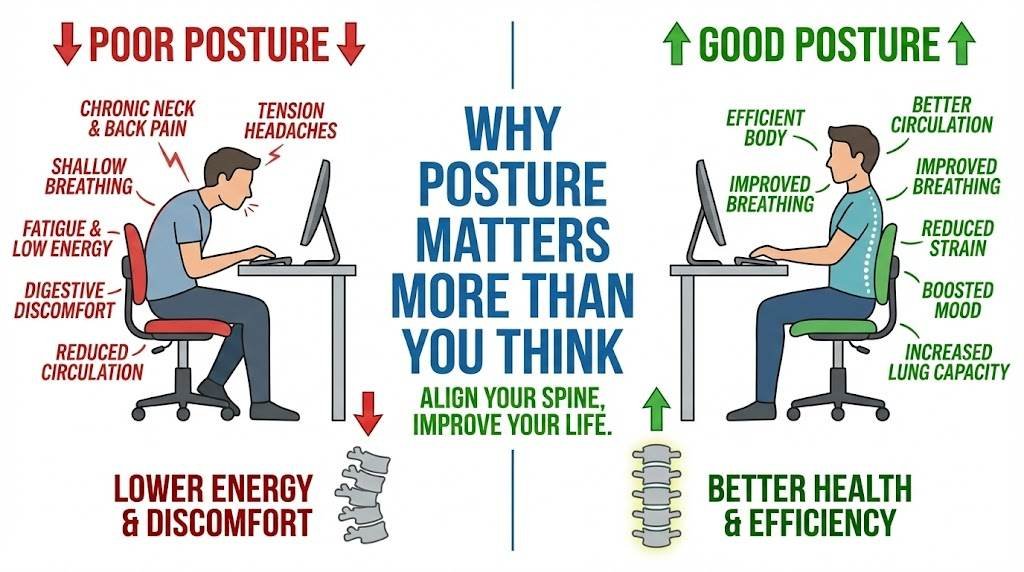
Your spine isn’t just a stack of bones. It’s the central highway for your nervous system, the anchor for your muscles, and the structural support for nearly everything your body does. When it’s properly aligned, your body works efficiently. When it’s not, everything from digestion to circulation to mood can be affected.
Think about how you’re sitting right now. Are your shoulders rounded forward? Is your chin jutting out toward the screen? These patterns are so common that they place excess strain on muscles and joints that weren’t designed to work that hard for that long.
Over time, poor posture can contribute to:
- Chronic neck and back pain
- Tension headaches
- Shallow breathing and reduced lung capacity
- Fatigue and low energy
- Digestive discomfort
- Reduced circulation to the limbs
The encouraging part is that most of these issues aren’t permanent. With some awareness and a few key adjustments, the body is remarkably capable of rebalancing itself.
Mind-Body Connection You Didn’t See Coming
Here’s something that often surprises people: posture doesn’t just affect how your body feels; it affects how your mind works.
Research in psychology and neuroscience has shown that body position influences mood, confidence, and even stress hormone levels. Sitting upright tends to support clearer thinking and a more positive emotional state. Slumping, on the other hand, has been associated with lower energy and more negative self-perception.
This isn’t just motivational speak. There are real physiological reasons why standing tall or sitting with intention can help regulate the nervous system and reduce the physical experience of stress. When your posture is open and aligned, your body sends different signals to your brain than when it’s collapsed inward.
So when you make even a small posture fix, you’re not just helping your back. You’re potentially shifting your entire internal state.
When to Bring in a Professional
Self-awareness and daily habits take you a long way. But some postural patterns are deeply ingrained, and some come with underlying musculoskeletal issues that benefit from professional assessment.
A chiropractor can evaluate your spine’s structure, identify areas of misalignment, and help address the root causes of posture-related discomfort rather than just the symptoms. If you’ve been dealing with persistent pain, stiffness, or recurring tension despite your best efforts, it may be time to get a professional perspective.
The team at Crist Chiropractic takes a thorough, patient-centered approach to spinal health, helping people understand what’s driving their discomfort and building practical plans to address it. For many patients, chiropractic care works alongside the daily habits outlined above to accelerate progress and provide lasting relief.
Small Fixes That Make a Big Difference
You don’t need to restructure your daily routine to improve your posture completely. What you need are a few targeted habits applied consistently.
| Posture Tip | What to Do | Why It Matters |
|---|---|---|
| Sit With Your Feet Flat on the Floor | Adjust your chair so your feet rest flat on the floor (or use a footrest). | Keeps pelvis neutral, prevents lower back rounding, and supports the natural spinal curve. |
| Bring the Screen to Eye Level | Raise your laptop, phone, or monitor so you’re looking straight ahead. | Prevents forward head tilt and reduces strain on the neck (cervical spine). |
| Check Your Shoulder Position | Roll shoulders up → back → relax them down throughout the day. | Reduces built-up tension and prevents hunching or rounding forward. |
| Engage Your Core (Gently) | Lightly activate abdominal muscles without bracing hard. | Provides front support to the spine and reduces lower back pressure. |
| Take Movement Breaks | Stand, stretch, or walk for a few minutes every hour. | Prevents stiffness and reduces prolonged stress on spine and joints. |
How Posture Affects Breathing and Why That Matters
This connection often goes unnoticed, but it’s significant. When you slump, your rib cage compresses. The diaphragm, the primary muscle of respiration, has less room to move. The result is shallower, more effortful breathing.
Shallow breathing activates the body’s stress response. It keeps the nervous system in a low-grade state of alertness, which over time can contribute to anxiety, poor sleep, and chronic muscle tension.
Improving your posture opens the chest, gives the diaphragm room to function properly, and supports deeper, more efficient breathing. Some people notice a meaningful shift in their energy levels and sense of calm simply from making more space in their upper body.
Building Posture Awareness Into Everyday Life
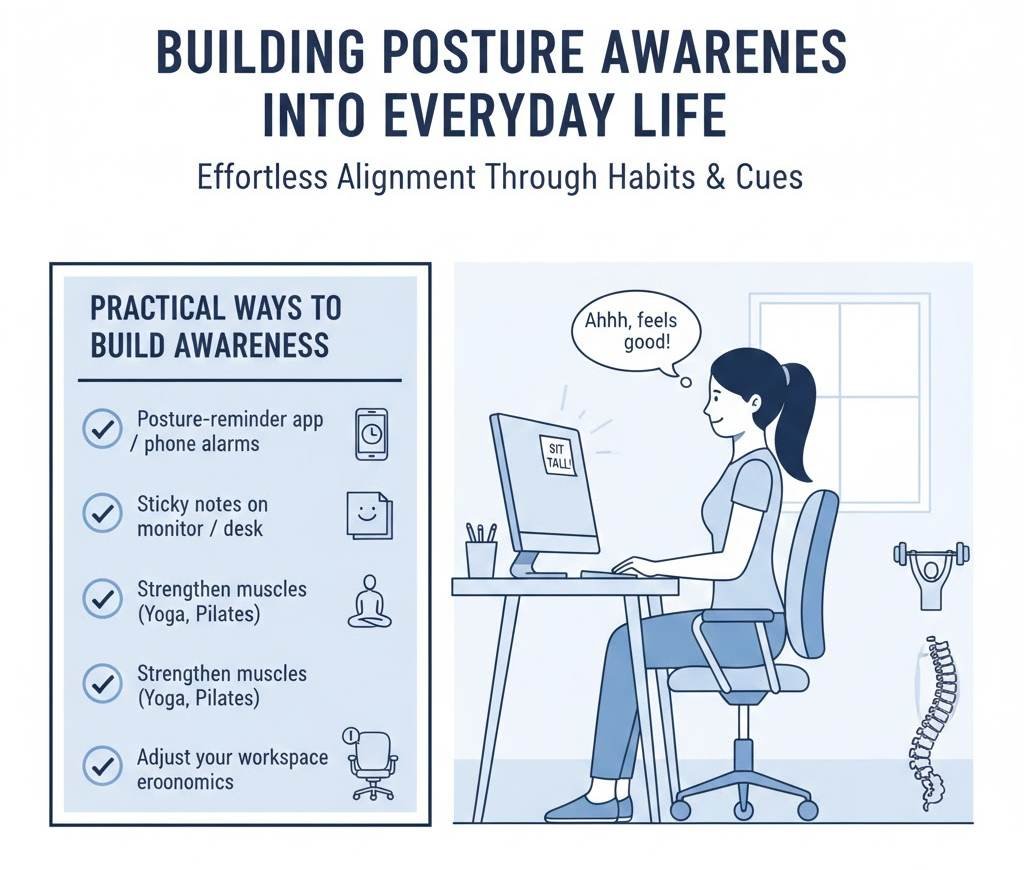
The tricky part about posture is that it’s mostly subconscious. You don’t decide to hunch, it just happens. So the goal isn’t to think about posture every second of the day (that would be exhausting), but to build environmental cues and habits that naturally guide you toward better alignment.
A few practical ways to do this:
- Use a posture-reminder app or set phone alarms as check-in prompts
- Place sticky notes on your monitor or desk as visual cues
- Strengthening supporting muscles through regular exercise, such as yoga, Pilates, and strength training, is particularly helpful
- Adjust your workspace so that good posture is the path of least resistance, not an effort
- Pay attention to how you feel after periods of good versus poor posture. That self-feedback loop is powerful.
Role of Sleep Posture
Posture doesn’t clock out when you do. How you sleep significantly affects how your spine feels when you wake up. Sleeping on your back with a pillow supporting the natural curve of your neck, or on your side with a pillow between your knees, tends to be easiest on spinal alignment. Sleeping on your stomach, by contrast, forces the neck into prolonged rotation and can worsen morning stiffness and headaches.
If you’re waking up sore or stiff regularly, your sleeping position is worth examining. Sometimes a simple pillow swap or position adjustment makes a noticeable difference.
Posture-Centered Care
For those who want guided support on their posture journey, working with a skilled chiropractor can help identify compensation patterns that the untrained eye might miss. Structural imbalances in the feet, hips, or shoulders often feed into spinal posture issues, and addressing them holistically tends to produce better, longer-lasting outcomes than focusing on the spine in isolation.
Conclusion
Good posture isn’t about standing at military attention or following rigid rules. It’s about giving your body the structural support it needs to function well and recognizing that small, consistent adjustments compound into significant changes over time.
Your body is always adapting. The question is: what are you asking it to adapt to?
When you start making intentional choices about how you hold yourself, how you sit, stand, breathe, and sleep, you’re not just fixing your back. You’re investing in your energy, mood, breathing, and long-term health. And that’s a return worth the effort.
Start small. Be consistent. And pay attention to how much better you can feel when you take care of the structure that holds everything else together.
Disclaimer
This article is for general educational purposes only and is not medical advice. Everyone’s body and health condition are different. If you have ongoing pain, injury, dizziness, numbness, or any medical concern, please speak with a qualified healthcare professional before starting posture exercises, stretches, or chiropractic care. Do not ignore professional medical advice because of something you read here.
Further References & Resources
For readers who want to learn more about posture, spinal health, breathing, and movement, these trusted health organizations provide reliable information:
- Guidance on musculoskeletal health and physical activity from the World Health Organization
- Research on posture, back pain, and ergonomics from the National Institutes of Health
- Everyday posture tips and back-care advice from the Mayo Clinic
- Practical guides on sitting posture, workplace ergonomics, and spinal care from the Cleveland Clinic
- Educational resources about chiropractic treatment and spine alignment from the American Chiropractic Association