

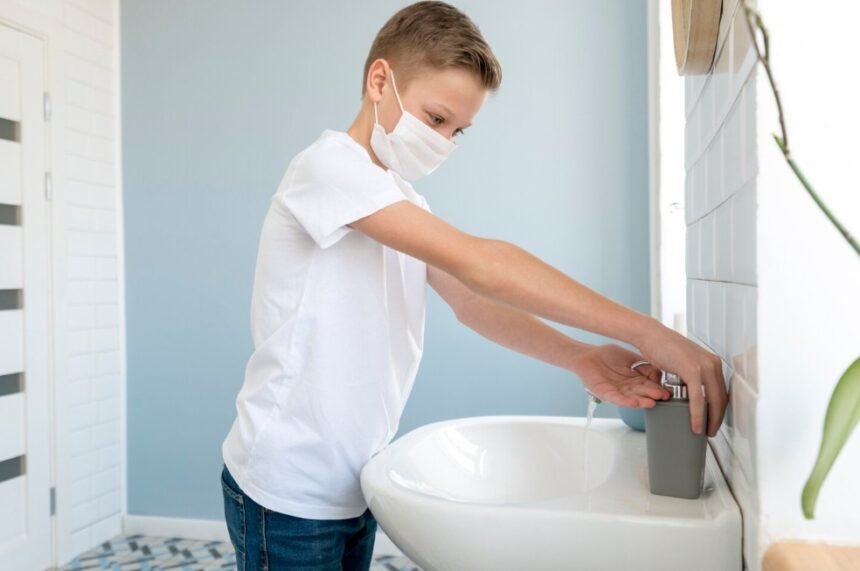
Teaching kids to use the bathroom independently is a major milestone. And let’s be honest, wiping properly is the part that matters most for hygiene and comfort.
The good news: it’s learnable. With patience, the right approach, and consistent practice, most kids figure it out between ages 3 and 5. It’s not complicated. It requires clarity, practice, and a bit of humour.
This guide covers:
- When kids are developmentally ready
- Step-by-step teaching techniques
- Common mistakes and how to fix them
- Product recommendations that work
- Tips for making the process smooth and stress-free
UNDERSTANDING DEVELOPMENTAL READINESS
Not all kids are ready at the same age, and that’s totally normal.
Signs Your Child Is Ready
Kids typically show readiness between ages 2 and 4. Look for:
- Staying dry for longer periods (1–2 hours)
- Interest in the bathroom and what happens there
- Ability to follow simple instructions
- Communication about needing to go
- Curiosity about how adults use the bathroom
What Readiness Doesn’t Mean
Readiness isn’t about perfection. Your kid won’t master this overnight. They’ll need reminders, practice, and patience. That’s completely normal.
Boys vs. Girls: Different Starting Points
Girls usually start wiping sooner because they need to from the very first time they sit on the toilet. Boys often start later because they may not feel the need as immediately.
This difference is fine. Don’t compare kids’ timelines; they’re not in a race.
TEACHING THE BASIC TECHNIQUE
Here’s the step-by-step approach that works.
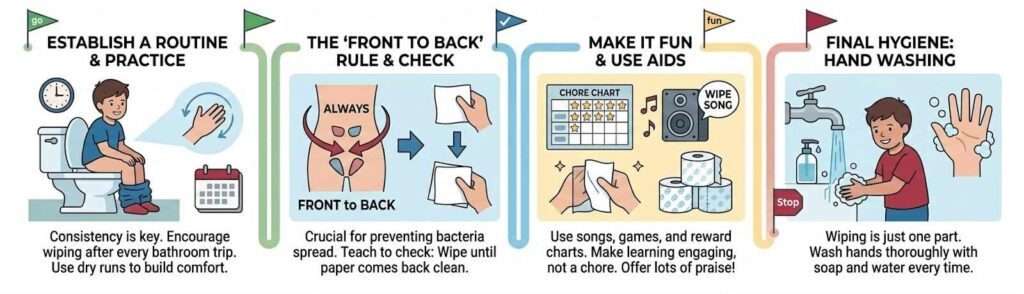
Front-to-Back Rule (For Girls)
This is non-negotiable for girls. Why? Bacteria from the back can cause infections if transferred forward.
The steps:
- Use a small amount of toilet paper
- Wipe from front to back (never back to front)
- Use fresh paper for each pass
- Wipe until clean (usually 3–5 passes)
- Wash hands
Teach this early and consistently. It becomes automatic.
Boys: Lighter Touch, Less Paper
Boys need a gentler approach because they are more sensitive.
The steps:
- Use 2–3 sheets folded together
- Wipe gently from back to front (okay for boys because the goal is just removing waste)
- One or two passes are usually enough
- Wash hands
Boys often need less paper and fewer passes. Acknowledge this early so they don’t feel self-conscious.
Middle Zone: What About Everyone Else?
If your child doesn’t fit neatly into “boy” or “girl,” follow what makes sense anatomically. Front-to-back for anyone with a vulva. Gentle wiping for anyone with a penis. The logic is the same.
MAKING PRACTICE FUN AND PRESSURE-FREE
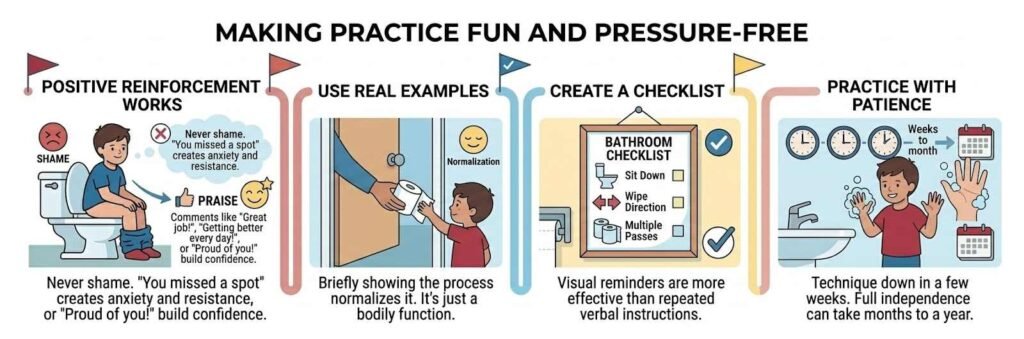
The biggest mistake parents make? Turning wiping into a battle.
Positive Reinforcement Works Better Than Shame
Never shame a kid for getting it wrong. They’re learning. Comments like “You missed a spot” or “That wasn’t enough” create anxiety and resistance.
Instead:
- “Great job wiping! You’re getting better every day.”
- “Let’s try a little more paper this time.”
- “I’m proud of you for trying.”
Use Real Examples
Kids learn by seeing. If you’re comfortable, let them see you do it (briefly). Normalize the process. It’s just a bodily function.
Create a Checklist They Can Reference
Hang a picture or a simple checklist in the bathroom showing the steps:
- Sit down
- Wipe front-to-back (or back-to-front for boys)
- Use enough paper
- Multiple passes
- Wash hands
Visual reminders are more effective than repeated verbal instructions.
Practice With Patience
Most kids get the technique down in a few weeks. Full independence (without reminders) takes longer, usually several months to a year.
COMMON MISTAKES AND HOW TO FIX THEM
Too Much Paper
The problem: Kids use too much paper, clog the toilet, or create confusion about how much is “enough.”
The fix: Show them. Use your hands to demonstrate “this much” (about a hand-width of folded paper). Practice together until they get it.
Not Enough Passes
- The problem: Kids wipe once or twice and think they’re done, leading to accidents later.
- The fix: Teach them to keep wiping until the paper comes out clean. Let them feel the difference between “not done” and “clean.”
Forgetting to Wash Hands
- The problem: Kids get wiping down but skip the handwashing.
- The fix: Make handwashing non-negotiable. Same importance as wiping. Sing a Song, make it a routine, never skip it.
Swapping Front and Back (Girls)
- The problem: Girls sometimes wipe back-to-front, spreading bacteria.
- The fix: Consistent, patient reminders. Draw an arrow on a picture to show the direction. Some parents use the phrase “front to back, that’s a fact” to make it memorable.
Embarrassment or Resistance
- The problem: Older kids get embarrassed or resistant to learning.
- The fix: Normalize it. Talk about how everyone does it. Frame it as a skill, not something weird. Never tease or shame.
HOW TO CHOOSE THE RIGHT PRODUCTS
What your kid wipes with matters.
1. Paper Strength and Softness
Kids need paper that’s soft enough not to irritate but strong enough to do the job. Look for:
- 2-ply minimum
- Soft texture
- Strength (doesn’t tear easily)
- Hypoallergenic if your kid has sensitive skin
2. Eco-Friendly Options
Unbleached toilet paper is gentle on skin and on the environment. Bamboo breaks down faster than traditional trees and doesn’t contain harsh chemicals. This is especially good for kids with sensitive skin.
3. Wet Wipes vs. Dry Paper
Wet wipes are gentler and sometimes work better for learning. But they’re not flushable (despite what labels say). If you use them:
- Have a separate trash can.
- Teach kids the difference.
- Use them as a supplement, not a replacement.
Dry paper is more practical in the long term. Stick with quality options.
4. For Runny Situations
When kids have diarrhea or loose stools, they need gentler options like non-toxic facial tissues, which are sometimes softer than toilet paper. Keep these on hand for rough patches.
ADDRESSING SPECIFIC SITUATIONS
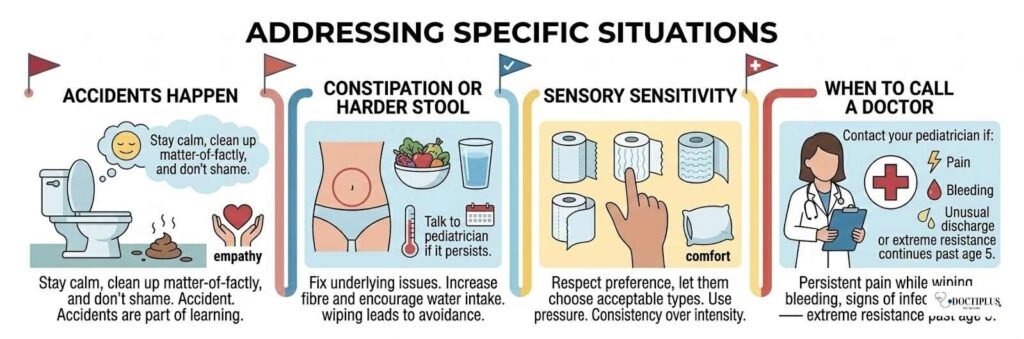
Accidents Happen
Kids will have accidents. Poop on their hands, missing a spot, going through their clothes. It happens.
Your response matters. Stay calm. Clean up matter-of-factly. Don’t shame. Accidents are part of learning.
Constipation or Harder Stool
If wiping is uncomfortable because stool is hard, address the root cause:
- Increase fibre in diet
- Encourage water intake
- Talk to your pediatrician if it persists
Uncomfortable wiping leads to avoidance and resistance. Fix the underlying issue.
Sensory Sensitivity
Some kids are sensitive to touch or texture. They might resist wiping or be very particular about paper type.
If this is your kid:
- Respect their preference
- Let them choose acceptable paper types.
- Use gentle pressure
- Don’t force; consistency over intensity.
When to Call a Doctor
Contact your pediatrician if:
- Your kid has persistent pain while wiping.
- Bleeding or unusual discharge
- Signs of infection (redness, swelling, discharge)
- Extreme resistance continues past age 5
TIMELINE & WHAT TO EXPECT
Ages 2–3
- Start potty training
- Sit on the toilet (with help)
- Introduce the concept of wiping.
- Mostly supervision and assistance
Ages 3–4
- Attempt wiping with assistance.
- Learn the technique (front-to-back, multiple passes)
- Still need reminders and checking.
- Accidents are normal
Ages 4–5
- Mostly independent wiping
- Still need occasional reminders.
- Can wipe adequately without help
- Handwashing becoming consistent
Ages 5+
- Should be fully independent
- Reminders are still helpful for consistency
- Can handle variations (harder stool, wet stool)
- By age 6–7, most kids do it without thinking.
LEARNING APPROACHES
| Method | Pros | Cons | Best For |
| Direct teaching (step-by-step) | Clear, consistent, effective | Time-consuming initially | Most kids |
| Visual aids (pictures, charts) | Kids can reference independently | Some kids don’t respond to visuals | Visual learners |
| Peer learning (sibling, friend) | Kids learn from observation | Not always available | Older siblings present |
| Gradual independence | Less pressure, builds confidence | Takes longer | Anxious or resistant kids |
| Positive reinforcement only | Reduces shame, builds confidence | May take longer | All kids benefit |
| Combination approach | Covers multiple learning styles | More involved | Best overall approach |
PARENT TIPS FOR SUCCESS
| Strategy | What to Do | Why It Helps |
|---|---|---|
| Establish Routine | Teach wiping at consistent times—after breakfast, after meals, and before bed. | A routine makes the habit automatic and easier for kids to remember. |
| Stay Patient | Remain calm even if you need to repeat the lesson many times. | Patience reduces pressure and helps kids learn without stress. |
| Celebrate Wins | Praise or celebrate when your child wipes correctly without being reminded. | Positive reinforcement encourages them to repeat the behavior. |
| Don’t Compare | Avoid comparing your child with siblings or other kids. | Every child learns at their own pace, and comparisons can discourage them. |
| Model Good Hygiene | Practice good hygiene yourself, like proper handwashing. | Kids often copy what they see adults doing. |
| Involve Them in Choices | Let them choose their toilet paper or soap (within reasonable options). | Being involved makes them more interested and willing to follow the habit. |
FREQUENTLY ASKED QUESTIONS
What if my kid refuses to wipe?
- Stay calm. Don’t force it. Go back to basics, sit together, show them, make it pressure-free. Sometimes stepping back and trying again later works better than pushing.
How much toilet paper is “enough”?
- A hand-width of folded paper is usually enough. Show your kid visually. Let them feel the difference between too much (clogs) and too little (doesn’t work).
Should I use wet wipes?
- They’re gentler and sometimes help kids learn. Use them as a supplement, not a replacement. Keep them in a separate trash can; they’re not actually flushable despite labels.
My kid is 5 and still not independent. Is that normal?
- Yes. Some kids take longer. Stay patient. Full independence usually comes by age 6–7. If there’s pain, resistance, or other concerns, talk to your pediatrician.
Final Conclusion
Teaching kids to wipe properly is an important step toward independence, hygiene, and confidence. Like many childhood skills, it develops gradually with guidance, repetition, and encouragement. Most children learn the basics between ages 3 and 5, but becoming fully comfortable and independent can take longer.
The key is consistency. Establish routines, demonstrate the correct technique, and use positive reinforcement rather than pressure or criticism. Small wins like remembering to wipe without prompting or washing hands afterward are meaningful progress.
Every child develops at their own pace. Some will master the process quickly, while others need more reminders and practice. With patience, a supportive attitude, and the right tools, kids will eventually learn to handle bathroom hygiene confidently and independently.
Disclaimer
This guide is intended for general educational purposes only and should not replace professional medical advice. If your child experiences persistent pain, bleeding, infections, severe constipation, or extreme resistance related to bathroom use, consult a qualified pediatrician or healthcare professional. Individual developmental timelines vary, and a medical professional can provide guidance tailored to your child’s specific needs.