

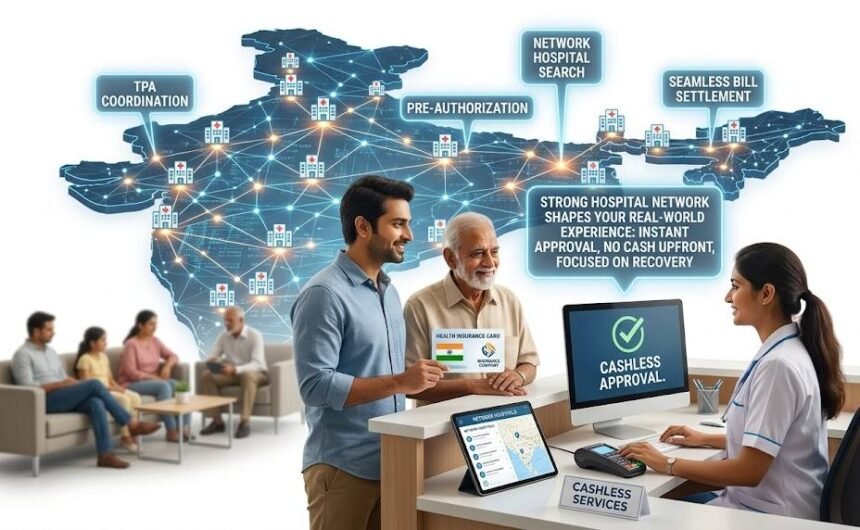
Cashless treatment sounds simple: you show your card, get admitted, and the hospital bill gets settled directly. In real life, the ease of that experience depends less on the slogan and more on one thing you can verify before you buy: the insurer’s hospital network.
A strong network changes how quickly the paperwork moves, how smoothly approvals happen, and how much running around you do when you should be focusing on recovery.
Let’s see how this plays out when you actually need to use your health insurance.
What Cashless Really Means at the Hospital Desk
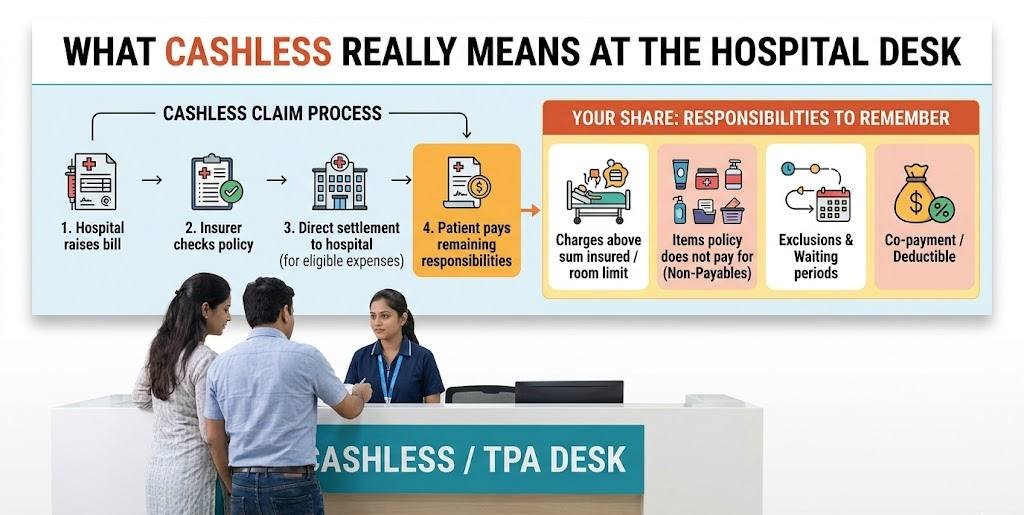
Cashless is not “free treatment”. It is a payment arrangement where the insurer settles eligible hospital expenses directly with the hospital, usually after an approval process. The hospital still raises a bill, the insurer still checks it against your policy terms, and you may still pay parts of the bill yourself.
Here is what typically remains your responsibility in a cashless claim:
- Any costs that are outside your policy coverage (for example, exclusions and waiting periods)
- Items the policy does not pay for (often listed as non-payables)
- Any co-payment or deductible mentioned in your policy schedule
- Charges above your sum insured or above any limits linked to your room category
Why a Strong Hospital Network Changes Everything
A hospital becomes a “network hospital” when it has an arrangement with the insurer or its claims partner to support cashless processes. That arrangement is not just a formality. It sets expectations for documentation, billing formats, timelines, escalation points, and dispute handling.
A strong network shapes your experience in ways you notice immediately:
- Admission feels faster because the hospital knows the cashless workflow and where to route your request
- Pre-authorisation moves with fewer follow-ups because the medical and admin teams understand what the insurer needs
- Billing is more predictable because network hospitals tend to follow agreed formats and package rules more consistently
- Discharge is less chaotic because the hospital has experience coordinating the final approval and settlement steps
- Support is clearer because many network hospitals have a dedicated insurance or TPA desk that handles daily cashless cases
Behind-the-Scenes Work That Makes Cashless Smooth
Cashless claims involve coordination between your treating doctor, the hospital’s billing team, and the insurer or its claims administrator. When any link is weak, patients get pulled into the middle, usually at the worst possible time.
Why Pre-Authorisation Often Decides the Pace
Pre-authorisation is the insurer’s initial approval based on the diagnosis, proposed line of treatment, and the hospital’s cost estimate. If the request is incomplete or unclear, it can lead to back-and-forth queries, delayed approvals, or reduced approvals.
Why Billing Habits Matter More Than People Realise
Even with cashless payments, billing can still create friction. A common example is a mismatch between the room you choose and the room category your policy allows. Another is unexpected non-payable items added at discharge.
How to Judge a Hospital Network Before You Buy
Before finalising health insurance, look beyond “cashless available” as a generic promise. What you want is network strength where you live, where your family lives, and where you are likely to seek care.
Use these checks as a quick filter:
- Are your preferred hospitals and nearby emergency options on the network list?
- Do the network hospitals cover key specialities you may need?
- Does the hospital have an insurance helpdesk that handles cashless requests daily?
- Is there clarity on cashless for planned hospitalisation versus emergencies?
- Is the insurer known for clear communication throughout the claims process, not just at purchase time?
How to Reduce Friction During Hospitalisation
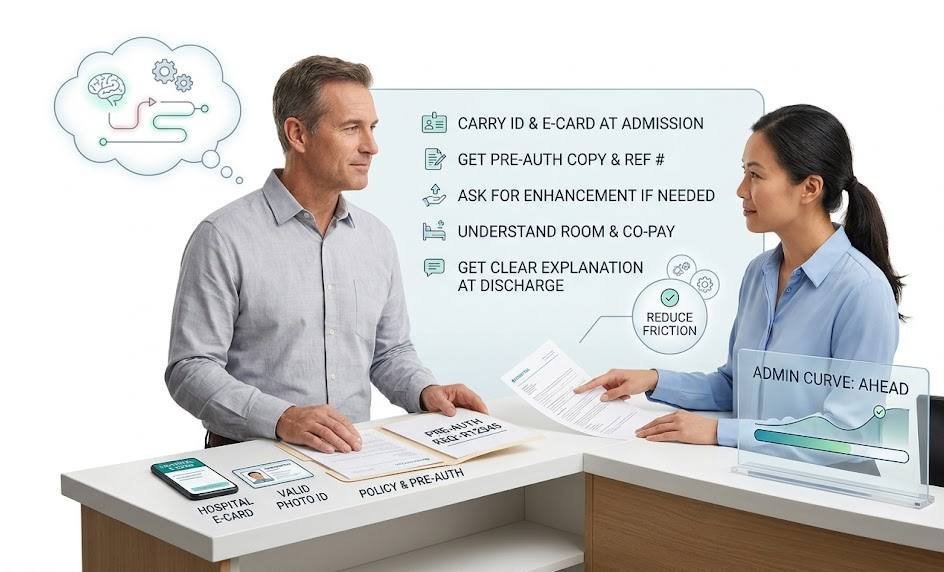
Even with a strong hospital network, you can make the process easier by staying slightly ahead of the admin curve.
- Carry your e-card and a valid photo ID, and share them at admission without waiting to be asked
- Ask for a copy or reference number of the pre-authorisation request raised by the hospital
- If treatment plans change, prompt the hospital to request an enhancement rather than settling for a low approved amount
- Keep your policy details handy, especially room eligibility and any co-payment clause
- At discharge, ask for a clear explanation of deductions or patient-payable items before you pay
Conclusion
The industry is moving towards making cashless treatment more widely available, including beyond traditional network-only arrangements. That is a positive direction. Still, in day-to-day reality, a strong network remains the most reliable predictor of a smooth experience because relationships, processes, and accountability are already in place.
Disclaimer
This content is intended for general informational purposes only and does not constitute financial, medical, or legal advice. Health insurance terms, coverage, exclusions, and claim processes can vary significantly between insurers, policies, and individual circumstances. Readers are advised to carefully review the policy document, including all terms and conditions, before purchasing or relying on any health insurance plan.