


Alzheimer’s disease is the most common form of dementia, affecting more than 57 million people worldwide, according to the World Health Organization (WHO). The condition gradually impairs memory, thinking, and daily functioning. In the United States, dementia care costs exceeded $384 billion. Because of these rising costs, some families are comparing treatment options internationally. Healthcare platforms that analyze medical pricing can help patients understand these differences. For example, this detailed guide to Alzheimer’S Disease Treatment Cost Turkey Usa Comparison compiles treatment price ranges reported by neurology clinics and hospitals to help patients evaluate potential care options abroad.
Understanding Alzheimer’s Disease and Its Treatment
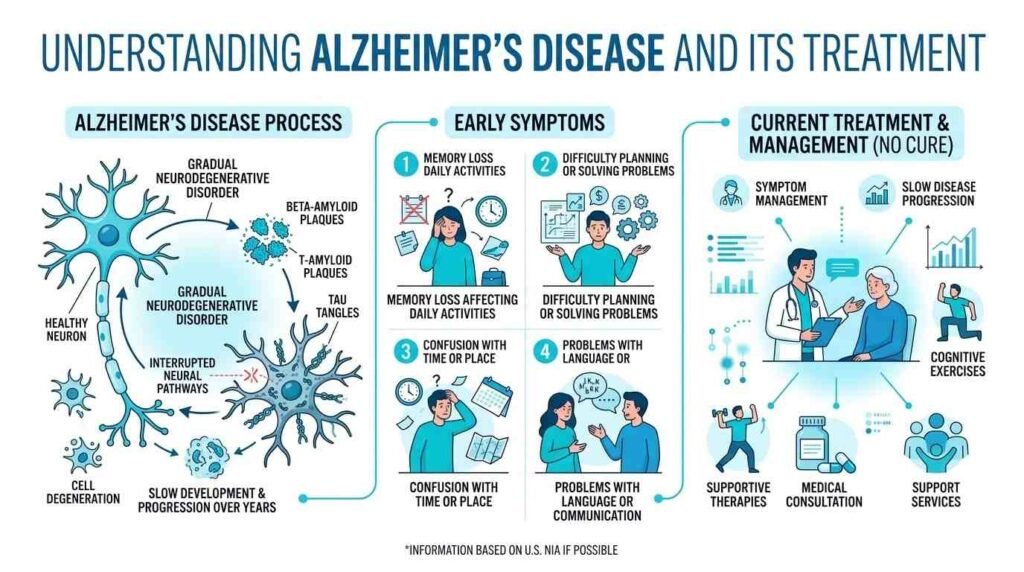
Alzheimer’s disease is a gradual neurodegenerative disorder caused by abnormal protein deposits in the brain known as beta-amyloid plaques and tau tangles. These changes interfere with communication between nerve cells and gradually impair memory and mental function.
According to the U.S. National Institute on Aging, the disease typically develops slowly and progresses over several years. Early symptoms often include:
- Memory loss affects daily activities.
- Difficulty planning or solving problems.
- Confusion with time or place.
- Problems with language or communication.
Although there is currently no cure, several treatments can support managing symptoms and slow disease progression.
Common Medications Used in Alzheimer’s Treatment
Doctors frequently prescribe medications that help preserve communication between brain cells. The most widely used drugs include:
These medications are recommended in clinical guidance published by organizations such as the National Institute of Neurological Disorders and Stroke.
Because Alzheimer’s treatment often continues for many years, medication pricing may substantially affect total healthcare expenses.
| Medication Type | Typical Monthly Cost (USA) | Typical Monthly Cost (Turkey) |
| Generic symptomatic medications | $20–150 | $8–40 |
Disease-Modifying Therapies
New therapies designed to slow the progression of Alzheimer’s disease have emerged in recent years. These treatments target amyloid proteins that accumulate in the brain.
One example is Lecanemab, a monoclonal antibody therapy approved by the U.S. Food and Drug Administration (FDA) for early Alzheimer’s disease.
Such therapies call for careful monitoring that may include:
- Intravenous infusion sessions.
- Regular MRI scans.
- Neurological evaluations.
Because of these requirements, treatment costs are significantly higher than standard medications.
| Therapy | Average Cost in USA | Estimated Cost in Turkey |
| Monoclonal antibody therapy (annual) | $26,000–32,000 | $4,000–5,000 |
Some treatment programs abroad include medication, monitoring, and imaging in bundled packages.
Advanced Neurological Treatments
In addition to medication-based therapies, some neurological centers offer advanced or experimental treatments for neurodegenerative diseases.
Two examples include:
- Stem cell therapy.
- Deep brain stimulation (DBS).
Stem cell therapy is currently being studied in neurological research programs listed in the ClinicalTrials.gov database. Deep brain stimulation involves surgically implanting electrodes in specific areas of the brain to regulate neural activity.
| Treatment | Average Cost in USA | Estimated Cost in Turkey |
| Stem cell therapy (per course) | ~$30,000 | $4,000–7,000 |
| Deep brain stimulation | $70,000–100,000 | $25,000–30,000 |
The price differences largely reflect variations in hospital operating costs and treatment packaging.
International Healthcare and Medical Travel
Cross-border healthcare has become more common as patients compare treatment costs and access to focused services. The Organisation for Economic Co-operation and Development (OECD) notes that medical travel often occurs when significant price differences exist between health care systems.
Hospitals that treat international patients may follow international quality standards evaluated by organizations such as the Joint Commission International (JCI), which assesses hospital safety, patient care processes, and clinical management.
Cost Comparison: Alzheimer’s Treatment in the USA vs Turkey
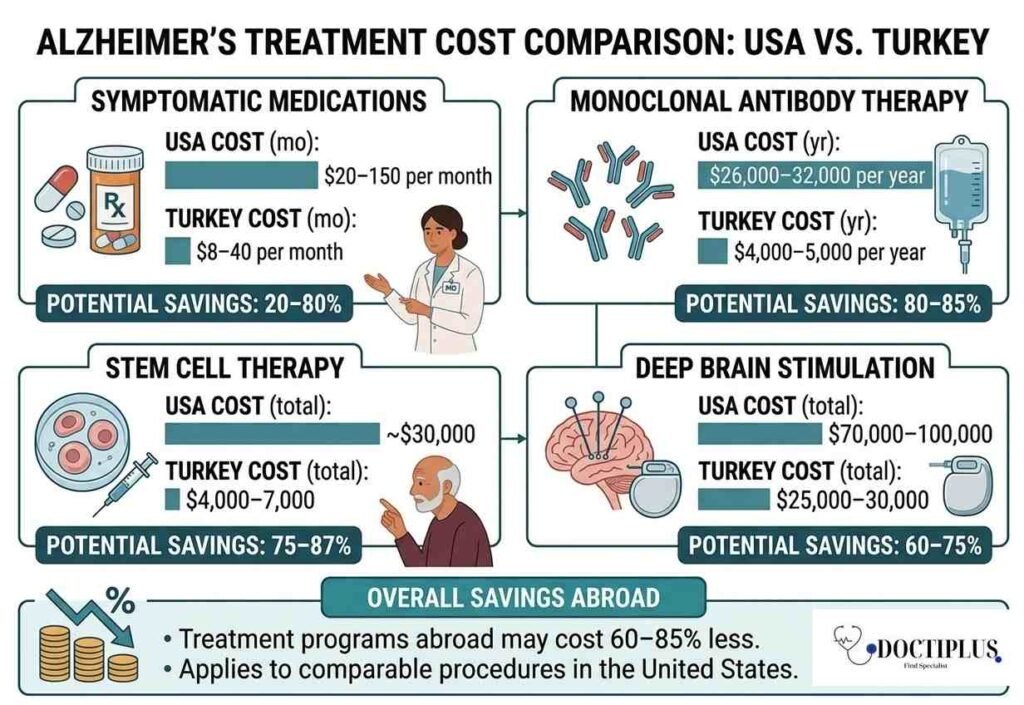
When comparing treatment options internationally, cost differences can be significant.
| Treatment Type | USA Cost | Turkey Cost | Potential Savings |
| Symptomatic medications | $20–150 per month | $8–40 per month | 20–80% |
| Monoclonal antibody therapy | $26,000–32,000 per year | $4,000–5,000 per year | 80–85% |
| Stem cell therapy | ~$30,000 | $4,000–7,000 | 75–87% |
| Deep brain stimulation | $70,000–100,000 | $25,000–30,000 | 60–75% |
Overall, treatment programs abroad may cost 60–85% less than comparable procedures in the United States.
Why Treatment Costs Are Lower in Turkey
Several measurable factors explain why many neurological treatments cost less in Turkey than in the United States.
- Lower national healthcare spending. According to the OECD Health Statistics, the United States spends over $12,500 per person annually on healthcare, while Turkey spends around $1,800 per person. Higher system-wide spending increases hospital fees, physician costs, and treatment prices in the U.S.
- Lower hospital labor and operating costs. Medical salaries and hospital operating expenses account for a large share of healthcare spending. Data from the World Bank on health expenditure show that healthcare costs per patient are significantly lower in middle-income countries such as Turkey than in the United States.
- Drug price regulation. Turkey uses a reference pricing system that ties drug prices to the lowest prices in several European countries. In contrast, the U.S. pharmaceutical market allows manufacturers to set market-based prices, which frequently leads to increased medication costs.
- Bundled treatment programs. Hospitals treating international patients often provide packages that include diagnostics, procedures, medication, and monitoring within one price. This lowers administrative costs and makes treatment pricing more predictable for patients traveling abroad.
What Patients Should Consider Before Seeking Treatment Abroad
Cost comparisons can be helpful, but medical decisions should not rely solely on price. Alzheimer’s disease requires long-term care and careful medical supervision.
Patients and caregivers should take into account several factors:
- Hospital accreditation and safety standards. International organizations such as the Joint Commission International evaluate hospitals for patient safety and quality of care.
- Experience of neurologists and multidisciplinary care teams. Alzheimer’s management commonly involves neurologists, geriatric specialists, and neuropsychologists working together.
- Availability of long-term follow-up care. According to the World Health Organization, dementia requires continuous monitoring, medication adjustments, and cognitive evaluation over many years.
- Transparency in treatment pricing and medical documentation. Clear treatment plans and written medical records help ensure continuity of care when patients return home.
Conclusion
Alzheimer’s disease is one of the most complex neurological conditions affecting elderly populations worldwide. Managing the disease often requires long-term treatment, medication, and ongoing medical supervision.
While the United States offers advanced neurological research and treatment, the associated costs can be extremely high for many families. Some countries provide similar treatments at significantly lower prices due to differences in medical infrastructure, pharmaceutical pricing, and hospital operating costs.
For patients exploring treatment options, comparing reliable healthcare information and consulting qualified medical professionals can help support well-informed decisions about long-term Alzheimer’s care.
Medical Disclaimer
This article is provided for informational and educational purposes only and should not be considered medical advice. The information presented about Alzheimer’s disease, treatment options, and cost comparisons between countries is based on publicly available research, healthcare reports, and data from medical organizations. However, treatment decisions should always be made in consultation with qualified healthcare professionals.
Medical costs, treatment availability, and regulatory approvals may vary by hospital, country, patient condition, and changes in healthcare policies. Patients considering treatment abroad should consult licensed neurologists, geriatric specialists, and accredited medical facilities to receive personalized medical guidance.
Nothing in this article is intended to diagnose, treat, cure, or prevent any disease. Individuals experiencing symptoms related to cognitive decline or dementia should seek immediate evaluation from a qualified healthcare provider. Always rely on professional medical advice for diagnosis and treatment decisions.