

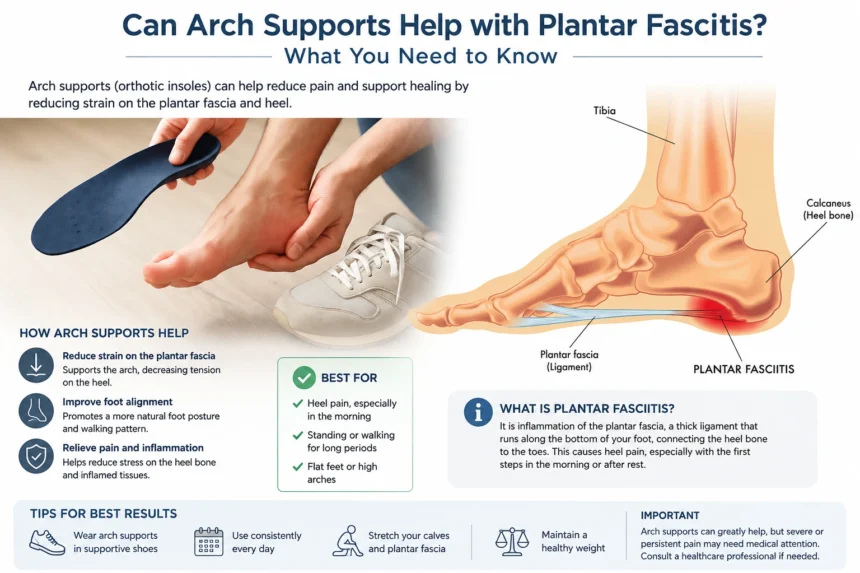
Plantar fasciitis is one of the most common sources of foot pain, and for anyone who has dealt with it, the experience is hard to forget. That sharp, stabbing sensation in the heel when you take your first steps in the morning. The way it eases slightly as you move around, then returns after long periods of standing or activity. It has a way of making every part of your day feel harder than it should.
The good news is that for most people, plantar fasciitis responds well to conservative care, and arch support is one of the most consistently recommended first steps. The Good Feet Store specializes in exactly this, offering personalized arch support fittings for plantar fasciitis and other common foot concerns through an in-person evaluation process that matches support to your specific foot structure. Understanding why arch support helps starts with understanding what’s actually happening in the foot.
What Is Plantar Fasciitis?
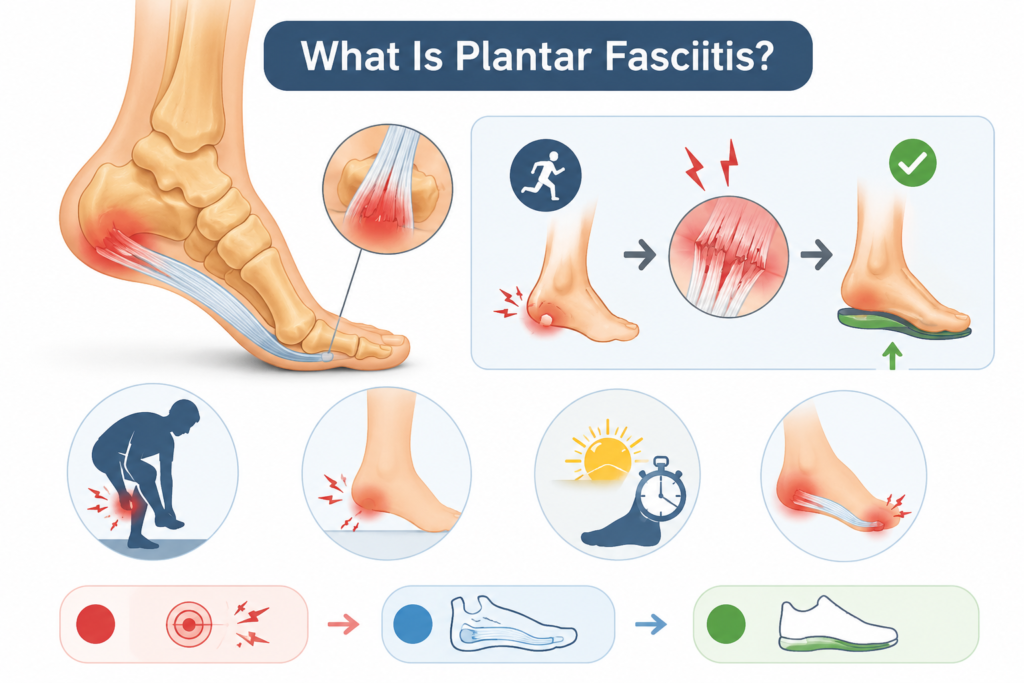
The plantar fascia is a thick band of connective tissue that runs along the bottom of the foot, connecting the heel bone to the base of the toes. Its job is to support the arch and absorb shock during movement. When that tissue is subjected to repetitive stress or strain, small tears can develop, leading to inflammation and pain most often felt at the heel.
Several factors can contribute to plantar fasciitis. Flat feet or high arches both create conditions where the plantar fascia takes on more strain than it should. Spending long hours on your feet, sudden increases in activity, unsupportive footwear, and tight calf muscles are all common contributors. The condition is particularly prevalent among people who are on their feet professionally, runners, and adults over 40, though it can affect anyone.
What makes plantar fasciitis frustrating is that it tends to linger when the underlying mechanics aren’t addressed. Rest may reduce inflammation temporarily, but if the structural factors driving the problem remain unchanged, the pain typically returns.
How Does Arch Support Help?
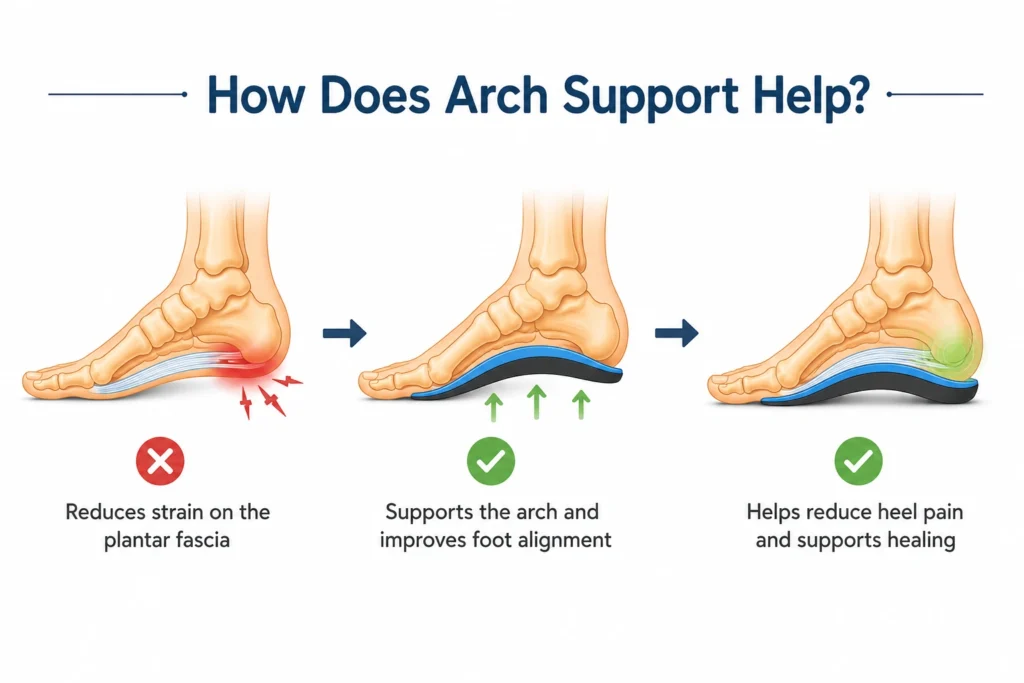
The plantar fascia works harder when the arch isn’t properly supported. In a foot with low arches, the tissue overstretches with each step. In a foot with high arches, the fascia is chronically taut and doesn’t absorb shock efficiently. Either way, the result is excessive strain on tissue that is already inflamed and struggling to recover.
Arch support works by redistributing load across the foot more evenly. When the arch is properly supported, the plantar fascia doesn’t have to work as hard to maintain the foot’s structure during movement. That reduction in strain gives the tissue an opportunity to recover while still allowing you to stay on your feet and go about your day.
This is why arch support tends to appear consistently in conservative treatment protocols for plantar fasciitis. It addresses the mechanical environment driving the problem, not just the symptom.
Why the Right Fit Matters
Not all arch support is equally effective, and this is where a lot of people run into trouble. A generic insole provides generalized cushioning, but cushioning and support are not the same thing. Support requires matching the structure of the insert to the structure of the foot. The wrong arch height, or a profile that doesn’t match how your weight distributes, can actually increase strain on the plantar fascia rather than reduce it.
That’s why a personalized fitting makes a meaningful difference, particularly when you’re dealing with an active condition like plantar fasciitis. At The Good Feet Store, the process begins with an in-person evaluation of your arch type, pressure distribution, and movement patterns. From there, a specialist fits you with arch supports from the 3-Step System, selected and sized specifically for your foot rather than for an average.
How the Good Feet 3-Step System Supports Plantar Fasciitis Recovery
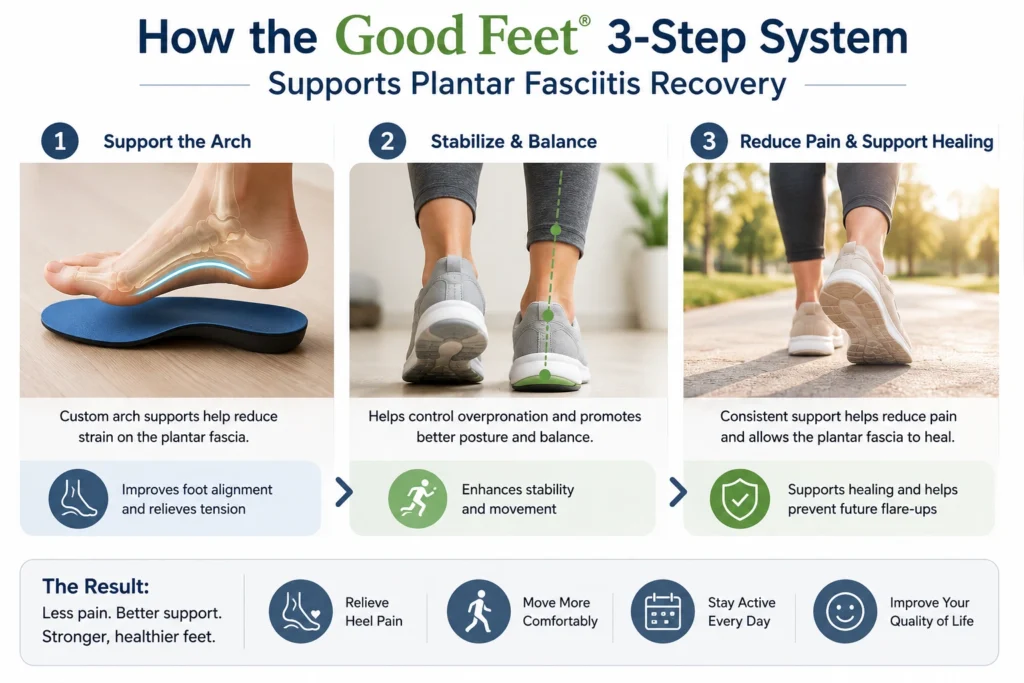
What makes the Good Feet approach particularly well-suited to plantar fasciitis is that it doesn’t rely on a single insert worn in every situation. The 3-Step System was designed around the reality that your feet need different kinds of support at different points in the day.
- The Strengthener is the most supportive of the three and is worn during your most active periods, when your feet are under the most load and the plantar fascia is working hardest.
- For someone managing plantar fasciitis, this is the insert doing the heaviest lifting. It holds the arch in proper alignment during the activities that would otherwise cause the most strain.
- The Maintainer is designed for extended everyday wear.
- It provides consistent support throughout the workday or during longer stretches of activity, keeping the foot properly supported without the intensity of the Strengthener.
- For people who are on their feet professionally, this is often the insert they rely on most.
The Relaxer is a softer, more flexible option intended for lower-activity periods and casual wear. It keeps the arch supported even during rest and recovery time, which matters more than most people realize. The plantar fascia is under tension even when you’re not particularly active, and maintaining support consistently throughout the day, rather than only during exercise or peak activity, is part of what makes the system effective.
Together, the three steps ensure that your foot is supported across the full range of your daily routine, not just during the moments you remember to think about it.
What to Expect When You Start Using Arch Supports
Arch supports are not an overnight fix for plantar fasciitis. The tissue that’s inflamed needs time to recover, and that process is gradual. Most people notice a reduction in discomfort within a few weeks of consistent use, particularly in the severity of that initial morning pain, which is often one of the first things to improve.
It’s also normal to experience a short adjustment period when you first start wearing arch supports, especially if your feet have been unsupported for a long time. Your muscles and soft tissue are adapting to a new mechanical environment, and some mild fatigue or awareness in the arch is not unusual in the first week or two. That’s different from pain, and it typically resolves as your feet adjust.
Consistency matters more than most people expect. Wearing your arch supports regularly, including during activities where you might be tempted to skip them, is important to getting results. Plantar fasciitis tends to flare in response to unsupported movement, so gaps in support can slow recovery even when progress is otherwise being made. The more consistently you wear them, the more consistently your foot is operating in the right mechanical environment.
Stretching the calf and plantar fascia regularly can also improve outcomes when combined with proper arch support. Tight calf muscles place additional tension on the Achilles tendon and plantar fascia, so keeping that tissue flexible reduces the overall load on the heel. The two approaches address different aspects of the same mechanical problem and work better together than either does alone.
When Should You See a Provider?
Arch support and conservative self-care resolve plantar fasciitis for the majority of people who experience it. But there are situations where professional evaluation is the right call. If pain is severe, worsening despite several weeks of conservative care, present in both feet simultaneously, or accompanied by numbness or swelling, seeing a provider is the appropriate next step. A healthcare professional can rule out other causes of heel pain and advise on whether additional intervention is needed.
For most people, though, plantar fasciitis is a manageable condition. Proper arch support, consistent stretching, appropriate footwear, and some patience get the majority of sufferers back to feeling normal. Starting with a personalized fitting ensures that the support you’re using is actually suited to your foot, which gives conservative care its best chance of working.