
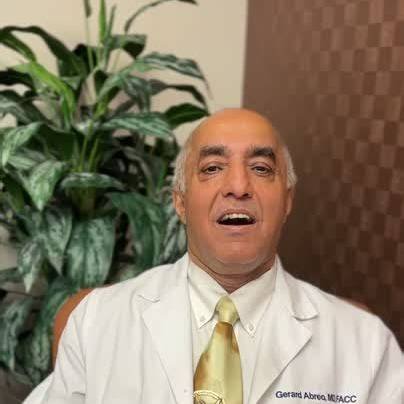
Dr. Gerard Abreo, MD Cardiologist and Heart Care
Dr. Gerard Abreo, MD, is a board-certified cardiologist whose clinical work focuses on cardiovascular disease and the long-term care of adults with heart-related concerns. His current professional profile identifies more than 25 years of cardiology experience and board certification in both internal medicine and cardiovascular medicine. His clinical interests include coronary artery disease, angina, heart failure, previous heart attack, heart-valve disease, coronary angiography, angioplasty, and coronary stent care.
For patients, seeing a cardiologist does not necessarily mean an invasive heart procedure is needed. A large part of cardiovascular medicine involves understanding symptoms, measuring heart-disease risk, reviewing medications, interpreting tests, and deciding whether continued monitoring or treatment is enough. Patients comparing heart specialists can also browse cardiology doctors on Doctiplus to understand how different cardiovascular physicians focus their care.
About Dr. Gerard Abreo
Dr. Abreo provides general cardiovascular care through CLS Health Southeast Houston Cardiology. CLS Health currently identifies him specifically in cardiology rather than interventional cardiology, although his clinical profile includes coronary angiography, angioplasty, stent placement, and other aspects of coronary disease management.
This distinction can matter to patients. General cardiology covers diagnosis, prevention, medication management, cardiac testing, and long-term monitoring, while certain procedures may involve an interventional cardiologist or another cardiovascular specialist depending on the individual case.
Dr. Abreo’s professional background also includes academic cardiology. CLS Health reports that he previously served as an Assistant Professor in a university Division of Cardiology and contributed to published cardiovascular research. His research history includes work involving chest-pain evaluation, cardiac biomarkers, stress echocardiography, and cardiovascular imaging.
Medical Education and Cardiology Training
Dr. Abreo completed medical school at St. John’s Medical College in 1991. He then completed internal medicine residency training through Cook County Health and Hospitals System, followed by cardiovascular disease fellowship training at the University of Texas Medical Branch. His cardiology fellowship was completed in 1998.
| Training Area | Institution | Details |
|---|---|---|
| Medical education | St. John’s Medical College | Medical degree, 1991 |
| Residency | Cook County Health and Hospitals System | Internal Medicine |
| Fellowship | University of Texas Medical Branch Hospitals | Cardiovascular Disease |
| Specialty | Cardiology | Adult cardiovascular medicine |
| Board certification | Internal Medicine and Cardiovascular Disease | Board-certified physician |
This training pathway is useful for patients to understand because cardiologists first develop a broad foundation in adult internal medicine. Cardiovascular fellowship then adds focused training in the diagnosis and management of diseases affecting the heart and circulation.
Board Certification and Professional Background
CLS Health identifies Dr. Abreo as board certified in both internal medicine and cardiology. His professional records also show a continuing focus on cardiovascular disease.
Board certification is different from a medical licence, hospital affiliation, or membership in a medical organization. For patients, it confirms formal specialty training but should still be considered together with the physician’s clinical focus and whether the doctor routinely evaluates the particular heart problem involved.
Dr. Abreo’s current clinical interests include atherosclerosis, cardiac angina, congestive heart failure, coronary artery disease, myocardial infarction, tricuspid valve disease, coronary angiography, angioplasty, and coronary stent placement.
Coronary Artery Disease and Atherosclerosis
Coronary artery disease develops when plaque accumulates within the arteries supplying the heart. Atherosclerosis is the underlying process that can gradually narrow these arteries and reduce blood flow.
Both atherosclerosis and coronary artery disease appear among Dr. Abreo’s current clinical interests.
For patients, the important issue is not simply whether some plaque exists. Cardiologists consider how extensive the disease appears, whether symptoms are present, what cardiac testing shows, and how other risk factors influence the likelihood of future heart problems.
A cardiovascular assessment may therefore bring together blood pressure, cholesterol, diabetes history, tobacco exposure, family history, exercise tolerance, medications, previous cardiac testing, and any history of a heart attack or coronary procedure.
Doctiplus describes cardiology and cardiovascular services as including heart-disease risk assessment, ECG testing, blood-pressure monitoring, and cardiac stress testing.
Chest Pain and Angina
Angina is chest discomfort associated with inadequate blood flow to heart muscle. Cardiac angina is specifically listed among Dr. Abreo’s clinical interests.
Patients may describe pressure, squeezing, heaviness, tightness, or discomfort rather than using the word pain. Symptoms may occur with physical activity and improve with rest, although cardiovascular symptoms do not appear identically in every patient.
Chest discomfort also has many possible causes outside the heart. Digestive disorders, muscles, lungs, anxiety, and other conditions can sometimes produce similar sensations.
That is why a cardiology consultation considers the pattern rather than assuming every episode represents blocked coronary arteries. The doctor may ask when symptoms occur, how long they last, whether activity triggers them, whether they travel elsewhere, and whether shortness of breath, sweating, dizziness, or other changes occur at the same time.
Cardiac Testing and Stress Evaluation
Testing can help a cardiologist decide whether symptoms are likely related to cardiovascular disease.
Depending on the patient, evaluation may involve an electrocardiogram, echocardiogram, cardiac stress testing, longer rhythm monitoring, laboratory tests, or more advanced imaging. Doctiplus includes ECG, blood-pressure monitoring, and cardiac stress testing within its cardiology care overview.
Testing should answer a specific question rather than simply produce more medical information. For example, a stress test may help determine whether heart muscle receives adequate blood flow when workload increases.
An abnormal result does not automatically mean a patient needs an invasive procedure. Results must be interpreted together with symptoms, examination findings, medical history, and other cardiovascular studies.
Coronary Angiography
Coronary angiography is specifically listed among Dr. Abreo’s clinical interests.
Angiography allows physicians to examine the coronary arteries and determine whether important narrowing or blockage is present. It may be considered when symptoms or earlier cardiac tests suggest that coronary blood flow needs closer evaluation.
For patients, one of the most useful questions is what the angiogram is expected to clarify. The existence of arterial narrowing is not the only factor that determines treatment. The location of the disease, severity, symptoms, overall heart function, and response to medical therapy can all influence what happens next.
Some patients continue with medication and cardiovascular risk management after testing, while others may require a coronary intervention or surgical evaluation.
Angioplasty and Coronary Stent Care
Coronary angioplasty and coronary artery stent placement are also included in Dr. Abreo’s current clinical-interest profile.
Angioplasty is used to widen selected narrowed arteries. A stent may be placed to help keep the treated section open. These procedures are appropriate only in specific clinical circumstances.
Patients should understand that discovering coronary plaque does not mean a stent is automatically needed. The treatment decision depends on symptoms, degree and location of narrowing, heart function, previous treatment, and whether improving blood flow through a procedure is expected to provide a meaningful benefit.
Calcified arterial disease can sometimes make coronary procedures more technically difficult. Patients researching modern approaches to heavily calcified vessels can read the Doctiplus guide to Shockwave IVL for artery disease.
Heart Attack Follow-Up
Myocardial infarction, commonly called a heart attack, is another condition listed within Dr. Abreo’s clinical interests.
Care does not end when a patient leaves the hospital after a heart attack. Follow-up cardiology can help assess recovery, review medications, monitor symptoms, check heart function, and address factors that increase the likelihood of another cardiovascular event.
Medication adherence can become especially important after a coronary intervention. Patients should bring an accurate list of every heart medicine they are taking and mention any medication they have stopped because of side effects, cost, or uncertainty.
Follow-up may also involve reviewing cholesterol, blood pressure, diabetes control, exercise tolerance, cardiac rehabilitation, and whether additional testing is needed.
Congestive Heart Failure
Congestive heart failure appears among Dr. Abreo’s current clinical interests.
Heart failure does not mean that the heart has stopped. It means that the heart is not pumping or filling effectively enough to meet the body’s needs under normal conditions.
Patients can experience shortness of breath, reduced exercise tolerance, swelling, fatigue, or other symptoms. The exact presentation depends on the type and severity of the condition.
Management may involve medication, monitoring of fluid status, blood-pressure control, treatment of coronary disease, evaluation of heart rhythm, and repeated assessment of heart function.
Changes in symptoms over time matter. A patient who can normally walk comfortably but becomes increasingly short of breath during ordinary activity should describe that functional change clearly during the appointment.
Heart-Valve Disease
Dr. Abreo’s clinical profile includes tricuspid stenosis and tricuspid valve disease.
Heart valves control the direction in which blood moves through the heart. When a valve becomes narrowed or does not close properly, blood flow can become less efficient and the heart may need to work differently to compensate.
Echocardiography is commonly important when valve disease is being assessed because ultrasound can show valve movement and the effect of an abnormal valve on surrounding heart chambers.
Not every valve abnormality requires immediate treatment. Some patients are monitored over time, while others need more detailed cardiovascular evaluation if symptoms or imaging findings progress.
High Blood Pressure and Cardiovascular Risk
Although a cardiologist may be consulted because of one specific heart problem, cardiovascular risk factors are often reviewed together.
High blood pressure, cholesterol abnormalities, diabetes, smoking, kidney disease, family history, physical activity, and previous cardiovascular events can influence the overall risk picture.
One blood-pressure reading or cholesterol result rarely tells the entire story. Trends over time and the presence of other health conditions can be more informative.
Patients can prepare for an appointment by bringing home blood-pressure readings, recent laboratory results, and a current medication list when these are relevant to their cardiovascular care.
Heart Rhythm Symptoms and Palpitations
Some patients reach cardiology because they notice racing, fluttering, skipped beats, or a feeling that the heartbeat is irregular.
A normal office examination does not necessarily rule out an intermittent rhythm problem because an abnormal rhythm may occur only occasionally.
Evaluation may involve an ECG or a monitor worn for a longer period so the rhythm can be recorded during symptoms.
The key information for the cardiologist includes when the palpitations occur, how long they last, whether they begin suddenly, and whether dizziness, weakness, chest symptoms, or shortness of breath accompany them.
What Patients Can Expect During an Appointment
A cardiology consultation usually begins with the reason for referral and the patient’s cardiovascular history.
Dr. Abreo may need to understand when symptoms started, whether they are triggered by activity, which heart conditions have previously been diagnosed, and whether the patient has undergone earlier testing or procedures.
Previous cardiac records can be especially useful. Patients who have already had an ECG, echocardiogram, stress test, coronary angiogram, stent procedure, or hospitalization should make those reports available when possible.
The next step may involve medication review, additional testing, continued monitoring, modification of cardiovascular risk factors, or consideration of a procedure.
A productive consultation should leave the patient understanding both what has been identified and why the recommended next step makes sense.
Preparing for an Appointment With Dr. Abreo
Patients can prepare by bringing one organized set of relevant cardiovascular information. This may include current medications and doses, medication allergies, recent blood-pressure readings, cholesterol and diabetes results, previous ECG or echocardiogram reports, stress-test findings, coronary angiography reports, information about prior stents, hospital discharge records, and a short symptom timeline.
Patients with chest symptoms should note what they were doing when the symptom started and whether resting changed it. Someone experiencing shortness of breath may find it helpful to describe what activity has become difficult compared with a few months earlier.
Specific functional examples usually provide more useful information than broad statements such as “my heart feels worse.”
Questions Worth Asking About Heart Care
Patients may want to ask what the doctor believes is causing their symptoms, which test findings are most important, whether medication alone remains reasonable, how cardiovascular risk can be reduced, and what changes should trigger earlier follow-up.
When angiography or another procedure is being discussed, patients should also understand what the procedure is expected to show, whether treatment might occur during the same procedure, what alternatives are available, and what follow-up would be required afterward.
For someone who already has coronary disease, another useful question is how treatment success will be measured. Improvement may involve fewer symptoms, better exercise tolerance, more stable testing, improved risk-factor control, or prevention of future cardiovascular events rather than simply producing one normal number.
Second Opinions in Cardiology
A second cardiology opinion can be helpful when a major cardiovascular procedure has been recommended, when several treatment approaches appear reasonable, or when symptoms and test results do not seem to match.
Another cardiologist may reach the same conclusion, which can provide reassurance. In other situations, another physician may recommend additional testing or continued medical treatment before an invasive procedure.
Patients comparing cardiovascular physicians can browse other Doctiplus cardiology profiles to understand how general cardiology, interventional cardiology, electrophysiology, and other heart-focused areas differ.
Current Practice and Appointment Information
Dr. Abreo currently practices with CLS Health Southeast Houston Cardiology. CLS Health lists him as accepting new patients and offering online booking, with 281-338-4004 as the current scheduling number associated with his profile.
Practice schedules, insurance participation, hospital affiliations, and new-patient availability can change, so patients should confirm practical details directly before an appointment. CLS Health currently lists adult and senior patients among the age groups he sees.
Understanding Dr. Abreo’s Clinical Profile
The clearest verified professional picture of Dr. Gerard Abreo is that of a board-certified cardiologist whose training progressed from internal medicine to cardiovascular disease fellowship at the University of Texas Medical Branch. His clinical profile includes coronary artery disease, angina, congestive heart failure, previous heart attack, heart-valve disease, angiography, angioplasty, and coronary stent care.
For patients, the practical value of his background is not simply access to cardiac testing or procedures. It is having cardiovascular symptoms, risk factors, previous heart events, medications, and test results considered together before the next treatment decision is made.
Readers can review the Doctiplus editorial policy and the site’s trusted medical information resources to understand how patient-focused medical information is prepared.




Reviews
There are no reviews yet.