
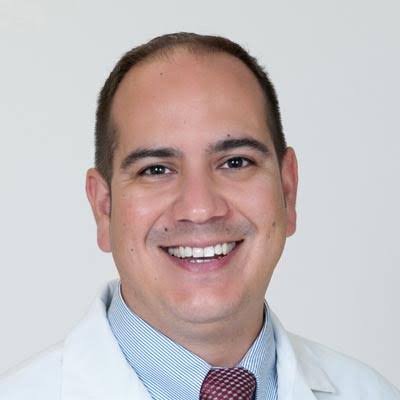
Dr. Ryan R. Barrientos, Gastroenterologist
Dr. Ryan R. Barrientos is a board-certified gastroenterologist providing diagnostic, preventive, and procedural care for adults with conditions affecting the digestive system.
His clinical work includes the evaluation and treatment of problems involving the esophagus, stomach, intestines, liver, gallbladder, bile ducts, and pancreas. He also performs endoscopic procedures used to investigate digestive symptoms, screen for colorectal cancer, remove certain polyps, and treat selected gastrointestinal conditions.
Patients comparing digestive health specialists can also read about Dr. Peter E. Bloom’s gastroenterology care.
Doctor Information
Name: Dr. Ryan R. Barrientos, MD
Specialty: Gastroenterology
Board Certification: Gastroenterology
Additional Training: Internal Medicine
Undergraduate Education: Texas A&M University
Medical School: University of Texas Health Science Center Medical School
Medical Degree Completed: 2006
Residency: Internal Medicine, University of Texas Health Science Center
Fellowship: Gastroenterology, University of Texas Health Science Center
Practice: Houston Regional Gastroenterology Institute
Hospital Affiliations: HCA Houston Healthcare Medical Center and The Woman’s Hospital of Texas
Languages Spoken: English and Spanish
NPI Number: 1982975405
Accepting New Patients: Current availability should be confirmed directly with the practice
About Dr. Ryan R. Barrientos
Dr. Barrientos is a Houston native who completed his undergraduate studies in biomedical science at Texas A&M University. He then earned his medical degree from the University of Texas Health Science Center Medical School in 2006.
After medical school, he completed an internal medicine residency before continuing with advanced fellowship training in gastroenterology. This combination of training supports care for digestive conditions while also considering how they may interact with diabetes, cardiovascular health, medication use, nutrition, and other medical concerns.
His clinical services include consultations, diagnostic testing, preventive colorectal cancer screening, and endoscopic treatment. He may work with patients experiencing persistent digestive symptoms as well as those who require continuing care for an established gastrointestinal or liver condition.
Gastroenterology Care
Gastroenterology focuses on the organs involved in digestion and nutrient processing. These include the esophagus, stomach, small intestine, colon, rectum, liver, gallbladder, bile ducts, and pancreas.
Dr. Barrientos may evaluate and manage conditions such as:
- Acid reflux and GERD
- Difficulty swallowing
- Gastritis
- Peptic ulcers
- Irritable bowel syndrome
- Inflammatory bowel disease
- Diverticulosis
- Diverticulitis
- Constipation
- Persistent diarrhea
- Gastrointestinal bleeding
- Colon polyps
- Celiac disease
- Liver disease
- Cirrhosis
- Gallbladder and bile duct disorders
- Pancreatic conditions
- Unexplained abdominal pain
Digestive symptoms can have several possible causes. A detailed history, examination, laboratory testing, imaging, and selected endoscopic procedures may be needed before treatment begins.
Abdominal Pain Evaluation
Abdominal pain may originate from the stomach, intestines, gallbladder, liver, pancreas, urinary system, abdominal wall, or another area.
Dr. Barrientos may ask about:
- The location of the pain
- When it began
- How long it lasts
- Whether it follows meals
- Changes in bowel habits
- Nausea or vomiting
- Fever
- Unexplained weight changes
- Medication use
- Previous abdominal procedures
- Family history of digestive disease
Testing may include blood work, stool studies, ultrasound, CT imaging, upper endoscopy, or colonoscopy.
The treatment plan depends on the underlying cause rather than the symptom alone.
Acid Reflux and Esophageal Conditions
Gastroesophageal reflux disease occurs when stomach contents repeatedly move into the esophagus. It may cause heartburn, sour-tasting fluid, chest discomfort, coughing, hoarseness, or difficulty swallowing.
Dr. Barrientos may evaluate:
- Frequent heartburn
- Regurgitation
- Painful swallowing
- Food becoming stuck
- Chronic throat irritation
- Unexplained chest discomfort
- Esophageal inflammation
- Narrowing of the esophagus
- Barrett’s esophagus
Treatment may involve dietary adjustments, changes to meal timing, medication, weight-related health support, or further testing.
Upper endoscopy may be recommended when symptoms are persistent, swallowing becomes difficult, bleeding is suspected, or treatment has not provided enough improvement.
Upper Endoscopy
Upper endoscopy, also called esophagogastroduodenoscopy or EGD, allows the physician to examine the esophagus, stomach, and first section of the small intestine.
It may be used to investigate:
- Persistent acid reflux
- Difficulty swallowing
- Upper abdominal pain
- Nausea or vomiting
- Gastrointestinal bleeding
- Anemia
- Peptic ulcers
- Abnormal imaging results
- Suspected inflammation
- Unexplained weight loss
During the procedure, small tissue samples may be collected for laboratory examination. Selected narrow areas may also be stretched when medically appropriate.
Patients receive preparation and medication instructions before the procedure. Transportation is usually required when sedation is used.
Colonoscopy and Colorectal Screening
Colonoscopy uses a flexible camera to examine the colon and rectum. It may be performed for preventive colorectal cancer screening or to investigate symptoms.
Reasons for colonoscopy may include:
- Age-appropriate cancer screening
- A family history of colorectal cancer
- Previous colon polyps
- Blood in the stool
- Persistent constipation or diarrhea
- Iron-deficiency anemia
- Unexplained abdominal discomfort
- Inflammatory bowel disease monitoring
- Abnormal stool-test results
- Unexplained weight changes
Polyps identified during colonoscopy can often be removed during the same procedure. Removed tissue is usually sent for laboratory analysis.
The recommended interval between screenings depends on age, family history, previous findings, bowel disease, and other risk factors.
Patients can also compare related services through Dr. Sian Chisholm’s gastroenterology profile.
Colonoscopy Preparation
The colon must be clean for the physician to examine its lining properly. Patients usually receive detailed instructions about diet, bowel-cleansing medicine, fluid intake, and medication changes.
Preparation may include:
- Following a temporary low-fiber diet
- Changing to clear liquids
- Taking the prescribed bowel preparation
- Drinking enough approved fluids
- Discussing blood-thinning medication
- Adjusting selected diabetes medicines
- Arranging transportation
- Following fasting instructions
Patients should tell the practice if they have kidney disease, heart disease, diabetes, medication allergies, or a history of difficulty completing bowel preparation.
Following the instructions closely can reduce the chance that the procedure must be repeated.
Colon Polyps
Colon polyps are growths that develop on the inner lining of the colon. Many are harmless, but certain types may gradually become cancerous.
Polyps often cause no symptoms and are commonly found during screening colonoscopy.
Management may involve:
- Removal during colonoscopy
- Laboratory examination
- Follow-up colonoscopy
- Review of family history
- Additional treatment for large or complex growths
The timing of the next colonoscopy depends on the number, size, and type of polyps, as well as the quality of the bowel preparation.
Inflammatory Bowel Disease
Inflammatory bowel disease includes Crohn’s disease and ulcerative colitis. These conditions cause continuing inflammation within the digestive tract.
Possible symptoms include:
- Persistent diarrhea
- Abdominal pain
- Blood in the stool
- Urgency
- Tiredness
- Anemia
- Reduced appetite
- Unintended weight loss
- Symptoms outside the digestive system
Dr. Barrientos may use blood tests, stool studies, colonoscopy, imaging, and tissue samples to evaluate suspected inflammatory bowel disease.
Treatment may involve anti-inflammatory medicine, immune-targeting treatment, nutrition support, symptom monitoring, and coordination with a surgeon when complications develop.
Patients usually need continuing follow-up because the disease may alternate between periods of improvement and flare-ups.
Irritable Bowel Syndrome
Irritable bowel syndrome can cause abdominal pain, bloating, constipation, diarrhea, or alternating bowel habits. It affects bowel function but does not produce the same visible tissue inflammation seen in inflammatory bowel disease.
Diagnosis may involve reviewing:
- Symptom patterns
- Bowel habits
- Food-related changes
- Medication use
- Stress and sleep
- Family medical history
- Warning signs
- Previous test results
Treatment may include dietary changes, fiber adjustment, medication, bowel-habit support, and management of individual triggers.
Testing may still be needed when symptoms begin later in life, bleeding occurs, anemia is present, weight loss develops, or the pattern changes unexpectedly.
Diverticulosis and Diverticulitis
Diverticula are small pouches that can form in the wall of the colon. Having these pouches is called diverticulosis.
When a pouch becomes inflamed or infected, the condition is called diverticulitis.
Possible symptoms include:
- Lower abdominal pain
- Fever
- Changes in bowel habits
- Nausea
- Abdominal tenderness
- Bloating
Evaluation may include blood testing and CT imaging. Treatment depends on symptom severity and whether complications are present.
Some patients can be treated with dietary adjustments, medication, and monitoring. Hospital care or surgery may be required when an abscess, perforation, obstruction, or repeated severe inflammation develops.
Gastrointestinal Bleeding
Bleeding within the digestive tract may appear as visible red blood, dark stool, vomiting of blood, or anemia detected during laboratory testing.
Possible causes include:
- Peptic ulcers
- Esophageal inflammation
- Diverticular disease
- Hemorrhoids
- Colon polyps
- Inflammatory bowel disease
- Blood vessel abnormalities
- Gastrointestinal tumors
- Medication-related irritation
Dr. Barrientos may use upper endoscopy, colonoscopy, capsule endoscopy, imaging, or laboratory tests to identify the source.
Treatment depends on the cause and severity. Some bleeding areas can be treated during an endoscopic procedure.
Capsule Endoscopy
Capsule endoscopy uses a small camera contained inside a capsule that the patient swallows. It takes images while moving through the digestive tract.
This test may help examine areas of the small intestine that are difficult to reach with standard upper endoscopy or colonoscopy.
It may be used to investigate:
- Unexplained gastrointestinal bleeding
- Iron-deficiency anemia
- Suspected small-bowel disease
- Selected inflammatory bowel conditions
- Abnormal imaging findings
- Possible small-intestinal growths
Capsule endoscopy is mainly a diagnostic procedure. Another procedure may be needed when treatment or tissue sampling is required.
Patients with suspected narrowing or obstruction may need additional assessment before swallowing the capsule.
Liver Disease Care
The liver helps process nutrients, remove waste products, produce important proteins, and support digestion.
Dr. Barrientos may evaluate conditions such as:
- Fatty liver disease
- Abnormal liver tests
- Viral hepatitis
- Alcohol-related liver injury
- Cirrhosis
- Medication-related liver damage
- Autoimmune liver conditions
- Bile duct problems
An evaluation may involve blood tests, ultrasound, CT or MRI imaging, fibrosis assessment, and review of medication, alcohol exposure, weight-related risk, and family history.
Treatment depends on the cause and extent of liver damage. Some patients need continuing monitoring for complications.
Cirrhosis Management
Cirrhosis develops when long-term liver injury causes extensive scarring. Early cirrhosis may produce few symptoms, while advanced disease can affect fluid balance, digestion, bleeding risk, mental clarity, and other body systems.
Care may involve:
- Laboratory monitoring
- Liver imaging
- Screening for enlarged veins
- Medication review
- Fluid and swelling management
- Nutrition guidance
- Monitoring for liver cancer
- Treatment of the underlying cause
- Referral for transplant evaluation when appropriate
Patients with cirrhosis should follow medication and follow-up instructions carefully because some common medicines and supplements may be unsafe for a damaged liver.
Gallbladder and Bile Duct Conditions
The gallbladder stores bile, while the bile ducts carry it from the liver toward the intestine.
Dr. Barrientos may evaluate:
- Gallstones
- Bile duct stones
- Biliary obstruction
- Gallbladder inflammation
- Abnormal liver tests
- Yellowing of the skin or eyes
- Upper-right abdominal pain
- Bile duct narrowing
- Biliary infection
Imaging may include ultrasound, CT, MRI-based bile duct imaging, or endoscopic procedures.
Some patients need referral to a general surgeon for gallbladder removal, while others require endoscopic treatment of the bile ducts.
ERCP
Endoscopic retrograde cholangiopancreatography, commonly called ERCP, is used to diagnose and treat selected problems involving the bile and pancreatic ducts.
During the procedure, an endoscope is passed through the mouth into the small intestine. Special instruments may then be used to access the duct openings.
ERCP may be used to:
- Remove bile duct stones
- Treat selected blockages
- Place a temporary stent
- Open a narrowed duct
- Collect tissue samples
- Manage certain bile leaks
- Investigate abnormal duct findings
ERCP carries risks and is usually recommended when it is expected to provide treatment or important diagnostic information.
Pancreatic Conditions
The pancreas produces digestive enzymes and hormones involved in blood sugar control.
Dr. Barrientos may assess:
- Acute pancreatitis
- Chronic pancreatitis
- Pancreatic cysts
- Abnormal pancreatic imaging
- Pancreatic duct disorders
- Selected pancreatic masses
- Digestive enzyme insufficiency
Testing may involve blood work, CT imaging, MRI, endoscopic ultrasound, or ERCP.
Treatment depends on the diagnosis and may involve medication, dietary support, endoscopic procedures, surgery, or coordination with an oncology team.
Digestive Diagnostic Testing
Depending on the patient’s symptoms, testing may include:
- Blood tests
- Stool testing
- Abdominal ultrasound
- CT or MRI imaging
- Upper endoscopy
- Colonoscopy
- Capsule endoscopy
- ERCP
- Tissue biopsy
- Breath testing
- Liver fibrosis assessment
Not every patient needs all these tests. Dr. Barrientos can select investigations based on the symptom pattern, examination, medical history, and likelihood of a particular condition.
Preparing for a Gastroenterology Appointment
Patients can prepare by bringing:
- A current medication list
- Previous colonoscopy or endoscopy reports
- Laboratory results
- Abdominal imaging
- Hospital discharge records
- A list of allergies
- Details about bowel habits
- Family history of digestive disease
- Notes about symptoms
- Questions about testing or treatment
It may be helpful to record when symptoms occur, what foods or activities appear to trigger them, and whether there has been bleeding, fever, vomiting, or an unexplained change in weight.
Patients should also mention blood thinners, diabetes medication, supplements, and previous reactions to sedation.
Patient-Focused Digestive Care
Dr. Barrientos provides care for both common digestive symptoms and complex gastrointestinal conditions. His work includes clinical evaluation, preventive colorectal screening, endoscopy, colonoscopy, capsule testing, ERCP, and continuing management of digestive and liver disease.
Treatment recommendations are based on the patient’s symptoms, health history, test results, existing conditions, and response to earlier care.
Patients should confirm current appointment availability, accepted insurance plans, procedure locations, preparation requirements, and referral policies directly with the practice.




Reviews
There are no reviews yet.