

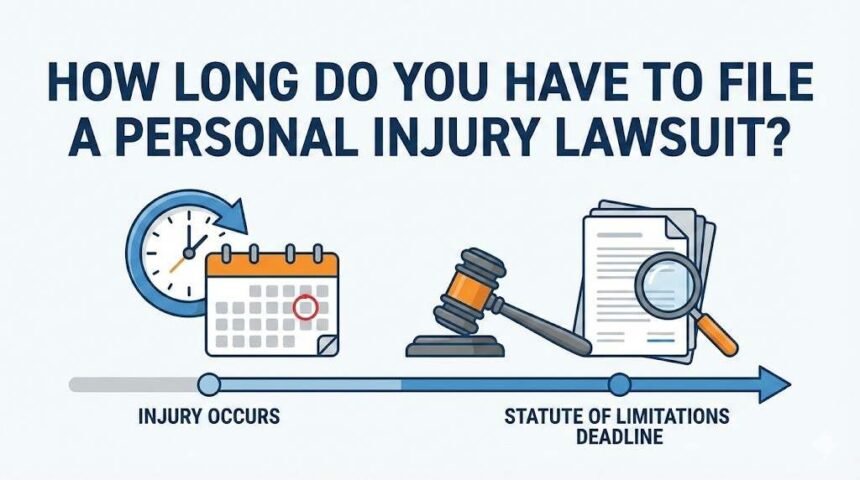
Nearly 39.5 million Americans require medical treatment each year following a personal injury, equating to approximately 126 cases per every 1,000 people. Automobile collisions, slip-and-fall accidents, and workplace injuries account for a significant portion of these incidents. Despite the physical and emotional toll, many injured victims fail to act quickly enough to protect their legal rights.
One of the most critical legal concepts every injury victim must understand is the statute of limitations for personal injury claims. Missing this deadline can permanently cost you the right to seek compensation, regardless of how strong your case may be.
Key Fact: In the U.S., the statute of limitations for personal injury cases typically ranges from 1 to 3 years, depending on your state, but several factors can shorten or extend this window.
What Is the Statute of Limitations for Personal Injury Claims?
The statute of limitations is a legally mandated time window within which an injured party must file a lawsuit against the responsible party. Once this period expires, courts will almost universally refuse to hear the case, no matter how compelling the evidence or severe the injuries.
This time limit exists for several important reasons: to ensure cases are decided on fresh evidence, to protect defendants from indefinitely delayed legal action, and to promote judicial efficiency. Understanding this deadline is not just helpful for legal strategy; it is foundational to preserving your right to compensation.
Why the Clock Starts Sooner Than You Think
In most states, the statute of limitations begins on the date the injury occurred. However, timing can vary depending on when you became aware of the injury (the discovery rule), the identity of the defendant, and whether a government entity is involved.
Because the clock often starts running from the day of the accident, victims who delay seeking legal counsel risk losing their opportunity to file entirely. Evidence degrades, witnesses become harder to locate, and legal paperwork takes time to prepare correctly.
Expert Insight: Advice From Houston Construction Accident Lawyer John W. Stevenson Jr.
Construction sites are among the most dangerous workplaces in the United States, and Houston is no exception, given its constant pace of development. According to Houston construction accident lawyer John W. Stevenson Jr., prompt legal action is one of the single most powerful steps an injured worker or bystander can take after a construction-related accident.
“The sooner you file your personal injury claim, the easier it is to meet the statute of limitations. Filing early prevents your case from being bogged down by legal red tape and gives your attorney time to gather crucial evidence while it is still available.” — John W. Stevenson Jr., Houston Construction Accident Lawyer
Construction accident cases often involve multiple liable parties, including contractors, subcontractors, property owners, and equipment manufacturers. Identifying all responsible parties and building a comprehensive claim takes time, which is precisely why acting early is so important.
Why Construction Accident Cases Face Unique Deadlines
Construction injury claims may involve OSHA investigations, workers’ compensation proceedings, and third-party personal injury lawsuits simultaneously. Each of these has its own timeline and procedural requirements. Missing one deadline can compromise your ability to pursue all available avenues of compensation.
- Workers’ compensation claims: Must often be reported within days of the incident
- Third-party personal injury suits: Typically governed by the state statute of limitations (2 years in Texas)
- OSHA complaint filing: Must be filed within 30 days for retaliation complaints
- Product liability claims: May have separate timelines if defective equipment is involved
State-by-State Statute of Limitations for Personal Injury: A Quick Reference Guide
Since personal injury statutes of limitations vary significantly by state, the table below highlights the most populous states and their respective deadlines. Always confirm with a licensed attorney in your jurisdiction, as laws can change and exceptions may apply.
| State | Statute of Limitations | Key Notes |
| Texas | 2 years | Applies to most personal injury and wrongful death cases |
| California | 2 years | Discovery rule may extend deadline for latent injuries |
| New York | 3 years | 1 year for claims against government entities |
| Florida | 2 years (as of 2023) | Changed from 4 years; medical malpractice varies |
| Illinois | 2 years | 5 years for certain property damage claims |
| Georgia | 2 years | Strict deadline; very few exceptions recognized |
Important: Claims against government entities (such as a city or state agency) often carry much shorter notice requirements, sometimes as few as 30 to 180 days. Always consult an attorney immediately if a government body may be involved.
Exceptions That Can Extend or Shorten Your Personal Injury Filing Deadline
While the statute of limitations sets a firm general deadline, several legal exceptions can significantly alter the clock. Understanding these exceptions is essential, particularly if you or a loved one is in a situation that makes immediate legal action difficult.
Tolling for Minors and Incapacitated Persons
If the injured party is a minor (under 18 years of age) or is mentally incapacitated at the time of the injury, the statute of limitations is generally paused, or tolled, until the disability is removed. For a minor, the clock typically begins on their 18th birthday. For a mentally incapacitated person, tolling continues until they regain sufficient legal capacity.
However, parents or legal guardians may file on behalf of a minor before the minor turns 18. In many cases, it is strategically advantageous to do so, since earlier filing preserves evidence and allows for timely medical documentation.
Discovery Rule
The discovery rule applies when an injury is not immediately apparent. Under this doctrine, the statute of limitations does not begin to run until the plaintiff discovers the injury, or reasonably should have discovered it. This rule is especially relevant in cases involving toxic exposure, occupational diseases, and defective medical devices or pharmaceuticals.
Courts analyze the discovery rule on a case-by-case basis. The critical question is: when did the plaintiff have sufficient facts to know or reasonably suspect that another party’s conduct had harmed them?
Defendant Absence From the State
In many jurisdictions, if the defendant leaves the state after causing the injury, the time they spent outside the state may not count toward the limitations period. This prevents defendants from evading lawsuits by temporarily relocating.
Fraud and Concealment
If a defendant intentionally conceals information about the injury or their role in causing it, courts in many states will toll the statute of limitations until the plaintiff discovers or reasonably could have discovered the fraud. This protects victims from being disadvantaged by a wrongdoer’s deliberate deception.
How to Determine Your Personal Injury Filing Deadline
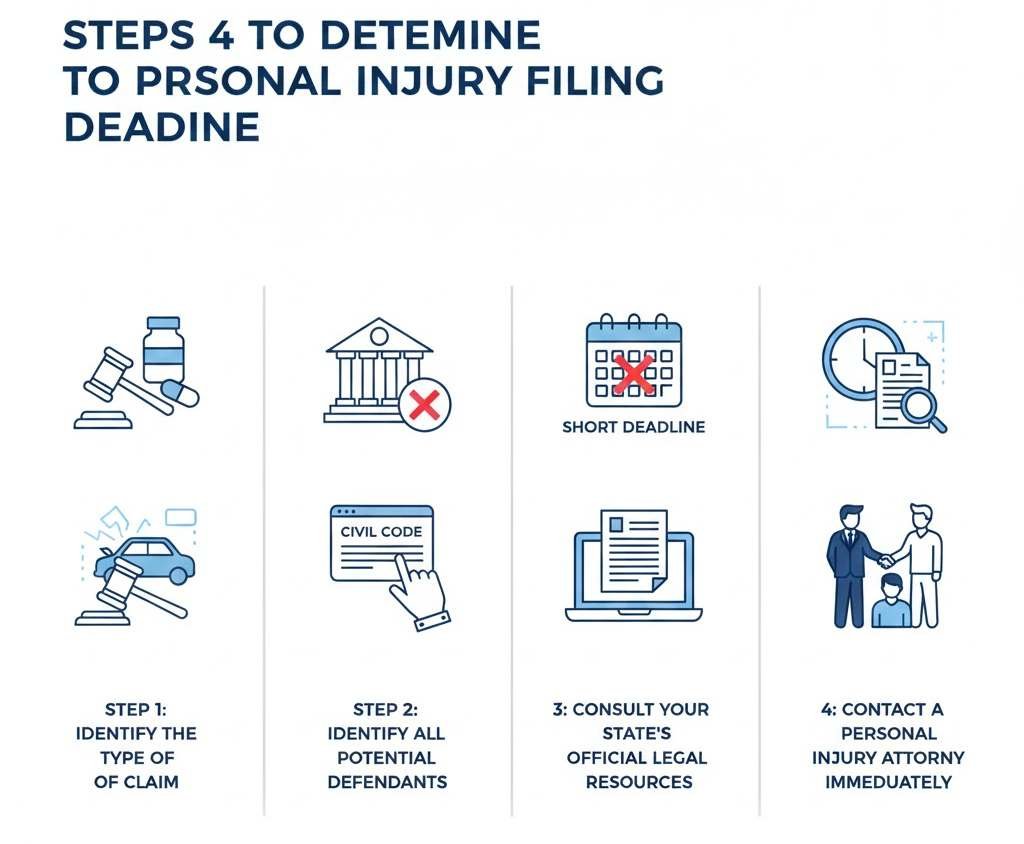
Finding the exact statute of limitations that applies to your case requires evaluating multiple factors. Here is a practical approach to ensure you do not miss your window.
Step 1: Identify the Type of Claim
Different injury types can carry different deadlines. For instance, medical malpractice, product liability, and wrongful death claims may each have distinct statutes of limitations even within the same state. Be precise about the category of your claim.
Step 2: Identify All Potential Defendants
If a government body, municipality, or public agency may be liable, you almost certainly face a shorter deadline and mandatory pre-suit notice requirements. Identify all potentially responsible parties before assuming which limitation period applies.
Step 3: Consult Your State’s Official Legal Resources
Most state court websites publish the civil code or statutes that govern personal injury claims. While these resources are publicly available, interpreting them without legal training can be risky due to the nuances of tolling, discovery rules, and jurisdictional exceptions.
Step 4: Contact a Personal Injury Attorney Immediately
The single most reliable way to know your exact filing deadline is to consult a licensed personal injury attorney in your state as soon as possible after sustaining an injury. An experienced attorney will review your specific facts, identify all applicable deadlines, and take immediate steps to preserve evidence and protect your rights.
Essential Pre-Filing Steps to Strengthen Your Personal Injury Lawsuit
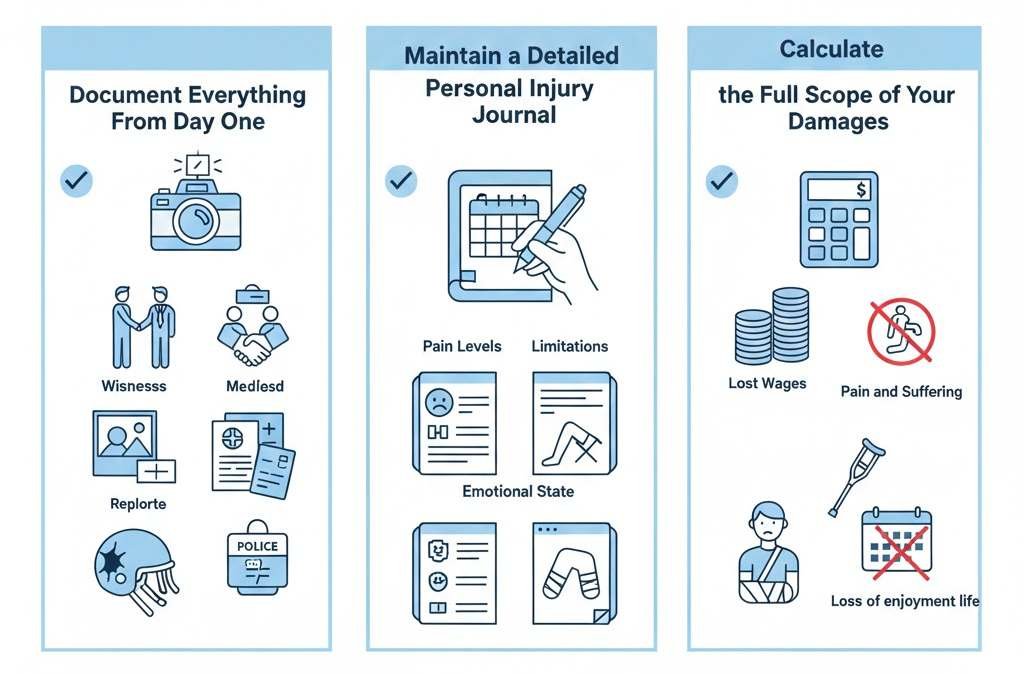
Filing within the statute of limitations is necessary but not sufficient for a successful outcome. The strength of your case depends heavily on the preparation you do before and after filing. The following steps are critical.
Document Everything From Day One
- Photograph all visible injuries immediately and continue photographing as they heal or worsen.
- Gather witness names, contact information, and written or recorded statements while memories are fresh.
- Obtain copies of all medical records, emergency room reports, diagnostic imaging, and treatment summaries.
- Request copies of any police, incident, or accident reports filed at the scene
- Preserve physical evidence such as damaged clothing, defective products, or broken safety equipment.
Maintain a Detailed Personal Injury Journal
A daily log documenting your pain levels, physical limitations, emotional state, and the ways the injury affects your daily activities and work is highly valuable in litigation. Courts and juries respond to specific, concrete accounts of how an injury changes a person’s life. Vague descriptions of suffering are far less persuasive than detailed, dated entries.
Calculate the Full Scope of Your Damages
Many injury victims focus only on immediate medical bills. However, compensable damages in a personal injury lawsuit can extend much further. They may include lost wages, future lost earning capacity, ongoing medical treatment, rehabilitation costs, permanent disability accommodations, pain and suffering, emotional distress, and loss of enjoyment of life.
Working with your attorney to quantify all present and future damages ensures you do not leave money on the table when negotiating a settlement or presenting your case at trial.
Consequences of Missing the Personal Injury Filing Deadline
Failing to file within the statute of limitations is one of the most damaging mistakes an injury victim can make. The consequences are severe and, in most cases, irreversible.
- Permanent loss of the right to sue: Courts will dismiss your case regardless of its merits
- Forfeiture of compensation: You become personally responsible for all medical bills, lost wages, and other costs
- Weakened negotiating position: Even before a formal filing, insurance companies use expired deadlines to deny or minimize settlements
- Inability to hold wrongdoers accountable: Beyond money, missing the deadline means the responsible party faces no legal consequence for their negligence
- Emotional and financial burden: Without compensation, the long-term financial strain of serious injuries can be devastating for victims and their families
A missed statute of limitations cannot be undone. Even if you hire the best attorney in the country after the deadline passes, there is almost nothing that can be done to restore your right to sue.
Final Conclusion
Understanding the statute of limitations for personal injury is not merely a legal formality. It is one of the most important and time-sensitive obligations you face after sustaining an injury caused by another party’s negligence. The law provides a window for you to seek justice, but that window closes permanently once the deadline passes.
Whether you were injured in a car accident, a slip-and-fall, a medical procedure, or a construction site incident, the advice is consistent across all categories of cases: act quickly, document thoroughly, and consult a qualified personal injury attorney without delay. The sooner you begin the legal process, the better your chances of building a strong case, gathering critical evidence, and securing the full compensation you deserve.
As Houston construction accident lawyer John W. Stevenson Jr. emphasizes, early action is not just advisable. It is often the difference between a successful recovery and being left with nothing. Your health and your financial future are worth protecting. Do not let a missed deadline decide your fate.
Legal Disclaimer
This article is intended for general informational and educational purposes only. It does not constitute legal advice and should not be relied upon as such. The information presented may not reflect the most current legal developments in your jurisdiction, and laws governing the statute of limitations for personal injury vary significantly by state and case type.
No attorney-client relationship is created by reading this article or contacting any attorney mentioned herein. Always consult with a licensed personal injury attorney in your jurisdiction regarding the specific facts and circumstances of your case before taking or refraining from any legal action.
References
- Centers for Disease Control and Prevention (CDC). Injury Prevention and Control: Data and Statistics. National Center for Injury Prevention and Control. Available at: https://www.cdc.gov/injury
- National Center for Health Statistics (NCHS). National Hospital Ambulatory Medical Care Survey: Emergency Department Summary Tables. U.S. Department of Health and Human Services.
- Stevenson, J.W. Jr., Houston Construction Accident Attorney. Expert legal commentary on personal injury filing strategy and statute of limitations compliance in Texas construction cases.
- Cornell Law School Legal Information Institute (LII). Statute of Limitations. Available at: https://www.law.cornell.edu/wex/statute_of_limitations
- American Bar Association (ABA). Personal Injury Claims: What You Need to Know. Public Resources Division.
- FindLaw by Thomson Reuters. State-by-State Statutes of Limitations for Personal Injury Claims. Available at: https://www.findlaw.com/injury/personal-injury/personal-injury-law/statutes-of-limitations-in-personal-injury-cases.html
- Nolo Press. The Discovery Rule in Personal Injury Cases. Available at: https://www.nolo.com/legal-encyclopedia/discovery-rule-personal-injury-cases.html
- Insurance Information Institute (III). Personal Injury Liability Claims and Industry Trends. Available at: https://www.iii.org
Published for informational purposes. For legal advice specific to your situation, please consult a licensed attorney in your state.