
Venous disorders are among the most common vascular conditions affecting adults worldwide. They range from mild cosmetic concerns, such as spider veins, to more advanced and symptomatic conditions, including varicose veins and chronic venous insufficiency. For many years, surgical intervention was the primary treatment, requiring hospital stays, general anesthesia, and extended recovery periods. Over the past few decades, however, the landscape of vein care has undergone significant changes.
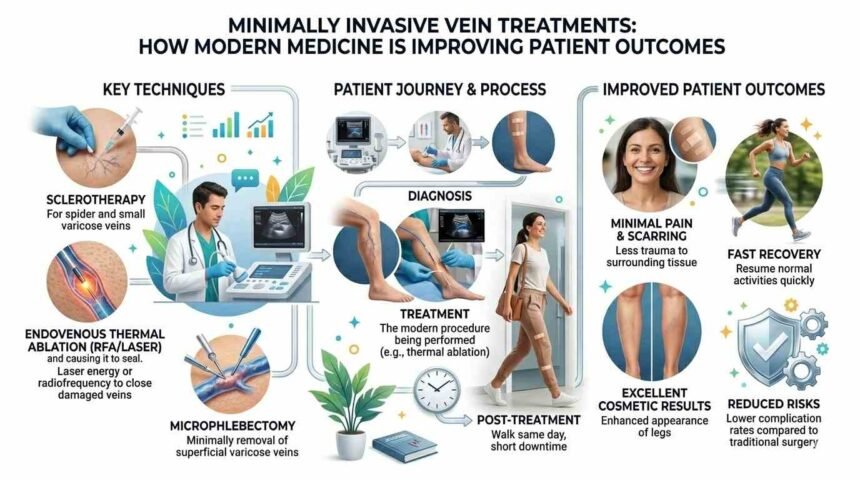
Advances in medical technology have led to the development of a new generation of minimally invasive vein treatments that are safer, more effective, and significantly less disruptive to patients’ daily lives. Most procedures today are performed in outpatient settings, often taking under an hour, with patients returning to normal activity within one to two days.
What Are Vein Conditions and How Do They Affect You?
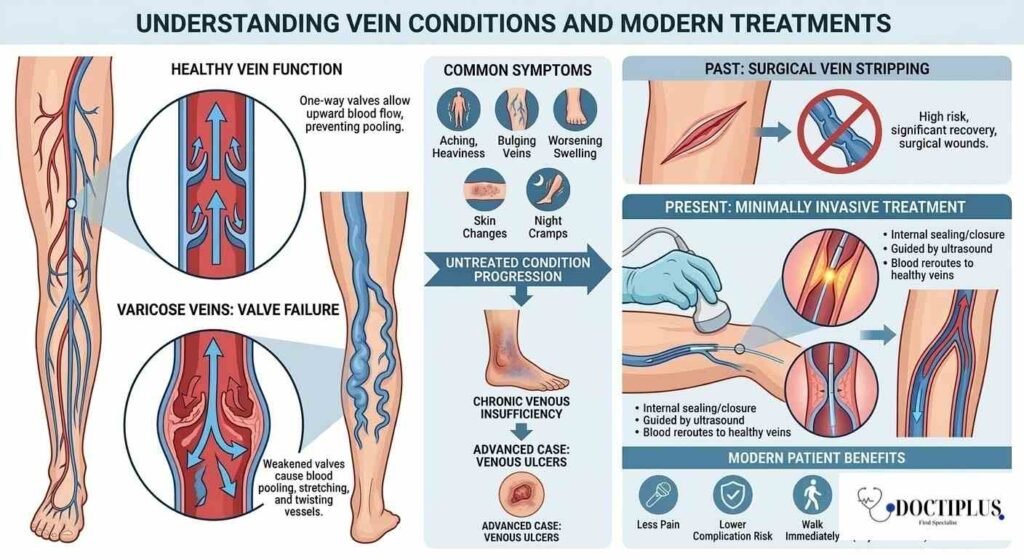
Veins are essential components of the circulatory system, responsible for returning blood to the heart after it has delivered oxygen and nutrients throughout the body. In the legs, veins must work against gravity to do this. They rely on a series of one-way valves that open to allow blood to flow upward and close to prevent it from flowing back down.
When these valves become weakened or damaged, blood pools in the veins. This increases pressure inside the vessel walls, causing them to stretch, enlarge, and twist. The result is varicose veins, bulging, rope-like vessels visible beneath the skin surface. Beyond the cosmetic concern, varicose veins commonly cause aching, heaviness, itching, swelling, and fatigue in the legs.
When left untreated, the condition can progress to chronic venous insufficiency, which may involve skin discoloration, persistent inflammation, and, in advanced cases, venous ulcers that are difficult to heal. Early diagnosis and treatment are therefore important not only for comfort but also for preventing long-term complications.
Common symptoms that warrant evaluation by a vein specialist include persistent leg aching or heaviness, visible bulging veins, leg swelling that worsens throughout the day, skin changes around the ankles or lower legs, and leg cramps at night. These symptoms are not always caused by varicose veins, but a medical evaluation can determine the underlying cause.
Shift Toward Minimally Invasive Treatment
Traditional surgical treatment for varicose veins involved a procedure known as vein stripping, in which the affected vein was physically removed through a series of incisions in the skin. While effective, this approach carried the risks associated with general anesthesia, required significant recovery time, and left patients with surgical wounds that needed careful post-operative management.
Modern vein medicine has moved away from surgical removal toward procedures that close or seal the damaged vein from within, allowing the body to gradually absorb the treated tissue while blood is naturally rerouted through healthier vessels nearby. These procedures are guided by real-time ultrasound imaging and use small catheters inserted through the skin rather than surgical incisions.
The practical benefits for patients are substantial. Minimally invasive approaches typically involve less pain, a significantly lower risk of complications, and recovery periods measured in days rather than weeks. Most patients can walk immediately following treatment and resume normal daily activities the same day or the day after.
Current Minimally Invasive Treatment Options
Endovenous Laser Therapy
Endovenous laser therapy uses targeted laser energy delivered through a thin catheter to heat and seal the inner wall of a diseased vein. Under ultrasound guidance, the physician positions the catheter precisely within the affected vein. As the catheter is slowly withdrawn, laser energy is emitted continuously, causing the vein wall to contract and close permanently.
The procedure is performed under local anesthesia, so patients remain awake and comfortable throughout. Most sessions are completed in under an hour. Clinical studies report high success rates for endovenous laser therapy in treating great saphenous vein reflux, with five-year closure rates consistently above 90 percent in peer-reviewed literature.
Radiofrequency Ablation
Radiofrequency ablation follows a similar principle to laser therapy but uses radiofrequency energy rather than laser light to generate the heat that closes the vein. Some patients and physicians prefer this approach because it delivers energy in a more controlled, segmental fashion, which may reduce post-procedure discomfort in certain cases.
Like laser therapy, radiofrequency ablation is performed under local anesthesia in an outpatient setting. Patients typically walk out of the clinic following treatment and return to work and light activity within one to two days. Long-term effectiveness data for radiofrequency ablation are comparable to those of laser therapy.
Key point for patients: Both endovenous laser therapy and radiofrequency ablation are currently endorsed as first-line treatments for symptomatic great saphenous vein reflux by the American Venous Forum and the Society for Vascular Surgery based on their strong safety and efficacy profiles.
Ultrasound-Guided Sclerotherapy
Sclerotherapy involves the injection of a chemical solution directly into the affected vein. This solution, known as a sclerosant, irritates the vein lining and causes it to swell shut. Over the following weeks, the body breaks down and absorbs the closed vessel, and blood is redirected through healthier veins.
Sclerotherapy is particularly well-suited for smaller varicose veins and spider veins that do not require thermal energy treatments. When performed with ultrasound guidance, the physician can accurately target deeper veins that are not visible from the skin surface, expanding the range of treatable vessels significantly.
The procedure involves only small injections and requires no incisions. Most patients experience minimal discomfort and can resume normal activity the same day. Multiple sessions may be required for optimal results, depending on the number and size of veins being treated.
Medical Adhesive Closure
Medical adhesive closure, also known as cyanoacrylate closure, is one of the most recent additions to minimally invasive vein treatment. A small amount of a specially formulated medical adhesive is delivered through a catheter directly into the diseased vein. The adhesive bonds the vein walls together, permanently sealing them closed without the need for thermal energy.
This technique has attracted attention because it typically requires little or no local anesthesia, and many patients do not need to wear compression stockings after the procedure, a requirement associated with other treatment methods. Recovery is rapid, and the procedure is well tolerated. Long-term outcome data continue to accumulate, but early results published in peer-reviewed journals are promising.
How These Treatments Improve Patient Outcomes
The shift to minimally invasive techniques has produced measurable improvements in patient experience and clinical results across several dimensions.
- Reduced pain and discomfort: Procedures performed under local anesthesia and without surgical incisions involve significantly less procedural and post-procedural pain than traditional surgery.
- Lower complication rates: The avoidance of general anesthesia and large incisions eliminates many of the risks associated with conventional surgery, including wound infections, nerve injury, and anesthesia-related complications.
- Faster recovery: Most patients return to work and light activity within one to two days, compared to several weeks following surgical stripping.
- Symptom relief: Many patients experience improvements in leg aching, heaviness, swelling, and fatigue within days to weeks of treatment.
- Cosmetic improvement: Treated veins fade and disappear over several weeks to months, improving the appearance of the legs and the confidence of patients who had previously avoided certain clothing or activities.
- Quality of life: Studies using validated quality-of-life instruments consistently show significant improvements in physical, social, and emotional well-being following successful vein treatment.
Role of Specialized Vein Centers
As minimally invasive procedures have become more sophisticated, vein care has increasingly moved into dedicated specialty centers that focus exclusively on vascular diagnosis and treatment. These centers use advanced duplex ultrasound imaging to map the venous anatomy precisely and identify the specific sources of reflux or obstruction causing each patient’s symptoms.
This diagnostic precision allows physicians to develop individualized treatment plans rather than applying a one-size-fits-all approach. Patients with multiple affected veins, complex anatomy, or prior treatment may particularly benefit from the level of expertise available at dedicated vein centers, such as those offering Vein treatment in Long Island.
Patients seeking specialist evaluation should look for centers staffed by board-certified vascular surgeons, interventional radiologists, or phlebologists with specific training and experience in venous disease. Accreditation by the Intersocietal Accreditation Commission for Vascular Testing is one indicator of diagnostic quality.
Prevention and Long-Term Vein Health
While minimally invasive treatments are highly effective for existing vein conditions, preventive care remains equally important for preserving vascular health over the long term. Several lifestyle factors have a meaningful influence on venous circulation and can reduce both the risk of developing venous disease and the likelihood of recurrence after treatment.
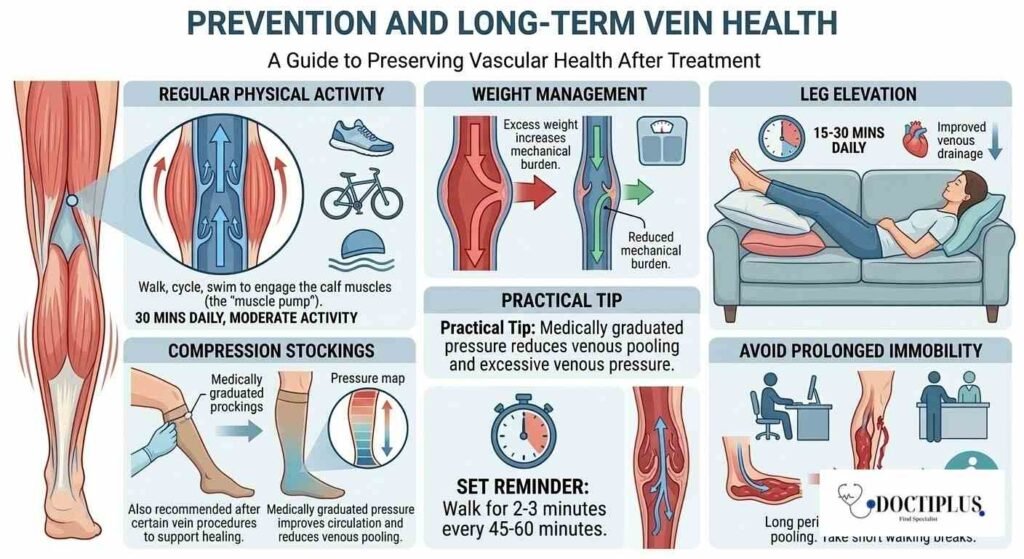
- Regular physical activity: Walking, cycling, and swimming engage the calf muscles, which act as a pump to push blood upward through the leg veins. Even 30 minutes of moderate activity most days of the week supports healthy venous return.
- Weight management: Excess body weight increases pressure on the leg veins, accelerating valve wear and widening of vessel walls. Maintaining a healthy weight reduces this mechanical burden.
- Leg elevation: Elevating the legs above heart level for 15 to 30 minutes daily, particularly after prolonged standing or sitting, allows gravity to assist venous drainage and reduces end-of-day swelling.
- Compression stockings: Medically graduated compression stockings improve circulation and reduce symptoms in people who stand or sit for extended periods. They are also routinely recommended after certain vein procedures to support healing and optimize results.
- Avoiding prolonged immobility: Long periods of sitting or standing without movement allow blood to pool in the leg veins. Taking short walking breaks every hour during sedentary work days makes a meaningful difference.
Practical tip: If your work requires prolonged sitting or standing, set a reminder to walk for two to three minutes every 45 to 60 minutes. This simple habit significantly reduces venous pooling and the associated discomfort.
Conclusion
Minimally invasive vein treatments represent one of the clearest examples of how technological progress in medicine has directly improved patient experience and outcomes. Procedures that once required surgical incisions, general anesthesia, and weeks of recovery can now be completed in outpatient settings in under an hour, with patients walking out the door the same day.
Endovenous laser therapy, radiofrequency ablation, ultrasound-guided sclerotherapy, and medical adhesive closure each offer distinct advantages, and the right approach depends on the individual patient’s anatomy, symptoms, and treatment goals. A thorough evaluation by a qualified vein specialist is the essential first step toward understanding which option is most appropriate.
Combined with preventive lifestyle practices and long-term follow-up care, these treatments give patients effective tools for managing venous disease, reducing symptoms, and protecting their vascular health for years to come.
Disclaimer
This article is provided for general informational and educational purposes only. It does not constitute medical advice, diagnosis, or treatment recommendations and should not be relied upon as a substitute for consultation with a licensed physician or qualified healthcare professional. Vein conditions vary significantly in type, severity, and underlying cause, and the appropriateness of any specific treatment depends on individual patient factors that can only be assessed through a clinical evaluation. Procedure descriptions, recovery timelines, and success rates referenced in this article are generalizations based on published literature and may not reflect outcomes for any individual patient. Treatment availability, techniques, and clinical guidelines may vary by region and are subject to change as research evolves. Always seek the advice of a board-certified vascular surgeon, phlebologist, or other qualified specialist before making any decisions regarding vein treatment.
References and Resources
- Society for Vascular Surgery and American Venous Forum. (2011). Clinical Practice Guidelines for the Care of Patients with Varicose Veins. Journal of Vascular Surgery, 53(5 Suppl), 2S-48S. https://doi.org/10.1016/j.jvs.2011.01.079
- American Venous Forum. Guidelines and Position Statements on Venous Disease. https://www.veinforum.org
- European Society for Vascular Surgery. Guidelines on Chronic Venous Disease. https://www.esvs.org
- Intersocietal Accreditation Commission. Vascular Testing Accreditation Standards. https://www.intersocietal.org
- Gloviczki P, et al. (2011). The care of patients with varicose veins and associated chronic venous diseases: Clinical practice guidelines of the Society for Vascular Surgery and the American Venous Forum. Journal of Vascular Surgery, 53(5 Suppl).
- Rasmussen LH, et al. (2013). Randomized clinical trial comparing endovenous laser ablation, radiofrequency ablation, foam sclerotherapy, and surgical stripping for great saphenous varicose veins. British Journal of Surgery, 98(8), 1079-1087.
- Morrison N, et al. (2015). Cyanovein (cyanoacrylate closure) long-term follow-up of a first-in-human study. Journal of Vascular Surgery: Venous and Lymphatic Disorders, 3(1), 89-100.
- Epstein D, et al. (2011). Cost-effectiveness analysis of current treatment strategies for varicose veins. British Journal of Surgery, 98(2), 283-295.
- American College of Phlebology. Patient Education on Vein Disease and Treatment. https://www.phlebology.org
- Vascular Disease Foundation. Understanding Venous Disease. https://vasculardiseasefoundation.org
- National Heart, Lung, and Blood Institute (NHLBI). Varicose Veins: Overview and Treatment. https://www.nhlbi.nih.gov/health-topics/varicose-veins
- MedlinePlus (U.S. National Library of Medicine). Varicose Veins. https://medlineplus.gov/varicoseveins.html
- Centers for Disease Control and Prevention (CDC). Physical Activity Guidelines for Americans. https://www.cdc.gov/physicalactivity
- National Institutes of Health. Body Weight and Vascular Health. https://www.nhlbi.nih.gov/health/educational/lose_wt/index.htm