

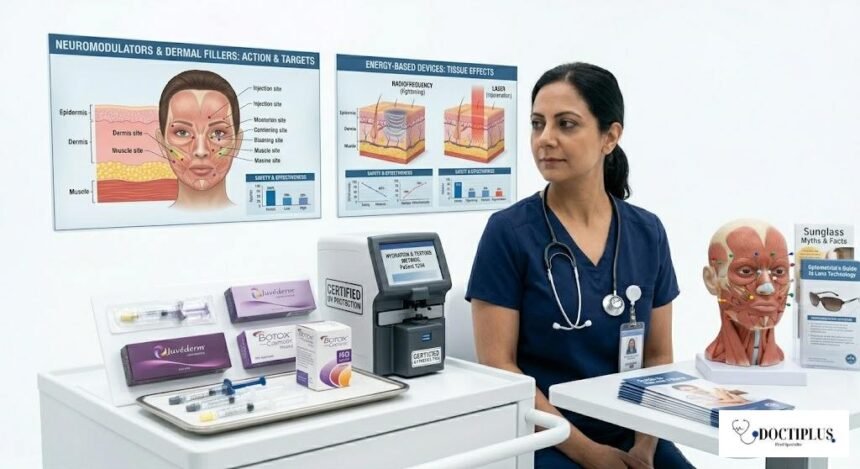
A lot has happened in aesthetic medicine over the past 10 years. Surgical procedures, which once ruled this domain, are now slowly being overtaken by non-surgical solutions with visible results and no or minimal downtime. This sea-change has not been caused simply by convenience or aesthetic trends, but driven by real medical advancements in the safety and efficacy of such therapies. With more people seeking non-invasive alternatives, it is essential to understand the medical viewpoint on these treatments.
Today, non-surgical aesthetic procedures are regarded as a lot more than simple superficial adjustments. They’ve joined a wider discussion in health care that encompasses skin health, preventive care and psychological well-being. Patients can gain a better understanding of what to consider when selecting their care by exploring how these treatments operate, the regulations involved with them and which factors are associated with outcomes.
You’re not getting any younger: Rise of Non-Surgical Aesthetic Medicine
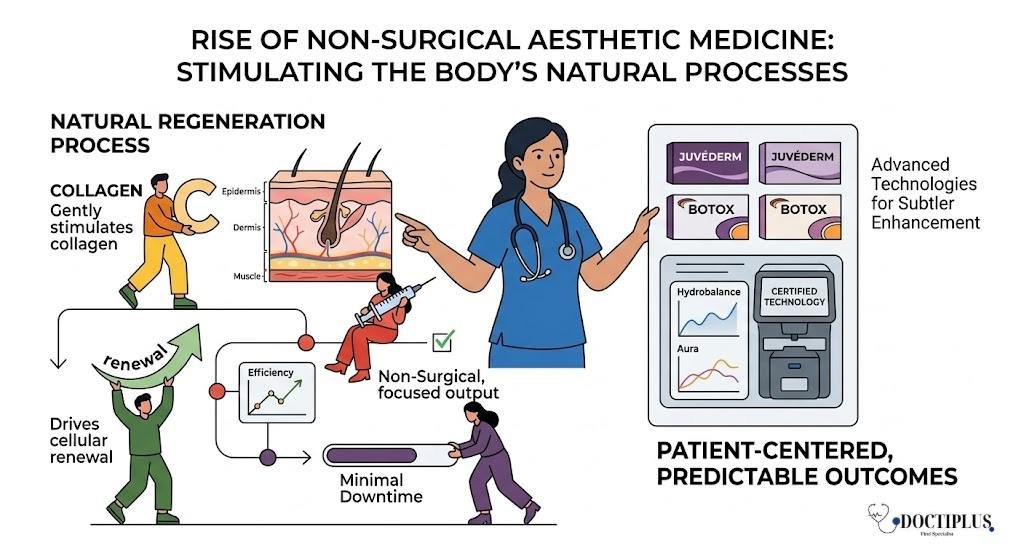
This shift in patient preferences is reflected in the growing popularity of non-surgical treatments. Of course, however packaged up, many are looking for subtle enhancements to their natural appearance without the downtime and potential complications of surgery. This demand has driven innovation in advanced technologies that can provide focused outputs in an efficient and predictable fashion.
Medically, these therapies are a huge leap forward. And they rely on a more nuanced understanding of how skin behaves and heals. Instead of changing anatomy through more invasive techniques, they work by gently stimulating the body’s natural processes, like collagen production and cellular renewal.
Such an approach drives trends in contemporary healthcare towards less invasive interventions and more patient-centered delivery of care.
Knowing the Mechanism Underlying These Therapies
Non-surgical aesthetic treatments are based on sound scientific principles. Multiple procedures utilize energy-based technology (like laser, radiofrequency or ultrasound) to interact with certain layers of the dermis. These technologies provide an energy signal that initiates a biological response while minimizing undesired effects on surrounding tissues.
For instance, heat-based therapies can activate fibroblasts, the cells that produce collagen. This improves skin firmness and elasticity over time from increased levels of collagen. Likewise, light-based treatments can target pigmentation or vascular lesions, allowing for a more uniform skin tone.
Injectable treatments work differently. Neuromodulators temporarily diminish muscle activity in order to smooth dynamic wrinkles. At the same time, dermal fillers are injected deeper into the skin to restore lost volume and add structure and definition to the face. These therapies are meticulously tailored to ensure that they interact with the body harmoniously, preventing unwanted side effects.
Evaluating Safety in Clinical Practice
When it comes to any medical procedure, safety is a top priority, and non-surgical aesthetic procedures are no exception. From a clinical point of view, several aspects determine safety: the nature of the treatment and the technology applied, as well as the experience of the practitioner.
Modern devices come with built-in safety features, making it possible to control the device as per the required energy delivery. It minimises the risk of complications like burns or tissue damage. Improvements in formulation and manufacturing have also enhanced the safety profiles of injectable products.
Proper patient assessment is essential. When repeating a process for any procedure, medical professionals need to consider how things such as skin type, medical history and treatment goals affect predictions. This approach helps ensure that treatments are safe and appropriate for each individual.
Importance of Practitioner Expertise
The skill level of the practitioner remains one of the most important elements in their safety and efficacy when it comes to non-surgical therapies. And the most sophisticated technology needs to be used with appropriate diligence and clinical judgment.
The quality of practice comes from qualified practitioners who are trained in the anatomy of the face, skin physiology and all aspects of each procedure. This knowledge enables them to perform precision treatments and modify techniques based on individual needs.
Choosing a reputable clinic with trained and certified professionals will help minimize this risk, as inexperienced or untrained providers can lead to adverse outcomes. Patients should feel very comfortable burning up the phone line to ask about qualifications and experience before a treatment starts.
Measuring Effectiveness: What Patients Should Expect
Comparative clinical outcomes and psychosocial satisfaction are markers of cosmetic effectiveness in non-surgical aesthetics. As opposed to surgical procedures, which generally have immediate and dramatic effects, non-surgical treatments usually yield incremental results.
Many patients would rather build gradually because of subtle changes that seem normal. For example, collagen-stimulating treatments take weeks or months to reach full results because the body requires time to create new tissue.
Realistic expectations are important from a medical viewpoint. Patients should realize that outcomes may differ depending on age, skin quality and lifestyle. Clear communication between practitioner and patient leads to expectations commensurate with desirable outcomes.
Risks and Potential Complications
Although non-surgical treatments are safe for the most part, they are not risk-free. Minor side effects like redness, swelling or bruising are relatively common and generally subside rapidly. More serious complications are rare but do happen, especially if procedures are done incorrectly.
Such irritations, including infections and allergic reactions, or uneven results, are common possible concerns that need to be addressed by a doctor immediately. The risk for these complications can be greatly minimized when the appropriate protocols are followed and experienced practitioners are chosen.
But some risk can be mitigated through post-treatment care. Patients are usually provided with specific directions to facilitate healing and maximize effects. Following these norms is an essential component of treatment.
Regulation and Standards’ Role
These are supported by regulatory frameworks for medical devices and products attesting to the safety and effectiveness of non-surgical aesthetic treatments. These therapies are vetted by regulatory authorities to confirm they adhere to the defined criteria before their accessibility to the wider public.
These rules provide consistency and protect patients from unsafe practices. While guidelines may differ by region, patients should still seek care through established providers who practice recognized standards.
Professional clinics, such as med spa services in Sarasota, function in a very different regulatory environment to ensure treatments are carried out in a safe and controlled manner.
Aesthetic Care and Your Total Health
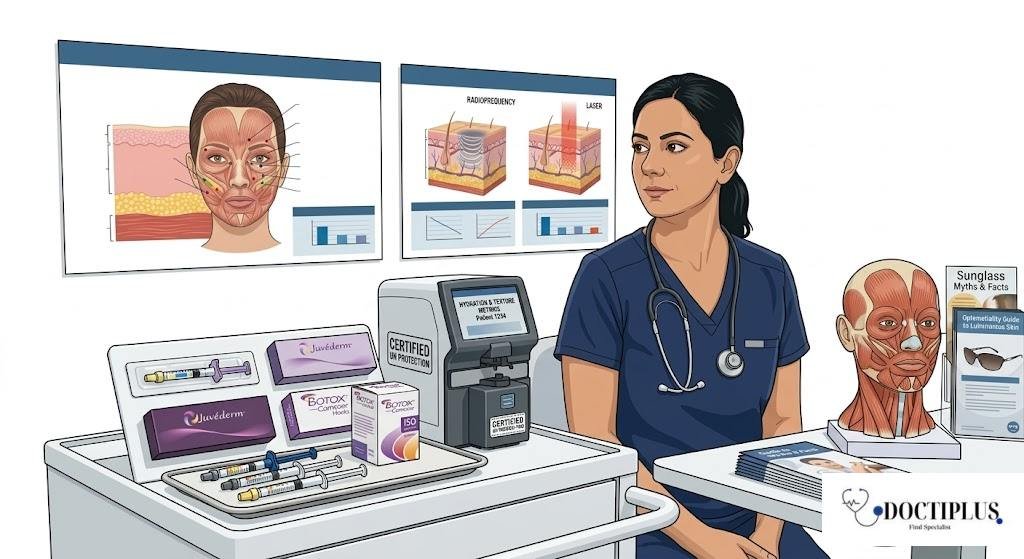
Combining cosmetic treatments with overall health and well-being-focused strategies is a growing trend in aesthetic medicine. This method is based on the idea that skin health can be affected by things like nutrition, hydration and lifestyle habits.
Medically speaking, proper attention to these underlying elements will improve aesthetic treatment outcomes. Other lifestyle factors can influence long-term results, such as receiving sun protection and having a good diet.
This general perspective is in line with the idea of preventive medicine, which prioritizes well-being over corrective treatment of apparent ailments.
Future of Non-Surgical Aesthetic Treatments
Emerging Trends and Continued Innovations in Non-Surgical Aesthetic Medicine. Breakthroughs in fields like regenerative medicine and biotechnology promise to enhance treatment efficacy even further.
Novel methods have emerged that more effectively induce the body to heal itself, similar to but longer-reaching and potentially more natural changes. Artificial intelligence is also making an impact directly on treatment planning, enabling practitioners to analyze data and tailor procedures with increased accuracy.
These advances indicate that non-invasive therapies will continue to improve upon one another, becoming safer and more effective as time passes.
Conclusion
These non-surgical treatments for aesthetic enhancement are a remarkable innovation in today`s medical world, that provides high-benefit and low-risk opportunity for patients to achieve their ideal results in less time. Scientifically proven analysis, technological exploration and medical expertise solidify their safety and effectiveness from a medical perspective.
Knowing the evidence on these therapies allows patients to make informed decisions and have realistic expectations. Possible risks exist, yet with adequate assessment, trained operators, and compliance to guidelines, the likelihood of complications can be drastically minimized.
Sporting advances as the field continues to expand, integrating aesthetic care and overall health wellness, mark an important trend going forward. Knowing how these treatments work and approaching them with caution can lead to results that are not just satisfying on an aesthetic level but also compatible with long-term wellness for the individual.
References
- Alam, M., & Dover, J. S. (2016). Noninvasive and minimally invasive treatment of aging skin. JAMA Dermatology. https://doi.org/10.1001/jamadermatol.2015.5071
- Sundaram, H., & Cassuto, D. (2013). Biophysical characteristics of hyaluronic acid soft-tissue fillers and their relevance to aesthetic applications. Plastic and Reconstructive Surgery. https://doi.org/10.1097/PRS.0b013e31829f4b80
- Fabi, S. G., & Goldman, M. P. (2014). Retrospective evaluation of the safety and efficacy of microfocused ultrasound for lifting and tightening lax skin. Dermatologic Surgery. https://doi.org/10.1111/dsu.12369
- Carruthers, J., & Carruthers, A. (2007). Botulinum toxin type A: History and current cosmetic use in the upper face. Seminars in Cutaneous Medicine and Surgery. https://doi.org/10.1016/j.sder.2006.12.002
- Hantash, B. M., Ubeid, A. A., Chang, H., Kafi, R., & Renton, B. (2009). Bipolar fractional radiofrequency treatment induces neoelastogenesis and neocollagenesis. Lasers in Surgery and Medicine. https://doi.org/10.1002/lsm.20762
- Alexiades-Armenakas, M. (2006). Laser skin tightening: Non-surgical alternative for skin rejuvenation. Journal of Drugs in Dermatology. https://doi.org/10.36849/JDD.2006.5.3
- Taub, A. F. (2007). Procedural treatments for skin rejuvenation. Dermatologic Clinics. https://doi.org/10.1016/j.det.2007.05.003
- Beer, K. (2009). Safety and efficacy of poly-L-lactic acid for facial lipoatrophy and cosmetic use. Journal of Cosmetic Dermatology. https://doi.org/10.1111/j.1473-2165.2009.00452.x
- Humphrey, S., Carruthers, J. D., & Carruthers, A. (2015). Clinical overview of botulinum toxin type A in aesthetic medicine. Clinical, Cosmetic and Investigational Dermatology. https://doi.org/10.2147/CCID.S64834
- Gold, M. H. (2011). Fractional technology: A review and clinical approaches. Journal of Clinical and Aesthetic Dermatology. https://doi.org/10.25251/skin.1.3.2