

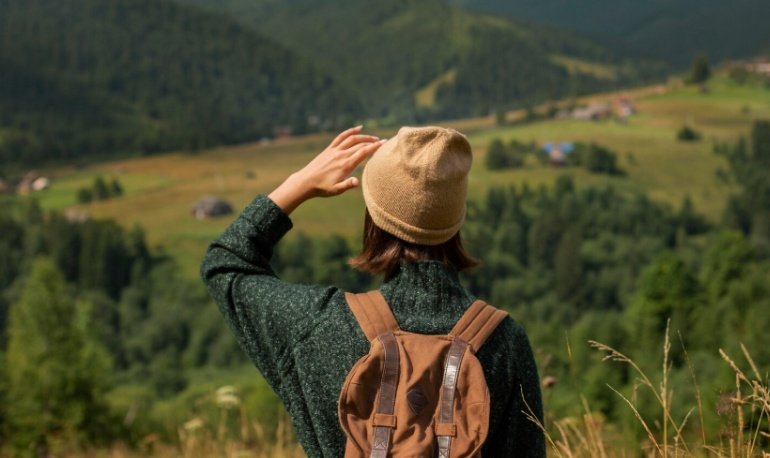
There’s a quiet rebellion happening in travel right now. People are packing lighter, staying longer, and choosing depth over distance. Instead of racing through five countries in ten days, exhausted, overstimulated, barely present, they’re spending a month in a single city. Learning its rhythms.
Finding a favorite coffee shop. Actually talking to people. According to AARP’s 2025 Travel Trends survey, 95 percent of people believe travel is good for their mental health. That’s not a small number. It signals something real: travel has stopped being purely recreational. For a growing segment of people, it’s restorative, a deliberate strategy for feeling better.
Understanding the Psychology of Slow Travel
So what actually drives someone to swap a highlight-reel trip for something quieter, slower, less Instagrammable? That’s where slow travel psychology gets genuinely fascinating and worth exploring carefully.
Core Principles Behind Slow Travel Psychology
At its foundation, slow travel is built on meaningful engagement. You’re not passing through, you’re temporarily inhabiting a place. That shift in intent changes everything, including how you shop, how you communicate, and how you perceive yourself in relation to an unfamiliar environment.
Staying somewhere long enough to feel even slightly familiar reduces the mental load that constant novelty creates. That might sound small. It isn’t. Many travelers who commit to this approach also choose an esim prepaid plan, which removes the friction of hunting for physical SIM cards at every new airport, giving you seamless connectivity without the logistical headache.
Mindful Travel Impact: How Slow Exploration Actually Changes the Brain
Research consistently shows that chronic stress shrinks the hippocampus, the part of your brain responsible for memory and emotional regulation. The mindful travel impact works in the opposite direction. New environments, approached without urgency, appear to restore neural flexibility over time.
Slow travel also reduces cortisol by eliminating constant decision fatigue. When you stop trying to “see everything,” your brain finally gets some breathing room. That’s nothing. For many people, it’s everything.
Slow Travel as Therapy: Healing Through Immersion
Some people don’t choose slow travel so much as arrive at it through necessity. Burnout. Grief. A diagnosis. A relationship that fell apart. Therapeutic slow travel has become a legitimate framework within mental health recovery discussions, particularly valuable for those who need consistency and calm rather than chaos and novelty.
There are stories of people who spent months wandering small Portuguese coastal towns or cycling through rural Japan, returning home genuinely changed. Not because something dramatic happened, but because nothing did and they finally had room to process what they’d been outrunning.
Designing a Slow Travel Lifestyle: A Conscious Approach
Living slowly while traveling isn’t merely about slowing down your itinerary. It’s about rethinking what travel is for in the first place.
Rethinking Pace: From “See Everything” to “Experience Deeply”
The slow travel lifestyle rejects FOMO in favor of JOMO, the Joy of Missing Out. You don’t need to see every museum or landmark. You need to find *your* café, your walking route, maybe even your neighbor. That specific intimacy is what actually changes a person.
There’s a practical case here, too. Extended stays tend to be more affordable, weekly rentals, local grocery stores, and fewer transit connections add up to genuine savings over a multi-week trip.
Incorporating Mindful Habits Into Daily Routines on the Road
Slowing your itinerary is only half the work. Journaling in the morning, cutting screen time, walking for ten minutes before you’ve touched your phone, these habits compound in ways that feel almost disproportionate after just two weeks.
Digital minimalism supports this well. Not disconnecting entirely, but being deliberate about when you plug in, and recognizing the difference between meaningful connection and reflexive scrolling.
How Slow Travel Reshapes Decision-Making and Life Satisfaction
Something quietly remarkable tends to happen when these habits take hold. People start questioning their careers, their relationships, and their definitions of success. The psychology of slow travel has a way of surfacing questions that a busy, scheduled life tends to bury.
Travelers report feeling more autonomous, more self-aware, and, perhaps most strikingly, more satisfied with less. That’s not a coincidence. That’s what happens when you stop filling every available moment.
Therapeutic Benefits of Slow Travel for Personal Growth
Beyond cultural awareness, slow travel does something deeply personal: it creates space to heal.
Overcoming Burnout and Rediscovering What Matters
Burnout isn’t simply tiredness. It’s a disconnection from meaning. Slow travel restores that connection by giving people time to feel again, without a rigid agenda pulling them forward every hour. Creative professionals, in particular, consistently report that slower, longer journeys reignite their work in ways no productivity framework has ever managed to replicate.
Building Meaningful Relationships While You’re Moving
The relationships formed during slow travel accelerate personal growth in ways that are hard to anticipate before you experience them. When you’re present in a place long enough, people begin to trust you. You form actual friendships with locals, not just friendly exchanges with strangers at a hostel. Those connections leave real marks.
Slow Travel as a Catalyst for Lasting Lifestyle Change
These shifts don’t stay on the road. People return from slow travel experiences and make concrete changes, take career breaks, deliberate on minimalism, and transition to remote work. The slow travel lifestyle has a way of becoming a permanent lens, not a temporary experiment.
Fast Travel vs. Slow Travel: A Direct Comparison
| Factor | Fast Travel | Slow Travel |
| Pace | Rushed, high-stimulus | Calm, intentional |
| Mental Health Impact | Often stressful | Restorative |
| Cultural Depth | Surface-level | Genuine immersion |
| Environmental Footprint | Higher (more flights) | Lower |
| Cost Over Time | Often higher | Frequently lower |
| Personal Growth | Limited | Significant |
Final Thoughts
Slow travel psychology isn’t a passing trend; it’s a direct response to something most people already feel privately. The world moves fast enough. Rushing through travel mirrors that exhaustion rather than relieving it. Choosing to stay longer, connect more deeply, and move with real intention is one of the most practical wellbeing strategies accessible today. It reshapes how you spend money, how you relate to other people, and ultimately, how you construct your life. Sometimes, slowing down genuinely is the fastest way forward.
FAQs
1. Is slow travel only realistic for people with unlimited time?
- Not really. Adding even two or three extra days to a single trip qualifies. Slow travel is a mindset as much as a schedule, prioritizing depth over quantity, regardless of the time available.
2. Does slow travel actually improve mental health?
- The evidence strongly suggests that it does. Reduced decision fatigue, deeper social connections, and consistent daily routines abroad all contribute to better emotional regulation and lower reported stress.
3. Is slow travel more expensive?
- Often it’s cheaper. Longer stays unlock weekly rental discounts. Eating locally costs far less than tourist-oriented restaurants. Fewer transit legs cut costs considerably over any multi-week trip.