

A health insurance premium receipt often looks like routine paperwork. Many people download it only when an employer, accountant, tax adviser, or insurance representative asks for proof. That habit can create problems later because the receipt is not just a payment note. It is the document that connects a real payment to a real policy, a real coverage period, and a real insured person.
This matters in any country where people manage private medical cover, employer benefits, tax records, family policies, or reimbursement claims. Rules differ across regions, but one principle stays the same. A bank payment shows that money has been left in an account. A premium receipt explains why the money was paid, who it covered, and which policy it supported.
For anyone buying health insurance, the receipt should be treated as part of the policy record, not as an optional download.
A Receipt Gives Meaning to a Payment
A card charge or bank transfer can prove that a transaction happened, but it cannot always explain the insurance purpose behind it. That difference becomes important when a person has more than one policy, changes jobs, renews coverage, or pays for family members.
Problem With Relying Only on Bank Records
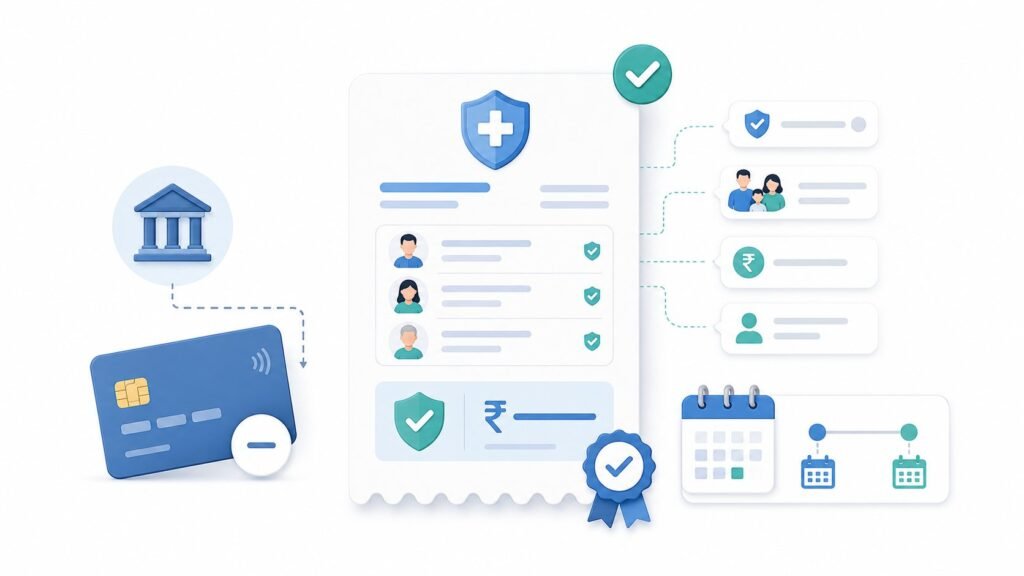
Imagine a person pays three insurance premiums in one year. One payment is for their own policy, one is for a partner, and one is for a parent. The bank statement may show three payments to insurance companies, but it may not show the policy number, insured person, coverage dates, premium type, or renewal status.
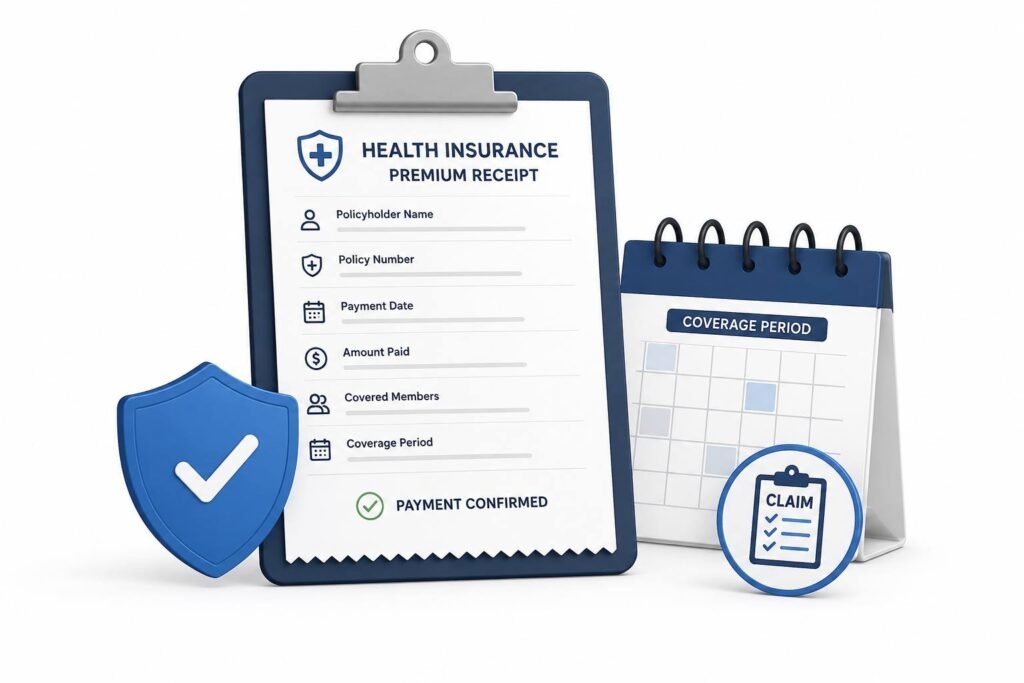
A premium receipt fills that gap. It usually includes the policyholder name, premium amount, payment date, policy number, insured member details, and sometimes a tax or fee breakdown. That makes it more useful than a payment screenshot when a tax adviser, employer, or insurer needs a clear record.
Why the Coverage Period Matters
The payment date and the coverage period are not the same thing. A person may pay in December for coverage that starts in January. Another person may renew late and have a gap between the old policy and the new one.
That distinction matters for employer benefit records, tax timing, claim disputes, and household budgeting. A receipt helps show not only that the premium was paid, but also which period the payment relates to.
Tax Rules Change, but Proof Still Matters
Tax treatment of health insurance premiums varies widely. Some countries allow certain deductions, some treat employer-paid cover as a taxable benefit, and some apply special rules for medical expenses or senior dependents. Because of that, the safest approach is not to assume eligibility. The safest approach is to keep proper proof and check local rules before filing.
Receipt Supports the Conversation With a Tax Adviser
In the United States, the Internal Revenue Service’s medical expense guidance explains that certain medical insurance premiums may be included as medical expenses in specific situations. In Canada, the Canada Revenue Agency guidance on private health services plans explains how some health plan premiums are treated for payroll and benefit purposes.
The point is not that every reader can claim the same benefit. The point is that local rules need evidence. A receipt allows a tax adviser to check the amount, timing, policy type, and insured person before deciding how it should be handled.
Employer Benefits Need Separate Attention
Employer-provided medical cover can create a different record-keeping issue. In the United Kingdom, GOV.UK guidance on medical treatment benefits explains reporting duties when employers provide certain medical benefits.
An employee may assume that a health benefit is already handled through payroll. That may be true, but it is still useful to keep documents showing what was paid by the employer and what was paid personally. This becomes important if the employee changes jobs, has a personal top-up policy, or pays extra to include family members.
Family Policies Need More Care Than Individual Policies
A single person with one policy may manage records easily. Complexity grows when the policy covers a spouse, children, parents, or older relatives.
Parent Cover Creates More Documentation Pressure
Premium receipts become especially important when someone pays for a parent or older family member. The receipt helps show whose cover was paid for, which policy was active, and whether the premium related to a separate senior plan or a family policy.
For health insurance for senior citizens, keeping clean records can also help when comparing renewals, checking waiting periods, reviewing exclusions, or confirming continuity of cover. Older adults may have more medical appointments, more claims, and more policy questions, so missing paperwork can create unnecessary stress.
A Real Family Example
Consider an adult child who pays for a mother’s health policy while also maintaining personal cover through an employer. At tax time, the adult child may need to separate personal payroll deductions, employer benefits, and the parent policy premium. During a claim, the family may need to confirm that the parent’s policy was active when treatment happened.
If the receipt is saved with the policy copy, renewal notice, and payment proof, the answer is easy. If the receipt is buried in an old inbox, the family may lose time during a stressful moment.
Receipts Help When Claims Become Complicated
Most people think about premium receipts during tax season. They can also matter during claim handling.
Active Cover Is Not Always Obvious From Memory
A claim dispute may involve a question about whether the policy was active on a specific date. The policy schedule shows the coverage period, but the receipt supports the payment side of the story. Together, they create a stronger record.
The HealthCare.gov summary of benefits and coverage page explains the value of clear plan information for understanding coverage. While that resource is United States-focused, the wider lesson applies everywhere. Policyholders should keep documents that explain both coverage and payment.
Renewal Receipts Can Show Continuity
Continuity of cover can matter when insurers review waiting periods, policy upgrades, or pre-existing condition terms. A renewal receipt can help show that the policy was not allowed to lapse.
For example, if a person renews the same policy every year, saving each receipt creates a timeline. That timeline can help when checking whether a waiting period has already been completed or whether a benefit became available in a later policy year.
Best Receipt System Is Built Around Real Questions
A useful filing system should answer the questions people actually face. Who was insured? Which policy was paid for? When was it paid? What period did it cover? Was the payment made personally or through work?
Name Files for Search, Not for Looks
A file named receipt 2026 is not helpful. A file named Father Health Policy Premium Receipt 2026 is better because it can be found quickly. Add the policy number if possible. Use the same naming pattern every year.
This is more than neatness. It prevents errors when multiple family members have policies with similar names or the same insurer.
Keep the Receipt With Related Documents
A receipt should not sit alone. Save it with the policy certificate, renewal notice, claim correspondence, and payment confirmation. If the policy is connected to work, keep the employer benefit documents in the same folder.
For a wider context, the Organisation for Economic Co-operation and Development health spending data shows how health costs are tracked across countries and systems. On a household level, the same idea applies in a smaller way. Clear records help people understand what they are paying and why.
Digital Receipts Are Convenient but Easy to Lose
Digital insurance records are useful, but they are also easy to misplace. Emails get archived. Phone apps change. Customer portals may require old passwords. A receipt that felt easy to access today may be difficult to find two years later.
Save It Outside the Insurer Portal
Do not rely only on the insurer’s app or website. Download the receipt and save it in a personal document folder. Keep a backup in secure cloud storage or encrypted storage if possible. If a family member manages records for an older parent, make sure another trusted person knows where the documents are kept.
Review the Receipt Before Filing It Away
Do not save the receipt without checking it. Review the policyholder name, insured member name, policy number, payment date, coverage period, amount paid, and payment method. If anything looks wrong, ask the insurer for a corrected version immediately.
This small review prevents bigger problems later. A wrong name, missing policy number, or unclear date can delay employer verification, tax review, or claim support.
Global Readers Should Treat Tax Benefits Carefully
Health insurance can interact with tax systems in different ways. Some countries allow deductions in limited cases. Some treat employer-paid cover as taxable. Some use rebates, credits, or reporting statements.
In Australia, the Australian Taxation Office’s private health insurance guidance explains how private health insurance can connect with tax reporting. In the United Kingdom, MoneyHelper guidance on insurance gives general consumer information about understanding insurance choices and financial protection.
These examples show why a general article should not promise one universal tax outcome. The receipt is valuable because it allows the correct rule to be applied in the correct country.
Final Thoughts
A health insurance premium receipt is a small document, but it protects much more than a payment record. It helps prove that a policy was paid, shows who was covered, supports tax review where local rules allow, helps employer verification, and keeps family insurance records organised.
The smartest habit is simple. Download the receipt after every premium payment. Check the details before saving it. Store it with the policy copy and payment proof. Keep parent and senior citizen policy records separate from personal cover. Review local tax rules before claiming any benefit.
A receipt cannot replace professional tax advice or insurance guidance, but it gives both advisers and families the evidence they need to make better decisions.