

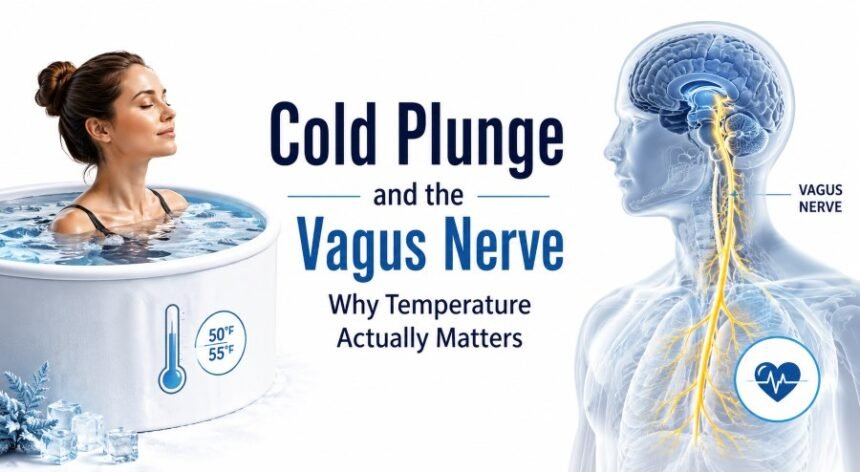
Cold water immersion has come a long way from the ice bucket in the corner of an NFL locker room. These days it is a fixture in home gyms, wellness studios, and biohacking routines, and most people who try it are chasing the same two things: less muscle soreness and a bit of extra calorie burn. What tends to get overlooked is that the real payoff is happening somewhere else entirely, deep inside the nervous system, at a nerve most people have never thought about since high school biology.
That nerve is the vagus nerve, and tapping into it through cold exposure has become one of the more effective drug-free tools for lowering stress and resetting an overworked brain. But here is the part almost nobody talks about. Getting the neurological benefit out of a cold plunge takes more than gritting your teeth through freezing water. It comes down to something far less dramatic: how precise and stable that water temperature actually stays for the duration of your session. Without that control, you are not training your nervous system. You are just shocking it and hoping for the best.
How Cold Exposure Talks to the Vagus Nerve
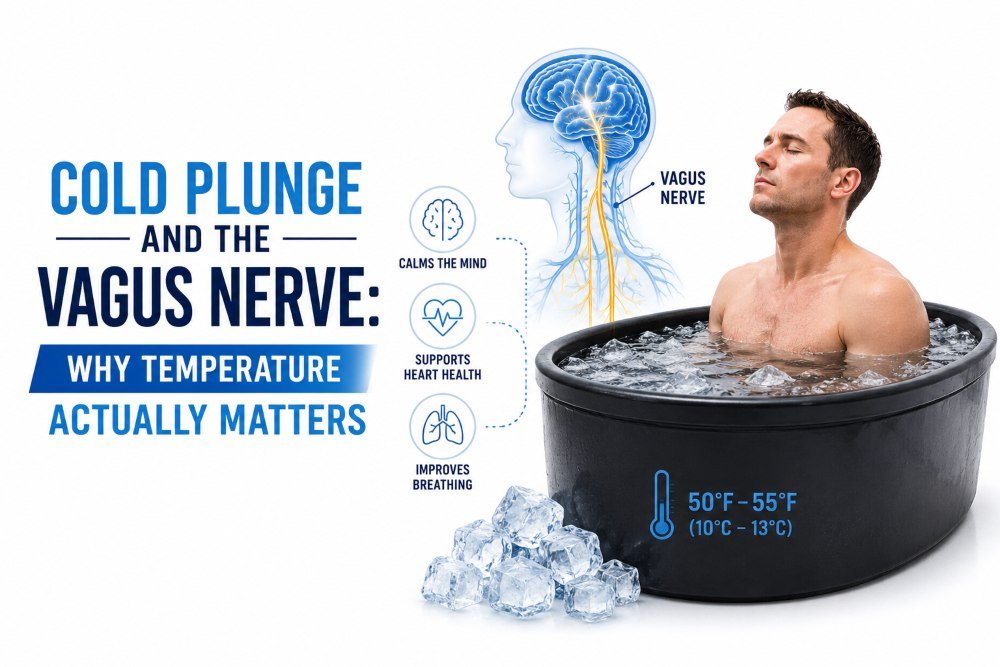
Picture the vagus nerve as your body’s internal brake pedal. It is the longest nerve in the autonomic nervous system, running from the brainstem all the way down through the chest and into the gut, and its job is to pump the brakes on the sympathetic fight or flight response so the parasympathetic rest and digest system can take over. People with strong vagal tone tend to recover from stress faster, run less chronic inflammation, and hold a calmer baseline day to day.
The moment you drop into cold water, skin receptors fire off a flood of signals to the brain almost instantly. That is the cold shock response. Heart rate spikes, breathing goes shallow, and every instinct says get out.
Here is where it gets interesting. Once you settle your breathing and stay in the water, the brain leans on the vagus nerve to slow the heart back down by releasing acetylcholine. Do this consistently over time, and you are essentially training that pathway. Research on cold water immersion and heart rate variability, a well-established marker of vagal activity, has shown that head-out immersion in cold to thermoneutral water reliably increases vagally mediated HRV, which is the physiological signature of a nervous system shifting out of panic mode and into recovery mode faster than it would untrained.
Why Consistent Temperature Is the Variable Most People Get Wrong
A common mistake with home ice baths is assuming that a bucket of melting ice cubes gets you the same result as a properly regulated setup. It does not, and the reason comes down to basic neurology. The brain responds best to a predictable, repeatable stimulus. When the water temperature drifts, the therapeutic effect drifts with it, for three specific reasons.
- You risk getting stuck in a panic loop instead of calming down. The nervous system works off fairly exact thresholds. Water that never gets cold enough will not trigger meaningful vagal activation in the first place. Water that swings into an uncontrolled, unpredictable deep freeze can trap the body in a sustained sympathetic response instead, flooding the system with cortisol and adrenaline and defeating the entire purpose of the session.
- Your own body heat can quietly sabotage the stimulus. Sit still in icy water long enough, and your body creates a thin, warm boundary layer against the skin that acts as an accidental insulator. Once that happens, the cold receptors stop sending the stress adaptation signals that made the plunge worthwhile to begin with. Water needs to stay actively circulated and precisely cooled for the signal to keep landing.
- Real adaptation needs a stable baseline to measure against. If the tub reads 50°F on Monday and 58°F on Wednesday because the ice already melted, the brain has nothing consistent to calibrate its stress tolerance against, and progress becomes nearly impossible to track.
This is exactly the gap that a dedicated water chiller for ice bath setups is built to close. Rather than fighting melting ice and guesswork, an active cooling system holds the water at an exact, unwavering temperature for the entire session, which is what actually gives the nervous system the steady stimulus it needs to build vagal tone over time.
Setting Up a Cold Plunge for the Nervous System, Not Just the Muscles
If the goal is mental resilience and nervous system regulation rather than pure muscle recovery, the colder is always better mindset actually works against you. A more effective approach looks like this.
- Find the neurological sweet spot. You do not need hypothermic extremes to condition the vagus nerve. A stable, controlled range of roughly 50°F to 55°F, or 10°C to 13°C, provides enough of a stress signal to prompt adaptation without tipping the brain into pure panic.
- Win the first sixty seconds. How you handle the initial shock matters more than almost anything else in the session. Short, panicked gasps keep you locked in sympathetic mode. Long, slow exhalations tell the brain it is safe, which is what allows the vagus nerve to step in and start bringing the heart rate back down.
- Prioritize duration over extreme cold. Two to three minutes in stable, moderately cold water does more for the nervous system than thirty frantic seconds in an unstable tub that starts warming up the moment you get in.
For anyone building a routine around this, the Plunge Chill blog is a useful resource for going deeper into protocols, temperature ranges, and setup guidance beyond what fits here.
Safety Considerations Worth Taking Seriously
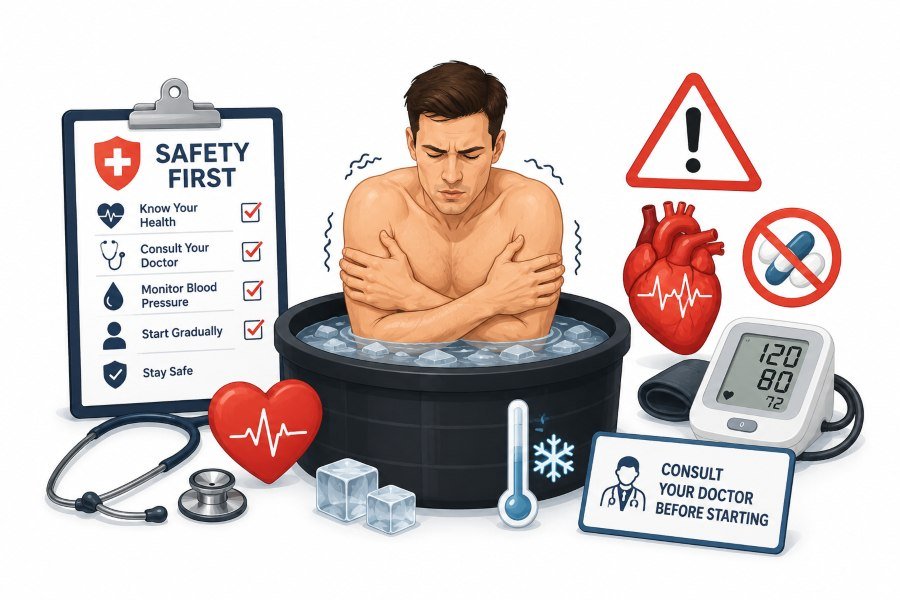
The benefits of cold exposure for focus, heart rate variability, and inflammation are real, but this is not a practice to approach casually. Sudden cold immersion causes blood vessels to constrict almost instantly, pushing blood toward the core and creating a temporary spike in blood pressure. The American Heart Association has specifically cautioned people with a cardiac history against cold plunging, noting that many people with heart conditions take medications like beta blockers that can make it harder for the body to adapt to a sudden temperature drop. Anyone with underlying heart conditions, high blood pressure, or circulatory issues such as Raynaud’s syndrome should talk to a doctor before starting. Given how much physical strain that initial reaction places on the cardiovascular system, keeping the environment controlled, monitored, and physically stable is not just about better results. It is a basic safety requirement.
Frequently Asked Questions
| Question | Answer |
|---|---|
| How long does it take to activate the vagus nerve during a cold plunge? | It largely comes down to breath control. The first 30 to 60 seconds are dominated by the body’s fight-or-flight response. Once the initial gasping reflex is replaced with slow, controlled breathing, the parasympathetic nervous system begins to take over. Meaningful vagal activation typically develops between 60 and 90 seconds during a well-controlled cold plunge. |
| Can fluctuating water temperatures reduce the benefits of cold therapy? | Yes. The nervous system responds best to a consistent cold stimulus. If the water warms rapidly because of body heat or melting ice, the signal sent to the brain becomes weaker. This inconsistency may reduce the training effect and make it more difficult to build long-term stress resilience and improve heart rate variability (HRV). |
| What is the ideal water temperature for nervous system regulation? | For nervous system conditioning, the ideal range is 50°F to 55°F (10°C to 13°C). Unlike near-freezing temperatures used in sports medicine for acute injuries, this stable temperature range is generally sufficient to stimulate the vagus nerve and parasympathetic response while remaining safer and more comfortable for most healthy adults. |
Disclaimer: This article is intended for general informational and educational purposes only and does not constitute medical advice. Cold water immersion carries real physiological risks, particularly for individuals with cardiovascular conditions, high blood pressure, circulatory disorders, or other underlying health concerns. Consult a licensed physician before beginning any cold exposure practice. Product mentions reflect editorial recommendations and may involve an affiliate relationship.