

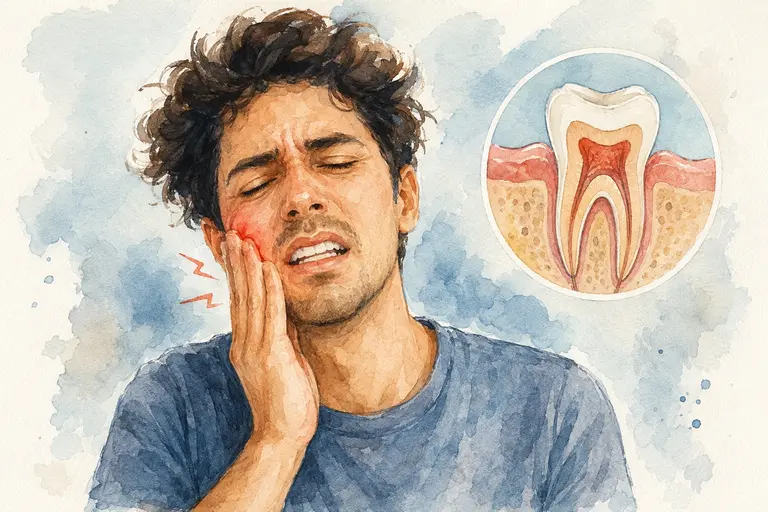
There’s a specific kind of dread that comes with a toothache that just won’t quit. Maybe it started as a mild sensitivity to cold drinks. Maybe you woke up one night with a throb you couldn’t ignore. And somewhere along the way, someone mentioned the words “root canal,” and suddenly your mind jumped straight to horror stories you heard from a coworker fifteen years ago. Let’s slow down and actually talk about what’s going on in your mouth, because most of what people believe about root canals is outdated, exaggerated, or just plain wrong.
What’s Actually Happening Inside a Painful Tooth
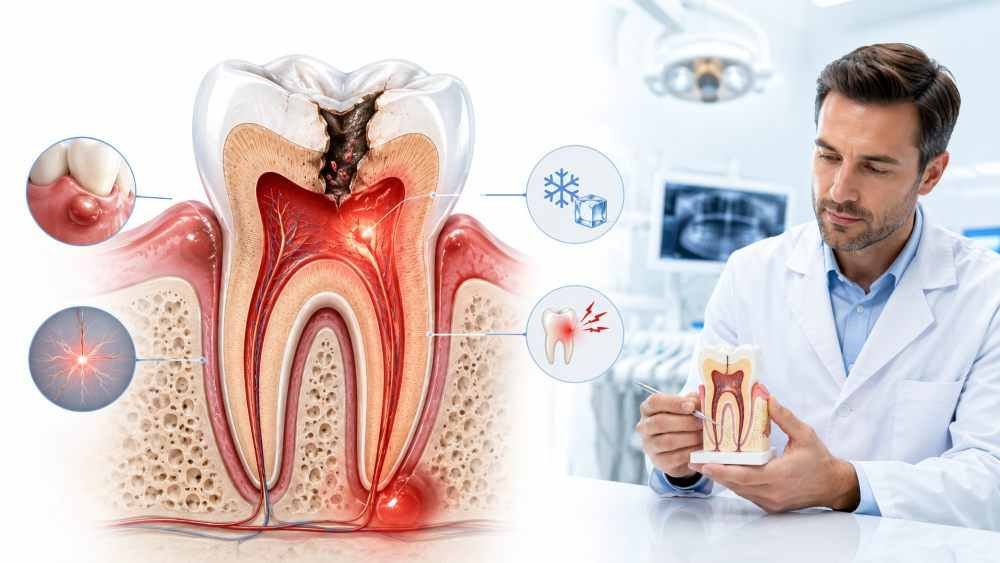
Every tooth has a soft center filled with nerves, blood vessels, and connective tissue, called the pulp. Under normal circumstances, you never think about it. But when deep decay, a crack, or repeated dental work lets bacteria reach that pulp, it gets inflamed or infected. That’s when the pain shows up, and it tends to show up in ways that are hard to ignore: sharp jolts when you bite down, lingering sensitivity after hot or cold, swelling along the gum, or sometimes a dull ache that seems to radiate toward your ear or jaw.
Here’s the part that surprises people: once the infection sets in, it doesn’t resolve on its own. Antibiotics might calm things down temporarily, and painkillers might get you through the night, but the underlying problem stays right where it is. Ignoring it usually means the infection spreads, and at that point, you’re not just risking the tooth; you’re risking the bone around it too.
So What Does a Root Canal Actually Do?
The name makes it sound worse than it is. A root canal treatment removes the infected or damaged pulp from inside the tooth, cleans out the empty canal, and seals it back up so bacteria can’t get back in. The tooth itself stays in your mouth, doing its job, instead of being pulled and replaced with something artificial.
Modern instruments and imaging have changed this procedure a lot over the past couple of decades. What used to take multiple long, uncomfortable visits can often be done in one or two appointments now, with local anesthesia keeping the area completely numb throughout. Most patients are genuinely surprised afterward, not by how much it hurts, but by how little. The truth is, the infection itself is what’s causing the pain beforehand. Once it’s cleaned out, most people feel noticeably better almost immediately.
For anyone who still feels nervous just thinking about the dental chair, that’s a completely normal reaction, and it’s exactly why practices offer options like sedation dentistry. There’s no reason to grit your teeth through an appointment out of fear when there are ways to stay relaxed and comfortable the entire time.
Signs You Shouldn’t Wait On
A lot of patients try to tough it out, hoping the pain will fade. Sometimes it does, temporarily, which is actually one of the more misleading signs, because it can mean the nerve inside the tooth has died rather than healed. The infection is often still there, quietly doing damage, even if the pain has gone quiet too.
Pain that lingers well after eating or drinking something hot or cold, rather than fading within a few seconds. Tenderness when you chew or even tap on the tooth. Visible swelling in the gum near a specific tooth, sometimes with a small bump that looks like a pimple. Discoloration, where a single tooth starts to look darker than the ones around it. And, of course, pain that wakes you up at night or radiates outward instead of staying localized.
If any of that sounds familiar, it’s worth getting looked at sooner rather than later. What starts as a manageable, single-appointment fix can turn into something far more complicated and expensive if the infection has time to spread. In more advanced cases, an abscess can form, and that’s a situation where waiting even a few more days genuinely matters. If you’re dealing with severe swelling, fever, or pain that’s escalating quickly, that crosses into emergency dental care territory, and it’s worth calling right away rather than waiting for a routine appointment slot.
What Happens to the Tooth Afterward
One thing that often gets left out of the conversation is what comes next. After the infected pulp is removed and the canal is sealed, the tooth is usually more brittle than it used to be, since it no longer has a live blood supply feeding it. That’s why a dental crown is typically recommended afterward, especially for back teeth that take on a lot of chewing pressure. Think of it as protective armor that lets you use the tooth normally for years, sometimes decades, without worrying about it cracking under everyday pressure.
This step matters more than people realize. A root canal without a proper crown, in a tooth that needs one, is a bit like patching a roof but leaving it exposed to the weather. The underlying repair was solid, but without protection, it’s vulnerable to new problems down the line.
Root Canal vs. Extraction: Why Saving the Tooth Usually Wins
When patients are in pain, the instinct is sometimes to say “pull it and be done with it.” It’s an understandable reaction in the moment, but it’s rarely the better long-term choice. Natural teeth are better at their job than anything artificial, even good replacements like implants or bridges. Once a tooth is extracted, neighboring teeth can shift, your bite can change, and depending on the replacement option you eventually choose, you could be looking at a longer and more expensive process than the root canal would have been in the first place.
There are exceptions, of course. If a tooth is severely cracked below the gum line or the bone support has broken down too much, extraction might genuinely be the better path. But for the vast majority of infected or damaged teeth, keeping your natural tooth in place through a root canal is the option that holds up best over time, both functionally and financially.
Don’t Let Fear Make the Decision for You
If there’s one thing worth taking away from all this, it’s that the fear around root canals is largely outdated. The procedure people dread today isn’t the procedure their parents or grandparents went through. Numbing is more precise, tools are gentler, and the whole process is generally over faster than people expect. The actual discomfort tends to live in the infection itself, not in the treatment that resolves it.
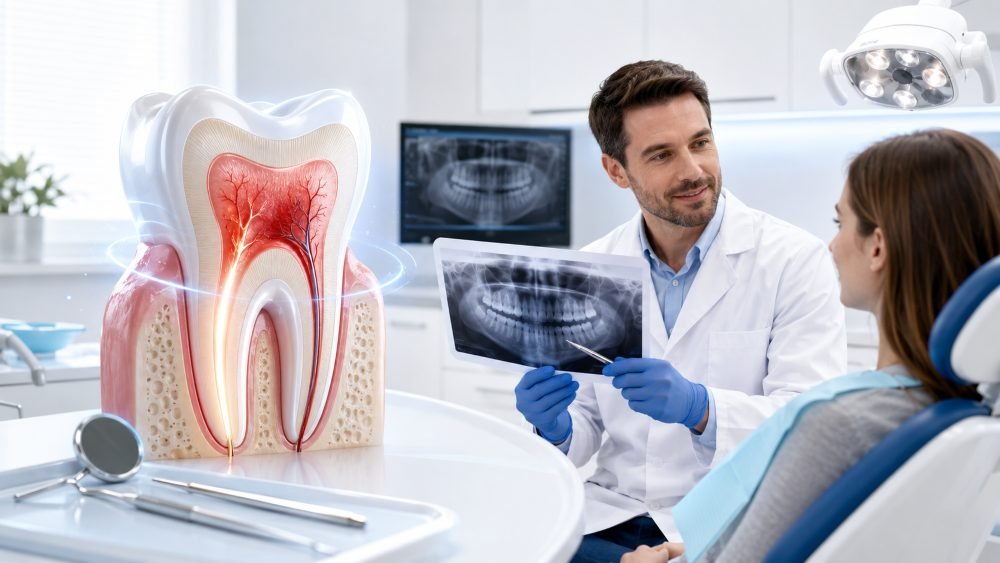
So if you’ve got a tooth that’s been bothering you, don’t wait it out hoping it resolves on its own. A quick exam and an X-ray will usually tell you exactly what’s going on and what your options are, often the same day you call. Waiting rarely makes things simpler, and it almost never makes them cheaper.
If that nagging toothache has been sitting in the back of your mind, it’s worth dealing with now rather than later. Schedule an appointment and get it checked out before a manageable problem turns into something bigger.
Medical Disclaimer
This article is provided for general educational purposes only and should not be considered a diagnosis, treatment plan, or substitute for professional dental advice. Tooth pain can have several causes, and only a qualified dentist or endodontist can determine whether root canal treatment, another dental procedure, or no treatment is appropriate after examining the tooth and reviewing any necessary X-rays.
Do not begin, stop, or change antibiotics or pain medication without guidance from a qualified healthcare professional. Seek urgent dental or emergency medical care if you develop rapidly increasing facial swelling, fever, difficulty swallowing or breathing, confusion, or other severe symptoms. Treatment recommendations, costs, appointment requirements, and outcomes may vary according to the tooth, infection severity, overall health, location, and dental provider.
References
- Burns, L. E., Kim, J., Wu, Y., Alzwaideh, R., McGowan, R., and Sigurdsson, A. (2022). Outcomes of primary root canal therapy: An updated systematic review of longitudinal clinical studies published between 2003 and 2020. International Endodontic Journal, 55, 714–731. DOI: 10.1111/iej.13736
- Ng, Y. L., Mann, V., Rahbaran, S., Lewsey, J., and Gulabivala, K. (2007). Outcome of primary root canal treatment: Systematic review of the literature, Part 1. Effects of study characteristics on probability of success. International Endodontic Journal, 40(12), 921–939. DOI: 10.1111/j.1365-2591.2007.01322.x
- Ng, Y. L., Mann, V., Rahbaran, S., Lewsey, J., and Gulabivala, K. (2008). Outcome of primary root canal treatment: Systematic review of the literature, Part 2. Influence of clinical factors. International Endodontic Journal, 41(1), 6–31. DOI: 10.1111/j.1365-2591.2007.01323.x
- Mergoni, G., Ganim, M., Lodi, G., Figini, L., Gagliani, M., and Manfredi, M. (2022). Single versus multiple visits for endodontic treatment of permanent teeth. Cochrane Database of Systematic Reviews, 12, CD005296. DOI: 10.1002/14651858.CD005296.pub4
- Agnihotry, A., Thompson, W., Fedorowicz, Z., van Zuuren, E. J., and Sprakel, J. (2019). Antibiotic use for irreversible pulpitis. Cochrane Database of Systematic Reviews, 5, CD004969. DOI: 10.1002/14651858.CD004969.pub5
- Lockhart, P. B., Tampi, M. P., Abt, E., et al. (2019). Evidence-based clinical practice guideline on antibiotic use for the urgent management of pulpal and periapical-related dental pain and intraoral swelling. Journal of the American Dental Association, 150(11), 906–921.e12. DOI: 10.1016/j.adaj.2019.08.020
- Nixdorf, D. R., Moana-Filho, E. J., Law, A. S., McGuire, L. A., Hodges, J. S., and John, M. T. (2010). Frequency of persistent tooth pain after root canal therapy: A systematic review and meta-analysis. Journal of Endodontics, 36(2), 224–230. DOI: 10.1016/j.joen.2009.11.007
- Torabinejad, M., Anderson, P., Bader, J., et al. (2007). Outcomes of root canal treatment and restoration, implant-supported single crowns, fixed partial dentures, and extraction without replacement: A systematic review. Journal of Prosthetic Dentistry, 98(4), 285–311. DOI: 10.1016/S0022-3913(07)60102-4
- Zhu, Z., Dong, X. Y., He, S., Pan, X., and Tang, L. (2015). Effect of post placement on the restoration of endodontically treated teeth: A systematic review. International Journal of Prosthodontics, 28(5), 475–483. DOI: 10.11607/ijp.4120