

Most people brush twice a day, floss when they remember, and assume that’s enough. For a lot of us, that assumption holds up fine for years, until it doesn’t. Tooth pain has a way of showing up at the worst possible time, and by the time it does, the small problem that started it has usually been growing quietly for months, sometimes longer.
This isn’t meant to scare anyone into obsessive dental habits. It’s just worth understanding what’s actually happening inside your mouth, why certain habits matter more than others, and when it’s time to stop guessing and see someone who knows what they’re looking at.
Mouth Is Not a Closed System

One thing people underestimate is how connected oral health is to the rest of the body. Gum disease has been linked to heart disease, diabetes complications, and even pregnancy outcomes. The mechanism isn’t mysterious. Chronic inflammation in the gums doesn’t stay contained. Bacteria from infected gum tissue can enter the bloodstream, and the immune response triggered by ongoing gum infection puts a low-grade strain on the rest of the body.
That’s a big reason dentists keep pushing the same basic message: what looks like a small issue in your mouth rarely stays small. A cavity that goes untreated doesn’t just get a little bigger. It eventually reaches the nerve, and at that point you’re looking at a root canal instead of a filling, or worse, an extraction instead of a root canal.
What Diet Actually Does to Teeth
Sugar gets blamed for cavities, and rightly so, but the full picture is a bit more specific. It’s not sugar itself that damages enamel. It’s the acid produced by bacteria feeding on that sugar. This distinction matters because it explains why sipping a sugary drink slowly over an hour is worse for your teeth than drinking the same amount quickly. Constant exposure means constant acid production, which gives enamel no time to recover.
Acidic foods and drinks, including citrus, wine, soda, and even some sports drinks, soften enamel temporarily. Brushing immediately after consuming them can actually brush away softened enamel. Waiting 30 minutes gives saliva time to neutralize the acid and re-harden the surface first.
On the other side, foods like cheese, plain yogurt, and leafy greens support oral health. Cheese in particular raises the pH in your mouth and stimulates saliva production, both of which help protect enamel.
Brushing and Flossing: Doing It Right Matters More Than Doing It Often
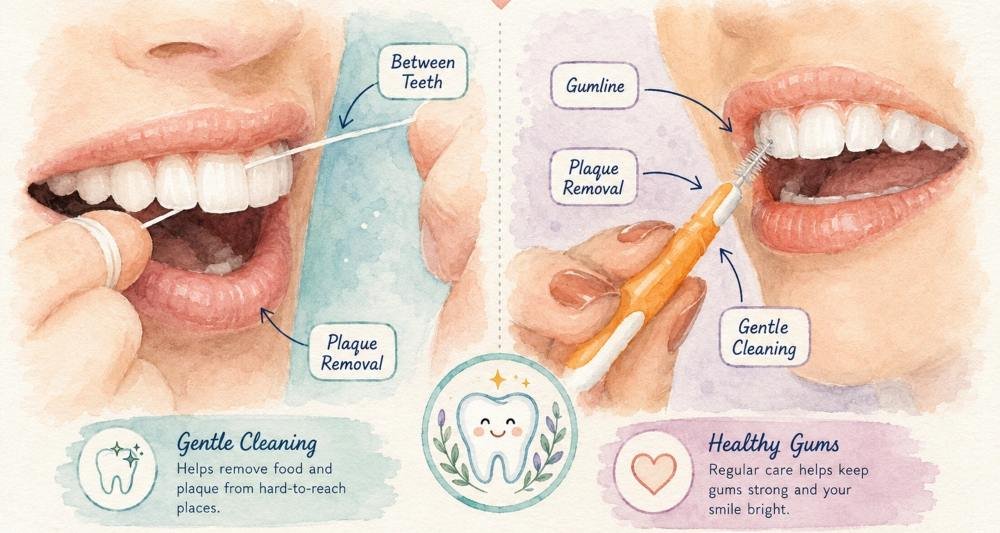
Almost everyone brushes. Far fewer people brush correctly. A few things actually make a difference:
Angle and pressure. Aggressive brushing at a hard angle can wear down enamel and irritate the gumline, causing recession over time. A 45-degree angle with gentle, circular motion covers the same ground without the damage.
Timing. Two minutes, twice a day, sounds simple but most people underestimate how long two minutes actually feels. Rushing through 30 seconds skips entire sections of the mouth, especially the back molars where cavities love to hide.
Flossing before, not after. Flossing loosens debris that brushing can then clear away. Doing it in that order actually improves plaque removal compared to flossing afterward.
The tongue. Bacteria collect on the tongue just as much as on teeth, and it’s a major contributor to bad breath. A quick pass with a tongue scraper or the back of a toothbrush takes five seconds and makes a real difference.
None of this is complicated, but consistency is where most people fall short. Skipping a night here and there feels harmless, and it mostly is, until it becomes a pattern.
Common Myths Worth Retiring
“If it doesn’t hurt, it’s fine.” Pain is often one of the last symptoms to appear, not the first.
“Whitening damages your teeth.” Professional whitening, done correctly, doesn’t damage enamel. Over-the-counter products used incorrectly or excessively are a different story.
Baby teeth don’t matter since they fall out anyway.” Baby teeth hold space for adult teeth and guide their alignment. Decay or early loss can cause crowding and bite problems later.
“Harder brushing means cleaner teeth.” As mentioned earlier, this is backwards. Harder brushing usually means more damage, not more cleaning.
Building a Routine That Actually Sticks
The people with the healthiest teeth aren’t necessarily the most disciplined. They’ve just built habits that don’t require willpower every single day. Keeping a toothbrush somewhere visible, setting a two-minute timer, or pairing flossing with an existing habit, like right after dinner, all reduce the mental effort needed to stay consistent.
It also helps to think of dental care the way you’d think of any other maintenance, such as car servicing. Skipping one oil change probably won’t wreck the engine. Skipping it for three years probably will. Teeth work the same way. Small, regular effort prevents the kind of damage that’s expensive, painful, and sometimes irreversible to fix later.
Checkup You Keep Postponing
Routine dental visits get skipped for all kinds of reasons, including cost, anxiety, or just the assumption that if nothing hurts, nothing’s wrong. That last assumption is the risky one. Cavities, early gum disease, and even oral cancer can develop without any noticeable pain in the early stages. That’s exactly why checkups exist: to catch things before they announce themselves.
A typical visit does more than clean your teeth. Dentists check for signs of enamel erosion, gum recession, bite misalignment, and oral cancer, and they can spot patterns, like grinding at night, that patients themselves often don’t notice. Professional cleanings also remove tartar, which is plaque that has hardened and can no longer be removed by brushing alone.
If you’ve been putting off a visit for longer than you’d like to admit, that’s usually a sign it’s overdue rather than optional. Clinics like Muse Dental offer general checkups, cleanings, and more specialized treatment for people who’ve let things slide for a while. There’s no judgment in walking in after two or three years away from a dentist’s chair.
Bottom Line
Oral health isn’t about chasing a perfect smile. It’s about avoiding pain, expense, and complications that are almost entirely preventable with basic, consistent habits and regular checkups. Brush properly, floss in the right order, be mindful of how and when you consume acidic or sugary foods, and don’t let years pass between dental visits.
If you’re overdue for a checkup or dealing with a problem you’ve been ignoring, it’s worth booking an appointment sooner rather than later. The earlier a dentist catches something, the simpler and cheaper it usually is to fix.
Medical Disclaimer
This article is provided for general educational and informational purposes only. It is not intended to diagnose, treat, cure, or prevent any dental or medical condition, and it should not replace advice from a qualified dentist, dental hygienist, physician, or other healthcare professional.
Dental needs vary depending on age, medical history, medications, existing restorations, gum health, and individual risk factors. Recommendations about brushing techniques, flossing, whitening products, dental visit frequency, and treatment should be discussed with a qualified dental professional.
Contact a dentist if you have persistent tooth pain, bleeding or swollen gums, loose teeth, unexplained mouth sores, facial swelling, or sensitivity that does not improve. Seek urgent medical care if swelling makes it difficult to breathe, speak, swallow, open your mouth, or see properly.
References
- Sanz, M., Marco del Castillo, A., Jepsen, S., et al. (2020). Periodontitis and cardiovascular diseases: Consensus report. Journal of Clinical Periodontology, 47(3), 268–288. DOI: 10.1111/jcpe.13189
- Borgnakke, W. S., Ylöstalo, P. V., Taylor, G. W., and Genco, R. J. (2013). Effect of periodontal disease on diabetes: Systematic review of epidemiologic observational evidence. Journal of Periodontology, 84(4 Supplement), S135–S152. DOI: 10.1902/jop.2013.1340013
- Daalderop, L. A., Wieland, B. V., Tomsin, K., et al. (2018). Periodontal disease and pregnancy outcomes: Overview of systematic reviews. JDR Clinical and Translational Research, 3(1), 10–27. DOI: 10.1177/2380084417731097
- Mazhari, F., Boskabady, M., Moeintaghavi, A., and Habibi, A. (2018). The effect of toothbrushing and flossing sequence on interdental plaque reduction and fluoride retention: A randomized controlled clinical trial. Journal of Periodontology, 89(7), 824–832. DOI: 10.1002/JPER.17-0149
- Moynihan, P. J., and Kelly, S. A. M. (2014). Effect on caries of restricting sugars intake: Systematic review to inform WHO guidelines. Journal of Dental Research, 93(1), 8–18. DOI: 10.1177/0022034513508954
- Carey, C. M. (2014). Tooth whitening: What we now know. Journal of Evidence-Based Dental Practice, 14, 70–76. DOI: 10.1016/j.jebdp.2014.02.006
- Warnakulasuriya, S. (2009). Global epidemiology of oral and oropharyngeal cancer. Oral Oncology, 45(4–5), 309–316. DOI: 10.1016/j.oraloncology.2008.06.002
- Marsh, P. D. (2006). Dental plaque as a biofilm and a microbial community: Implications for health and disease. BMC Oral Health, 6(Supplement 1), S14. DOI: 10.1186/1472-6831-6-S1-S14