

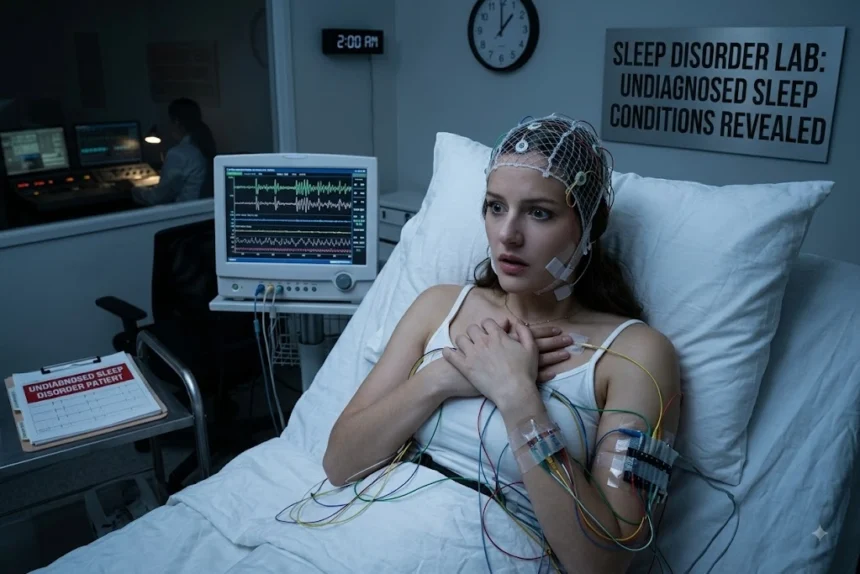
For years, my alarm was a headache. I would surface around half past five with a dull band of pressure wrapped around my skull, worst behind the eyes, and by the time I had showered and swallowed whatever was on the nightstand, it would slowly loosen its grip. I called it my morning migraine. So did three doctors. Between them they tried five preventive medications, two rounds of injections, and a rotating cast of acute pills, and I kept a headache diary thick enough to have its own drawer. Nothing held. The headaches were the fixed point around which the rest of my life arranged itself.
What none of us checked, for the better part of a decade, was what happened while I slept.
Clue That Was Hiding In Plain Sight
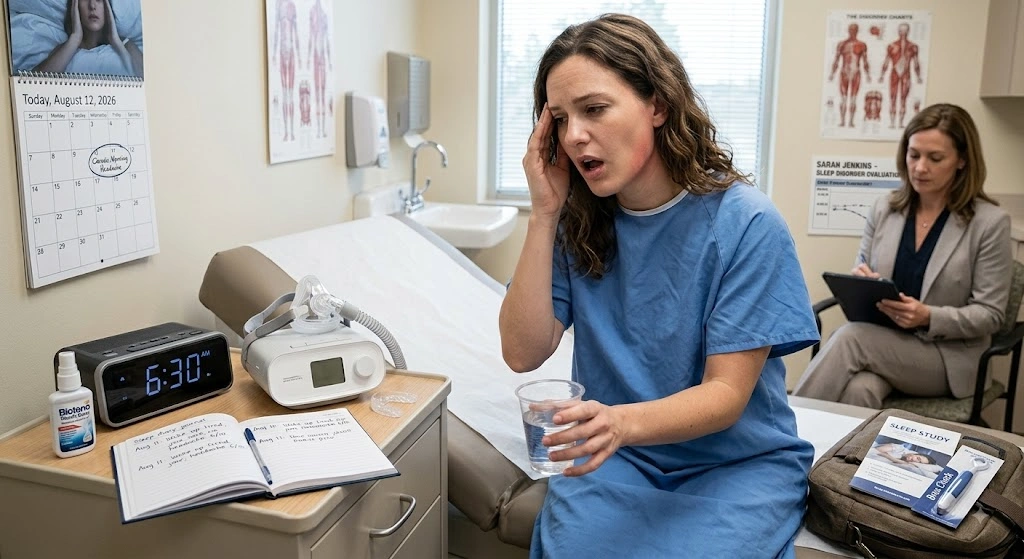
The most frustrating part, in hindsight, is how classic my presentation was. Pain that is present on waking and eases as the morning goes on is a recognized signal of sleep-disordered breathing. Mayo Clinic lists morning headaches among the daytime symptoms of obstructive sleep apnea, alongside loud snoring, witnessed pauses in breathing, and waking unrefreshed. It is common enough to have been studied directly. One analysis of patients referred for sleep studies found morning headache in roughly three in ten of them. My symptom was not exotic. It was in the textbook. It just happened to live in a different textbook than the one my headache doctors were reading.
Years I Treated The Wrong Problem
The thing I got wrong was not stubbornness or neglect. I showed up to every appointment. I took the medications as prescribed. I got the wrong problem solved, efficiently and repeatedly. My chart said chronic migraine, and every new clinician inherited that label and reached, reasonably, for the next migraine treatment on the list. The question underneath the label, whether the headaches were the disease or a symptom of something else, never got asked, because the label already seemed to answer it.
My partner was the one who eventually said the useful thing, and it was not about my head. It was about my nights: the snoring that had grown louder over the years, and the stretches where I seemed to stop breathing and then startle awake with a gasp. I had mentioned none of that to a doctor, because it had never occurred to me that my sleep and my headaches were the same story. A sleep study later confirmed obstructive sleep apnea, moderate to severe. Within a couple of months of using a CPAP machine, the morning headaches that had defined my life faded to something occasional. I want to be careful not to oversell that. It was not a miracle, and it did not happen overnight. But the change was real, and it was humbling.
How Sleep And Headache Feed Each Other
What I understand now, and did not then, is that the relationship runs in both directions. Poor sleep lowers the threshold at which a headache fires, and headaches in turn wreck sleep, so each condition quietly recruits the other. The American Migraine Foundation describes this as a genuine two-way connection rather than a coincidence, which is part of why treating only one side tends to produce, at best, temporary relief. Neurologists who work where these two fields overlap make the same point. As Rab Nawaz, M.D. has observed, evaluating headache without considering sleep is an incomplete assessment, and some patients labeled with refractory migraine improve substantially once an unrecognized sleep disorder is finally treated. That was, more or less, the plot of my own decade.
Screening That Takes About A Minute
Here is the detail that still stings. There is a short, validated questionnaire for sleep apnea risk called STOP-Bang, eight plain questions covering snoring, tiredness, observed pauses, blood pressure, and a few physical factors. Reviews have found it to be a fast and effective screening tool, and it takes about a minute to fill in. In roughly ten years of headache appointments, no one ever handed it to me. As headache clinicians such as Dr. Negar Sodeifi MD have argued, sleep apnea screening belongs in the routine evaluation of chronic headache, particularly for the patients who have not responded to standard treatment, which was exactly the group I was in.
A screening questionnaire is not a diagnosis, and this is worth saying plainly, because the answer to under-testing is not self-diagnosis. A high score flags risk. Confirming it requires an actual sleep study, either in a lab or, for many uncomplicated cases, with a home test. The American Academy of Sleep Medicine maintains a directory of accredited sleep centers, which is a sensible place to understand what proper testing involves rather than guessing from an online symptom checklist.
When The Problem Is Insomnia, Not Apnea
Apnea was my answer, but it is not everyone’s, and I have grown wary of turning my story into a template. For many people, the sleep problem is insomnia rather than disordered breathing, and the fix is different. The most strongly supported first step there is not a drug but a structured behavioral program. The National Heart, Lung, and Blood Institute describes cognitive behavioral therapy for insomnia as the option usually recommended first for long-term insomnia, with durable results and no pharmacology involved. The broader lesson is not that everyone with a headache secretly has sleep apnea. It is that sleep deserves a genuine look, and that the specific sleep problem, once identified, tends to point to a specific and often unglamorous fix.
Medication Trap I Nearly Walked Into

There is a quieter hazard in a decade of unexplained headaches, which is that the treatments themselves can become part of the problem. When acute pain medication is taken often enough, it can start generating headaches of its own, a pattern called medication overuse headache. The American Migraine Foundation notes that treating frequent attacks with acute medication on too many days each month can push an episodic pattern toward a chronic, daily one. I was closer to that line than I understood, reaching for pills most mornings to break a pain that a machine, in the end, addressed at its source. Some sedating medications, and opioids in particular, can also worsen breathing during sleep, which means a person whose headaches are actually driven by apnea can be handed a treatment that deepens the underlying condition while masking its symptom. None of this is a reason to stop a prescribed medicine on your own. It is a reason to make sure someone is looking at the whole system, not just the part that hurts.
What I Would Tell My Earlier Self
If I could go back to that nightstand, I would not hand myself the diagnosis. I would tell myself to widen the question. Ask, out loud, whether the headaches might be a symptom rather than the disease, and ask specifically about sleep. When you choose care, notice whether a clinician is curious about the whole picture or mainly working down a medication list, because that difference is easier to spot in the first two visits than people assume. Practically, it is worth asking whether a sleep evaluation is warranted, checking whether your insurance covers a sleep study and, if apnea is found, the therapy for it, and considering a headache specialist if a general approach has stalled. A brief, honest sleep history, including the things a bed partner notices, can redirect years of care.
None of this is medical advice for your particular situation, and individual circumstances differ more than any article can account for. Headaches have many causes, most of which have nothing to do with sleep, and only a qualified professional who can examine you should guide your actual decisions. How many people are quietly in the position I was in, cycling through headache treatments while an undiagnosed sleep disorder does the real driving, is genuinely unknown. But given how common undiagnosed sleep apnea is, and how rarely headache patients are asked about their sleep, I find it hard to believe the number is small. I was one of them for ten years, and the thing that finally helped was not a stronger painkiller. It was a question no one had thought to ask.
Medical Disclaimer
This article describes a personal experience and is provided for general information and reflection only. It is not medical advice and is not a substitute for professional diagnosis or treatment. Sleep disorders, headache disorders, and their treatments vary widely between individuals, and screening questionnaires cannot replace evaluation by a qualified clinician. Do not start, stop, or change any medication or treatment without consulting a licensed healthcare professional who can assess your specific situation.
References
- Mayo Clinic, Obstructive Sleep Apnea, Symptoms and Causes: https://www.mayoclinic.org/diseases-conditions/obstructive-sleep-apnea/symptoms-causes/syc-20352090
- American Migraine Foundation, Migraine and Sleep: Understanding the Two-Way Connection: https://americanmigrainefoundation.org/resource-library/migraine-and-sleep-understanding-the-two-way-connection/
- Spałka J, et al., Morning Headache as an Obstructive Sleep Apnea-Related Symptom (Brain Sciences, 2020): https://www.ncbi.nlm.nih.gov/pmc/articles/PMC7016602/
- Chen L, et al., Validation of the STOP-Bang Questionnaire for OSA Screening, systematic review and meta-analysis: https://www.ncbi.nlm.nih.gov/pmc/articles/PMC8590671/
- National Heart, Lung, and Blood Institute (NIH), Insomnia Treatment: https://www.nhlbi.nih.gov/health/insomnia/treatment
- American Migraine Foundation, Medication Overuse Headache: https://americanmigrainefoundation.org/resource-library/medication-overuse-headache-3/
- American Academy of Sleep Medicine, Accredited Sleep Center Directory: https://sleepeducation.org/sleep-center