
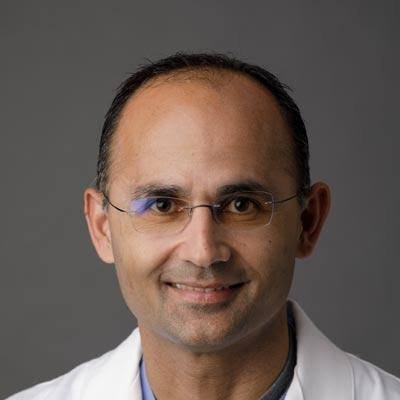
Dr. Peter Razeghi, MD Cardiologist and Cardiovascular Care
Dr. Peter Razeghi, MD, is a board-certified cardiovascular disease specialist whose clinical background combines internal medicine with advanced cardiology training. Current Houston Methodist and Memorial Hermann physician profiles identify him in cardiology and cardiovascular disease, while his professional profile also lists interests in echocardiography, nuclear cardiology, cardiovascular CT, adult congenital heart disease, and non-invasive cardiology.
For patients, this type of cardiology care is often most useful before a procedure is ever considered. Chest symptoms, shortness of breath, abnormal heart testing, high blood pressure, palpitations, reduced exercise tolerance, or an existing cardiovascular diagnosis may all require careful interpretation before the next step becomes clear.
Patients comparing physicians in this field can browse cardiology specialists on Doctiplus, where general cardiologists, interventional cardiologists, and other heart specialists are grouped by their cardiovascular focus.
About Dr. Peter Razeghi
Dr. Razeghi currently practices cardiovascular medicine in Cypress. Houston Methodist lists him as a cardiologist accepting new patients and affiliated with Houston Methodist Cypress Hospital. Memorial Hermann also lists him in cardiovascular diseases and cardiology and identifies Memorial Hermann Cypress Hospital among his affiliated centers.
His Doximity professional profile identifies practice interests in adult congenital heart disease, echocardiography, nuclear cardiology, and non-invasive cardiology. It also lists professional credentials in adult echocardiography, cardiovascular CT, and nuclear cardiology.
This combination is relevant because many cardiovascular decisions depend on understanding imaging and functional testing rather than immediately moving toward an invasive procedure. A cardiologist may need to determine whether a symptom is truly heart-related, whether a structural abnormality is clinically important, or whether a test result changes treatment.
Medical Education and Cardiology Training
Dr. Razeghi graduated from Heinrich Heine University of Düsseldorf in 1999. He later completed internal medicine residency training at the University of Texas Health Science Center at Houston from 2002 to 2006, followed by a cardiovascular disease fellowship there from 2005 to 2008. Memorial Hermann independently lists the same medical school, internal medicine training, and cardiovascular fellowship pathway.
| Training Area | Institution | Details |
|---|---|---|
| Medical education | Heinrich Heine University of Düsseldorf | Medical degree, 1999 |
| Residency | University of Texas Health Science Center at Houston | Internal Medicine |
| Fellowship | University of Texas Health Science Center at Houston | Cardiovascular Disease |
| Specialty | Cardiology | Adult cardiovascular evaluation and management |
| Board certification | American Board of Internal Medicine | Cardiovascular Disease |
This training pathway matters because cardiologists first develop a broad foundation in adult medicine. Fellowship training then concentrates on diseases of the heart and circulation, interpretation of cardiovascular testing, prevention, and long-term management of patients whose heart conditions may overlap with diabetes, kidney disease, respiratory conditions, or other medical problems.
Board Certification and Cardiac Imaging Credentials
Current professional information lists Dr. Razeghi as board certified in cardiovascular disease through the American Board of Internal Medicine. Doximity also lists credentials in adult echocardiography, cardiovascular CT, and nuclear cardiology.
These areas provide different types of information about the heart. Echocardiography uses ultrasound to evaluate heart structure and movement. Cardiovascular CT can provide detailed anatomical imaging in selected clinical situations. Nuclear cardiology examines aspects of blood flow and heart function using specialized imaging techniques.
For a patient, the value is not simply having access to several tests. The important part is deciding which test actually answers the clinical question and how the result should influence treatment.
Echocardiography and Structural Heart Assessment
Echocardiography is specifically listed among Dr. Razeghi’s professional areas.
An echocardiogram can provide information about heart pumping function, chamber size, valve movement, and other structural findings. It may become useful when patients have unexplained shortness of breath, a heart murmur, suspected heart failure, previous cardiovascular disease, or another reason to evaluate heart structure.
An abnormal echocardiogram does not necessarily mean an invasive treatment is required. Some findings need monitoring, some require medication or additional testing, and others may justify referral to a more procedure-focused cardiologist or cardiac surgeon.
This distinction is particularly important when a finding is discovered incidentally. The cardiologist has to decide whether it explains the patient’s symptoms or is simply something that should be followed over time.
Nuclear Cardiology and Stress Testing
Nuclear cardiology is another credential listed in Dr. Razeghi’s professional profile.
Nuclear cardiac testing may be used in selected patients to assess blood flow to heart muscle and how the heart responds under stress. Depending on the clinical situation, stress may be created through exercise or medication.
A patient with chest discomfort or reduced exercise tolerance may sometimes undergo stress testing before more invasive evaluation is considered. The result needs to be interpreted with the patient’s symptoms, ECG findings, medical history, and cardiovascular risk.
An abnormal stress test does not automatically mean an artery needs a stent. It indicates that the cardiologist may need additional information to understand whether blood flow is meaningfully impaired and which treatment approach is appropriate.
Cardiovascular CT
Dr. Razeghi’s professional credentials also include cardiovascular CT.
CT-based cardiac imaging can provide detailed anatomical information in selected cardiovascular evaluations. Depending on the clinical question, CT may be used to examine coronary anatomy, heart structures, major blood vessels, or other findings that are difficult to define with simpler testing.
The usefulness of CT depends on why it is being ordered. More imaging is not automatically better care. The test should answer a specific question that is likely to influence diagnosis, monitoring, or treatment.
Patients who have already undergone a cardiac CT should bring the report, and when requested by the cardiologist, the actual images may also be useful for comparison.
Adult Congenital Heart Disease
Adult congenital heart disease is listed among Dr. Razeghi’s professional practice areas.
Congenital heart conditions begin with structural differences present from birth, but their medical importance can continue well into adulthood. Some people underwent surgery during childhood and need ongoing monitoring, while others may not learn about a structural difference until later in life.
Adult care can involve understanding previous operations, heart-valve function, chamber size, rhythm problems, exercise tolerance, and how the condition has changed over time.
Patients with a complex congenital heart history may also require care from a cardiologist whose work is dedicated specifically to adult congenital heart disease. Dr. Razeghi’s listed interest in this area is relevant, but patients should confirm whether their particular congenital diagnosis fits his current scope of practice.
Chest Pain and Cardiovascular Evaluation
Chest discomfort is a common reason for cardiology referral, but it has many possible causes. The heart is one possibility, while muscles, the digestive system, lungs, and other conditions can sometimes create similar symptoms.
A cardiovascular assessment considers the pattern. Discomfort that consistently occurs during exertion may be interpreted differently from brief symptoms that occur only with certain movements or after meals.
The cardiologist may also consider age, blood pressure, cholesterol, diabetes, family history, previous coronary disease, smoking history, ECG findings, and previous cardiac testing.
The aim is to estimate how likely it is that the symptoms are connected with reduced blood flow or another cardiovascular condition and then select testing based on that probability.
Coronary Artery Disease
Coronary artery disease is one of the major conditions managed within cardiovascular medicine. It develops when atherosclerotic plaque affects arteries supplying heart muscle.
The presence of plaque does not by itself determine treatment. Cardiologists consider symptoms, severity and location of disease, heart function, other medical conditions, and whether medication is adequately controlling the patient’s cardiovascular risk.
Some patients remain on medical treatment and monitoring. Others eventually need coronary angiography or consultation with an interventional cardiologist.
This is where the difference between cardiology subspecialties becomes useful. Patients who need catheter-based evaluation can compare Dr. Razeghi’s cardiovascular profile with Dr. Andres F. Vasquez’s interventional cardiology care, where coronary angiography, vascular intervention, and stent-related treatment form a more explicit part of the specialist’s training.
High Blood Pressure and Long-Term Cardiovascular Risk
Blood pressure management is an important part of cardiovascular care because elevated readings often occur alongside cholesterol problems, diabetes, kidney disease, or other cardiovascular risks.
One office reading rarely provides the whole picture. Home readings and trends over time can help a cardiologist determine whether pressure is consistently elevated and whether treatment is working throughout the day.
Patients who already take blood-pressure medicine should bring accurate medication doses and, when available, recent home readings.
The goal is not simply to produce a lower number during one appointment. Long-term treatment aims to reduce the strain that uncontrolled blood pressure can place on the heart and blood vessels.
Palpitations and Abnormal Heart Rhythm Symptoms
Palpitations can feel like racing, pounding, fluttering, skipped beats, or brief irregularity. A symptom description alone cannot determine which rhythm is present.
An ECG may identify a persistent rhythm abnormality, but intermittent symptoms can require longer monitoring.
A general cardiologist can often begin this evaluation by reviewing symptoms, medication use, ECG findings, heart structure, and other cardiovascular factors. If a more complicated electrical disorder is identified, referral to a cardiac electrophysiologist may become appropriate.
This is an example of why cardiology care often involves several subspecialties. The first physician does not necessarily need to perform every possible treatment. The important task is identifying which type of specialist is needed next.
Heart Failure and Reduced Exercise Tolerance
Shortness of breath and reduced exercise capacity can sometimes be related to heart failure, but these symptoms have many possible causes.
Cardiology evaluation may include examination, echocardiography, laboratory results, medication review, and assessment of other cardiovascular conditions.
Heart failure does not mean that the heart has completely stopped functioning. Instead, it describes a situation in which the heart’s filling or pumping performance is not meeting the body’s needs normally.
Treatment varies widely according to the cause and type of heart failure. Some patients primarily need medication and monitoring, while others require additional cardiovascular procedures or specialized heart-failure care.
When Interventional Cardiology May Be Needed
Although Dr. Razeghi’s listed professional focus includes non-invasive cardiology and cardiac imaging, current directory information also associates his practice with Houston Interventional Cardiology. His verified board certification, however, is specifically listed in cardiovascular disease rather than interventional cardiology.
That distinction is worth keeping clear for patients.
A general cardiovascular specialist may evaluate coronary disease and determine when cardiac catheterization should be considered. An interventional cardiologist has additional procedure-focused training for catheter-based treatment.
Patients who have already been told they may need angioplasty or a coronary stent can also review Dr. Cyril B. Tawa’s interventional cardiology profile to understand how interventional training differs from medical and non-invasive cardiology.
What Patients Can Expect During a Cardiology Consultation
A useful cardiology visit generally starts with understanding why the patient was referred and how symptoms have changed.
Dr. Razeghi may need to review existing cardiovascular diagnoses, medications, blood-pressure history, previous hospital care, family history, exercise tolerance, and earlier cardiac testing. Patients who already have echocardiograms, stress tests, cardiac CT studies, rhythm-monitor reports, or hospital records should make them available when possible.
After the history, records, and examination are considered together, the next step may involve continued medical treatment, medication adjustment, additional non-invasive testing, monitoring, or referral for a more specialized cardiac procedure.
Doctiplus provides a broader overview of cardiology and heart-related medical services for patients trying to understand where cardiovascular testing and specialist consultation fit within ongoing healthcare.
Preparing for an Appointment With Dr. Razeghi
The most useful preparation is an accurate cardiovascular history rather than a large collection of unrelated paperwork. Patients should know their current medications and doses and bring relevant heart-testing reports, recent blood-pressure readings, cholesterol or diabetes results when applicable, and information about previous cardiac procedures.
Someone with chest symptoms can also note when the discomfort occurs and whether activity consistently triggers it. A patient with shortness of breath may be able to describe how far they can now walk compared with several months earlier.
These functional details can help the cardiologist understand how strongly a cardiovascular finding is affecting everyday life.
Patients who have already undergone cardiac imaging should mention where and when it was performed so the cardiology team can determine whether the previous study remains useful or needs to be repeated.
Second Opinions and Choosing the Right Cardiology Path
A second cardiology opinion can be useful when test findings and symptoms do not seem to match or when an invasive procedure has been proposed but several treatment options remain reasonable.
Another cardiologist may agree with the initial recommendation. That confirmation can still be valuable because it helps the patient understand that two specialists independently reached a similar conclusion.
In other cases, another physician may recommend additional imaging, continued medical therapy, or referral to a different cardiology subspecialty.
The goal of a second opinion is not necessarily to avoid treatment. It is to make sure the diagnosis, severity of disease, and expected benefit of the recommended treatment are clear.
Current Practice and Appointment Information
Houston Methodist currently lists Dr. Razeghi as accepting new patients, with 832-912-6777 as the physician-office scheduling number. Its current profile associates him with Houston Methodist Cypress Hospital.
Memorial Hermann currently lists the same appointment number, identifies cardiovascular diseases and cardiology as his specialties, and lists Memorial Hermann Cypress Hospital among his affiliated centers. It also records Heinrich Heine University Düsseldorf as his medical school, UTHealth Houston as the site of his internal medicine training, and cardiovascular disease fellowship completion in 2008.
WellMed likewise lists Dr. Razeghi in cardiovascular disease with NPI 1316116981 and associates him with Houston Interventional Cardiology.
Practice locations, hospital affiliations, insurance participation, appointment availability, and office schedules can change. Patients should confirm current arrangements directly with the practice before sending records or planning a visit.
Understanding Dr. Razeghi’s Clinical Profile
The clearest verified professional picture of Dr. Peter Razeghi is that of a board-certified cardiovascular disease specialist whose training progressed from medical education at Heinrich Heine University Düsseldorf to internal medicine residency and cardiovascular disease fellowship at the University of Texas Health Science Center at Houston.
His professional profile also reflects a strong diagnostic-cardiology component, with listed interests or credentials in echocardiography, nuclear cardiology, cardiovascular CT, adult congenital heart disease, and non-invasive cardiology.
For patients, this background is most relevant when symptoms or heart-test results need to be connected into a clear cardiovascular plan. The useful question is not simply whether a test can be ordered or a procedure exists. It is whether the finding explains the patient’s symptoms, whether treatment is necessary now, and which level of cardiovascular care is appropriate next.
Readers can review the Doctiplus editorial policy for more information about how patient-focused physician profiles and health content are prepared.

Reviews
There are no reviews yet.