


It usually happens at the pharmacy counter. You hand over a prescription, the person behind the counter glances at it, and says the same salt is available for a third of the price. Do you want that one instead?
And you hesitate.
That hesitation is not ignorance. You are being asked to make a medical decision in about ten seconds, standing up, with no information beyond a price gap. Most of us respond to that the way we respond to a cheap helmet or a cheap car seat. We assume the low price is hiding something.
This guide tries to close that information gap honestly. Not with reassurance that generics are always fine, but with what is actually verified before a generic medicine reaches you, what genuinely does differ from the branded version, and the small number of situations where you really should ask a doctor first.
Why Generic Medicines Feel Riskier Than They Are
Three things drive the doubt, and none of them are about the medicine.
The first is price. We treat cost as a shortcut for quality because it usually works, for phones, for shoes, for cars. Medicines break that rule, for reasons explained further down.
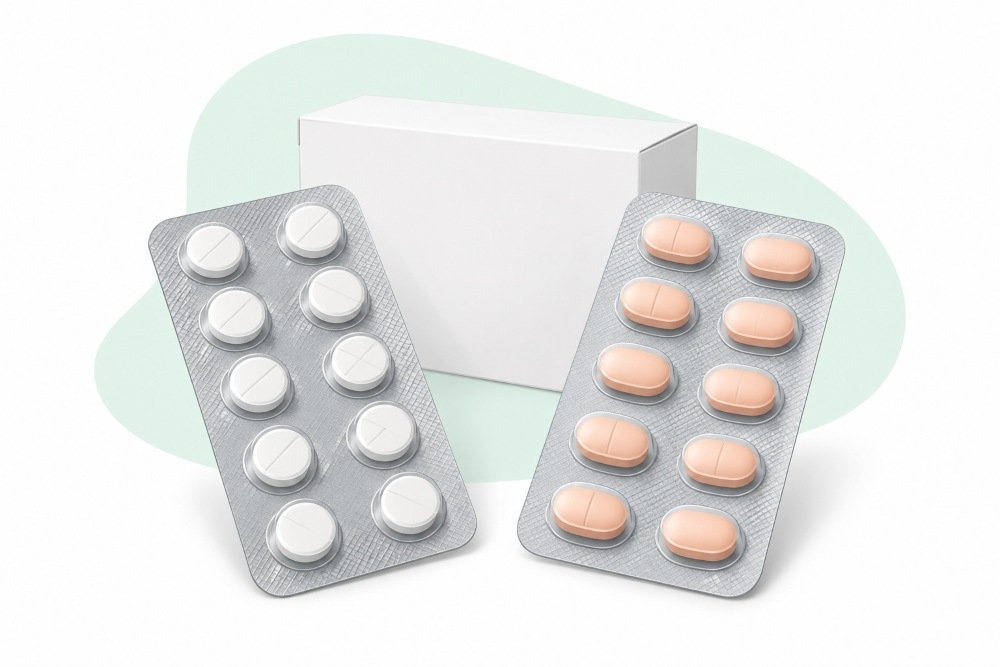
The second is appearance. Trademark law protects the look of a branded tablet, so a generic version is often required to look different. A round white tablet replaces an oval pink one, and your brain reads that as a different drug.
The third is naming, and in India this is where most of the confusion sits. The market is dominated by branded generics, which are off-patent molecules sold under a company’s own brand name. So a patient can be offered three products that are pharmacologically the same thing: the original innovator brand, a branded generic from a large Indian manufacturer, and an unbranded generic labelled only with the molecule name: three prices, three boxes, one active ingredient.
What A Generic Medicine Actually Is
A generic medicine contains the same active ingredient, in the same strength, in the same dosage form, taken by the same route, as the reference product it copies. Before approval, it has to show bioequivalence, meaning the active ingredient enters the bloodstream at a comparable rate and to a comparable extent as the original.
What is allowed to differ is everything around the molecule: the colour, the shape, the imprint, the coating, the fillers and binders, the packaging, the brand name and the price.
That distinction is the whole subject in one line: same drug, different wrapper, different cost structure.
Ten Common Myths About Generic Medicines
Myth 1: Generic Medicines Are Weaker Than Branded Medicines
Fact: They are approved on the condition that they perform the same way in the body.
Bioequivalence testing is done in volunteers, comparing blood concentration curves for the generic and the original. There is a persistent misreading of the acceptance limits here, including among health professionals, so it is worth stating plainly: the widely quoted 80 to 125 percent figure does not mean a generic may contain 80 to 125 percent of the active ingredient. It is a statistical boundary applied to the confidence interval of the comparison, as explained in this clear breakdown of the bioequivalence requirement. The content of the active ingredient itself is held to much tighter assay limits, the same ones the branded product must meet.
Myth 2: Generic Manufacturers Use Cheap, Low Quality Ingredients
Fact: the raw materials face the same identity, purity and impurity testing.
Active pharmaceutical ingredients and excipients are tested against pharmacopoeial standards, and manufacturers must operate under Good Manufacturing Practice, with documented batch records, in-process controls and stability data. Plants making generics are inspected on the same basis as plants making brands, and in many cases they are literally the same plants. The American Academy of Family Physicians has a useful summary of how regulators police generic quality after approval as well as before it.
Myth 3: Nobody Really Checks Generic Medicines
Fact: They sit inside the same regulatory system as every other medicine sold in the country.
In India, approvals and import licensing run through the Central Drugs Standard Control Organisation, with state drug control authorities licensing manufacture and sale, and drug testing laboratories sampling products from the market. Quality standards come from the Indian Pharmacopoeia. None of that is a lighter regime for generics.
Myth 4: Generic Medicines Take Longer To Start Working
Fact: onset is part of what bioequivalence measures.
The testing looks at both how much of the drug reaches the blood and how fast, so a product that is absorbed noticeably more slowly would fail. In practice, the gap is small. A regulatory review of pooled bioequivalence data found the average difference in exposure between generic and originator products was under five percent, which is within the variation you would see between two batches of the same brand.
Myth 5: Doctors Do Not Trust Generic Medicines
Fact: a great deal of Indian medicine already runs on them.
Government hospitals, district health programmes, tuberculosis and HIV treatment services and most public procurement operate on generics as a matter of routine. India also produces a large share of the world’s generic supply, including antiretrovirals used across Africa. What a doctor is choosing between, in most consultations, is not brand versus generic but which manufacturer they have found reliable.
Myth 6: If It Is This Cheap, Something Must Be Wrong With It
Fact: the price gap comes from costs the generic maker never had to carry.
The originator spent years and a very large sum discovering the molecule and running clinical trials, then priced the product to recover that during patent exclusivity, and spent heavily on promotion. A generic manufacturer starts after the patent expires, with the science already established, and competes on price against several others making the same thing. Add India’s price ceilings on scheduled essential medicines, and the arithmetic works out. Products under the government’s Jan Aushadhi scheme are sold at a fraction of branded prices while being sourced from certified manufacturers and batch-tested before distribution.
Myth 7: Generics Are Just Copies That Skip The Testing
Fact: They skip repeating the clinical trials, not the quality testing.
This is the most useful thing to understand about generic approval. Because the molecule’s safety and efficacy were already established in the original trials, a generic applicant does not have to prove all of that again in thousands of patients. What it must do is prove chemical sameness, manufacturing control and bioequivalence. Identity, assay, dissolution, impurities, stability and sterility testing all still apply, batch after batch, indefinitely.
Myth 8: Generic Medicines Cause More Side Effects
Fact: The expected side effect profile follows the active ingredient, which is unchanged.
Two honest caveats belong here. Inactive ingredients can differ, so a person with a specific intolerance or allergy to a dye or to lactose, for example, may react to one product and not another. And expectation itself has a measurable effect. If you have been told the cheap version is inferior, you are more likely to notice and attribute symptoms to it. Neither caveat means generics are riskier as a class. If something does feel wrong after a switch, it should be reported, and India has a formal route for that through the Pharmacovigilance Programme of India, which patients as well as clinicians can use.
Myth 9: Generic Medicines Are Only Suitable For Minor Illnesses
Fact: They are the backbone of long-term treatment.
Blood pressure, diabetes, thyroid replacement, cholesterol, epilepsy, asthma, depression and HIV are all managed on generics for millions of people every day. Chronic illness is in fact where the price difference matters most, because the medicine is bought every month for years, and a treatment a household cannot sustain financially is a treatment that quietly stops being taken.
Myth 10: You Can Swap Between Products On Your Own
Fact: For most medicines, a switch is straightforward, but it should not be silent.
The reason is not that the generic is unsafe. It is that your doctor is tracking a dose, sometimes a blood test, and needs to know which product you are actually taking. There is also a practical hazard: when the same molecule is sold under several names, patients occasionally end up taking two of them at once without realising, which is a genuine overdose risk. Tell your doctor or pharmacist about any change, and keep one written list of what you take.
Question That Matters More Than Brand Versus Generic
Here is the part most articles on this subject leave out.
The meaningful risk in medicines is not the generic label. It is falsified and substandard products entering the supply chain, and that affects expensive brands and cheap generics alike. The World Health Organization estimates that more than one in ten medicines in low- and middle-income countries are substandard or falsified, and its advice for patients buying medicines focuses on the seller rather than the price tag: unregulated online sources, missing physical addresses, and offers that look too good.
When To Slow Down And Ask Before Switching

Most switches need nothing more than a mention. A few deserve a proper conversation, because the margin between an effective dose and a problem dose is narrow:
- Thyroid hormone replacement, where small differences in absorption show up on blood tests
- Blood thinners such as warfarin, which INR monitors
- Antiepileptic medicines, where breakthrough seizures are the cost of instability
- Lithium, digoxin and immunosuppressants after transplant
- Modified-release, extended-release and enteric-coated forms, because the release mechanism is part of the product
- Inhalers and injectable pens, where the device and the technique change even when the drug does not
In these cases, the advice is not to avoid generics. It is to switch deliberately, with your prescriber informed, and to keep to the same product once you are stable rather than changing with every refill. If a switch does happen, note the date so any change in your readings can be interpreted properly.
A Short Practical Checklist For Buying Medicines
- Read the molecule name and strength on the strip and match it against your prescription, not the brand name
- Check the manufacturer’s name, batch number, manufacturing date and expiry before you leave
- Buy from a licensed pharmacy and take the bill, which is what makes a batch traceable if there is ever a problem
- Treat unusually deep discounts from unverified online sellers as a warning rather than a bargain
- Keep the outer carton and package insert until the course is finished
- Store as instructed, since heat and humidity degrade medicines regardless of who made them
If A Medicine Does Not Feel Right After A Switch
Do not stop a prescribed medicine abruptly on your own, particularly for blood pressure, epilepsy, diabetes, heart conditions or mental health treatment, because sudden withdrawal can be more dangerous than the concern that prompted it.
Instead, write down what changed and when, keep the strip and carton, and speak to your doctor or pharmacist. Suspected adverse reactions can be reported to the Pharmacovigilance Programme of India through its toll-free helpline on 1800 180 3024, and those reports are how genuine quality problems get identified.
Bottom Line
A generic medicine is the same active ingredient held to the same standards, sold without the cost of a discovery programme behind it. The evidence supporting that is not a marketing claim; it is the approval requirement.
What deserves your attention instead is the supply chain, the small group of narrow margin medicines that need a careful switch, and keeping your prescriber informed about what you are actually taking. Get those three right and cost stops being a reason to compromise on treatment, which for anyone managing a long-term condition is the whole point.
Medical Disclaimer
This article is for general information and health education only. It is not medical advice, and it cannot account for your individual diagnosis, other medicines, allergies, pregnancy, kidney or liver function, or age. Do not start, stop, substitute or change the dose of any medicine on the basis of this article. Always consult a qualified doctor or a registered pharmacist about your own treatment, and seek urgent medical care for any severe or rapidly worsening symptoms.