

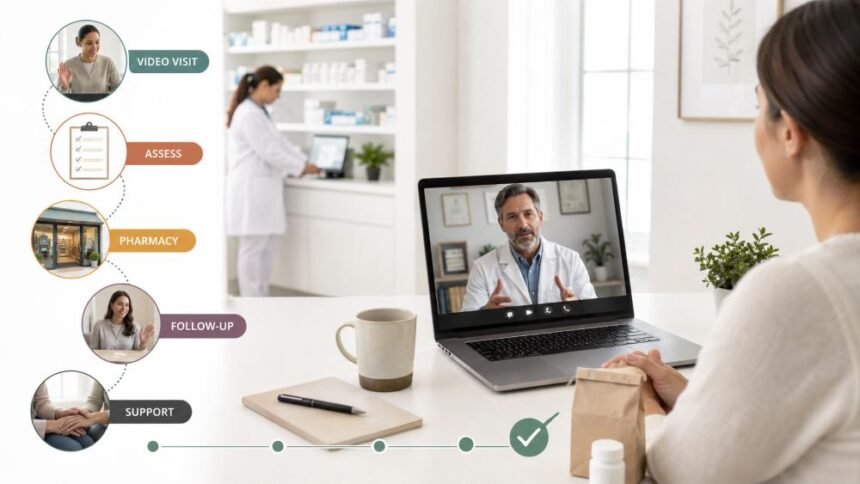
There is a strange gap in opioid addiction treatment that most people never hear about until they are standing in it. The hard part is supposed to be the beginning: admitting there is a problem, finding a doctor, getting a prescription. Suboxone, the combination of buprenorphine and naloxone, is one of the most effective tools we have for opioid use disorder, and getting a prescription for it has become easier than it used to be. Then the prescription is written, the person walks into a pharmacy, and the pharmacist says the words no one prepared them for: we do not have it in stock.
That moment is far more common than it should be, and it has nothing to do with how hard the patient is trying. It is a system problem, and it is one of the main reasons virtual care has become such an important part of how people reach treatment. What follows is a look at why the pharmacy counter trips so many people up, what telemedicine actually changes, and what good online Suboxone care looks like from the first appointment onward.
Part Of Treatment Nobody Warns You About
A prescription is only as useful as your ability to fill it, and for buprenorphine that turns out to be a real caveat. A 2025 analysis published in Health Affairs found that only about 39 percent of retail pharmacies in the United States regularly stocked buprenorphine in 2023, a modest rise from 33 percent six years earlier. Buprenorphine is the only medication for opioid use disorder that a clinician can prescribe in an ordinary office and a patient can pick up at a normal pharmacy, which makes that stocking gap especially frustrating. The prescriber barrier has largely fallen. The pharmacy barrier has not.
The shortage is not spread evenly, either. The same research from the USC Schaeffer Center shows that pharmacies in predominantly Black and Latino neighbourhoods are far less likely to carry the medication than those in mostly white neighbourhoods, and some rural counties hit hardest by the opioid crisis have almost no pharmacies stocking it at all. In practice, that means the people already facing the steepest odds are often the ones sent from one counter to the next. The pattern is documented most thoroughly in the United States, but the underlying frictions, stigma, rural distance, and thin local supply are familiar to patients in Canada too.
For someone stabilizing on buprenorphine, that runaround is not a minor inconvenience. Missing doses brings back withdrawal, and withdrawal is exactly the moment when the pull toward returning to use grows strongest. The barrier does not reflect a lack of effort on the patient’s part. It reflects decisions made long before they ever reached the counter.
Why The Pharmacy Counter Becomes The Bottleneck
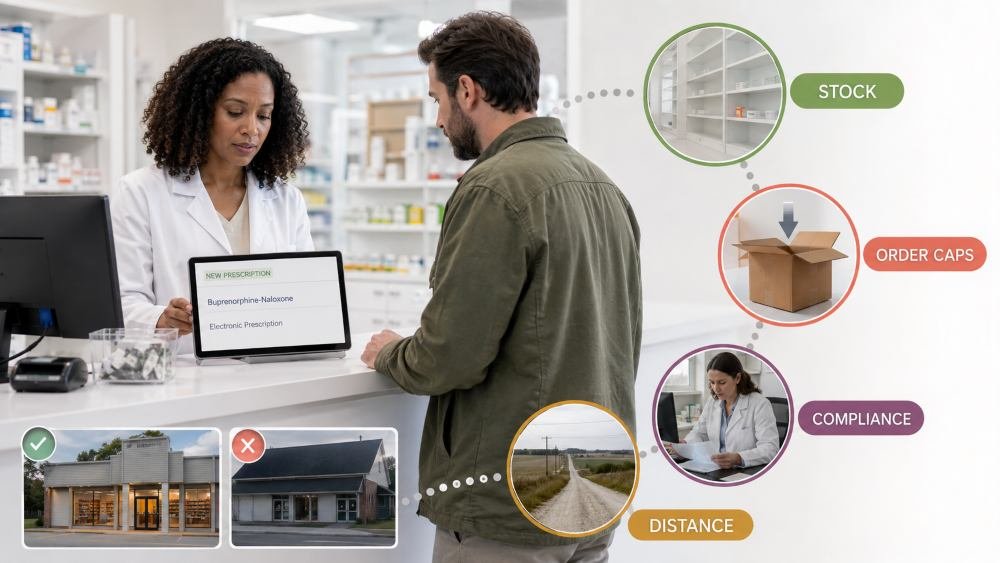
If buprenorphine works so well, why is it so hard to find on a shelf? Part of the answer is plain stigma. Some pharmacists still view medication for opioid use disorder as trading one dependence for another, a belief the clinical evidence does not support, and that attitude can quietly shape whether a store bothers to keep the drug in stock.
Stigma is only one thread, though. Buprenorphine is a controlled substance, and pharmacies face genuine pressure around ordering, storing, and dispensing it. Wholesale distributors sometimes cap or flag orders, some pharmacies worry about regulatory scrutiny, and low stock becomes self-reinforcing when a store assumes there is little local demand. A panel of pharmacists who studied these barriers pointed to supply and distribution problems, not just individual bias, as a major reason the medication is so unevenly available. The result is a patchwork where two pharmacies a few kilometres apart can give completely different answers to the same prescription.
How Virtual Care Changes The Equation
This is the gap that Telemedicine Suboxone care for opioid use disorder is built to close. Instead of leaving a patient to phone around on their own, a well-run virtual program handles the pharmacy side as part of the service. The prescription is routed to a location known to keep buprenorphine in stock, so the patient is expected rather than surprised, and the awkward conversation at the counter simply does not happen.
Coordination is the quiet advantage here. In a fragmented system, a patient often has to stitch their own care together: the prescriber in one place, counseling in another, the pharmacy somewhere else. Integrated telehealth pulls those threads into a single process, which removes much of the friction that causes people to fall out of treatment. Some programs can even manage a same-day start, where a person completes a video visit and picks up their first supply the same afternoon. For a condition where timing genuinely matters, that speed can be the difference between staying on track and slipping.
What The Research Actually Shows
It is fair to ask whether care delivered through a screen holds up against care delivered in a clinic. The evidence so far is reassuring. Federally funded research summarized by the National Institutes of Health found that in Kentucky, 48 percent of people who started buprenorphine through telehealth stayed in treatment for 90 continuous days, compared with 44 percent of those who started in person. A separate study led by Oregon Health and Science University followed patients for six months and found that those who began treatment on a telehealth platform stayed engaged at least as well as, and often better than, those who started in a traditional office.
The medication itself has a strong track record independent of how it is prescribed. One analysis of Medicare data found that starting buprenorphine after a nonfatal overdose was linked to a 62 percent lower risk of dying from a later opioid overdose. Canadian clinical guidance reflects that weight of evidence: Canada’s guidelines recommend buprenorphine and naloxone as a first-line treatment for opioid use disorder, largely because of its favourable safety profile. Delivering it virtually does not dilute any of that. Within a few weeks, many people report the ordinary but meaningful gains that come with stability, better sleep, a clearer head, and the mental room to rebuild the rest of their lives.
What Online Suboxone Care Actually Involves
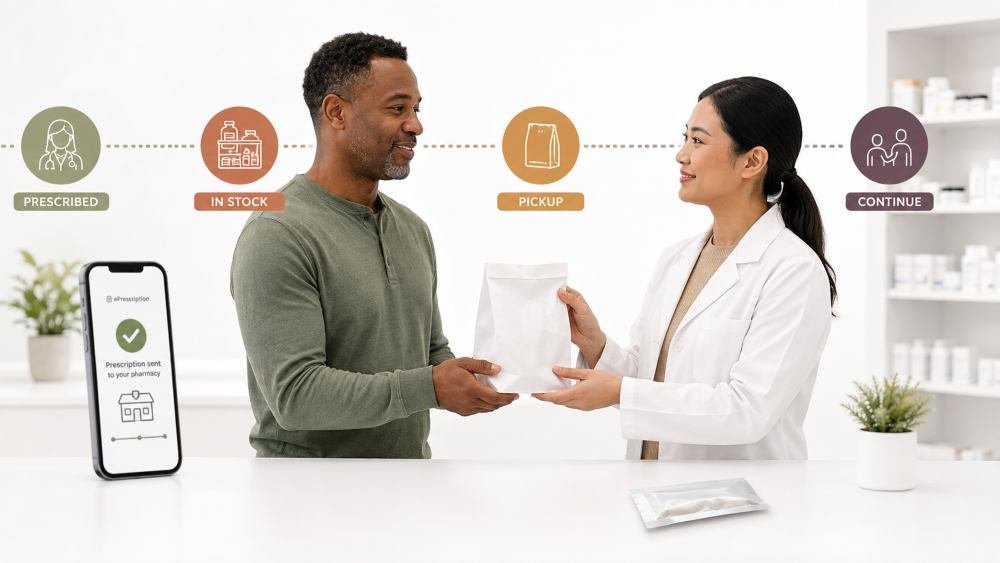
For anyone picturing something clinical and cold, the real process is fairly human. It usually starts with a video consultation with a licensed physician who takes a full history, talks through the pattern of opioid use, and works out a plan together with the patient rather than handing one down. From there, the prescription is coordinated with a pharmacy that has the medication ready, so there is no explaining and no chasing.
The first doses matter most. Induction, the point where buprenorphine is introduced, is timed carefully to ease withdrawal rather than provoke it, and the clinician stays close during this window to watch how the person responds and adjust the dose. Once someone is stable, treatment settles into maintenance: a consistent dose, regular virtual check-ins, and support that continues for as long as it is needed. Those check-ins are not a formality. They are how small problems get caught before they turn into reasons to drop out.
Who Benefits Most From This Model
Virtual Suboxone care is not the right fit for every situation, but it clears obstacles that block a great many people. For someone juggling a job and a family, appointments that fit around real life, without a day off work or a scramble to arrange childcare, can be the thing that makes treatment feasible at all. For patients in rural and northern parts of Ontario, where an experienced addiction physician may be hours away, telemedicine brings the specialist to them instead of the other way around. And for anyone who has been judged or brushed off in a waiting room, the privacy of a virtual visit is not a luxury. It is often what makes them willing to try again.
Questions Worth Asking Before You Choose A Provider
Not every telehealth service coordinates the pharmacy side, and that detail is worth checking, because it is the exact problem that trips people up. It is reasonable to ask whether a provider works with a network of pharmacies that stock buprenorphine, whether they prescribe electronically, and what their backup plan is if the first pharmacy comes up short. It is also worth asking how counseling and ongoing support fit into the program, and confirming that the clinicians are licensed to treat you where you live. Good coordination is not a bonus feature. It is the thing standing between a prescription and an actual dose.
Access Is Where Recovery Starts
Opioid addiction is treatable, and the medication that treats it works. The stubborn problem has never really been the science. It has been the distance between a prescription and the medication in someone’s hand, and for too many people that distance has been filled with stigma, phone calls, and waiting. Virtual care does not erase every barrier, but it takes on the pharmacy runaround directly and quietly strips away much of the shame that surrounds this kind of treatment. A confidential conversation with a provider such as Aegis Medical Canada, available across Ontario, is often all it takes to begin closing that gap.
A Note On Medical Guidance
This article is for general information and is not medical advice. Suboxone and other medications for opioid use disorder should be started and adjusted only under the care of a licensed clinician who knows your history. If you or someone you know is in immediate danger or may be experiencing an overdose, contact local emergency services right away.
References
- Substance Abuse and Mental Health Services Administration (SAMHSA), Buprenorphine. https://www.samhsa.gov/substance-use/treatment/options/buprenorphine
- Centre for Addiction and Mental Health (CAMH), Buprenorphine. https://www.camh.ca/en/professionals/treating-conditions-and-disorders/opioid-use/opioid-use-treatment/buprenorphine
- Health Affairs, Trends in the Availability of Buprenorphine at US Retail Pharmacies, 2017 to 2023. https://www.healthaffairs.org/doi/10.1377/hlthaff.2025.00349
- USC Schaeffer Center, Despite Relaxed Prescribing Rules, Opioid Addiction Treatment Still Hard to Find at Pharmacies. https://schaeffer.usc.edu/research/opioid-treatment-buprenorphine-access-pharmacies/
- National Institutes of Health (NIH), Telehealth supports retention in treatment for opioid use disorder. https://www.nih.gov/news-events/news-releases/telehealth-supports-retention-treatment-opioid-use-disorder