


Hello. I’m a doctor, and I’ve seen countless wellness trends come and go. One that keeps popping up in my examination room is water fasting. People often go in there excited by the stories they read online, hoping for a quick reset.
It’s true that periods of restricted eating, sometimes called intermittent fasting or time-restricted eating, can be incredibly valuable for metabolic health and managing things like blood sugar. But a strict water-only fast, drinking only water for 24 hours or longer, is an entirely different ballgame. It’s a powerful tool, but it comes with significant risks.
Let’s talk frankly about what happens in your body during a water fast and, most importantly, how to approach it with wisdom and safety.
What’s Really Happening Inside Your Body?
When you only drink water, you stop providing your body with its primary, fast-access fuel source: glucose (sugar) from carbohydrates.
After about 12 to 18 hours, your body switches gears. It uses up its stored glucose (glycogen) and starts breaking down fat for energy. This is a state known as ketosis.
Many people are attracted to water fasting because of this switch. They hope to lose weight or experience the cellular cleanup process called autophagy, which clears out damaged cells. Both of these effects are real, but they take time and must be balanced with the body’s stress response.
A Crucial Warning: Who Should Never Water Fast
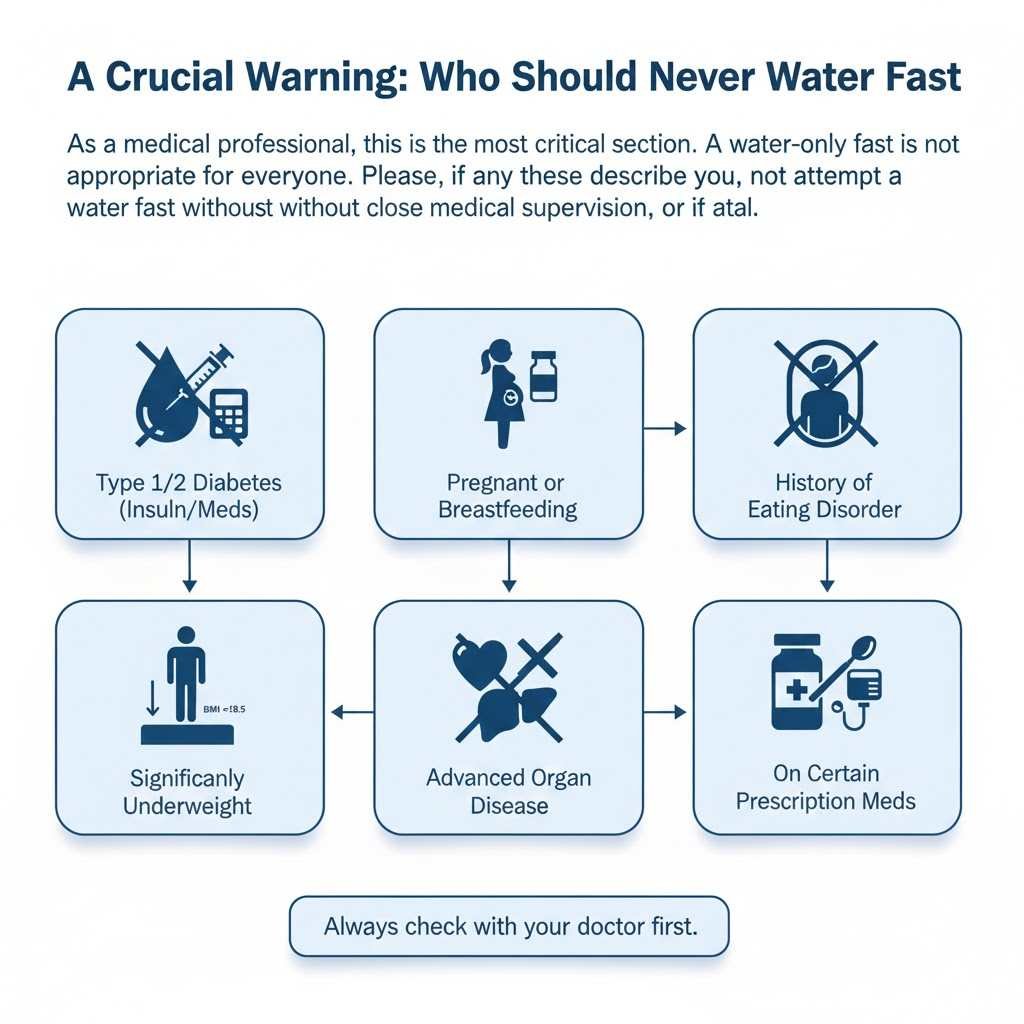
As a medical professional, this is the most critical section. A water-only fast is not appropriate for everyone. Please, if any of these describe you, do not attempt a water fast without close medical supervision, or at all.
- You have Type 1 Diabetes (or Type 2 Diabetes on insulin or certain medications). The risk of dangerously low blood sugar (hypoglycemia) or a serious complication called diabetic ketoacidosis is exceptionally high.
- You are pregnant or breastfeeding. Your body needs consistent, reliable nutrients for you and the baby.
- You have a history of an eating disorder (anorexia, bulimia, etc.). Fasting can trigger a relapse or worsen disordered eating patterns.
- You are significantly underweight (BMI below 18.5).
- You have advanced heart disease, kidney disease, or liver failure. Fasting places stress on these organs, especially when fluid and electrolyte balance is disrupted. That is also why topics such as heart attack and dehydration matter when assessing whether prolonged fasting is safe for someone with cardiovascular risk.
- You are on certain prescription medications. This is a big one. Medications for blood pressure (which can drop dangerously during a fast) or for mental health conditions often require food for proper absorption and to prevent side effects. Always check with your doctor first.
Clinical Insight: The Dehydration Trap
One of the most common issues I see when patients attempt a long fast (say, 3 days or more) is not just dehydration, but electrolyte imbalance.
I once had a fit, healthy patient who came in feeling terrible, dizzy, weak, and with a racing heart, after a 48-hour fast. He thought he was drinking enough water, but he failed to realize that when you stop eating, your kidneys flush out electrolytes like sodium and potassium much faster.
He was experiencing severe hyponatremia (low sodium). Simply drinking plain water doesn’t replace these vital salts. In fact, drinking too much plain water can dilute them further, which can lead to seizures and even coma.
- Practical Takeaway: If you choose to fast for more than 24 hours, you must add a pinch of unrefined salt to some of your water. Look for low-sodium alternatives for potassium and magnesium replacement as well, but do this carefully; too much potassium can also be dangerous.
Short-Term Fasting vs. Prolonged Fasting

There is a vast difference in the body’s response to a 16-hour fast and a 5-day fast.
1. The Short, Routine Fast (12–24 Hours)
This is what most people can safely manage, provided they don’t fall into the high-risk categories above.
- Examples: Going 16 hours without food (e.g., stopping dinner at 7 PM and eating breakfast at 11 AM) or doing a full 24-hour fast once a week (e.g., dinner-to-dinner).
- The Benefit: Helps teach the body to become metabolically flexible, meaning it can easily switch between burning sugar and burning fat. This is generally safe and a great starting point for improving blood sugar control.
2. The Prolonged Fast (48 Hours to 5+ Days)
This requires serious preparation, knowledge of electrolyte supplementation, and ideally, medical supervision.
- The Benefit: This is where the more profound effects, like significant cellular repair (autophagy), are thought to become more pronounced.
- The Risk: The chance of severe dehydration, electrolyte imbalance, low blood pressure, and nutritional deficiencies skyrockets. These long fasts should never be undertaken on a whim.
Practical Tips for Safe Fasting
If you and your doctor decide a short fast is a reasonable step for you, here are three simple, real-world tips that make the difference between a successful fast and a miserable one:
- Mind the Caffeine: Coffee and tea are generally allowed on a water fast, but be careful. Caffeine is a diuretic (it makes you lose water and salts) and, on an empty stomach, can lead to severe anxiety and heartburn. Keep it moderate.
- Don’t “Feast” Before the Fast: People often think they should gorge themselves the day before. This causes a massive spike in blood sugar and insulin, making the following day of fasting much harder due to intense sugar crashes and cravings. Eat normally and healthily the day before, focusing on nutrient-dense whole foods.
- Break the Fast Gently: This is a major mistake people make. After a 2-day fast, you can’t just dive into a massive steak dinner. Your digestive system has been resting and needs to be gently woken up.
My Recommendation for Breaking a Fast: Start with something light and easily digestible. A small bowl of bone broth (for electrolytes and easy protein) or a few bites of fermented food like sauerkraut (to wake up the gut bacteria) works well. Wait an hour, and then eat a small, balanced meal with protein and healthy fats.
Remember the Bigger Picture: Lifestyle is Key
Water fasting is a tool, not a magic cure. It doesn’t fix a poor diet or a high-stress, low-sleep lifestyle.
The real, sustainable wins for your long-term health and wellness come from consistency: eating primarily whole foods, moving your body every day, managing your stress, and getting quality sleep.
If you’re drawn to fasting, start with simple time-restricted eating. See how your body feels. Monitor your energy, mood, and sleep. And please, before you restrict food for more than 24 hours, talk to your healthcare provider and get their professional input. Your well-being is too important to risk based on a fleeting trend.