

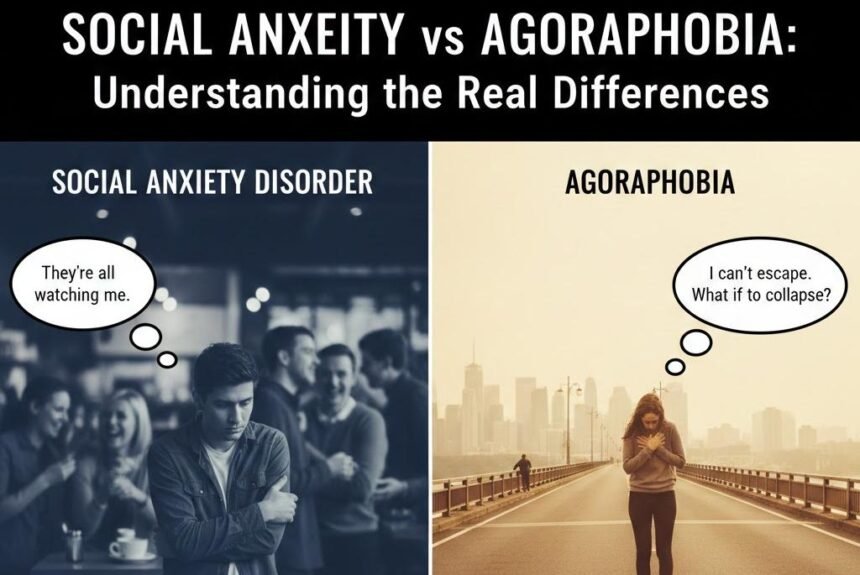
Understanding how social anxiety vs agoraphobia compares can be confusing because both conditions involve fear, avoidance, and emotional overwhelm. Before diving deeply into these two experiences, it helps to explore a trusted resource that clearly breaks down the comparison. You can learn more through this guide on social anxiety vs agoraphobia, which explains how each condition affects daily life.
As people begin exploring the topic, many discover that the two disorders appear similar on the surface. However, the emotional triggers and the situations that create distress are often very different. Understanding these differences is incredibly important because receiving the correct diagnosis is the first step toward effective treatment.
Exploring How These Conditions Develop
While reviewing how social anxiety vs agoraphobia compares, it becomes clear that both disorders can form slowly over time. Social anxiety often begins with fear around social judgment, embarrassment, or perceived criticism. Over time, this fear becomes a pattern, leading individuals to avoid social gatherings, work events, or even everyday interactions.
Agoraphobia tends to develop after a person experiences intense panic or distress in a specific setting. That experience creates a fear of being stuck, unable to escape, or without help available. Because of this, many daily environments begin to feel unsafe, not due to judgment but due to fear of panic itself.
Even though both conditions may lead to avoidance, the reasons for that avoidance differ. That distinction influences treatment planning, emotional strategies, and long-term support.
Recognizing What Triggers Each Condition
A closer look at the triggers behind social anxiety vs agoraphobia highlights some of the most apparent differences between the two. Social anxiety is usually tied to interactions that involve speaking, performing, meeting new people, or being observed. The core fear centers on negative evaluation, humiliation, or failure to meet expectations.
Agoraphobia triggers depend more on the environment rather than the people within it. For example, a crowded store, a long line, public transportation, or a large open area may create panic. The worry often focuses on feeling trapped or unable to escape quickly. The fear is less about what others think and more about personal safety and control.
This key difference allows mental health professionals to distinguish between the conditions even when the external behavior looks the same. Someone who refuses to attend an event might be avoiding judgment or panic. Understanding the deeper reason can change the entire direction of treatment.
How Each Condition Affects Daily Life
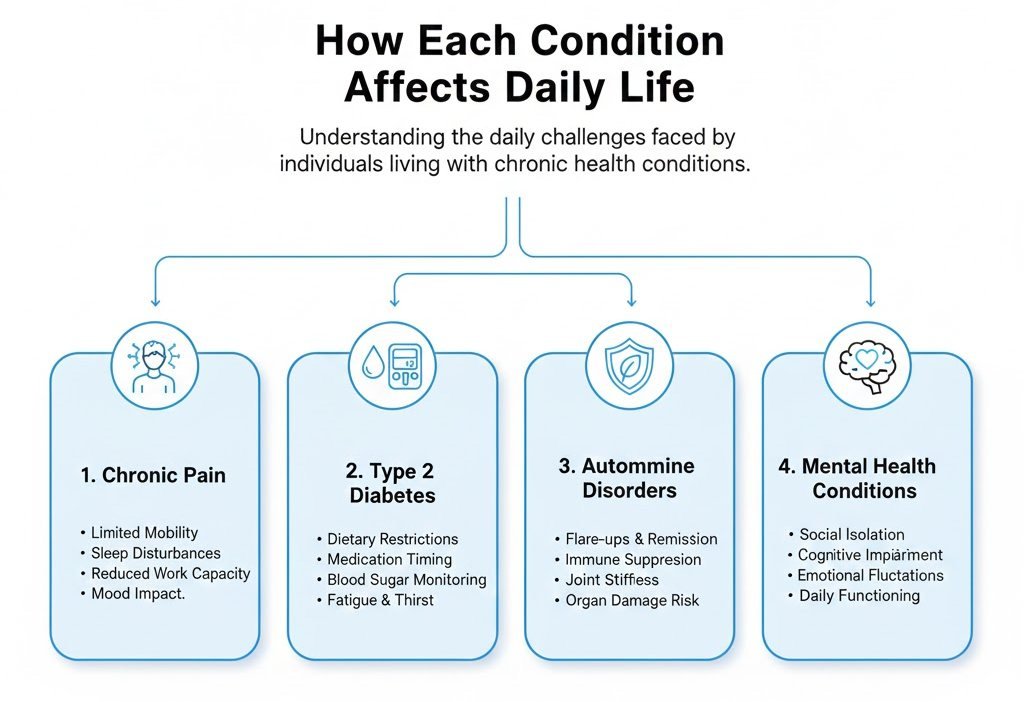
Daily life challenges show another distinction as we compare social anxiety vs agoraphobia. With social anxiety, the emotional burden appears in conversations, work communication, social invitations, and situations involving performance or public speaking. Many people describe feeling drained by the constant pressure of social expectations.
With agoraphobia, daily life becomes shaped by the need for predictable and safe environments. People may avoid driving long distances, entering busy buildings, or even stepping outside their home. The fear is connected to physical sensations and the possibility of panic, which can limit independence and mobility.
Both conditions can cause isolation, but the paths to that isolation differ. Recognizing this allows for more personalized support, which is essential for long-term progress.
Signs That Help Differentiate the Two
Sure signs make the difference between social anxiety and agoraphobia easier to understand. If someone experiences fear specifically connected to social judgment or embarrassment, that fear usually points to social anxiety. Meanwhile, if the distress appears in spaces where escape feels difficult, even when no social interaction is required, that pattern is more consistent with agoraphobia.
For example, a person might fear eating in a restaurant because others are watching, which aligns with social anxiety. Another might fear the restaurant because it feels crowded and complex to exit if panic begins, which aligns with agoraphobia. The situation is the same, but the emotional fear behind it is not.
Why Misunderstanding These Conditions Can Delay Help
Many people unknowingly treat these disorders as interchangeable. While comparing social anxiety vs agoraphobia, it becomes clear that misunderstanding the differences can delay professional care. A person might assume they are struggling with social anxiety when in reality their fear is tied to having a panic attack in public. Others may think they have agoraphobia without realizing that their worries come directly from social evaluation.
Accurate support depends on clarity. Because of this, understanding the emotional foundation of each experience leads to better guidance and more effective strategies.
Practical Treatment Approaches for Each Condition
Treatment for social anxiety vs agoraphobia shares some similarities, yet each condition benefits from targeted techniques. Social anxiety treatment focuses on gradually reducing fear of judgment through therapeutic exposures, cognitive reframing, and confidence-building skills. Many people find that learning supportive communication tools helps them approach interactions with more comfort.
Agoraphobia treatment often includes exposure strategies as well, but these target environments instead of social interactions. A therapist guides the person through small, meaningful steps that help rebuild confidence in navigating previously feared places. Over time, the body learns that these spaces are not as threatening as they once felt.
Some individuals experience both conditions simultaneously. In those cases, treatment blends both approaches to address the whole picture.
Supporting a Loved One Through Either Condition
When trying to understand social anxiety vs agoraphobia, loved ones play a meaningful role. Support becomes more helpful when family and friends understand the specific type of fear involved. Encouragement works best when it is patient and consistent rather than forceful. Gentle reassurance and celebrating small progress steps help individuals feel less alone during recovery.
Loved ones can also support by recognizing when someone needs professional help. Because these conditions can interfere with work, relationships, and independence, seeking therapeutic guidance can make a significant difference.
Building Confidence Through Education and Awareness
Gaining clarity on social anxiety vs agoraphobia provides empowerment. Many people feel relieved when they finally understand the root of their fear. Education replaces confusion with direction, and that sense of direction opens the door to healing.
Learning about these conditions also helps reduce stigma. As people understand the emotional complexity behind anxiety disorders, empathy grows, and support strengthens.
Final Thoughts
Exploring the differences between social anxiety and agoraphobia highlights how unique each person’s experience can be. When individuals understand what they are facing, they can pursue care with greater confidence. Healing is always possible, and compassionate guidance makes the path easier.
For those seeking more resources, Pacific Coast Mental Health offers supportive information and mental health insights designed to help individuals move toward wellness with clarity and confidence.
References
- American Psychiatric Association. (2013). Diagnostic and Statistical Manual of Mental Disorders (5th ed.). Arlington, VA: American Psychiatric Publishing.
- Heimberg, R. G., & Becker, R. E. (2002). Cognitive-behavioral group therapy for social phobia: Basic mechanisms and clinical strategies. New York, NY: Guilford Press.
- Craske, M. G., Kircanski, K., Zelikowsky, M., Mystkowski, J., Chowdhury, N., & Baker, A. (2008). Optimizing exposure therapy for anxiety disorders: An inhibitory learning approach. Behaviour Research and Therapy, 46(1), 5–27.
- Kessler, R. C., Chiu, W. T., Demler, O., & Walters, E. E. (2005). Prevalence, severity, and comorbidity of 12-month DSM-IV disorders in the National Comorbidity Survey Replication. Archives of General Psychiatry, 62(6), 617–627.
- Pollack, M. H., & Otto, M. W. (2006). Anxiety disorders: A practical guide to diagnosis and management. Philadelphia, PA: Lippincott Williams & Wilkins.
Disclaimer
The information provided is for educational and informational purposes only and is not a substitute for professional medical or mental health advice, diagnosis, or treatment. If you or someone you know is experiencing social anxiety, agoraphobia, or any related mental health concerns, consult a licensed mental health professional. Individual experiences and treatment outcomes may vary. Pacific Coast Mental Health and related resources do not guarantee specific results, and professional guidance should always be sought for accurate diagnosis and effective treatment plans.