

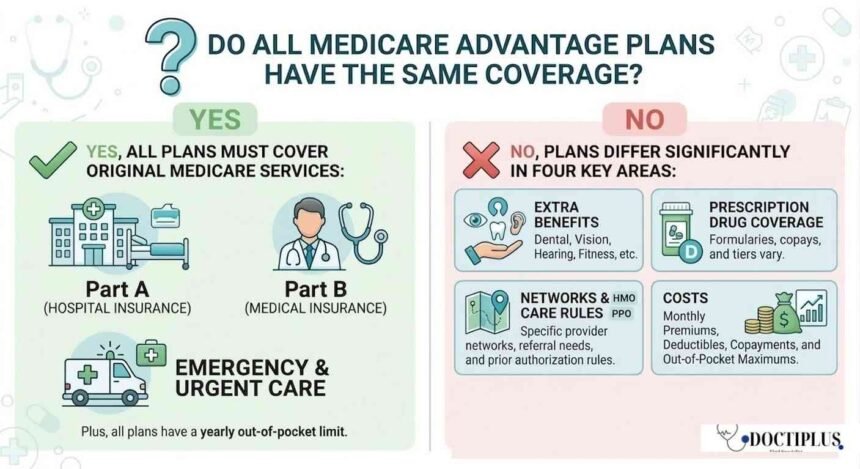
Many people enrolling in Medicare hear about Medicare Advantage plans and assume they all provide identical coverage. While these plans must follow Medicare rules, the details of what they offer can vary from one plan to another. Understanding these differences helps individuals choose a plan that better fits their healthcare needs.
Medicare Advantage plans combine hospital and medical coverage into a single policy offered by private insurance companies approved by Medicare. Because each insurer designs its own plan structure, benefits, provider networks, and costs can differ in several ways.
Another important point is that Medicare Advantage plans are offered regionally. This means the plans available in one county or state may differ from those offered in another area. Because of these local differences, beneficiaries often need to compare several plans available in their specific location before choosing coverage that fits their medical needs and budget.
How Medicare Advantage Plans Are Structured
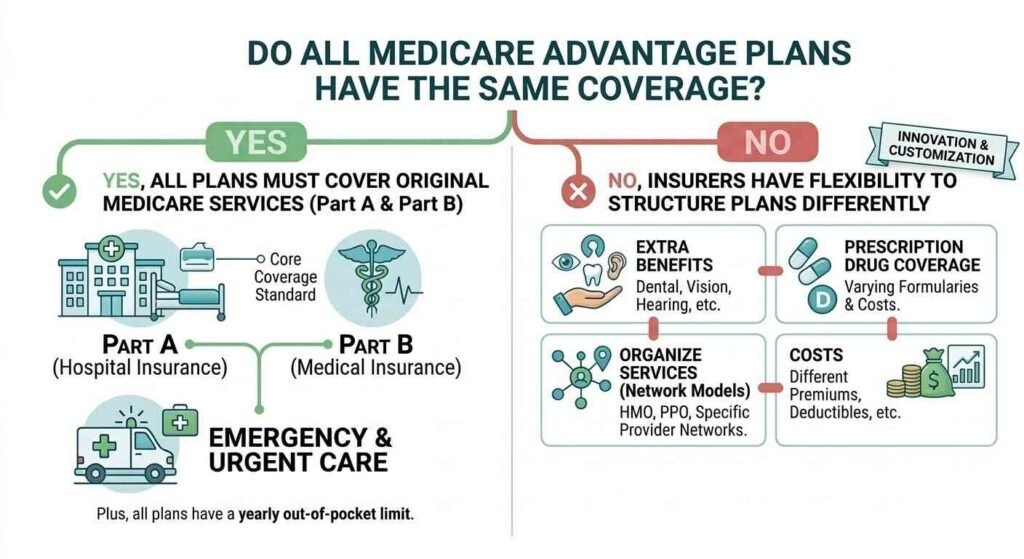
Medicare Advantage plans, also called Medicare Part C, provide an alternative way to receive Medicare benefits. These plans include the same basic hospital and medical coverage found in Original Medicare.
Private insurance companies manage these plans while following federal guidelines. Every plan must provide at least the same level of coverage that Original Medicare offers for hospital and medical services.
Although the core coverage must meet Medicare standards, insurers can structure their plans differently. This flexibility allows companies to include additional benefits or organize services differently from plan to plan.
Differences in Provider Networks
One major difference between Medicare Advantage plans involves provider networks. Some plans use Health Maintenance Organization structures, while others operate as Preferred Provider Organization plans.
HMO plans typically require members to receive care within a specific network of doctors and hospitals. Patients often select a primary care physician who helps coordinate medical treatment and referrals to specialists.
PPO plans generally offer greater flexibility by allowing members to see doctors outside the network, though costs may be higher. These differences in provider access can affect how individuals receive care and which healthcare professionals they can visit.
Variations in Additional Benefits
Another area where Medicare Advantage plans differ is in the additional services they offer. Many plans include benefits beyond what Original Medicare provides.
Some plans may include prescription drug coverage, while others may bundle vision, hearing, or dental services. Wellness programs, fitness memberships, and preventive health services may also be offered as add-ons in certain plans.
Because insurers design these benefit packages independently, the exact combination of services can vary significantly. Reviewing these features helps individuals find plans that support their personal healthcare priorities.
Differences in Costs and Out-of-Pocket Limits
Costs are another factor that varies between Medicare Advantage plans. Monthly premiums, copayments, and coinsurance amounts can vary depending on the insurance company and the plan structure.
Each plan also includes a maximum annual out-of-pocket limit for covered services. Once a member reaches this limit during the year, the plan typically covers additional approved services for the remainder of that year.
Understanding these financial differences helps individuals compare plans and estimate potential healthcare expenses.
Looking Ahead When Comparing Plans
When reviewing coverage options, it can be helpful to consider both current benefits and how plan offerings may change over time. Insurance companies periodically adjust plan features, costs, and provider networks.
Individuals researching long-term healthcare coverage sometimes review topics related to Medicare Advantage plans for 2027 to understand how plan options may evolve. Staying informed about these changes enables beneficiaries to evaluate their coverage and make adjustments if needed regularly.
Coverage Aligning with Individual Healthcare Needs
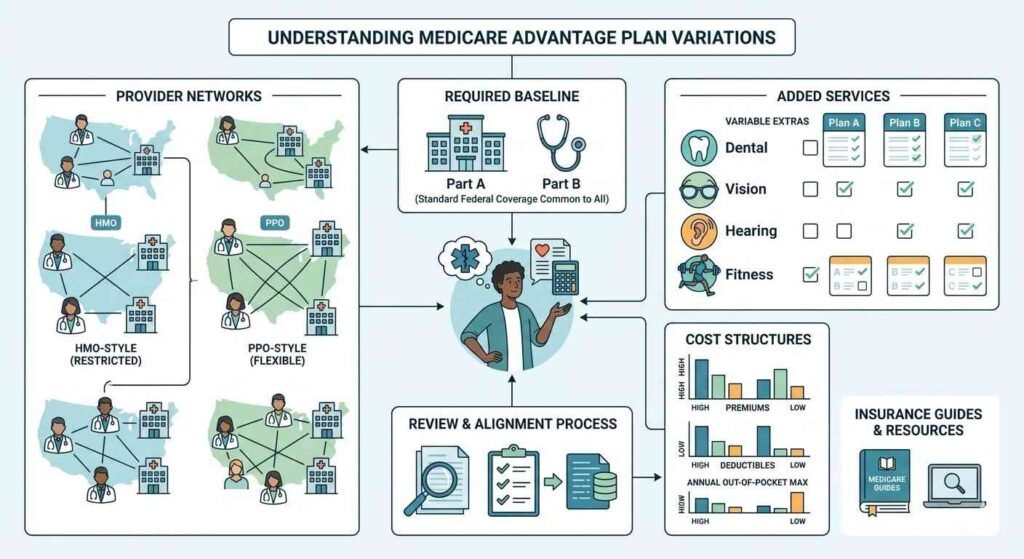
Medicare Advantage plans must meet federal standards for hospital and medical coverage, but they do not all provide the same overall benefits. Differences in provider networks, added services, and cost structures can make each plan unique.
By reviewing plan details carefully and comparing available options, individuals can choose coverage that aligns with their healthcare needs and financial preferences. Taking time to understand these variations helps ensure that Medicare coverage continues to support long-term health and well-being.
For those interested in understanding different types of coverage, resources like the Medicare insurance guide on MedicarePlansGuide.org provide helpful background information.
Conclusion
Medicare Advantage plans provide a valuable alternative to Original Medicare, but they are not identical in the coverage they offer. While every plan must meet federal standards for hospital and medical services, insurance providers have flexibility in designing benefits, structuring provider networks, and determining costs. These variations can significantly affect how beneficiaries access care and manage their healthcare expenses.
Because of these differences, comparing plans carefully is an important step before enrolling. Reviewing factors such as provider networks, additional benefits, prescription drug coverage, and out-of-pocket costs can help individuals identify plans that best match their healthcare needs and financial situation. Taking the time to evaluate available options ensures that beneficiaries select coverage that supports both their medical needs and long-term health goals.
Disclaimer
This article is intended for general informational and educational purposes only and should not be considered medical, legal, or financial advice. Medicare plan details, eligibility requirements, costs, and benefits may vary by location and may change from year to year. Individuals should review official Medicare resources or consult with a licensed insurance professional to obtain the most accurate and up-to-date information regarding Medicare coverage options.