


Could constant tiredness or shortness of breath while climbing stairs mean something more serious? Many people do not realize they have low iron until their doctor performs a blood test. Many feel tired, look pale, or notice they become breathless when going upstairs. These are usually not considered problematic until you know your blood test results, but low iron levels can be very dangerous. Your body cannot produce healthy red blood cells without enough iron, and without red blood cells, they cannot carry enough oxygen to every organ. If the organs are not getting oxygen, then they begin to struggle at some point.
Iron deficiency anemia develops gradually. Iron stores in the body decrease first, and the condition then develops slowly without dramatic symptoms. Followed by a reduction in blood quality. Because it takes several months for someone to present with these clinical symptoms after running low on body iron stores, these warning signals may go unnoticed before their clinical presentation.
What Is Iron Deficiency Anemia and Why Does the Body Need Iron?
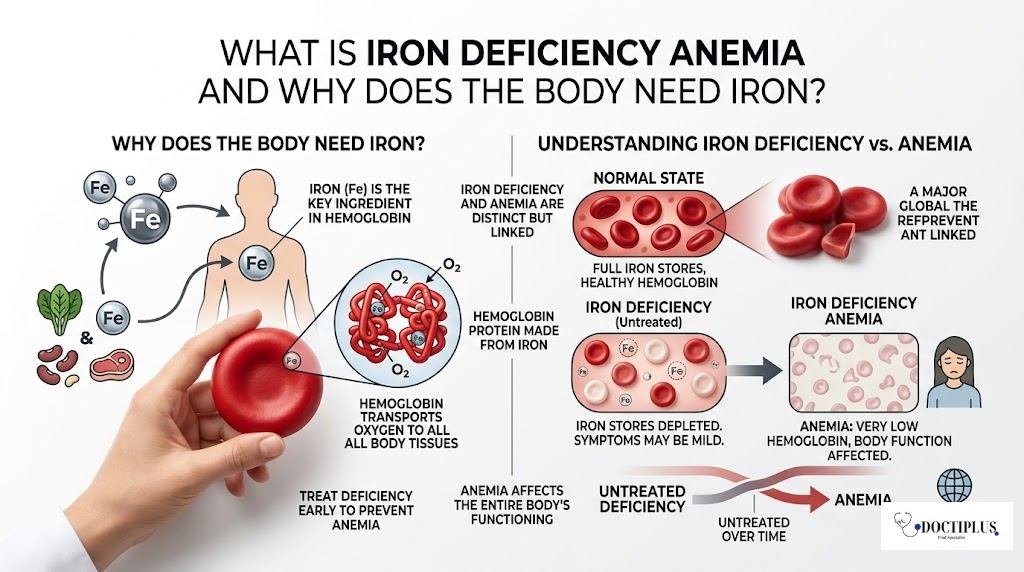
Understanding the difference between iron deficiency and anemia is important for recognizing early health problems. The following points explain how iron levels affect haemoglobin and how untreated iron deficiency can eventually lead to anaemia.
- Anemia and iron deficiency are distinct conditions, but iron deficiency can lead to anemia if left untreated for too long.
- Hemoglobin is the protein found in red blood cells that is made from iron in your body. When you lack iron.
- Anemia is the term given to this problem once it has persisted long enough to affect all parts of the body and how the body feels and functions.
- You can develop an iron deficiency and then develop full-blown anemia, but if you treat the deficiency before it reaches that stage, it is much easier to treat.
- Iron deficiency and anemia worldwide remain the number one nutritional issue and are not being identified in any of the clinics today.
What Are the Main Causes of Iron-Deficiency Anemia in Patients?
Causes of Iron Deficiency Anaemia: determining the specific treatment required to restore your body to normal iron levels.
- There are many different reasons for having a low level of stored iron. In women, iron is often lost through heavy menstrual bleeding.
- Some people may have bleeding occurring from their gastrointestinal tract as a result of an ulcer or polyp, or even as a potential cause of bowel cancer.
- It is common for people with poor dietary habits, such as not eating enough iron-containing foods or having restricted/very limited food choices, to develop iron deficiency anaemia.
- People who have coeliac disease and Crohn’s disease will often experience damage to their intestinal lining.
- During pregnancy, infants directly draw on the mother’s iron stores, and as the pregnancy progresses, they require more iron.
What Symptoms and Signs Should Doctors Look for in Patients?
Levels continue to decrease, and symptoms first appear mild but worsen as levels decline. Most patients wait too long to treat themselves:
- Pale skin, pale gums, and pale conjunctiva will be pale when the hemoglobin level drops significantly below normal.
- Shortness of breath with minimal exertion, such as climbing stairs or walking to the vehicle, with no other apparent cause of shortness of breath.
- A rapid and/or irregular heartbeat occurs when the heart is trying to pump enough blood to meet the body’s need for oxygen.
- Headaches, difficulty concentrating, and feelings of dizziness. The brain is the first organ that feels the effects of low oxygen.
- Absence or breakdown of nails, patches of hair falling out, and a strong desire to consume ice or dirt.
How Is Iron-Deficiency Anaemia Confirmed With a Blood Test?
Symptoms point in the right direction, but blood results give the actual answer:
- Full blood count checks hemoglobin and red blood cell size. Very small pale cells mean iron deficiency straight away.
- Serum ferritin shows how much iron is stored. A low reading means the body’s reserves are nearly gone.
- Serum iron and transferrin saturation show how iron is moving through the body and whether the supply is keeping up.
- Once anaemia is confirmed, determine whether further tests are needed to identify the source of the iron.
- In an older adult with no clear cause, always check for hidden bowel bleeding; it can be the first sign of something serious.
When are medications injected?
When prescribing iron for anaemic patients, oral iron is the first option. However, not all patients tolerate oral iron; therefore, if the patient does not respond to oral iron therapy, the practitioner may consider injectable options.
- Some patients will stop taking oral iron because it makes them nauseated, crampy, or constipated, and their iron deficiency continues.
- Patients with celiac disease and Crohn’s disease are unable to absorb any iron through the gut because of damage.
- Ferric Carboxymaltose is given intravenously, and the patient’s ferritin levels can increase dramatically after a single infusion.
- The effcm 1000mg injection, which can be administered in an outpatient clinic or on an inpatient basis, is a preparation of Ferric Carboxymaltose.
- This injection can be utilized before certain surgical procedures for anemic patients to reduce the risk of a blood transfusion during the procedure.
Which Patients Are Most Likely to Develop Iron-Deficiency Anemia?
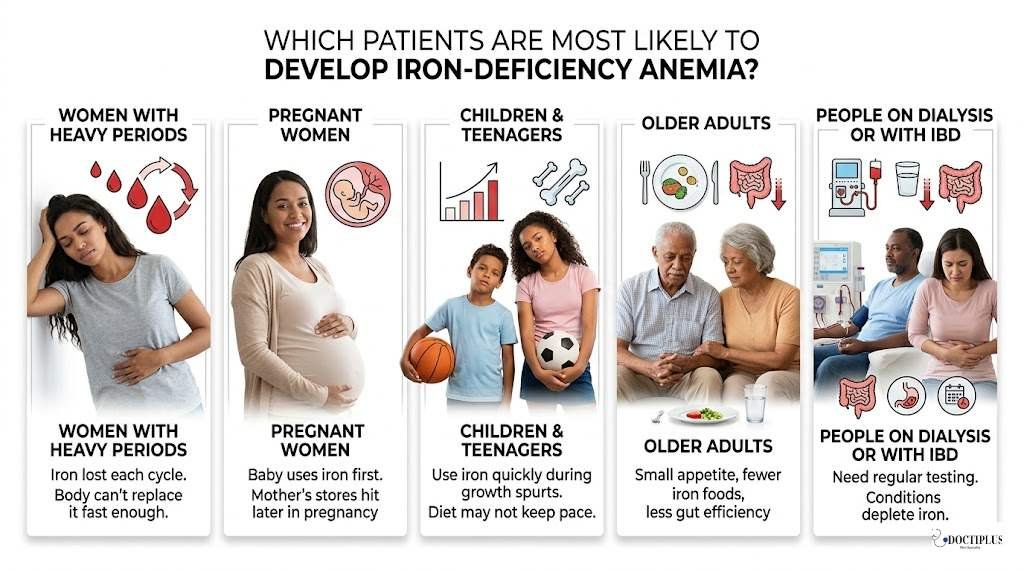
Some groups face this problem far more than others. Knowing who they are makes early testing much easier to justify:
- Women with heavy periods, iron goes out with every cycle and the body often cannot replace it fast enough through food alone.
- Pregnant women, the baby takes what it needs first, and the mother’s iron stores take the hit, especially in the later months.
- Children and teenagers going through growth spurts are using iron quickly, but their diets do not always keep pace.
- Older adults have a smaller appetite, fewer iron-rich foods, and a gut that absorbs nutrients less efficiently.
- People on dialysis or living with inflammatory bowel disease need their iron levels checked regularly, not just when symptoms appear.
Final Thoughts
Iron-deficiency anemia is common. It is also very treatable. The problem is that it hides well. Tired and pale doesn’t feel like a blood condition; it feels like a bad week. So people wait. Months pass. A blood test would have told them straight away. Ferritin and hemoglobin do not lie.
Once confirmed, match the treatment to the patient. Tablets for those who manage them well. Then go after the cause. Blood loss, poor absorption, bad diet, whatever it is, it needs sorting. Topping up the iron without stopping the drain is not a fix. It just delays the same problem coming back.
Disclaimer
This article is for educational and informational purposes only. It does not provide medical advice, diagnosis or treatment recommendations. Always consult a qualified healthcare professional before starting or changing any treatment.
References
- Leung AKC, Lam JM, Wong AHC, et al. Iron Deficiency Anemia: An Updated Review. Current Pediatric Reviews. 2024;20(3):339‑356. DOI: 10.2174/1573396320666230727102042
- Kumar A, Sharma E, Marley A, Samaan MA, Brookes MJ. Iron deficiency anemia: pathophysiology, assessment, practical management. BMJ Open Gastroenterology. 2022;9(1):e000759. DOI: 10.1136/bmjgast-2021-000759
- Liu K, Kaffes AJ. Iron deficiency anemia: a review of diagnosis, investigation and management. European Journal of Gastroenterology & Hepatology. 2012;24(2):109‑116. DOI: 10.1097/MEG.0b013e32834f3140
- Chaudhary HT. Management Strategies for Iron Deficiency Anemia: A Clinical Review. Biological and Clinical Sciences Research Journal. 2025;6(6):1828. DOI: 10.54112/bcsrj.v6i6.1828