


Transitioning from a clinical setting to running your own office is a monumental step in a clinician’s career. It represents freedom, professional autonomy, and the ability to curate a specific healing environment tailored to your values. However, starting a therapy practice involves more than being a great clinician; it requires stepping into the role of an entrepreneur. You are no longer just a provider; you are now a CEO, a marketer, and an administrator.
The journey of starting a private practice can feel overwhelming at first, but when broken down into manageable phases, it becomes an exciting project of professional self-discovery. This guide will walk you through the essential roadmap for building a sustainable, thriving business. Understanding the relationship between mental and physical health as a business owner is also vital, as the stress of a startup can take a toll if not managed properly.
How to Start a Therapy Practice: First Steps to Take
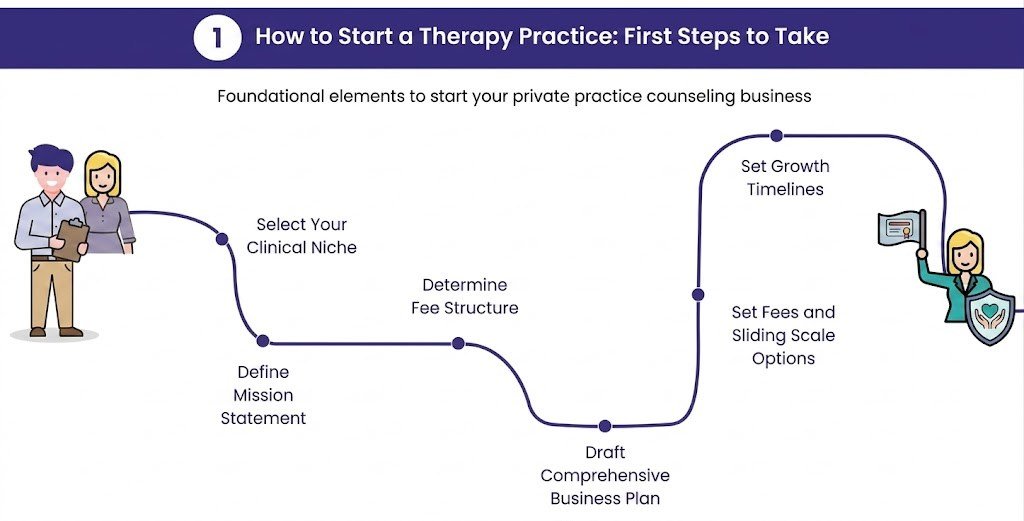
Before you sign a lease or design a logo, you need a clear vision. The very first step in starting a therapy practice is defining your niche. You cannot be everything to everyone. Identifying a specific population – such as couples, teens, or professionals experiencing burnout – allows you to focus your clinical training and business resources effectively. A specialized therapy practice often grows faster than a general one because your marketing resonates more with a specific group of people.
During these initial stages, focus on the following foundational elements to ensure your therapist business has a strong base:
- Defining Your Mission Statement. Your mission statement should clearly articulate why you do what you do and who you serve. It acts as a compass for every business decision you make moving forward.
- Determining Your Fee Structure. Research the local market rates to set a price that reflects your expertise while remaining competitive. Decide early on whether you will offer sliding-scale spots or remain strictly private-pay.
- Creating a Comprehensive Business Plan. A formal document outlining your goals, projected expenses, and growth strategy is vital, especially if you plan to seek small-business loans or external funding.
- Selecting Your Clinical Niche. Specializing in a specific area, like trauma, neurodiversity, or postpartum support, helps you stand out in a crowded market and makes your networking efforts more targeted.
- Setting Realistic Growth Timelines. Understand that a therapy practice rarely fills up overnight. Set 3-month, 6-month, and 1-year goals to track your progress without becoming discouraged by the initial slow pace.
Starting a Private Practice: Legal and Financial Foundations
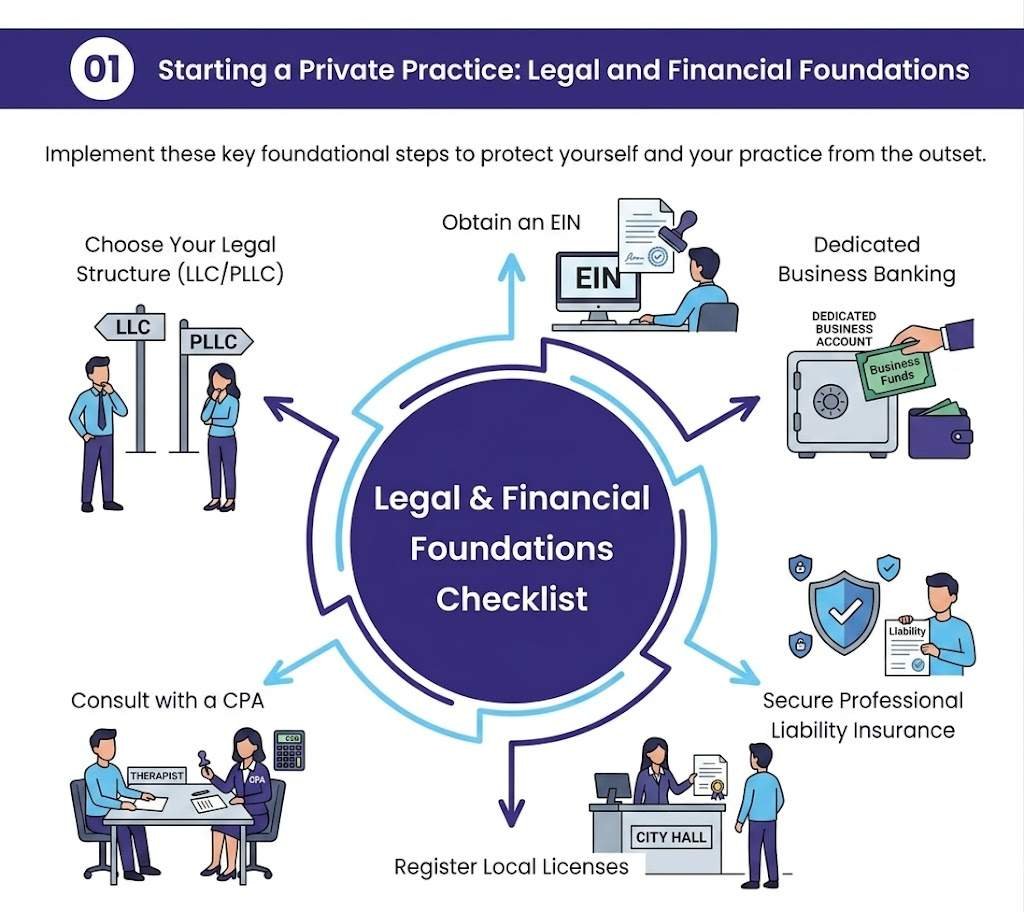
The “business” side of starting a private practice is where many therapists feel most out of their element. However, getting your legal and financial ducks in a row early prevents massive headaches later. This phase is about protection – protecting your personal assets and protecting your clients’ sensitive data. If you are starting a mental health business, you must decide on a legal structure. Most therapists choose an LLC (Limited Liability Company) or a PLLC (Professional Limited Liability Company), depending on state laws, to create a separation between themselves and their therapy business.
Key legal and financial steps for starting a private practice include:
- Obtaining an EIN from the IRS. An Employer Identification Number (EIN) allows you to open a business bank account and keep your Social Security number private, adding a layer of security to your identity.
- Setting Up Dedicated Business Banking. Never mix personal and business funds. Having a dedicated account makes tax season much simpler and reinforces the professional legitimacy of your therapy practice.
- Securing Professional Liability Insurance. Malpractice insurance is non-negotiable. Ensure your policy covers the specific types of therapy you provide, including specialized modalities such as EMDR and telehealth services.
- Registering for Local Business Licenses. Check with your local city and state government to ensure you have the necessary administrative permits to operate a commercial entity in your specific jurisdiction.
- Consulting with a Tax Professional. A CPA who understands the healthcare industry can help you navigate deductions, self-employment taxes, and the best way to pay yourself as a private practice therapist.
How to Start a Counseling Business That Attracts Clients
A beautiful office means nothing if the chairs stay empty. When learning how to start a counseling business, you must prioritize visibility and trust-building. Modern clients search for help online, which means your digital presence is your new storefront. Your goal is to build a bridge of trust before the first phone call. This is especially true for the modern private practice therapist who may operate entirely online.
To build a how to start a counseling business strategy that actually works, consider these outreach methods:
- Optimizing Your Website for SEO. Ensure your site uses keywords that local clients are searching for. A fast, mobile-friendly website is essential for appearing in search results when someone types “therapist near me.”
- Joining High-Traffic Provider Directories. Platforms like Psychology Today or GoodTherapy are often the first places clients look. A well-written profile here can provide a steady stream of referrals for a new therapy practice.
- Networking with Local Medical Professionals. Building relationships with GPs, psychiatrists, and even specialists can lead to a reciprocal referral network that sustains your therapist business for years to come.
- Content Marketing through Blogging. Writing helpful articles on mental health topics establishes you as an authority in your field and helps potential clients get a sense of your personality and clinical approach.
- Claiming Your Google Business Profile. This free tool lets your therapy practice show up on Google Maps, a powerful way for local clients to find you and see your office location or contact info.
Building a Therapist Business: Branding and Marketing
Branding is more than just a color palette; it is the emotional resonance of your therapist’s business. When a client sees your business card or website, they should immediately feel a sense of what it is like to sit in a room with you. Effective marketing tells a story of transformation and hope. Many people wonder how to be a private practice therapist who stays busy without burning out on social media. The secret is consistency over intensity.
Focus on these branding essentials to elevate your therapist business:
- Developing a Professional Visual Identity. Invest in a high-quality logo and professional headshots. These visual cues signal to clients that you take your therapy practice seriously and are a stable professional.
- Crafting a Consistent Brand Voice. Whether your style is clinical and authoritative or warm and relational, your written copy should remain consistent across your website, social media, and intake forms.
- Utilizing Social Media Strategically. Choose one or two platforms where your ideal clients hang out. Focus on sharing educational and encouraging content rather than “selling” your services.
- Email Marketing and Community Newsletters. Collecting emails (with consent) allows you to stay top-of-mind with your community by providing monthly wellness tips and updates about your therapist business.
- Engaging in Public Speaking or Workshops. Offering free or low-cost webinars for the community can introduce your work to a wider audience and establish your reputation as a leading private practice therapist.
Therapy Practice Essentials: Insurance, Billing, and Space
The final piece of the puzzle for starting a therapy practice is the logistics of the daily grind. You need to decide whether you will be an “out-of-network” provider or take insurance. This decision will dictate your administrative workload. Taking insurance can quickly fill a therapy practice, but it requires significant time for billing and credentialing. Additionally, your physical (or virtual) space must meet HIPAA standards for privacy and security.
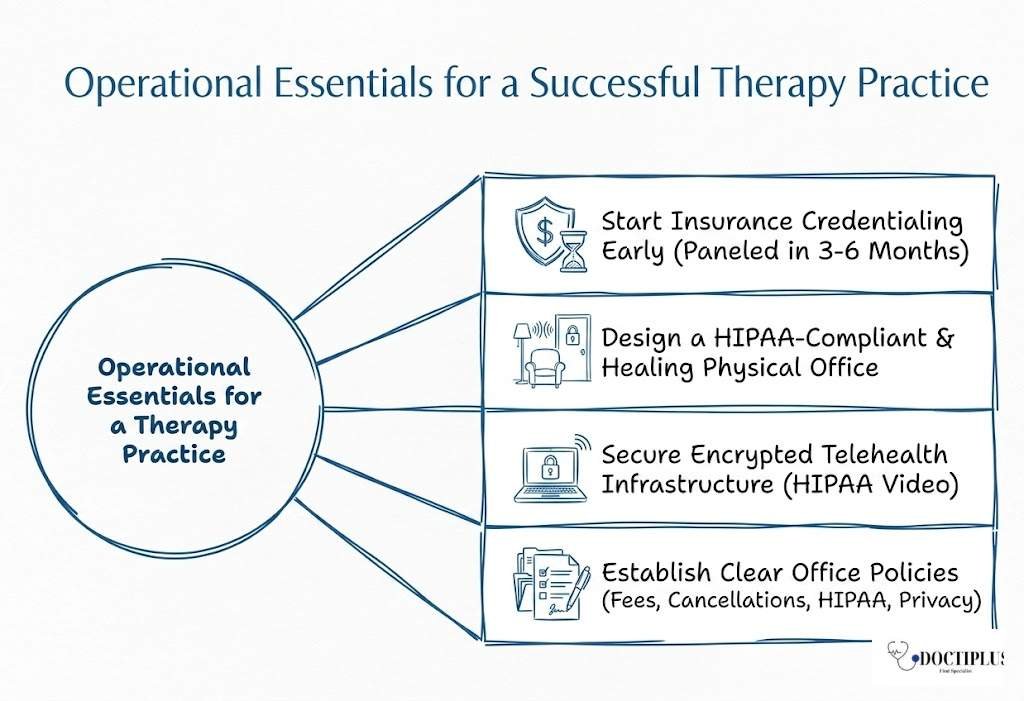
Don’t overlook these operational necessities for your therapy practice:
- Navigating the Credentialing Process. If you decide to take insurance, start the credentialing process early, as it can take several months to be fully approved and paneled by major insurance companies.
- Designing a Healing and Private Physical Space. If you have a physical office, consider lighting, soundproofing, and comfortable seating to ensure your clients feel safe, contained, and physically comfortable.
- Securing Your Telehealth Infrastructure. If you want to be a private practice therapist who works remotely, invest in a high-speed internet connection and a secure, encrypted video platform to ensure HIPAA compliance.
- Establishing Clear Practice Policies. Clear paperwork regarding your cancellation policy, fees, and privacy practices protects both you and the client from future misunderstandings and ensures the therapy practice runs smoothly.
- Managing Your Own Work-Life Balance. As the owner of a counseling business, you must prevent burnout. Set firm boundaries on your working hours to ensure you remain a healthy clinician for your clients.
Learning how to start a therapy practice is a marathon, not a sprint. The first year is often about trial and error, but with a solid foundation, your therapy practice will grow into a rewarding and profitable venture. By focusing on both clinical excellence and smart business habits, you create a space where you can do your best work while enjoying the benefits of self-employment.
Disclaimer
This content is for informational and educational purposes only and does not constitute legal, financial, medical, or professional business advice. Requirements for starting a therapy or counseling practice vary by country, state, and licensing board. You should consult with a qualified attorney, accountant, licensed clinical supervisor, or regulatory authority before establishing your practice. Additionally, always ensure compliance with applicable privacy laws, ethical guidelines, and professional standards in your jurisdiction.
References
- American Psychological Association. Guidelines for the Practice of Telepsychology. Washington, DC: American Psychological Association; 2013 (updated resources referenced 2023).
- National Board for Certified Counselors (NBCC). Building Your Private Practice: Ethics, Licensing, and Standards for Counselors. Greensboro, NC: NBCC; 2022.
- U.S. Small Business Administration (SBA). Small Business Guide: 10 Steps to Start Your Business. Washington, DC: U.S. SBA; 2024 Edition.
- American Counseling Association (ACA). Private Practice Pointers: A Guide to Starting and Managing a Counseling Practice. Alexandria, VA: American Counseling Association; 2023.
- Internal Revenue Service (IRS). Tax Guide for Small Business (Publication 334). Washington, DC: U.S. Department of the Treasury; 2024.
- U.S. Department of Health and Human Services. Health Insurance Portability and Accountability Act (HIPAA) Privacy and Security Rules. Washington, DC: HHS; Updated Guidance 2023.
- National Institute of Mental Health (NIMH). Mental Health Information and Resources for Providers. Bethesda, MD: National Institutes of Health; 2023.